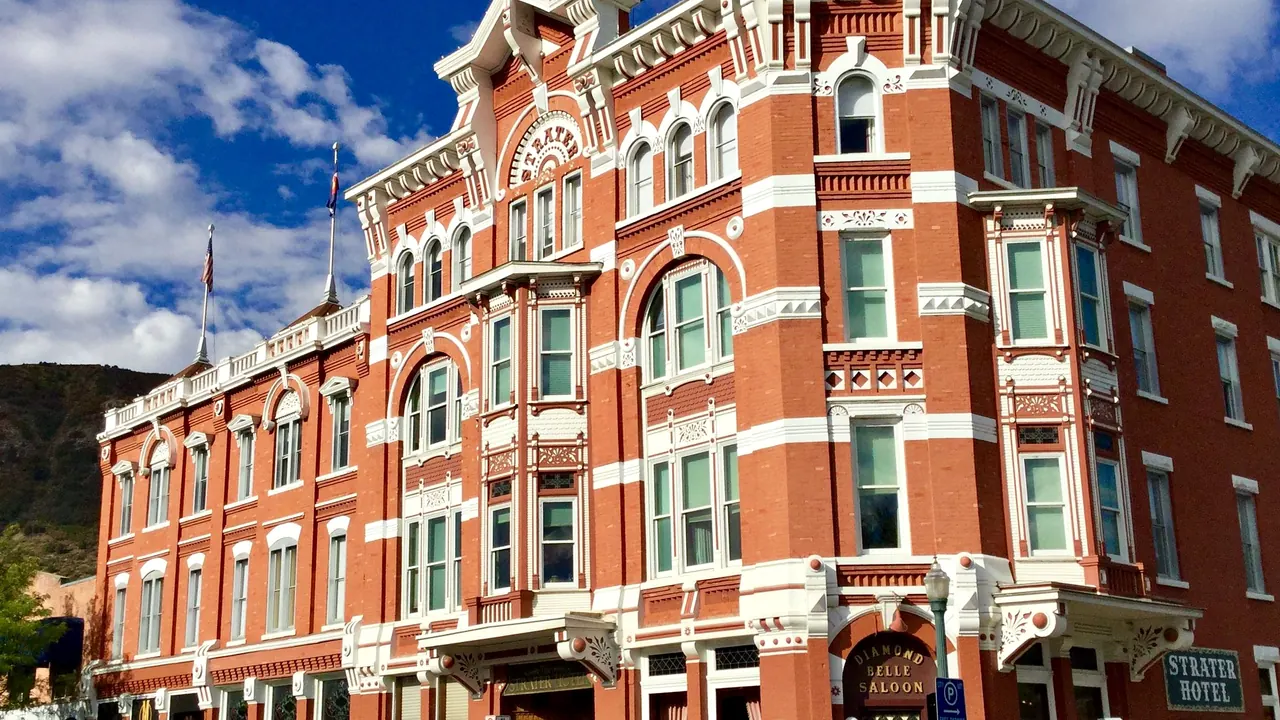
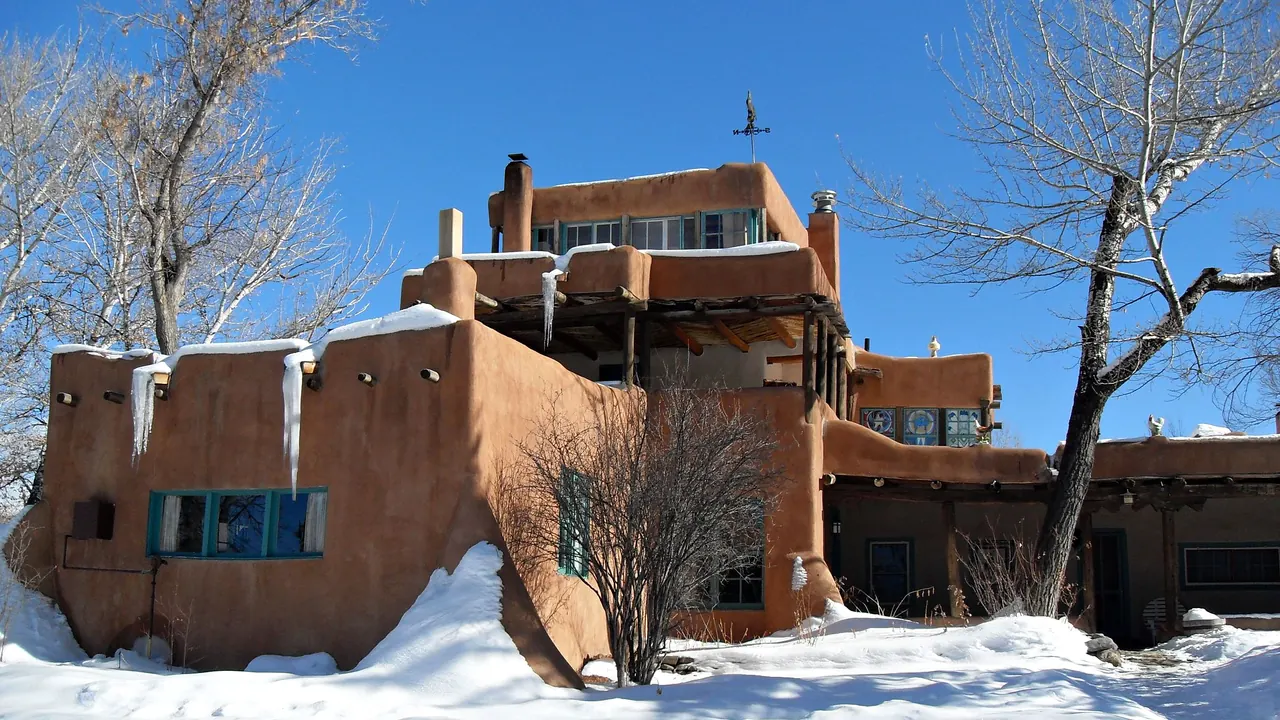
Photos: Durango, Colorado by Adeledstarr, CC BY-SA 4.0, cropped; Taos by PhictureGal, CC BY-SA 3.0, cropped.
Durango, Colorado or Taos?
Our verdict in twelve categories, each scored against the same fixed benchmark cities, and the climate month by month, so you can choose for your trip.
Choose Durango, Colorado for
- families
- getting around
- nightlife
Durango is the better pick for an active, sociable mountain trip, especially with children. The steam train, river tubing, summer coaster and ziplines give families plenty to do. Its brewery taprooms and saloons keep evenings a little livelier, and the compact Main Avenue centre is easier to manage without driving everywhere. Riders and hikers get singletrack and the Colorado Trail right from the edge of town.
Choose Taos for
- culture and sights
- shopping
- wellness
Travellers drawn by history, art and a sense of place will get more from Taos. Taos Pueblo, still lived in after a thousand years, and the art-colony museums give it a depth of culture Durango cannot match. Galleries, Pueblo pottery and Rio Grande weaving make it the better place to shop for something made locally. Add the gorge, the big skies and the soak at Ojo Caliente, and it suits a slower, more reflective stay, as long as you are happy to drive.
Scoreboard
Twelve categories on one fixed scale from 0 to 100. The shaded stretch is the gap between the two.
Your match
Pick a travel style or drag the sliders, and both match scores follow your weighting.
Too close to call, 1 point apart
Wins on families and getting around with your weighting.
Wins on culture and sights and shopping with your weighting.
What matters to you?
Category by category
What the scores mean for a trip.
Beaches & swimming
Neither town is a place for a beach, but Durango at least gives you somewhere to get wet. There is a swimming area at Lake Nighthorse, some sandy edges at Vallecito Lake and inner tubes floating down the Animas through the middle of town.
In Taos the Rio Grande is for rafting, not swimming, and the mountain lakes are too cold. A hotel pool or a hot spring is the closest you will get.
Food & drink
The two eat about equally well but quite differently. Durango's strength is beer, with a remarkable number of breweries for a small town. Its menus lean towards steakhouses, hearty breakfasts and Colorado lamb and trout.
Taos is all about northern New Mexican cooking: posole, carne adovada and sopaipillas with red or green chile, served with conviction in old family places. Horno bread from the Pueblo adds to the local flavour. Neither town offers much variety beyond its own regional cooking.
Culture & sights
Here Taos is clearly the richer of the two. Taos Pueblo is a living community and a World Heritage site. The buttressed church at Ranchos de Taos and a string of art-colony houses and museums, including the Fechin House, the Blumenschein home and the Martínez hacienda, give you several unhurried days.
In Durango the culture is mostly the 1880 railway: the depot, the roundhouse museum and a few blocks of Victorian brick and sandstone. The college's Southwestern collection is the best of the rest, and the major Puebloan sites lie out of town.
Nightlife
Both go quiet early, but Durango has a little more going on after dinner. Its taprooms and Main Avenue patios fill up with cyclists and rafters, and college students keep a few bars busy at weekends.
Taos evenings tend to be a margarita in an adobe hotel bar or a band in a saloon. In winter there is après-ski up the valley, and most nights end soon after the meal.
Nature & outdoors
Both are first-class mountain bases, but they suit different interests. Durango is the stronger pick for mountain biking, with singletrack straight from town, the start of the Colorado Trail and the Weminuche Wilderness. It also has rafting and fly-fishing on the Animas, and the drive towards Silverton is one of Colorado's most dramatic.
Taos has more open, desert scenery: the Rio Grande gorge cutting through the sagebrush plateau, Taos Box whitewater in spring and the climb up Wheeler Peak. Skiers should note that the Taos Ski Valley is known for steep, demanding runs.
Day trips
The day trips are equally good, but they lead to different places. Durango's outings are about ancient sites and old mining towns. Mesa Verde's cliff dwellings are the high point, along with the steam train up the canyon to Silverton, Ouray beyond it and the Aztec ruins to the south.
From Taos the trips have more of a Spanish colonial and artistic flavour. The High Road passes Truchas, Las Trampas and Chimayó on the way to Santa Fe, and there is O'Keeffe country at Abiquiu and Ghost Ranch. You will need a car for nearly all of them from either town.
Good for families
Durango does a better job of entertaining children. The steam train is a guaranteed hit, and the Animas is gentle enough for summer tubing. The ski area adds a coaster and ziplines in summer, and climbing the ladders at Mesa Verde brings history to life.
Taos welcomes children but has little designed for them. You get ski school, float trips, horse riding and the recreation centre pool, while the museums are small art collections. In both towns the altitude can tire young children for the first day or two.
Getting around
Durango is the easier of the two without a car, although only up to a point. Its flat centre runs from the depot up Main Avenue in a quarter of an hour, and a riverside trail and a trolley along the main corridor extend your reach. The regional airport is close by.
Taos has a walkable plaza area and a basic bus, but the Pueblo, the gorge, the ski valley and Ranchos are spread across a wide valley. Most visitors also drive about two and a half hours from Albuquerque, so a hire car is part of the trip.
Shopping & style
Taos is the better place to shop if you like art and craft. The lanes around the plaza and Kit Carson Road are lined with galleries, and the local specialities include Pueblo pottery, Rio Grande weaving and carved santos, some bought directly from the people who made them.
Durango's Main Avenue has a pleasant mix of outdoor shops, Western boots and Navajo silver and turquoise. Once you have browsed those, though, there is not much more. Neither town has fashion streets or department stores.
Affordability
Costs are much the same in both, and both are cheapest in spring and late autumn, between the ski and summer seasons. In Durango the extras mount up: the steam train, guided rafting and bike trips. Rooms are scarce at peak times, but the trails and river themselves cost nothing.
Taos is a little gentler on the budget if you stick to simple motels and casual chile diners. Its historic inns and ski-valley lodging charge resort rates, though, and the long drive from Albuquerque makes a hire car unavoidable.
Live music & performing arts
Both towns have a summer chamber music festival and little else on most nights. Durango's other entertainment is light-hearted Western fun: a Victorian melodrama where the audience boos the villain, and cowboy music with a chuckwagon supper. The college concert hall brings in touring acts.
The most memorable performances in Taos are the traditional dances at the Pueblo on feast days such as San Gerónimo. They are watched quietly, without cameras, and are a very different experience from anything staged in Durango.
Wellness & relaxation
The difference is how far you go for a soak. Durango keeps its mineral pools a few minutes up the valley, so an easy soak fits at the end of a ride or a day on the slopes. Pagosa Springs and Ouray give you a change of scene if you want one.
Taos asks a little more of you and gives a quieter stay in return. Ojo Caliente, with pools of different mineral waters under the cliffs, is worth the drive, and you reach the wild springs at the bottom of the gorge on foot. In town, yoga studios and retreat centres reflect its long reputation as a place to slow down.
When should you go?
Pick your month. The climate figures are measured averages, not a forecast.
Durango, Colorado in July
Taos in July
Daytime high, °C
Rainfall in the month, mm
Where the figures come from
Durango, Colorado has no weather station within reach, so its figures come from a gridded climate model rather than a measured record, and read a broad area rather than the city itself.
Taos has no rain gauge within 25 km of the centre, so its rainfall comes from a gridded climate dataset read at the city rather than from a gauge further away.
Temperature and rainfall are climate normals, averaged over the years shown. Durango, Colorado: 1991-2020 normals, TerraClimate 4 km grid at the town, no weather station within 90 km. Taos: 2006-2020 (rainfall 1991-2020) normals, Taos / Los Cordovas (10.5 km from centre).
The two towns follow almost the same temperature curve through the year. Winters are cold, with daytime highs only just above freezing, around 5°C, in December and January, which suits skiing far better than wandering the streets. Spring warms quickly through April and May, and June to August are properly warm, reaching about 30°C in Durango in July. September and early October are mild and comfortable, the best weeks for walking and for the golden aspens. Rivers and lakes stay cold even in high summer, so swimming is only ever a quick dip.
Where they differ is the rain. Durango is fairly wet all winter, at around 40mm a month, and June is its driest month. Taos has much drier winters and springs, and its wettest months are July and August, at about 45mm each, mostly in afternoon thunderstorms. Summer storms come to both towns, so start hikes early.
Which traveller are you?
On a culture and arts trip, choose Taos. The UNESCO-listed Pueblo, the painted church at Ranchos de Taos and the Harwood and Millicent Rogers museums fill two or three days. Durango's railway museum and Victorian streets take an hour or two.
On a family trip with children, choose Durango. The steam train to Silverton, gentle tubing on the Animas through town and the summer coaster at the ski area give children far more to do. In Taos, almost every outing for children is a nature trip with a car journey.
For a shopping trip, Taos wins on the strength of its craft. You can buy micaceous pottery and bread from makers at the Pueblo, as well as santos, weaving and gallery painting. Durango's Main Avenue offers turquoise and outdoor gear, but it fills an afternoon at most.
Before you go
| Measure | Durango, Colorado | Taos |
|---|---|---|
| Currency | US Dollar (USD) | US Dollar (USD) |
| Sockets | AB120 V, 60 Hz | AB120 V, 60 Hz |
| Driving side | Right | Right |
| Time zone | UTC-7, UTC-6 in summer | UTC-7, UTC-6 in summer |
| Emergency number | 911 | 911 |
| Elevation | 1,988 m | 2,124 m |
| Main airport | Durango La Plata County Airport (DRO)18 km from centre4 non-stop destinations | Santa Fe Municipal Airport (SAF)99 km from centre5 non-stop destinations |
| Public holidays this year | 12 days | 13 days |
By the numbers
| Measure | Durango, Colorado | Taos |
|---|---|---|
| City population | 19,071 | 6,474 |
| People per km² | 739 | 415 |
| Museums within 10 km | 2 | 4 |
| UNESCO World Heritage sites within 50 km | 1 | 1 |
Where else could you go?
Every comparison below shares a destination with this one, so you can follow Durango, Colorado or Taos somewhere new.
- Telluridevs Durango, Colorado
- Santa Fevs Taos
- Albuquerquevs Taos
- Moabvs Durango, Colorado
- Aspenvs Durango, Colorado
- Santa Fevs Durango, Colorado