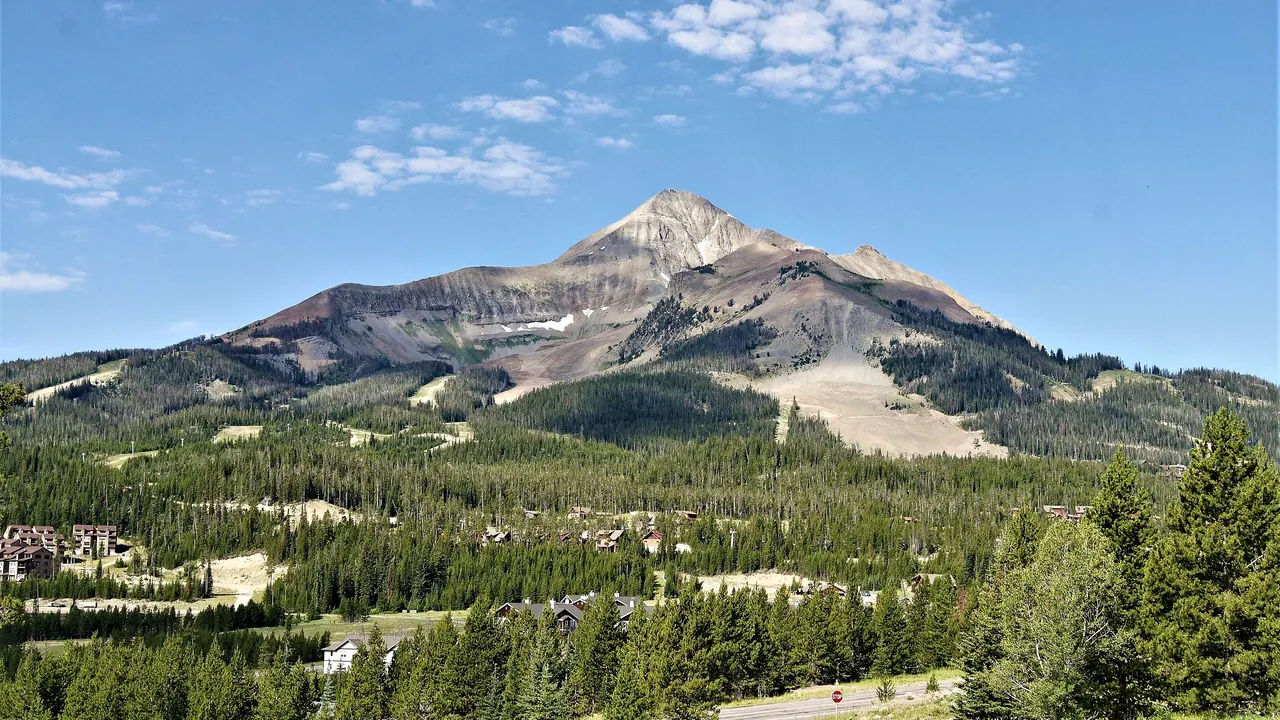
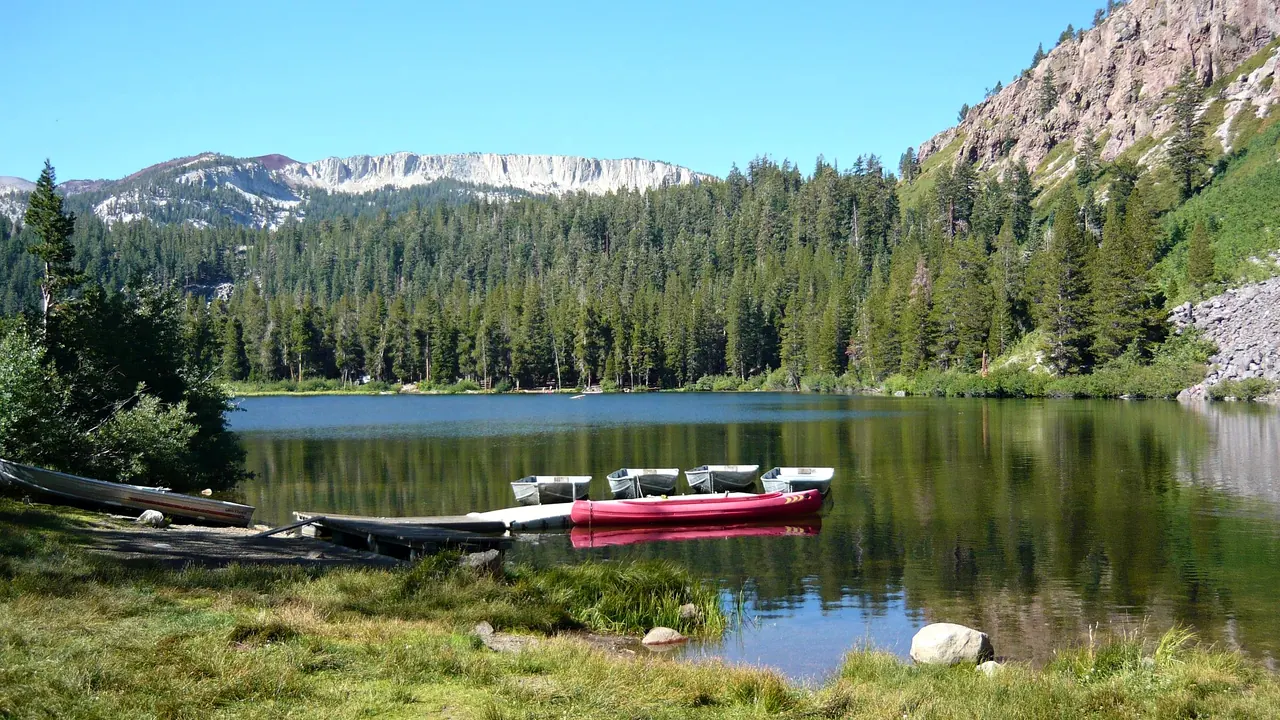
Photos: Big Sky by Greg Gjerdingen, CC BY 2.0, cropped; Mammoth Lakes by Dr. Al. K. Lisch, CC BY-SA 3.0, cropped.
Big Sky or Mammoth Lakes?
Our verdict in twelve categories, each scored against the same fixed benchmark cities, and the climate month by month, so you can choose for your trip.
Choose Big Sky for
- live music and the arts
- nature and the outdoors
Big Sky is for travellers who want the mountain to be as big and wild as possible, and who are relaxed about the cost. Lone Peak gives steep, high skiing, the Gallatin River is there for fly fishing and rafting, and Yellowstone's geysers, bison and wolves are close enough for a day out. Bozeman, an hour down the canyon, adds a real town when you want a change from the resort.
Choose Mammoth Lakes for
- getting around
- prices
- wellness
Mammoth Lakes is the easier choice if you want more variety from one base and a bill that stings a little less. The ski season often runs into early summer, the dry summers open up the Lakes Basin, Devils Postpile and the Yosemite high country, and natural hot springs in the sagebrush make it the better place to unwind. Shuttles and the gondola also make a ski trip without a car realistic.
Scoreboard
Twelve categories on one fixed scale from 0 to 100. The shaded stretch is the gap between the two.
Your match
Pick a travel style or drag the sliders, and both match scores follow your weighting.
Wins on live music and the arts and nature and the outdoors with your weighting.
Wins on getting around and prices with your weighting.
What matters to you?
Category by category
What the scores mean for a trip.
Beaches & swimming
Neither town has any beach life, but Mammoth Lakes at least gives you a swim. In July and August people take a cold dip at Horseshoe Lake in the Lakes Basin, and Crowley Lake, which sits lower, warms a little more.
In Big Sky the Gallatin is fast and icy even in midsummer, so a swim usually means the hotel pool.
Food & drink
Both feed you well after a day outside without being somewhere you go for the food. Big Sky leans into Montana: bison, elk, local beef and river trout, plus a few ambitious lodge kitchens. Its range is narrow, and for anything more varied you drive an hour to Bozeman.
Mammoth Lakes is more burgers, tacos, pizza and steakhouses, and because it caters to a big winter crowd the choice is a little wider. In both towns some places cut back between seasons.
Culture & sights
Neither has much to see, because both grew up as ski resorts. Big Sky's one piece of heritage is the pair of log cabins at the Crail Ranch homestead in Meadow Village. Mammoth's small log-cabin museum tells the story of its mining camp. In both places the history worth a visit is an hour or more away.
Nightlife
Evenings in both are après-ski and then an early night. The difference is in the setting. Big Sky has old Gallatin Canyon saloons with pool tables and a ranch-country crowd, while Mammoth has brewery taprooms in town, and on long ski weekends it can stay up later. Neither has clubs, and both are very quiet in spring and autumn.
Nature & outdoors
These are two of North America's great mountain bases, and they differ in character rather than quality. Big Sky has the steep, high terrain of Lone Peak, the Spanish Peaks and Lee Metcalf Wilderness for hiking, and the Gallatin for fly fishing and rafting. Its trump card is Yellowstone's geysers and wildlife, about an hour south.
Mammoth's country is volcanic and dry. The ski season often lasts into early summer, the granite lakes of the Lakes Basin are right above town, and nearby are the basalt columns of Devils Postpile, Mono Lake's tufa towers and, once Tioga Pass opens, Tuolumne Meadows in Yosemite.
Day trips
Both regions have gold-rush history, but what lies within reach differs. From Big Sky you can drive to an actual town: Bozeman is an hour away, with a Western main street and the dinosaur fossils of the Museum of the Rockies. The boardwalks of Virginia City are further on.
From Mammoth the sites are more striking but the towns smaller. Bodie is a ghost town left as it decayed, and Manzanar is a moving wartime internment camp, while Bishop and June Lake are pleasant stops. Winter pass closures narrow the choice.
Good for families
Children do well in both if the family likes the outdoors, and both share the same gaps: nothing for a wet day, and altitude that can tire small children at first. In Big Sky the summer adventure park, horse riding and spotting bison in Yellowstone are the highlights.
Mammoth adds a snow-tubing hill in winter and, in summer, rowing boats and trout fishing on the Lakes Basin. Condos with kitchens make family life simpler.
Getting around
Mammoth Lakes is easier without a car. In winter, free shuttles link the lodging areas to the lift bases and a gondola runs from the Village up the mountain. In summer a trolley serves the Lakes Basin and a shuttle runs into Reds Meadow.
Big Sky is strung along about 15km of road. A free bus joins the villages, but the airport is an hour away and Yellowstone needs a car. Both towns need a car to explore further afield.
Shopping & style
Neither is a shopping destination, and in both the shops are for gear. Big Sky has a little more Western style, with a few boutiques and galleries of wildlife art, and Bozeman is near enough for a proper shop. Mammoth has stronger climbing and fly-fishing outfitters and landscape photography galleries, but no city close by.
Affordability
Both are costly, but Big Sky sits at the very top of the American West's price range. In winter, slopeside lodging and luxury resorts set the level, and lift passes, ski school and guided fishing quickly add up. Summer and the quieter months bring only partial relief, so the real saving comes from sleeping in the canyon or down in Bozeman, which you pay for in driving.
Mammoth's peak ski weeks are steep as well, with lift tickets as dear as almost anywhere. Once those weeks pass, though, the town eases off more clearly than Big Sky does, and in spring and autumn rooms get cheaper without your having to move away from the mountain. Groceries and restaurant bills still carry resort-town prices all year.
Live music & performing arts
Both towns put on more than you would expect for their size, in different ways. Big Sky's arts centre in Meadow Village brings in touring musicians and theatre in winter, and summer adds free concerts on the lawn and a short classical festival. Mammoth has its own resident theatre company playing through the year on the college campus, and in summer a jazz festival and chamber music outdoors.
Wellness & relaxation
Mammoth Lakes is the better place to unwind, because its volcanic ground produces natural hot springs. Soaking in a simple pool out in the sagebrush at dusk, looking across to the Sierra, is something Big Sky cannot match.
In Montana, relaxing means lodge spas and a hot tub under the stars, and the nearest springs are an hour away towards Bozeman.
When should you go?
Pick your month. The climate figures are measured averages, not a forecast.
Big Sky in July
Mammoth Lakes in July
Daytime high, °C
Rainfall in the month, mm
Where the figures come from
Big Sky has no weather station within reach, so its figures come from a gridded climate model rather than a measured record, and read a broad area rather than the city itself.
Mammoth Lakes's station stands 227 m below the city centre, so the centre is likely a little cooler than the figures say.
Mammoth Lakes has no rain gauge within 25 km of the centre, so its rainfall comes from a gridded climate dataset read at the city rather than from a gauge further away.
Temperature and rainfall are climate normals, averaged over the years shown. Big Sky: 2001-2020 normals, NASA POWER reanalysis grid, no weather station within 90 km. Mammoth Lakes: 2008-2020 (rainfall 1991-2020) normals, Mammoth / Whitmore Hot Springs (12 km from centre).
Big Sky has a hard, cold winter, with daytime highs around -4°C from December to February and snow lying until April. Spring is the wettest part of the year, peaking at about 83mm in May, so it is a muddy, in-between season. The short summer is the time for hiking and Yellowstone: July and August reach about 26°C and are fairly dry, and September stays pleasant before the cold comes back in October.
Mammoth Lakes runs the other way round. Its precipitation falls in winter, about 80mm in January, almost all as snow, yet winter days are milder at around 6°C. From June to September it is close to rainless, with highs near 28°C in July and August, the only weeks when a lake swim makes sense. Autumn stays dry and mild for longer than in Montana, which makes October a better month here than in Big Sky.
Which traveller are you?
For an outdoors trip with wildlife in mind, Big Sky is the pick. Yellowstone's west entrance is about an hour away, so you can watch bison, elk and wolves, and the Gallatin's fly fishing and the Spanish Peaks trails are right there.
On a relaxing and wellness trip, Mammoth Lakes suits better. Its volcanic ground feeds primitive hot springs looking across to the Sierra, and the lodges have spas as well. In Big Sky, unwinding mostly means a hot tub on the deck.
On a tight budget, neither place is easy, but Mammoth Lakes hurts less. In summer the hiking, lakes and scenic drives cost little, and condos with kitchens keep meals down. Big Sky is among the most expensive places to stay in the American West.
Before you go
| Measure | Big Sky | Mammoth Lakes |
|---|---|---|
| Currency | US Dollar (USD) | US Dollar (USD) |
| Sockets | AB120 V, 60 Hz | AB120 V, 60 Hz |
| Driving side | Right | Right |
| Time zone | UTC-7, UTC-6 in summer | UTC-8, UTC-7 in summer |
| Emergency number | 911 | 911 |
| Elevation | 2,200 m | 2,402 m |
| Main airport | Bozeman Yellowstone International Airport (BZN)59 km from centre27 non-stop destinations | Reno Tahoe International Airport (RNO)217 km from centre25 non-stop destinations |
| Public holidays this year | 12 days | 13 days |
By the numbers
| Measure | Big Sky | Mammoth Lakes |
|---|---|---|
| City population | 3,591 | 7,191 |
| People per km² | 12 | 110 |
| Museums within 10 km | 0 | 0 |
| UNESCO World Heritage sites within 50 km | 0 | 0 |
Where else could you go?
Every comparison below shares a destination with this one, so you can follow Big Sky or Mammoth Lakes somewhere new.
- South Lake Tahoevs Mammoth Lakes
- Jackson Holevs Big Sky
- San Josevs Mammoth Lakes
- Montereyvs Mammoth Lakes
- Carmel-by-the-Seavs Mammoth Lakes
- Sun Valleyvs Big Sky