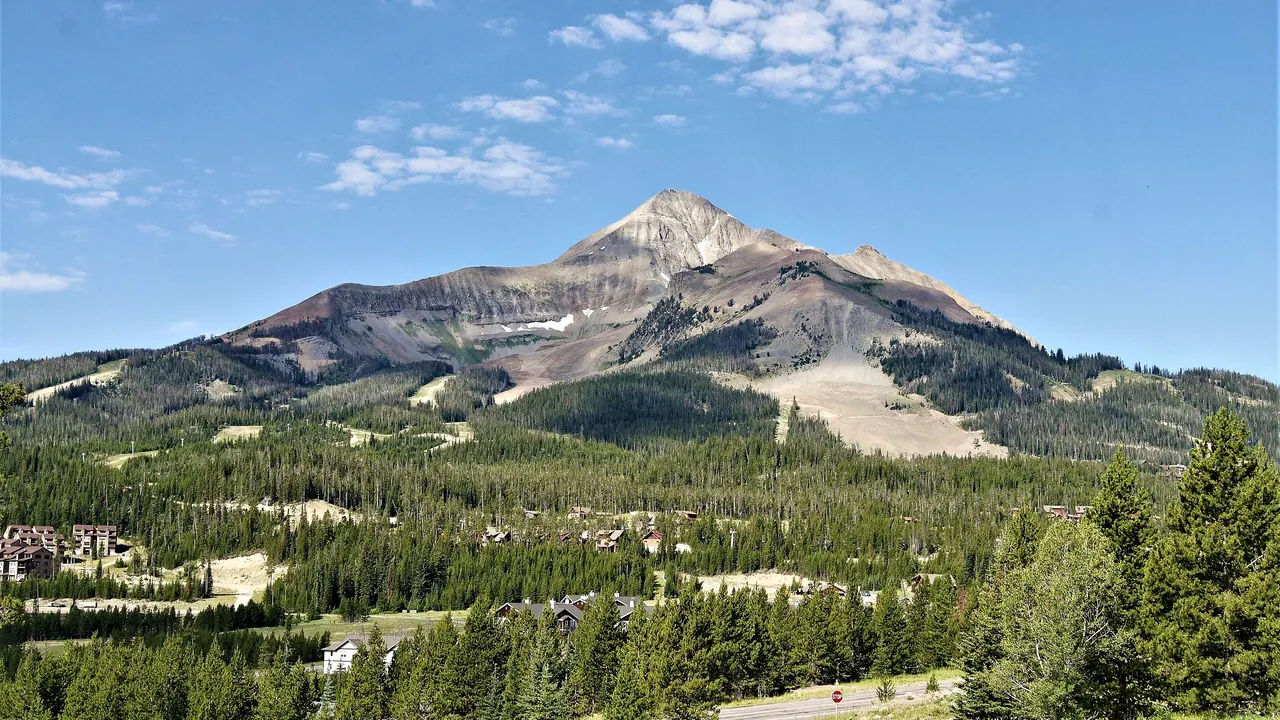
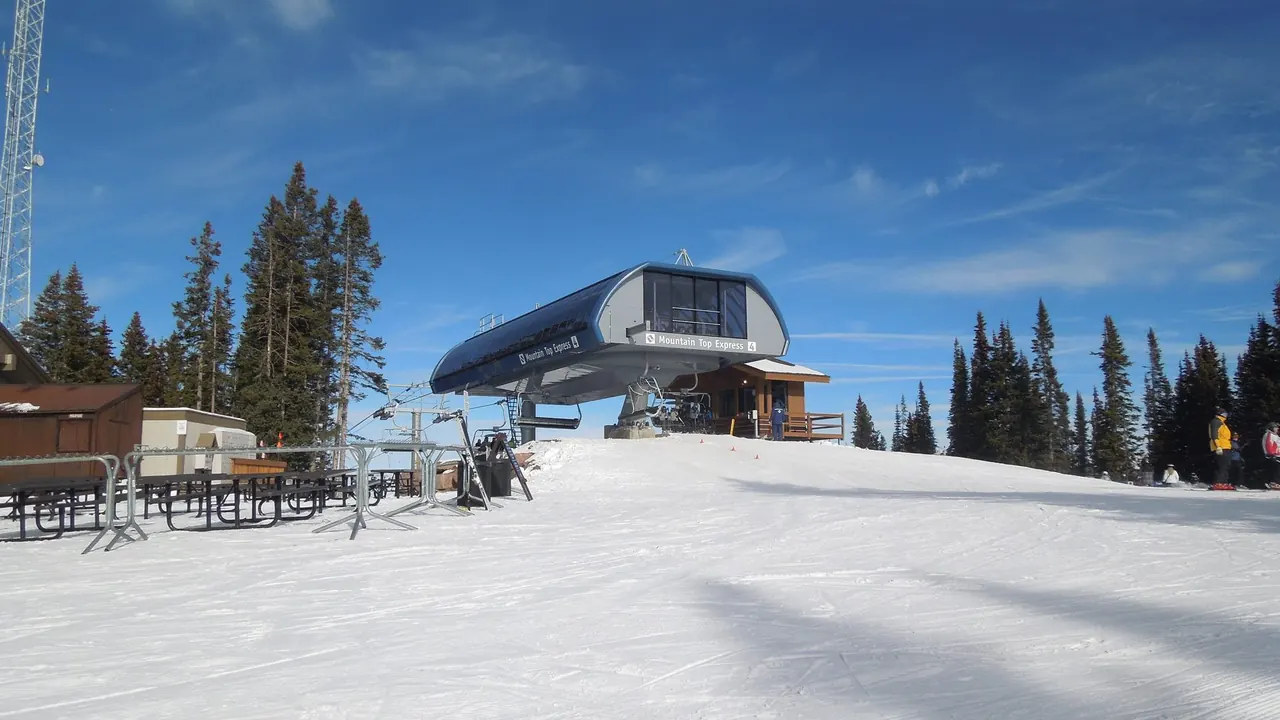
Photos: Big Sky by Greg Gjerdingen, CC BY 2.0, cropped; Vail by DReifGalaxyM31, CC BY 3.0, cropped.
Big Sky or Vail?
Our verdict in twelve categories, each scored against the same fixed benchmark cities, and the climate month by month, so you can choose for your trip.
Choose Big Sky for
- nature and the outdoors
- prices
Big Sky suits travellers who want the mountain to themselves and wilder country beyond it. Lone Peak and the Spanish Peaks feel less tamed, the resort is quiet and uncrowded, and Yellowstone's geysers and bison are close enough for a day out. Pick it for a ski week or a summer of hiking, fishing and wildlife, and come prepared to drive and to eat simply.
Choose Vail for
- getting around
- shopping
- live music and the arts
Vail is the easier, more polished place to be. Its car-free village puts lifts, restaurants and shops within a short walk, the free valley bus means you can leave the car at home, and evenings offer more choice. In July and August it adds summer music and dance festivals that Big Sky cannot match. Choose it if the town around the slopes matters as much as the slopes.
Scoreboard
Twelve categories on one fixed scale from 0 to 100. The shaded stretch is the gap between the two.
Your match
Pick a travel style or drag the sliders, and both match scores follow your weighting.
Wins on nature and the outdoors and prices with your weighting.
Wins on getting around and shopping with your weighting.
What matters to you?
Category by category
What the scores mean for a trip.
Beaches & swimming
Neither place has any beach life. The water is cold in both even in July, so a swim usually means a hotel pool. In Big Sky the summer alternative is a picnic on the bank of the fast, rocky Gallatin, while Vail's small mountain lakes are better for lying in the sun than for swimming.
Food & drink
Vail has the wider table. Vail Village and Lionshead offer fondue rooms, sushi counters, polished steak and game restaurants and hotel dining rooms with serious wine lists, and in summer there is a farmers' market.
Big Sky sticks to hearty mountain cooking: bison, elk, trout, wood-fired pizza and big ski breakfasts, spread thinly across three villages and the canyon roadhouses. In both resorts kitchens close in the quiet seasons, but in Big Sky the answer to wanting more variety is an hour's drive to Bozeman.
Culture & sights
Neither resort is a place for sightseeing, and the little each has is different in character. Big Sky's one genuine piece of the past is the Crail Ranch homestead, a pair of pioneer log cabins in Meadow Village. Vail's village is a 1960s imitation of a Tyrolean town, but its Colorado Snowsports Museum tells the story of the Tenth Mountain Division ski troops, and the Betty Ford Alpine Gardens fill a summer hour.
Nightlife
Vail is where you can actually go out. Après-ski fills the slopeside terraces of Vail Village and Lionshead, and on winter weekends a few bars and a small club keep going past midnight for a well-off, festive crowd.
Big Sky's evenings are shorter and plainer. You get beer on the decks at the lift base, a few taverns in Town Center and old canyon saloons with pool tables, then bed before the first lift. Both go almost silent in spring and autumn.
Nature & outdoors
Both are first-rate mountain bases, so the difference is in character. Big Sky has Lone Peak's steep, high terrain, the Spanish Peaks and the Lee Metcalf Wilderness, and the Gallatin River for fishing and rafting. Its trump card is Yellowstone, about an hour south, with geysers and wildlife no Colorado resort can offer.
Vail answers with its open Back Bowls and Blue Sky Basin under dry Rocky Mountain powder, and in summer the Gore Range and Holy Cross wilderness, with lakes and peaks above 4,000m. Autumn, when the aspen slopes turn gold, is its best season outside winter.
Day trips
Vail has more towns within reach. Breckenridge's Victorian main street is under an hour away, Leadville's brick streets and opera house make a half day, and Glenwood Springs lies down the Colorado River canyon, with Aspen and Denver further off.
From Big Sky, the main town outing is Bozeman and its Museum of the Rockies with its dinosaur fossils. The gold-rush boardwalks of Virginia City and Nevada City are about two hours away. Its best days out are into the landscape rather than to other towns.
Good for families
Both work for outdoor families in much the same way, with good ski schools, gentle slopes and no zoos or rainy-day museums. Big Sky's summer appeal is horse riding, zip lines and spotting bison in Yellowstone. Vail has a car-free village that is easier to stroll with a pushchair, plus a mountain coaster, tubing and creekside parks. Both sit high enough that small children feel the altitude at first.
Getting around
Vail is far easier on foot. The village and Lionshead are pedestrian, the gondolas leave from town, and a free bus runs the length of the valley, so a week without a car is normal. The weak point is the road in, as the interstate over Vail Pass can close in heavy snow.
Big Sky is strung out along about 15km of road, from the canyon to Mountain Village. A free bus links the villages, but walking between them is not realistic. Bozeman airport is an hour away, and for Yellowstone or anything beyond the resort you need a hire car.
Shopping & style
Vail's pedestrian lanes give you real browsing, with upmarket ski clothing, fur and leather, jewellery, Western boots and hats, and mountain-landscape galleries, though all of it is aimed at wealthy visitors. Big Sky offers little beyond gear shops, a handful of Western boutiques and wildlife art, which is enough for new gloves or a fly rod. For anything more you drive to Bozeman from one, or to Denver from the other.
Affordability
Neither is a place to save money. Slopeside lodging, lift passes, ski school and restaurant meals cost a great deal in both, and both are cheaper in summer and the shoulder seasons than in winter. In Big Sky, beds down in the Gallatin Canyon, still part of the resort's own stretch of road, cost less than those at the lifts. The bigger saving is to stay in Bozeman, but that means an hour's drive each way.
In Vail, peak winter weeks push prices higher still. The free valley bus is what makes cheaper lodging further down the valley practical, because you can reach the slopes without a car.
Live music & performing arts
Vail has the stronger arts life, concentrated in July and August. Bravo! Vail brings major orchestras to the open-air Gerald R. Ford Amphitheater, and the Vail Dance Festival and a long-running jazz festival follow. In winter there is little beyond après-ski bands.
Big Sky's offer is smaller but spread more evenly. A small arts centre in Meadow Village has touring musicians, chamber music and theatre through the ski season, and in summer there are free lawn concerts in Town Center.
Wellness & relaxation
Vail does wellness a little better. Its village hotels run polished spas with saunas and steam rooms, and Glenwood Springs, about an hour away, has large mineral pools and vapour caves that have been used since the 1800s.
Big Sky offers hot tubs on the deck, lodge spas built around tired ski legs, and quiet, starry nights. Its nearest natural hot springs are towards Bozeman, so they are an outing rather than part of the stay.
When should you go?
Pick your month. The climate figures are measured averages, not a forecast.
Big Sky in July
Vail in July
Daytime high, °C
Rainfall in the month, mm
Where the figures come from
Big Sky has no weather station within reach, so its figures come from a gridded climate model rather than a measured record, and read a broad area rather than the city itself.
Vail's temperatures are measured 47 km from the centre, at Kremmling.
Vail's station stands 186 m below the city centre, so the centre is likely a little cooler than the figures say.
Vail has no rain gauge within 25 km of the centre, so its rainfall comes from a gridded climate dataset read at the city rather than from a gauge further away.
Temperature and rainfall are climate normals, averaged over the years shown. Big Sky: 2001-2020 normals, NASA POWER reanalysis grid, no weather station within 90 km. Vail: 2006-2025 (rainfall 1991-2020) normals, Kremmling (46.5 km from centre).
Both are deep in winter from December to February, and that is the time for skiing. Big Sky warms slowly. It only reaches about 7°C by day in April, and late spring is its wettest stretch, with 83mm of rain in May and nearly as much in the months either side. July and August are the warm months, with highs around 26°C, and also the driest, which makes them the best weeks for hiking and for Yellowstone. June and September are cooler but still pleasant for walking.
Vail is about a month ahead. It reaches in March the 7°C that Big Sky only gets to in April. Its summer runs from June into September with highs up to 29°C, and October is still mild enough for walks under the gold aspens. Rain is light and spread evenly through the year, with no wet season. Choose Vail for a longer, more settled hiking season, and Big Sky if you prefer a shorter, fresher summer.
Which traveller are you?
On an outdoors trip, Big Sky has the edge. Lone Peak and the Lee Metcalf Wilderness feel wilder, the Gallatin is a classic fly-fishing river, and Yellowstone is about an hour away for geysers, bison and wolf-watching.
For a culture and arts trip, Vail is the clear choice, though only in summer. Bravo! Vail brings orchestras to the open-air Ford Amphitheater, the Vail Dance Festival draws leading dancers, and the Colorado Snowsports Museum gives some background on skiing history.
On a food and nightlife trip, Vail gives you more. Its pedestrian village has fondue rooms, sushi counters and wine lists, and on winter weekends après-ski runs on past midnight. Big Sky offers hearty plates and a friendly beer, then an early night.
Before you go
| Measure | Big Sky | Vail |
|---|---|---|
| Currency | US Dollar (USD) | US Dollar (USD) |
| Sockets | AB120 V, 60 Hz | AB120 V, 60 Hz |
| Driving side | Right | Right |
| Time zone | UTC-7, UTC-6 in summer | UTC-7, UTC-6 in summer |
| Emergency number | 911 | 911 |
| Elevation | 2,200 m | 2,445 m |
| Main airport | Bozeman Yellowstone International Airport (BZN)59 km from centre27 non-stop destinations | Eagle County Regional Airport (EGE)48 km from centre16 non-stop destinations |
| Public holidays this year | 12 days | 12 days |
By the numbers
| Measure | Big Sky | Vail |
|---|---|---|
| City population | 3,591 | 4,835 |
| People per km² | 12 | 400 |
| Museums within 10 km | 0 | 1 |
| UNESCO World Heritage sites within 50 km | 0 | 0 |
Where else could you go?
Every comparison below shares a destination with this one, so you can follow Big Sky or Vail somewhere new.
- Beaver Creekvs Vail
- Copper Mountainvs Vail
- Keystonevs Vail
- Breckenridgevs Vail
- Winter Park, Coloradovs Vail
- Aspenvs Vail