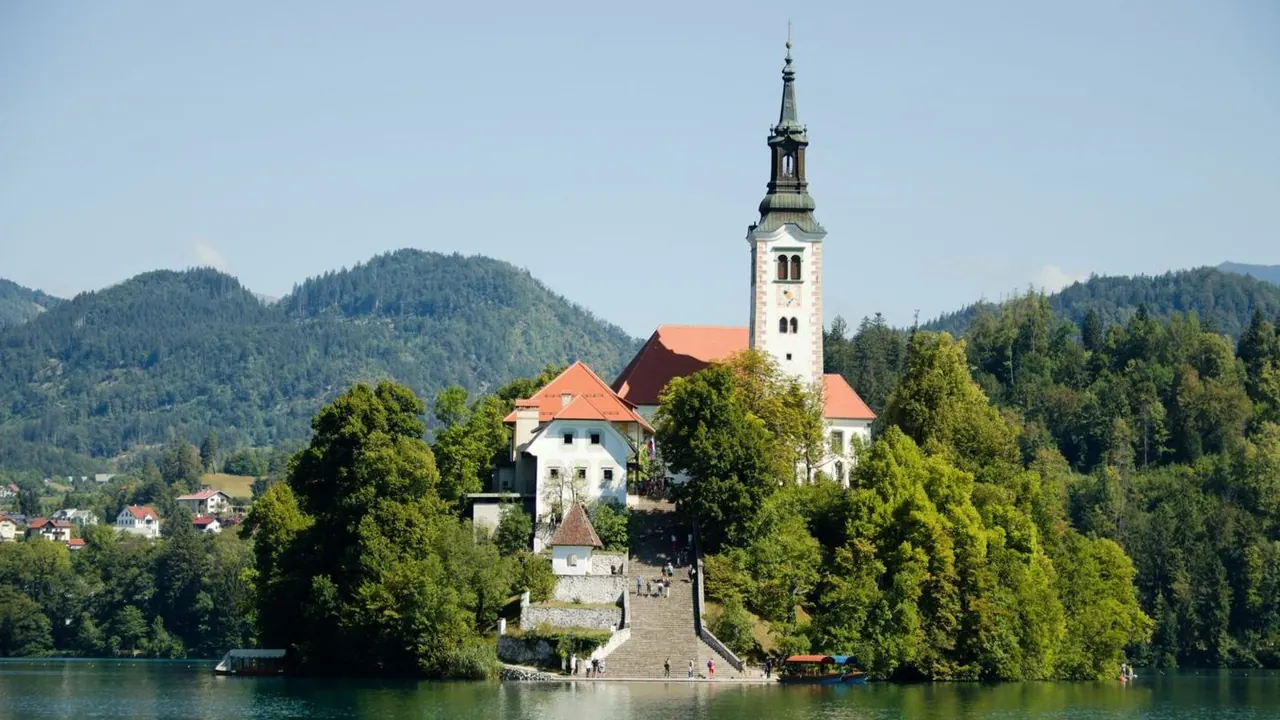
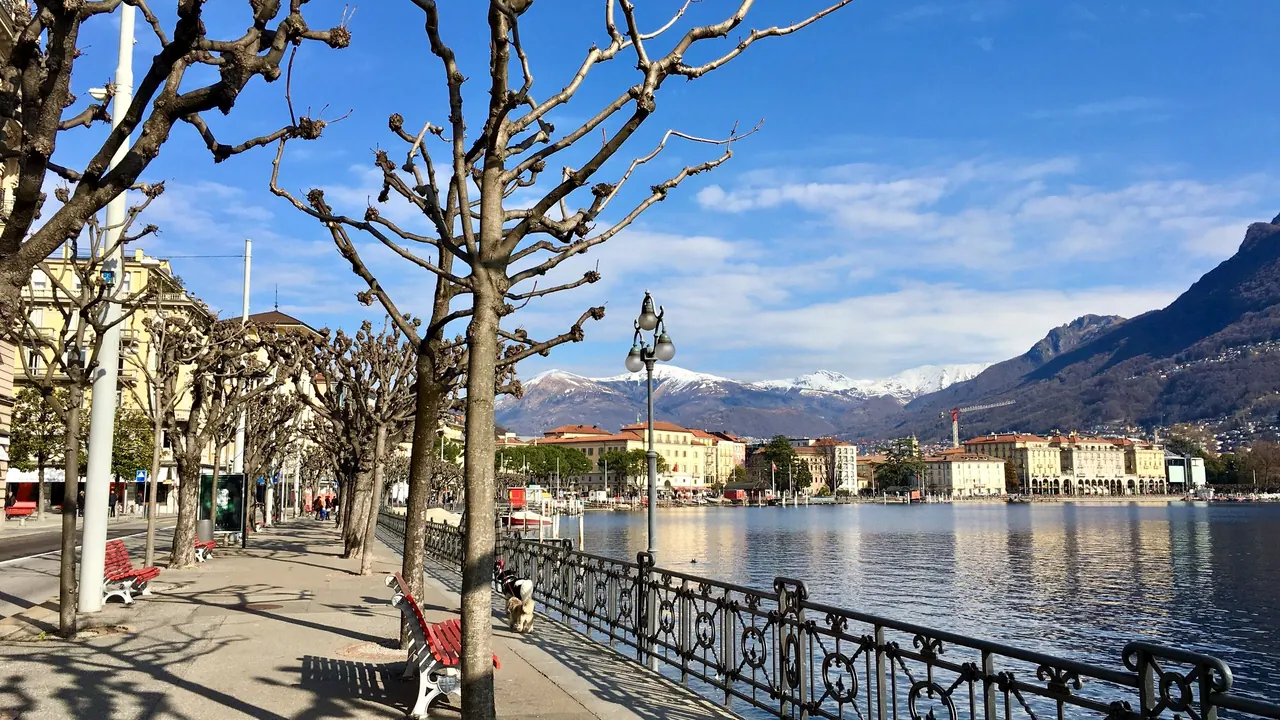
Photos: Bled by Luka Peternel, CC BY-SA 4.0, cropped; Lugano by Thomas Woodtli from Zürich, Switzerland, CC BY-SA 2.0, cropped.
Bled or Lugano?
Our verdict in twelve categories, each scored against the same fixed benchmark cities, and the climate month by month, so you can choose for your trip.
Choose Bled for
- prices
- wellness
- nature and the outdoors
Bled is the pick for travellers who want the mountains first and everything else second. The Julian Alps start at the edge of the village, with gorge walks, hut-to-hut hiking, rafting and winter skiing all close by. It also costs noticeably less than Lugano, and its old spa-resort calm suits a slow, restful week. Expect simple food and very quiet evenings, and plan to go to Ljubljana for anything urban.
Choose Lugano for
- shopping
- live music and the arts
- food and drink
Lugano gives more of a town around its lake. Arcaded squares, grotto taverns, Ticino Merlot, a proper concert hall and Via Nassa's watchmakers make the evenings and rainy days easier to fill. Fast trains to Milan, Como and Bellinzona also make it the stronger base for sightseeing in two countries. It suits travellers who like their scenery with a bit of polish and don't mind Swiss prices.
Scoreboard
Twelve categories on one fixed scale from 0 to 100. The shaded stretch is the gap between the two.
Your match
Pick a travel style or drag the sliders, and both match scores follow your weighting.
Wins on prices and wellness with your weighting.
Wins on shopping and live music and the arts with your weighting.
What matters to you?
Category by category
What the scores mean for a trip.
Beaches & swimming
Swimming is about equal, but the setting is different. At Bled you get in from grassy lidos and wooden piers, slip off the rocks along the shore path, or swim out to the island, and the lake is warm for an Alpine one. Bohinj nearby is colder and has pebble shores.
Lugano is more of a town lido. The main one, at the mouth of the Cassarate, has pools, decks and slides, and small lake baths in the villages are a boat ride away. Its season starts a little earlier, in June.
Food & drink
Bled is somewhere to have a slice of kremšnita, not a place to plan meals around. Apart from the cream cake on a lake terrace, you choose between hotel dining rooms, pizzerias and a few inns serving trout, žlikrofi and buckwheat dishes. The more rewarding cooking is out in the farm inns of the nearby valleys.
Lugano gives someone who cares about food more to work with, though not without limits. The main draw is the grotto, a cellar tavern in the hills or a lake village where you can spend an afternoon over risotto, braised meat and local cheese with a glass of Ticino Merlot. Pastry shops and the old-town market add a little more. With little street food or international cooking, though, keen eaters still cross into Italy for their best meals.
Culture & sights
Neither town takes more than a day to see, but Lugano has more depth. It has a Lombard old town of arcades around Piazza della Riforma, the Renaissance façade of San Lorenzo, Luini's great Passion fresco in Santa Maria degli Angioli, and an art collection split between LAC and Palazzo Reali.
Bled's sights are fewer but very photogenic: the cliff-top castle with its small museum and printing workshop, and the pletna boat ride out to the baroque island church with its wishing bell. Beyond those, people come for the view more than for the history.
Nightlife
Neither suits a big night out, but Lugano at least has an evening routine. It starts with an aperitivo on the lakefront, moves on to wine and cocktail bars or a lounge by the water, and there are one or two clubs, with a well-dressed local crowd. In Bled the evening is a terrace drink and a walk along the lit shore, and the village is in bed early. Anyone who wants more ends up in Milan from one and in Ljubljana from the other.
Nature & outdoors
Both are lake-and-mountain places, and Bled's edge is the real Alps. Triglav National Park, the Vintgar Gorge, the Pokljuka plateau and the Vršič road to the Soča valley are all close. They open up multi-day hut routes, rafting and canyoning on the Sava, paragliding, and skiing at Vogel in winter.
Lugano's mountains are lower and easier to get up. Funiculars climb Monte Brè and San Salvatore, a rack railway goes up Monte Generoso, and the Lema to Tamaro ridge makes a fine day's hike. The Gandria shore path and the green rivers of the Verzasca valley suit people who would rather walk than climb.
Day trips
Lugano has the richer day trips, and the train gets you to most of them. Milan's cathedral and The Last Supper are just over an hour away, Como half an hour, and you can do Bellinzona's three castles or the Borromean Islands on Lake Maggiore without a car.
Bled covers a whole small country well. Ljubljana is under an hour away, medieval Radovljica is next door, and full days out take you to the Postojna cave, Predjama Castle and Venetian Piran. Austria's Wörthersee is close by too, though many of these trips are easier by car.
Good for families
Families do equally well in both, and in both the lake is the main attraction. Bled is easier with small children on foot: the shore path is flat enough for pushchairs and bikes, and children can row a boat to the island, ring the bell, and spend an afternoon at the summer toboggan run and rope park on Straža hill.
In Lugano the streets climb steeply, but the rides make up for it: funiculars, the Generoso rack railway, boats to the villages and the long-loved park of Swiss landmarks in miniature at Melide. Neither town has a zoo or aquarium, so a wet day is hard work in both.
Getting around
Lugano is much easier to manage without a car. Swiss trains, lake boats, city buses and mountain railways connect almost everything, and hotel stays usually include regional transport. The one nuisance is the climb from the station down to the old town, and a short funicular takes care of it.
Bled's lake is easy to walk around, and buses run to Ljubljana and Bohinj. Further into the Julian Alps, the passes and trailheads have few services, so most people who come to explore end up hiring a car and then hunting for summer parking.
Shopping & style
Lugano is the only one of the two where shopping is worth planning for. Via Nassa's arcades are lined with Swiss watchmakers, jewellers and Italian fashion houses, the old-town lanes have delicatessens and wine shops, and there is a big designer outlet near Mendrisio.
Bled has a handful of lakeside stalls selling honey, lace and painted beehive panels, which make good small souvenirs. Most other shopping means a trip to Ljubljana.
Affordability
Bled is clearly cheaper, although lakeside rooms and terrace restaurants still charge for the view, especially in high summer. Staying in a village guesthouse, at the campsite or in Radovljica or Bohinj brings the cost down, and the trails and viewpoints are free.
In Lugano almost everything costs Swiss prices: hotels, wine, boat trips and funiculars. Grotto meals, set lunches and the free transport that comes with a hotel stay help a little, but the cheapest meals are in Italian towns across the border.
Live music & performing arts
Lugano has a real season. It is centred on LAC, where the concert hall is home to the Orchestra della Svizzera italiana and the theatre stages drama and dance, much of it in Italian. In summer, Estival Jazz brings free open-air concerts to Piazza della Riforma.
Bled has no venue of its own, just occasional summer concerts in the castle or the churches and folk evenings put on for visitors. Anyone who wants opera or theatre has to go to Ljubljana.
Wellness & relaxation
Bled has the stronger claim to rest and restoration, because it was built as a health resort. Arnold Rikli brought guests here in the nineteenth century for air and sun cures, and mild springs at the eastern end still feed hotel spas that sometimes take day guests. Out of season it is about as calm as a lake town gets.
Lugano has no springs. Its version of relaxing is a slow coffee under the arcades, an afternoon in Parco Ciani among the palms, a long grotto lunch, and the large indoor pool and sauna complex near Rivera if you want to bathe.
When should you go?
Pick your month. The climate figures are measured averages, not a forecast.
Bled in July
Lugano in July
Daytime high, °C
Rainfall in the month, mm
Where the figures come from
Bled's temperatures are measured 36 km from the centre, at Klagenfurt.
Bled has no rain gauge within 25 km of the centre, so its rainfall comes from a gridded climate dataset read at the city rather than from a gauge further away.
Temperature and rainfall are climate normals, averaged over the years shown. Bled: 1991-2020 normals, Klagenfurt (35.5 km from centre). Lugano: 1991-2020 normals, Lugano (1.2 km from centre).
The two lakes have very similar summers. Both reach about 27°C in July and August, which is when the water is warm enough for a comfortable swim. Winter is where they part. Bled sits at the foot of the Alps and its days barely rise above freezing, about 1°C in January, so it suits a snow trip more than strolling. Lugano stays near 7°C and gets more winter sunshine, so the waterfront and old town are still pleasant to walk in the cold months.
Rain falls at different times. Lugano turns wet from April, with May the wettest month at about 178mm. Bled builds up to an autumn peak and is wettest in November at around 211mm. For walking and hiking, Bled's best window runs from late May to September. In Lugano, the mild weeks of March and October are also good, and summer there can feel humid.
Which traveller are you?
For a trip on a tight budget, Bled is the clear choice. It is pricey for Slovenia, but guesthouses in nearby villages, the lakeside campsite and cheap buses keep costs down. The lake path, viewpoints and trails cost nothing, while Lugano has no cheap way to stay.
On a culture and arts trip, Lugano gives you more. You get the Luini fresco, the art museum at LAC and the Hesse museum in Montagnola by day, and Orchestra della Svizzera italiana concerts by night. Bled's castle and island church fill one afternoon.
For a food and nightlife trip, Lugano is the better of two quiet places. Long grotto lunches with local Merlot are followed by an aperitivo under the arcades and perhaps a lounge bar by the water. In Bled, dinner at a hotel or inn is usually the whole evening.
Before you go
| Measure | Bled | Lugano |
|---|---|---|
| Official language | Slovene | French, German, Italian, Romansh |
| Currency | Euro (EUR) | Swiss Franc (CHF) |
| Sockets | CF230 V, 50 Hz | CJ230 V, 50 Hz |
| Driving side | Right | Right |
| Time zone | UTC+1, UTC+2 in summer | UTC+1, UTC+2 in summer |
| Emergency number | 112 | 112 |
| Elevation | 501 m | 283 m |
| Main airport | Ljubljana Jože Pučnik Airport (LJU)31 km from centre32 non-stop destinations | Milan Malpensa International Airport (MXP)46 km from centre208 non-stop destinations |
| Public holidays this year | 21 days | 15 days |
By the numbers
| Measure | Bled | Lugano |
|---|---|---|
| City population | 4,969 | 63,495 |
| People per km² | 26 | 837 |
| Museums within 10 km | 4 | 17 |
| UNESCO World Heritage sites within 50 km | 3 | 5 |
Where else could you go?
Every comparison below shares a destination with this one, so you can follow Bled or Lugano somewhere new.