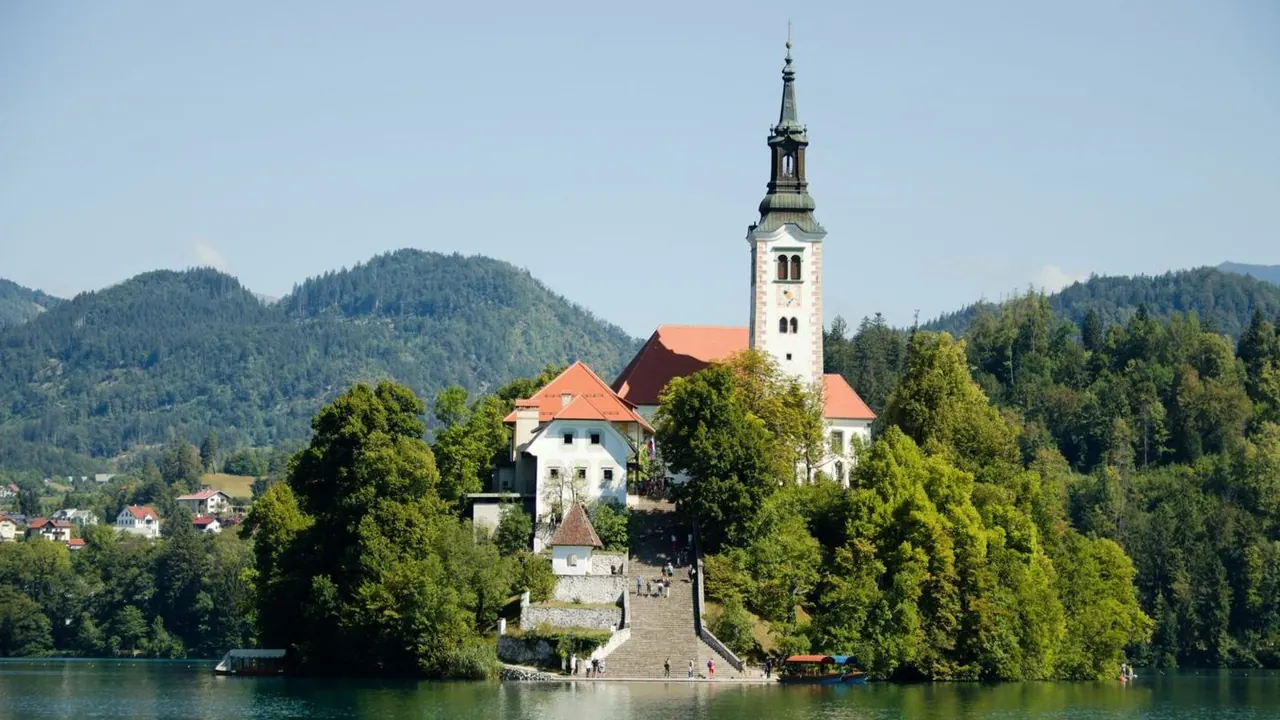
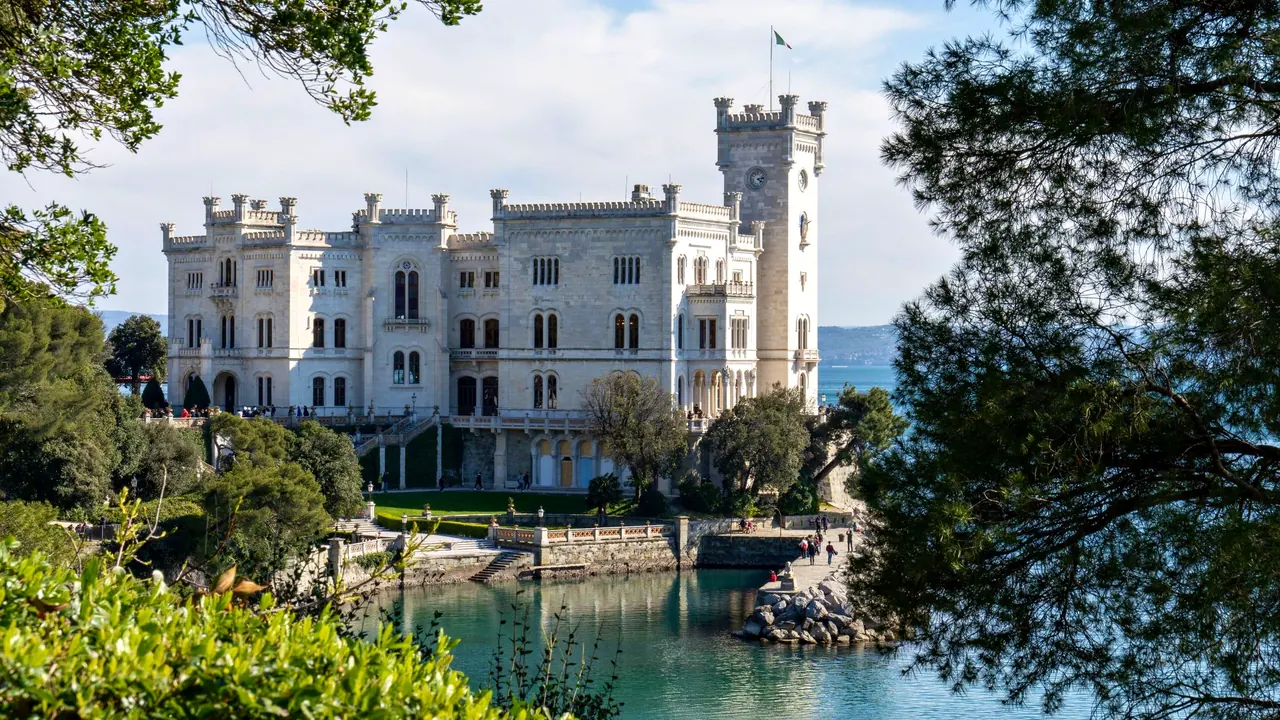
Photos: Bled by Luka Peternel, CC BY-SA 4.0, cropped; Trieste by Tibor Szabo, Pexels License.
Bled or Trieste?
Our verdict in twelve categories, each scored against the same fixed benchmark cities, and the climate month by month, so you can choose for your trip.
Choose Bled for
- nature and the outdoors
- wellness
- families
Bled is the one to choose for a trip built around mountains and water. The Julian Alps begin at the edge of the village, so the lake circuit, the Vintgar Gorge, Lake Bohinj and the trails of Triglav National Park are all close by. Walkers, cyclists, rowers and anyone who wants a calm lakeside base will be happy here. Just don't expect much from dinner, the shops or the evenings.
Choose Trieste for
- live music and the arts
- food and drink
- culture and sights
Travellers who want a proper city around them should pick Trieste. The Habsburg squares, San Giusto hill, Miramare, the opera house, the buffets and the coffee houses give you far more to see, eat and go to in the evening, and the Adriatic at Barcola is part of everyday life all summer. The Karst still has good walking, but this is a place for museums and long dinners first and hill paths second.
Scoreboard
Twelve categories on one fixed scale from 0 to 100. The shaded stretch is the gap between the two.
Your match
Pick a travel style or drag the sliders, and both match scores follow your weighting.
Wins on nature and the outdoors and wellness with your weighting.
Wins on live music and the arts and food and drink with your weighting.
What matters to you?
Category by category
What the scores mean for a trip.
Beaches & swimming
Neither place has sandy beaches. In Bled you swim in an Alpine lake that gets pleasantly warm in high summer, from grassy lidos and wooden piers below the castle or at the shallow Velika Zaka end. The season lasts only about two months, and Bohinj nearby is colder still.
Trieste has the open Adriatic. You climb down ladders from the concrete platforms and pine-shaded lawns at Barcola, use the old bathing establishments with their changing cabins, or head out to the pebble coves at Sistiana, Duino and Grignano. The season is longer and the water is clear. Parents of toddlers may still prefer the gentle shallows at the western end of Bled's lake.
Food & drink
Trieste is much the better place to eat. Its food mixes Italian, Austrian and Slavic cooking: boiled meats with horseradish at buffet counters, jota soup, fried sardoni, presnitz, and a coffee culture with its own words for how you order. Up on the Karst, the osmize pour Vitovska and Terrano next to home-cured ham. Fine dining is thin, but there is plenty that is local.
Bled has one famous cake, the kremšnita custard slice, and after that it is mostly hotel dining rooms, pizzerias and inns serving trout and žlikrofi to day visitors. Food lovers will want to drive out to the valley farm inns or go to Ljubljana.
Culture & sights
Bled has a postcard view rather than a cultural programme. The cliff-top castle with its small museum, the baroque church on the island reached by pletna boat, and the old spa villas along the shore can all be seen in a day.
Trieste needs several days. The grand palaces around Piazza Unità, the canal-side grid of the Borgo Teresiano with the Serbian Orthodox church, the mosaics of San Giusto cathedral, the Roman theatre and the white Miramare Castle show a Habsburg port with layers of history. The Revoltella museum, the great synagogue and the Risiera di San Sabba memorial add art and some hard history.
Nightlife
Neither is a party town, but Trieste at least has an evening scene. People take spritz and local white wine around Piazza Unità and in the lanes of Cavana, students keep a few streets of wine bars going, and in summer the kiosks at Barcola stay open late by the water.
Bled offers a drink on a hotel terrace and a walk along the lit shore, and the village is asleep well before midnight. For anything more you have to go to Ljubljana.
Nature & outdoors
Bled is in the stronger setting. You can walk out of the village onto the lake path, up to the Ojstrica and Osojnica viewpoints, or along the walkways of the Vintgar Gorge. Triglav National Park, Bohinj, the Savica waterfall and the Pokljuka plateau are a short drive away, along with rafting, canyoning, paragliding and skiing in winter.
Trieste's outdoors is limestone and sea. There is the Strada Napoleonica above the gulf, the Rilke Path along the Duino cliffs, climbing in Val Rosandra, and caves such as the Grotta Gigante. It also has something Bled lacks: sailing, and snorkelling or kayaking in the Miramare marine reserve.
Day trips
Both make good bases, and from either one Piran and the Postojna cave make a full day out. Bled's trips head inland: Ljubljana in under an hour, medieval Radovljica and the iron-forging village of Kropa close by, and Carinthia in Austria through the Karawanks tunnel.
Trieste reaches more, and more varied, places. Roman Aquileia, Lombard Cividale, star-shaped Palmanova, Grado's lagoon town and the Collio wine villages are all easy, Ljubljana and Lipica are not far, Croatian Istria works by car, and Venice is a realistic train day.
Good for families
The two are about equally good with children, in different ways. Bled is an outdoor village: rowing a boat to the island to ring the bell, shallow lidos, a flat lake path for pushchairs, and the toboggan run and rope park on Straža hill. On a wet day, though, there is very little to do.
Trieste has more for rainy days, including a small aquarium, a science centre and the huge Grotta Gigante, plus the gardens at Miramare. Its steep, stepped streets and rocky swimming spots make it better for older children than for toddlers.
Getting around
Bled is easy on foot around the lake, and buses and trains link it to Ljubljana and Bohinj. The Alpine sights you came for are another matter: Vršič, Pokljuka and the Soča valley are thinly served, so most visitors hire a car.
Trieste is simpler to manage without one. The centre is flat and compact by the water, and a dense bus network runs up to the Karst and out to Barcola and Miramare. Boats cross the bay to Muggia. The only hard part is the steep climb to San Giusto.
Shopping & style
Nobody goes to either place to shop, but Trieste has at least some browsing: antique and second-hand shops in the old town lanes, ordinary Italian clothing shops around Corso Italia, and good things to take home such as locally roasted coffee and Karst wine.
In Bled the shopping is a few lakeside stalls selling honey, lace and painted beehive panels, plus a supermarket.
Affordability
Trieste is the gentler of the two on your budget. It is fairly priced for northern Italy, a buffet lunch and a coffee at the bar cost little, and swimming at Barcola and walks on the Karst are free.
Bled is Slovenia's showpiece resort, and lakeside rooms and terraces charge for the view, especially in July and August. The trails and lake path are free, but the island boat, the castle and the gorge all charge entry. Staying in Radovljica, Bohinj or at the lakeside campsite brings the cost down.
Live music & performing arts
Trieste has a real stage life. The Teatro Verdi on the waterfront runs opera and ballet seasons, the city keeps up its Habsburg fondness for operetta, and the Politeama Rossetti and a Slovenian-language theatre add drama. Live music outside the theatres is limited.
Bled has no venue of its own, only occasional summer concerts in the castle or churches and folk evenings for tourists. For anything regular, you go to Ljubljana.
Wellness & relaxation
Bled is the better place to slow down. It began as a nineteenth-century health resort, and the mild springs at the eastern end of the lake feed spa pools in the big hotels, some of which let day guests in. Early walks around still water and slow boat rides do the rest, especially outside the summer peak.
Trieste relaxes you in a city way: long mornings in old coffee houses and sunset walks out along the Molo Audace pier. Its spas are limited to hotels and a few day spas.
When should you go?
Pick your month. The climate figures are measured averages, not a forecast.
Bled in July
Trieste in July
Daytime high, °C
Rainfall in the month, mm
Where the figures come from
Bled's temperatures are measured 36 km from the centre, at Klagenfurt.
Bled has no rain gauge within 25 km of the centre, so its rainfall comes from a gridded climate dataset read at the city rather than from a gauge further away.
Temperature and rainfall are climate normals, averaged over the years shown. Bled: 1991-2020 normals, Klagenfurt (35.5 km from centre). Trieste: 1991-2020 normals, Trieste (1.6 km from centre).
Bled has a short summer and a long, cold, wet winter. June to August are the warm months, with highs around 27°C in July, and that is the only stretch when the lake is warm enough to swim. May and September are fine for hiking and walking the lake path, but it rains a lot all year and gets wetter into autumn, peaking at 211mm in November, when the days are also short and dull. From December to February daytime temperatures stay close to freezing, which suits skiing more than sightseeing.
Trieste is warmer and drier in every season. July and August reach 29°C, with the sea at 25°C and the most sunshine of the year, and swimming is comfortable from June into September. That midsummer heat makes the steep streets above the waterfront hard work at midday, so May, June, September and October are better for walking. Winters are mild, around 9°C in January, though late autumn brings the most rain.
Which traveller are you?
On an outdoors trip, Bled is the clear choice. The village sits at the foot of the Julian Alps, with gorge walkways, hut routes in Triglav National Park, rafting on the Sava and winter skiing nearby. Trieste's Karst has good walks but no real mountains.
For a culture and arts trip, Trieste has far more to give. Piazza Unità, the cathedral and castle on San Giusto, the Roman theatre, Miramare and the Revoltella museum fill several days, and the Teatro Verdi has a full opera season. Bled's castle and island church take one morning.
On a food and nightlife trip, Trieste wins easily. Its buffets carving boiled pork, its grand coffee houses, the farmhouse osmize on the Karst and the evening aperitivo along the Canal Grande give your days shape. Bled has kremšnita, hotel dining rooms and an early night.
Before you go
| Measure | Bled | Trieste |
|---|---|---|
| Official language | Slovene | Italian |
| Currency | Euro (EUR) | Euro (EUR) |
| Sockets | CF230 V, 50 Hz | CFL230 V, 50 Hz |
| Driving side | Right | Right |
| Time zone | UTC+1, UTC+2 in summer | UTC+1, UTC+2 in summer |
| Emergency number | 112 | 112 |
| Elevation | 501 m | 2 m |
| Main airport | Ljubljana Jože Pučnik Airport (LJU)31 km from centre32 non-stop destinations | Trieste Airport (TRS)31 km from centre32 non-stop destinations |
| Public holidays this year | 21 days | 13 days |
By the numbers
| Measure | Bled | Trieste |
|---|---|---|
| City population | 4,969 | 198,417 |
| People per km² | 26 | 2,332 |
| Museums within 10 km | 4 | 33 |
| UNESCO World Heritage sites within 50 km | 3 | 5 |
| Swim season, months above 21 °C | - | 4 months |
Where else could you go?
Every comparison below shares a destination with this one, so you can follow Bled or Trieste somewhere new.