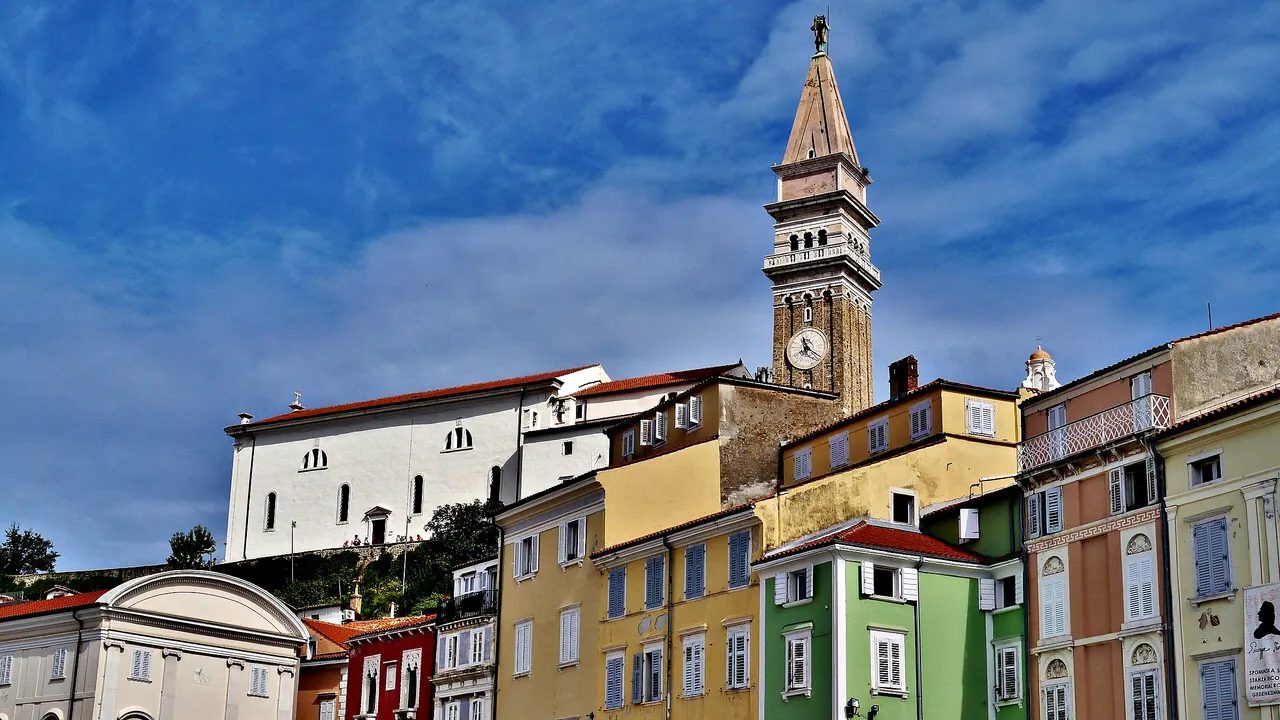
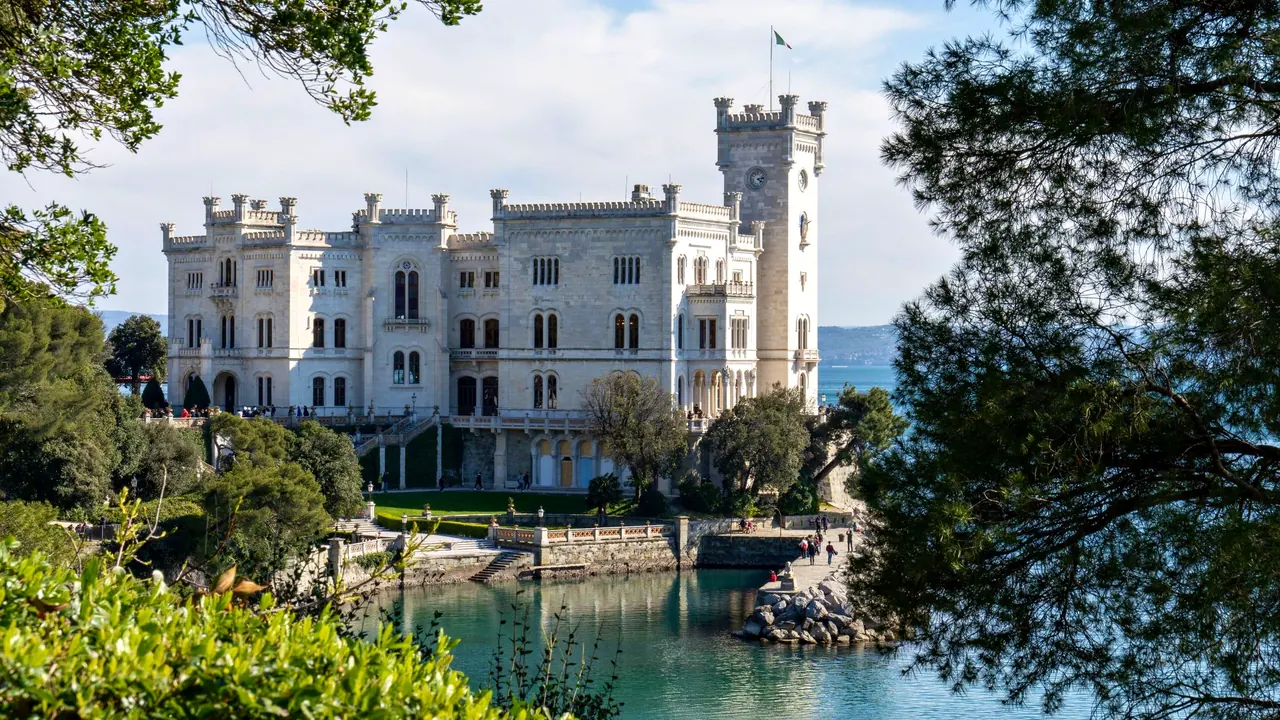
Photos: Piran by Zairon, CC BY-SA 4.0, cropped; Trieste by Tibor Szabo, Pexels License.
Piran or Trieste?
Our verdict in twelve categories, each scored against the same fixed benchmark cities, and the climate month by month, so you can choose for your trip.
Choose Piran for
- wellness
Piran suits travellers who want a small, car-free Venetian town by the water and very little to organise. The days go on swimming off the rocks below the walls, slow meals of grilled fish, and sunsets from the Punta. Next door are the sea-salt spas of Portoroz and the Secovlje pans, and that makes it the better of the two for a restful few days.
Choose Trieste for
- live music and the arts
- food and drink
- culture and sights
Trieste is the choice for anyone who wants a proper city on the same gulf. It has grand Habsburg squares and coffee houses, a working opera house, buffets carving boiled pork, and the Karst plateau rising straight behind the streets for walks and caves. It gives you more to see, eat and do. It costs a little less too, and it rewards a longer stay than Piran can fill.
Scoreboard
Twelve categories on one fixed scale from 0 to 100. The shaded stretch is the gap between the two.
Your match
Pick a travel style or drag the sliders, and both match scores follow your weighting.
Wins on wellness with your weighting.
Wins on live music and the arts and food and drink with your weighting.
What matters to you?
Category by category
What the scores mean for a trip.
Beaches & swimming
Neither place has a real beach. In both you swim off concrete and rock and climb down ladders into clear water. Trieste has more of it, though. Barcola is a long seafront with pine-shaded lawns where half the city spends summer afternoons, and there are old bathing establishments in town and pretty pebble coves at Sistiana, Duino and Grignano further up the coast.
Piran's swimming is lovely but compact: the ledges below the walls, the Punta and the little pebble cove at Fiesa. Its one advantage is a sandy option close by, the small artificial beach at Portoroz, which young children may welcome.
Food & drink
Trieste eats far more distinctively. Its buffets carve boiled pork and ham from steaming pots, jota sits next to marinated sardoni and Central European cakes, and the coffee has a vocabulary of its own. Up on the Karst, farmhouse osmize pour Vitovska and Terrano.
Piran keeps to seafood by the water: squid, mussels and scampi buzara in konobas whose menus repeat one another. It is simple and good, seasoned with salt from the local pans and washed down with Malvazija or Refosk.
Culture & sights
Piran's old town is itself the attraction: Tartini Square, the campanile of St George and the walls on the ridge, with small museums that a single day covers comfortably. Trieste has the weight of a former imperial port. There is the vast Piazza Unità facing the sea, the Borgo Teresiano along the Canal Grande, the cathedral and castle on San Giusto and a Roman theatre.
Beyond the centre, Trieste adds Miramare Castle, the Revoltella museum, a great synagogue and the sobering Risiera di San Sabba. That gives several days of sightseeing where Piran gives one.
Nightlife
In Piran an evening is a glass of wine at sunset on Tartini Square or the Punta, and then the town goes to sleep. For anything later you have to cross to the casino and the handful of summer clubs at Portoroz.
Trieste gives you more of an evening. Aperitivo spreads across Piazza Unità, the Canal Grande and the lanes of Cavana, the students keep a few streets of wine bars and pubs going, and in summer the kiosks along Barcola stay open late. It is still a long dinner and a drink by the sea rather than a night of clubbing.
Nature & outdoors
Trieste has wilder country closer at hand. The Karst rises straight behind the city, and from it you can take the Strada Napoleonica high above the gulf, hike and climb in the Val Rosandra gorge, walk the Rilke Path near Duino or go underground in the Grotta Gigante. On the water there is serious sailing and a marine reserve at Miramare, and the Julian Alps are in reach for mountain days.
Piran's outdoors is gentler and flatter. You can walk and paddle below the flysch cliffs of Strunjan, watch wading birds at the Secovlje salt pans, or cycle the Parenzana through olive groves. Both towns reach the Škocjan caves easily.
Day trips
Both make excellent bases on the same three-country corner, and each is a day trip from the other. The difference is direction. From Piran the pull is south into Croatian Istria, to Rovinj, Porec and the hill towns of Motovun and Groznjan, with summer boats across to Venice.
Trieste looks west into Friuli: Roman Aquileia, star-shaped Palmanova, Cividale, Grado and the Collio wine villages. Venice is reachable by train, while from Piran most excursions need a car.
Good for families
Both are safe and calm with children, and neither has much built for them. Piran suits younger ones better, with its car-free lanes, flat seafront, small aquarium and the shallow sand at Portoroz. Trieste suits older children. It has the huge Grotta Gigante, the gardens at Miramare, a hands-on science centre and boats across the bay, though its steep stepped streets are hard work with a pushchair.
Getting around
Piran is small enough to cross on foot in a quarter of an hour, with the car left at the edge of town. Leaving it is the problem: there is no railway, and the buses to Istria and the Karst are slow.
Trieste is easier to use as a base. Its flat centre is walkable, a dense bus network climbs to the Karst and runs out to Barcola and Miramare, boats cross to Muggia, and trains connect onward. A car only earns its keep for the wine villages and the border trips.
Shopping & style
In Piran the shopping is a few galleries and craft shops in the lanes and souvenir stalls along the harbour. The thing worth buying is salt flower from the Secovlje pans, with a bottle of coastal wine beside it.
Trieste has more to browse. There are ordinary Italian clothing and shoe shops around Corso Italia, antique and second-hand shops in the old-town lanes that recall its merchant past, and coffee from the city's roasters to take home. It has no luxury or flagship shopping, so plan a trip around something else.
Affordability
Trieste is the easier of the two on the budget. A coffee at the bar, a plate at a buffet and city buses all cost little, and rooms stay reasonable for most of the year outside the regatta and high summer.
Piran charges a seasonal premium. Old-town rooms in July and August are scarce and dear, and the harbour restaurants charge for the view. Staying in Portoroz or coming out of season brings it back to a fair level.
Live music & performing arts
Here the gap is wide. Trieste has the Teatro Verdi on the waterfront with a full opera and ballet season, a rare Habsburg fondness for operetta, plays and musicals at the Politeama Rossetti and a Slovenian-language theatre. Piran's music centres on summer concerts honouring Tartini in churches, the monastery cloister and the main square, and there is little to attend outside the warm months.
Wellness & relaxation
Piran wins this one clearly. Portoroz grew up as a spa resort with seawater pools and brine baths, the Secovlje salt pans have an open-air thalasso spa where you lie in salt mud among the lagoons, and Strunjan has a seawater health resort.
Trieste's calm comes from its pace instead: long sittings in old coffee houses and sunset strolls on the Molo Audace. For real treatments, though, you have to leave the city, and Piran is the obvious place to go.
When should you go?
Pick your month. The climate figures are measured averages, not a forecast.
Piran in July
Trieste in July
Daytime high, °C
Rainfall in the month, mm
Temperature and rainfall are climate normals, averaged over the years shown. Piran: 2005-2020 (sunshine 1991-2020, rainfall 1991-2020) normals, Portoroz (1.2 km from centre). Trieste: 1991-2020 normals, Trieste (1.6 km from centre).
The two towns lie less than an hour apart on the same gulf, and their weather is almost the same. Piran runs a degree warmer in high summer, around 30°C in July. From June to September the sea is warm enough to swim in, at 25°C in July and August. Those are the sunniest months, fine at the water but hard work on the steep climbs to St George's in Piran or San Giusto in Trieste.
May and June are the best months for walking and sightseeing: warm, bright and not yet heavy. September is still warm and the sea is still good, but it starts the wet stretch. September, October and November each bring more than 110mm of rain, so pack for showers. Winter highs sit around 10°C. Piran goes very quiet then, while Trieste carries on as a working city, though the cold Bora can make its winter days harsh.
Which traveller are you?
On a culture and arts trip, Trieste is the clear pick. It has Habsburg squares, the San Giusto cathedral mosaics, Miramare Castle and a real opera and ballet season at the Teatro Verdi. Piran's lovely old town and its summer Tartini concerts fill a day or two.
For a relaxing and wellness trip, Piran is the better choice. It has seawater pools and salt-mud treatments in Portoroz, an open-air thalasso spa among the Secovlje lagoons, and car-free lanes made for slowing down. Trieste offers coffee-house calm but only hotel spas.
On a food and nightlife trip, Trieste gives you far more. There are the buffets and coffee rituals, osmize on the Karst, and aperitivo spread across Piazza Unità, the Canal Grande and Cavana. Piran offers good seafood and a quiet glass of wine on its square.
Before you go
| Measure | Piran | Trieste |
|---|---|---|
| Official language | Slovene | Italian |
| Currency | Euro (EUR) | Euro (EUR) |
| Sockets | CF230 V, 50 Hz | CFL230 V, 50 Hz |
| Driving side | Right | Right |
| Time zone | UTC+1, UTC+2 in summer | UTC+1, UTC+2 in summer |
| Emergency number | 112 | 112 |
| Elevation | 7 m | 2 m |
| Main airport | Trieste Airport (TRS)34 km from centre32 non-stop destinations | Trieste Airport (TRS)31 km from centre32 non-stop destinations |
| Public holidays this year | 21 days | 13 days |
By the numbers
| Measure | Piran | Trieste |
|---|---|---|
| City population | 3,787 | 198,417 |
| People per km² | 85 | 2,332 |
| Museums within 10 km | 5 | 33 |
| UNESCO World Heritage sites within 50 km | 4 | 5 |
| Swim season, months above 21 °C | 4 months | 4 months |
Where else could you go?
Every comparison below shares a destination with this one, so you can follow Piran or Trieste somewhere new.