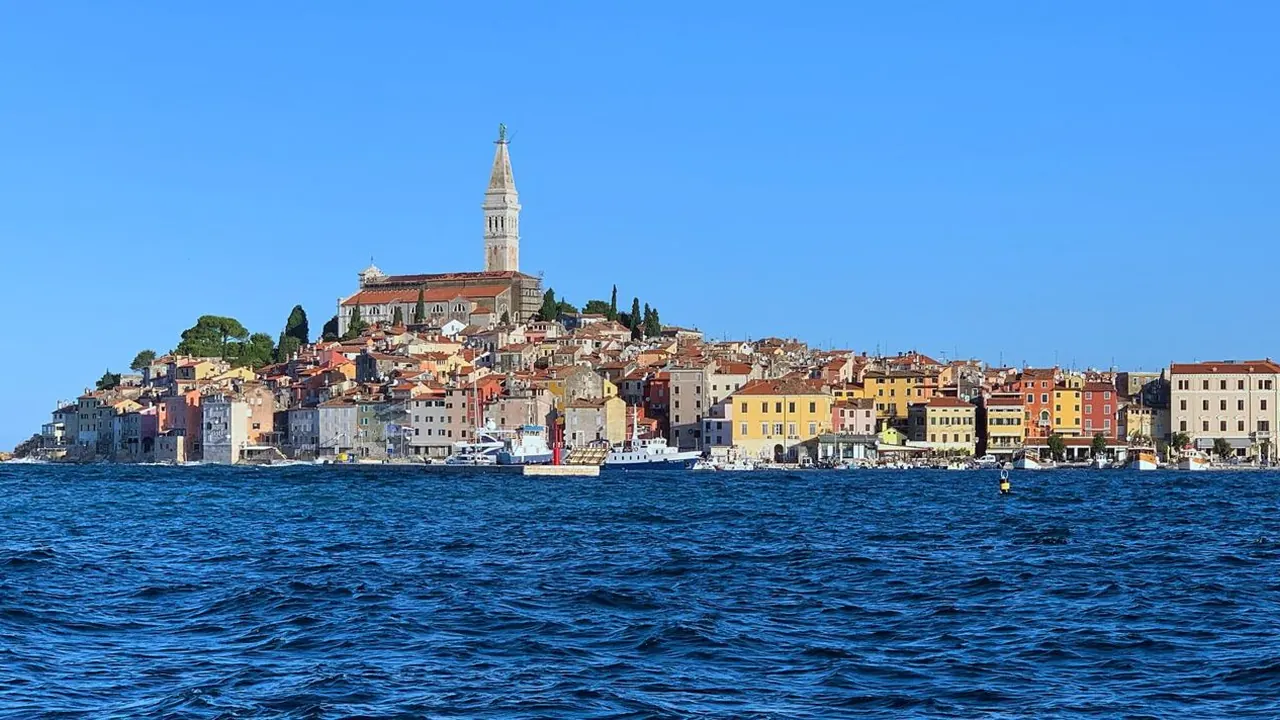
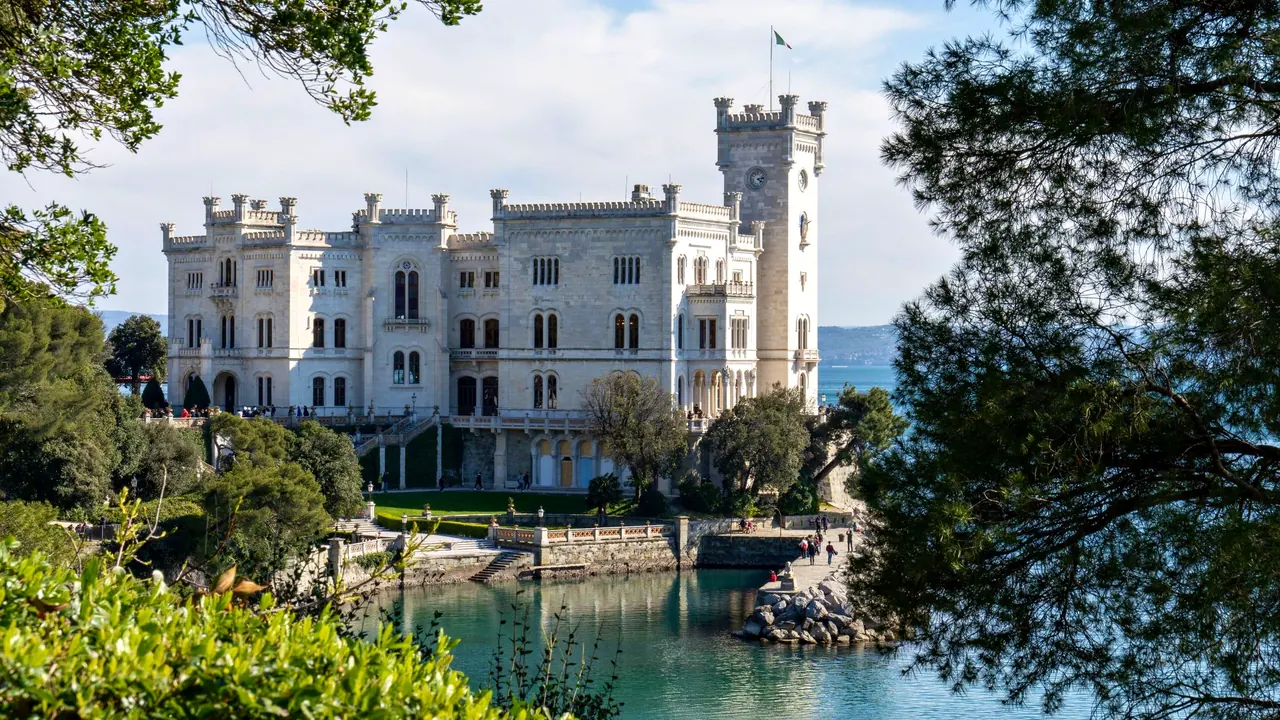
Photos: Rovinj by Vyacheslav Bukharov, CC BY-SA 4.0, cropped; Trieste by Tibor Szabo, Pexels License.
Rovinj or Trieste?
Our verdict in twelve categories, each scored against the same fixed benchmark cities, and the climate month by month, so you can choose for your trip.
Choose Rovinj for
- beaches
- wellness
Rovinj suits a slow summer week by the water. You swim off the rocks below the old town and in the Golden Cape pines, take taxi boats to the islands, eat long fish dinners, and drive to Pula, Porec and the hill towns of inland Istria. It is a compact, picture-book town rather than a place with a lot to see or do after dark, and it costs more in high summer.
Choose Trieste for
- live music and the arts
- culture and sights
- prices
Choose Trieste if you want a real city with the sea attached. It has the grander sights, from Piazza Unità to Miramare, plus an opera house with a full season, buffets and coffee houses, buses that make a car optional and easier prices. The Karst and day trips into three countries are right on the doorstep. The trade-off is that swimming means the concrete steps at Barcola rather than coves.
Scoreboard
Twelve categories on one fixed scale from 0 to 100. The shaded stretch is the gap between the two.
Your match
Pick a travel style or drag the sliders, and both match scores follow your weighting.
Wins on beaches and wellness with your weighting.
Wins on live music and the arts and culture and sights with your weighting.
What matters to you?
Category by category
What the scores mean for a trip.
Beaches & swimming
Neither has sand, but Rovinj gives a swimmer more. Limestone ledges and pebble coves run for kilometres under the pines of the Golden Cape, you can slip into the sea right below the old town walls, and taxi boats reach quieter coves on St Catherine and Red Island.
Trieste's sea works like a city lido. People lay towels on the concrete steps and lawns of Barcola, climb down ladders into the water or use the old bathing establishments with their changing cabins. The prettier coves at Sistiana, Duino and Grignano mean a trip along the coast.
Food & drink
Trieste has the more distinctive table. Its buffets carve boiled pork to eat with horseradish and sauerkraut, and alongside them come jota, sardoni and Central European cakes, all reflecting the city's mix of Italian, Austrian and Slavic cooking. Its coffee culture is a reason to visit in its own right, and the osmize on the Karst add farmhouse wine and cured meats.
Rovinj eats well within narrower limits: fish, scampi buzara, truffle pasta and Istrian oil and wine, with some of the best meals in the country konobas. Many harbour menus are written for passing visitors, and cheap everyday eating is harder to find than at a Trieste buffet counter.
Culture & sights
In Rovinj the old town is the sight. Its pastel Venetian houses climb to St Euphemia, and with the Grisia lane and the Batana House you can see it all in an afternoon.
Trieste has a city's worth of history. Piazza Unità and the Borgo Teresiano show Habsburg ambition, and San Giusto pairs a cathedral with Byzantine-style mosaics and a castle. Miramare, the great synagogue, the Revoltella and the Risiera di San Sabba memorial can fill several days.
Nightlife
Neither is a party town: in both, evenings mean dinner and a drink. Trieste still has more going on. Aperitivo around Piazza Unità and the Canal Grande and student wine bars keep evenings going all year, and in summer the kiosks at Barcola stay open late. In Rovinj the night means a sunset cocktail on the rocks and a few waterfront bars, and outside summer it largely shuts down.
Nature & outdoors
Trieste has the more dramatic setting. The Karst rises straight up behind the city, with the Strada Napoleonica high above the gulf, the Rilke Path along the Duino cliffs, the Val Rosandra gorge and huge caves like the Grotta Gigante. The Julian Alps are close enough for days in the mountains.
Rovinj's outdoors is gentler and centred on the sea. There are flat paths through the Golden Cape forest park, kayaking and diving around the archipelago, and boat trips up the Lim Fjord, but no high ground nearby.
Day trips
Both are good bases, but from Trieste you can go further, and more easily. Aquileia, Cividale, Palmanova, Udine and the Collio wine country are all in Friuli. Across the Slovenian border are Piran, Ljubljana and the Postojna cave, and Venice is a long but realistic day by train.
Rovinj's range is Istria: Roman Pula, the Euphrasian Basilica at Porec, the hill towns of Motovun and Groznjan, and the Brijuni islands. It is a rich circuit, but almost all of it needs a car.
Good for families
For families the two are much alike. Both are safe and calm, both swim from rock and concrete rather than sand, and both are steep in places.
What differs is the kind of trip. Rovinj is a resort town, with family campsites, pools, playgrounds and boat trips to the islands, which suits younger children. Trieste has outings for older ones: the Grotta Gigante, the gardens at Miramare, an aquarium and a hands-on science centre.
Getting around
Rovinj is easy as long as you stay in town. The car-free old town, the promenade and the swimming rocks are all within walking distance. Beyond it there is no railway, only intercity buses, so the hinterland means a car.
Trieste is easier to get around. The flat centre is walkable, a dense bus network runs out to Barcola, Miramare and the Karst, and boats cross the bay to Muggia. You only need a car for the wine country and trips across the border. The one real effort is the steep climb to San Giusto.
Shopping & style
Trieste has the slight edge, though shopping is a sideline in both. In Rovinj the most interesting browsing is in the galleries and artists' studios along Grisia. What people take home comes from the region: truffles, Istrian olive oil, Malvazija and Teran. There is little choice outside summer.
Trieste adds ordinary Italian clothing and shoe shops around Corso Italia and antique and second-hand shops in the old town lanes. The best things to pack are edible: coffee from the city's roasters, Karst wine and presnitz.
Affordability
Trieste is easier on the budget. Buffet lunches and coffee at the bar cost little, buses are cheap, rooms are reasonable for most of the year, and the waterfront, the cathedral hill and Barcola are free.
Rovinj is one of the pricier stops on the Croatian coast. Harbour restaurants charge for the view, and fish sold by weight adds up quickly. Private apartments, campsites and travelling in late spring or September soften the cost.
Live music & performing arts
This is one of the widest gaps between the two. Trieste has the Teatro Verdi with a full season of opera and ballet, a long attachment to operetta that is rare in Italy, the Politeama Rossetti and a Slovenian-language theatre, as well as summer concerts in the castle courtyard on San Giusto.
Rovinj offers summer concerts in St Euphemia, music on the squares and occasional performances of bitinada singing, but very little outside the season. The nearest big stage is the Roman arena at Pula.
Wellness & relaxation
Neither is a spa destination, and both are better at slowing you down than at pampering you. Rovinj's calm is a resort's. It means late-afternoon swims off the rocks and slow walks under the Golden Cape pines in May, June or September, and the bigger shoreline hotels open their pools, saunas and treatments to outside guests. In July and August the old town fills up, so for quiet you have to head away from the harbour.
Trieste winds down as a city does, with coffee and conversation rather than sun loungers. You can spend an unhurried morning at a marble table in one of the grand old coffee houses, then walk out along the Molo Audace into the gulf as the light goes. Apart from a few hotel and day spas there is little to book, and for real thermal baths you have to leave town.
When should you go?
Pick your month. The climate figures are measured averages, not a forecast.
Rovinj in July
Trieste in July
Daytime high, °C
Rainfall in the month, mm
Where the figures come from
Rovinj's temperatures are measured 64 km from the centre, at Trieste.
Rovinj has no rain gauge within 25 km of the centre, so its rainfall comes from a gridded climate dataset read at the city rather than from a gauge further away.
Temperature and rainfall are climate normals, averaged over the years shown. Rovinj: 1991-2020 normals, Trieste (63.7 km from centre). Trieste: 1991-2020 normals, Trieste (1.6 km from centre).
The two towns have almost the same temperatures and sunshine. Daytime highs climb from 9°C in January to 29°C in July and August, and the sunniest weeks fall in midsummer. In both, the sea is warm enough for swimming from June to September and reaches about 25°C at its peak. July and August are hot for climbing Rovinj's cobbles or the steps up to San Giusto, so May, June and September are the comfortable months for walking.
Rain is the real difference. Trieste is the wetter of the two all year, most noticeably in late spring: May brings about 90mm there against 59mm in Rovinj. Both turn wet from September to November. Winter is cool and grey in each, and in Trieste the cold Bora wind can make it raw.
Which traveller are you?
For a beach and sun trip, choose Rovinj. Kilometres of rocky coves and pine shade along the Golden Cape, clear water below the old town walls and taxi boats to quieter island coves make swimming the centre of the day. Trieste's Barcola is a city promenade.
On a culture and arts trip, Trieste is the clear choice. Its Habsburg squares, San Giusto hill, Miramare and the Revoltella fill several days, and evenings can end at the Teatro Verdi for opera or ballet. Rovinj has nothing on that scale.
On a tight budget, Trieste makes your money go further. Buffet lunches, cheap buses and free pleasures like swimming at Barcola and walking on the Karst keep costs down. Rovinj's harbour restaurants and high-summer rooms are priced like a sought-after resort.
Before you go
| Measure | Rovinj | Trieste |
|---|---|---|
| Official language | Croatian | Italian |
| Currency | Euro (EUR) | Euro (EUR) |
| Sockets | CF230 V, 50 Hz | CFL230 V, 50 Hz |
| Driving side | Right | Right |
| Time zone | UTC+1, UTC+2 in summer | UTC+1, UTC+2 in summer |
| Emergency number | 112 | 112 |
| Elevation | 0 m | 2 m |
| Main airport | Pula Airport (PUY)31 km from centre34 non-stop destinations | Trieste Airport (TRS)31 km from centre32 non-stop destinations |
| Public holidays this year | 14 days | 13 days |
By the numbers
| Measure | Rovinj | Trieste |
|---|---|---|
| City population | 12,968 | 198,417 |
| People per km² | - | 2,332 |
| Museums within 10 km | 1 | 33 |
| UNESCO World Heritage sites within 50 km | 1 | 5 |
| Swim season, months above 21 °C | 4 months | 4 months |
Where else could you go?
Every comparison below shares a destination with this one, so you can follow Rovinj or Trieste somewhere new.