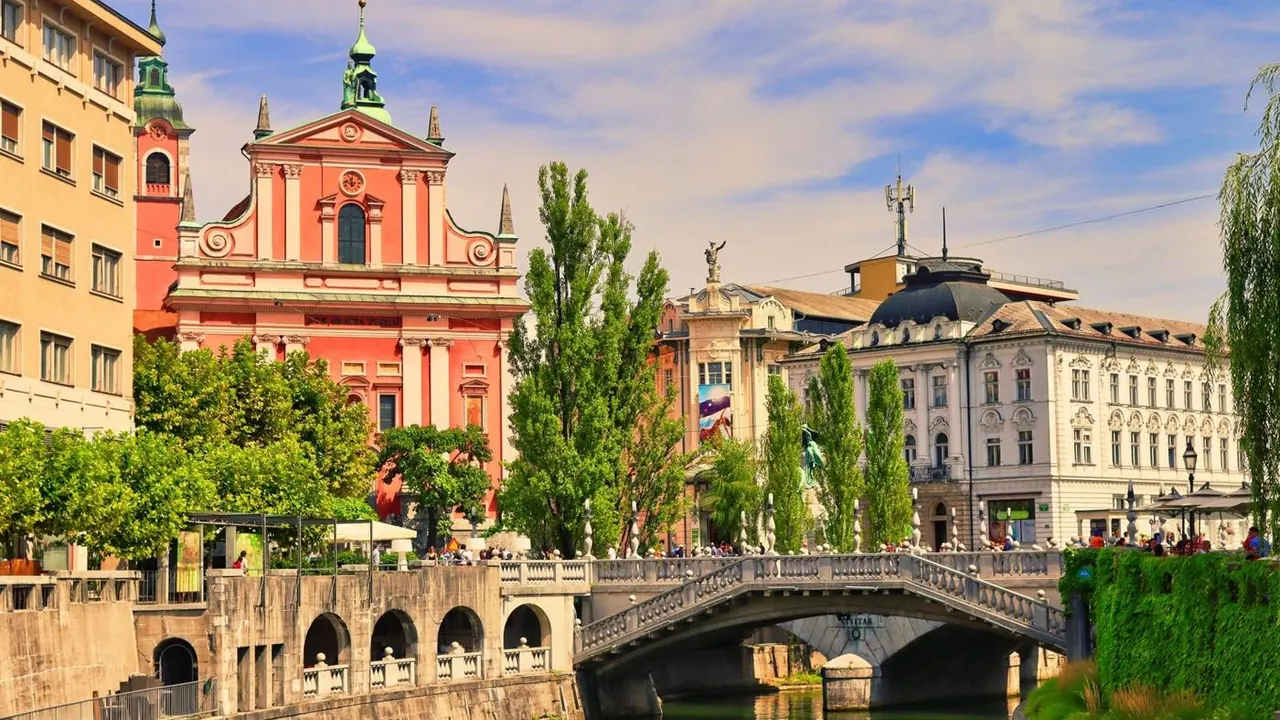
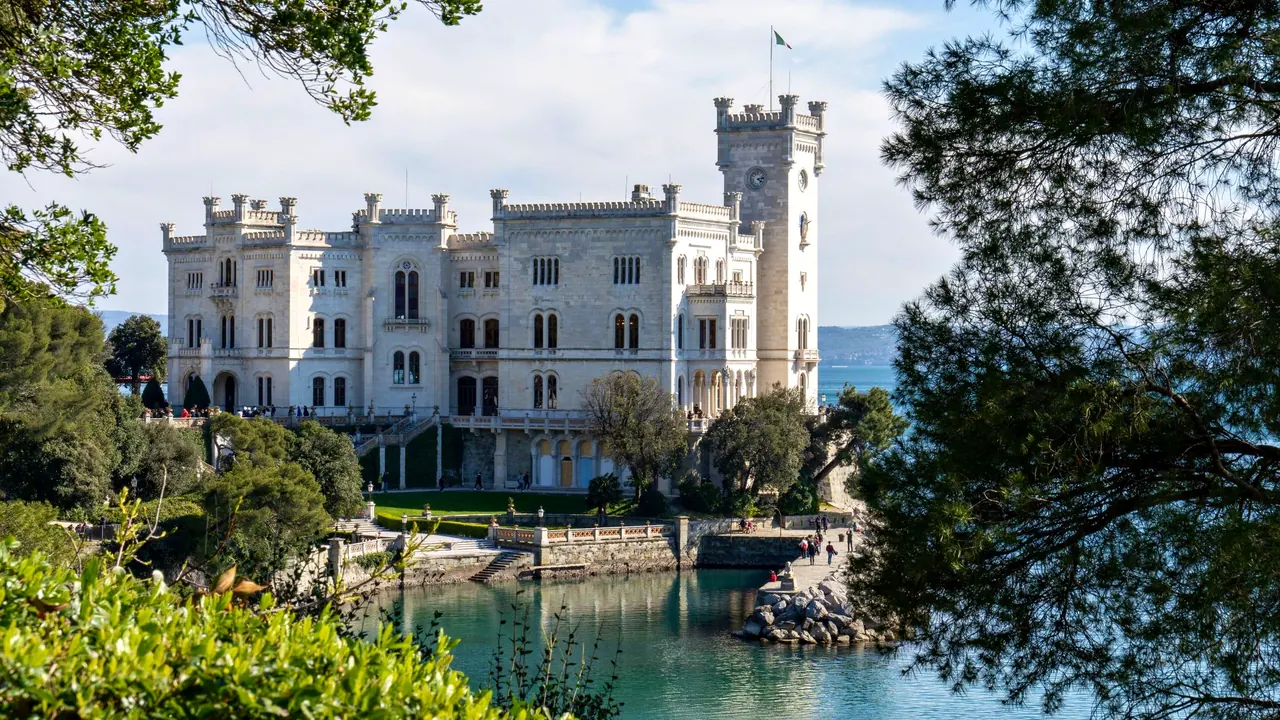
Photos: Ljubljana by detait, Pexels License; Trieste by Tibor Szabo, Pexels License.
Ljubljana or Trieste?
Our verdict in twelve categories, each scored against the same fixed benchmark cities, and the climate month by month, so you can choose for your trip.
Choose Ljubljana for
- nature and the outdoors
- nightlife
- getting around
Ljubljana suits travellers who want mountains, lakes and caves close by and a small, car-free capital to come back to in the evening. Bled, the Julian Alps and the Kamnik-Savinja Alps are all near, the riverside terraces have more life after dark than anything in Trieste, and most of Slovenia can be seen from this one base.
Choose Trieste for
- beaches
- culture and sights
- food and drink
Choose Trieste if you want the sea to be part of every day and a grander city to explore. Swimming off the Barcola platforms, Habsburg squares facing the gulf, buffet counters and old coffee houses give it more to do within the city itself. The Karst plateau and the towns of Friuli are close by, and outside high summer it is the milder of the two.
Scoreboard
Twelve categories on one fixed scale from 0 to 100. The shaded stretch is the gap between the two.
Your match
Pick a travel style or drag the sliders, and both match scores follow your weighting.
Wins on nature and the outdoors and nightlife with your weighting.
Wins on beaches and culture and sights with your weighting.
What matters to you?
Category by category
What the scores mean for a trip.
Beaches & swimming
The gap here is wide. Ljubljana is inland, so swimming means the Sava in summer, the lakes at Bled and Bohinj, or a day out to Piran on the coast.
Trieste has the Adriatic on its doorstep. Neither city has sand, but in Trieste the sea is part of everyday life from June to September. Residents climb down ladders from the Barcola promenade, there are old-style bathing establishments near the centre, and prettier pebble coves lie at Sistiana and Duino.
Food & drink
The two cooking traditions share roots, and jota bean stew appears in both, but Trieste's food has more character. Its buffet counters carve boiled pork to eat with horseradish, it has its own coffee vocabulary from its Habsburg port days, and there are Adriatic sardoni and farmhouse osmize on the Karst that open for a few weeks at a time.
Ljubljana's food is more homely: Carniolan sausage, štruklji and žganci in gostilna inns, and a Central Market full of Alpine cheeses and pumpkin-seed oil. Its real strength is wine by the glass from Vipava, Brda and Styria, including the orange wines. Both cities have only a narrow range of restaurants.
Culture & sights
Trieste has more to see. Piazza Unità opens onto the sea, and there are the Canal Grande and the Borgo Teresiano, the cathedral and castle on San Giusto hill, a Roman theatre, Miramare Castle and the Risiera di San Sabba memorial. Together they fill more days and carry more history.
Ljubljana is smaller and feels like a single design: Plečnik's bridges, colonnades and library, an old town of baroque and Secession buildings, and the castle on its hill. The charm is in the townscape as a whole, with Metelkova's murals as an alternative streak, but its museums are modest and two or three days are enough.
Nightlife
Neither city is made for a big night out, but Ljubljana has more going on after dark. Students fill the terraces along both banks of the Ljubljanica, and Metelkova's small, scruffy clubs in the former barracks stay open late at weekends.
Trieste's evenings are built around the aperitivo: a spritz on Piazza Unità or along the Canal Grande, and in summer the bars on the Barcola seafront. With an older population and few clubs, it is the quieter of the two, especially on winter weeknights.
Nature & outdoors
Both cities have the outdoors close, but Ljubljana has more of it and on a bigger scale. Within about an hour lie Triglav National Park, the Kamnik-Savinja Alps with Velika Planina and the Vintgar gorge. Further west there is rafting on the Soča, and small ski resorts open in winter.
Trieste's landscape is the sea and the Karst: the Strada Napoleonica above the gulf, the Rilke Path at Duino, the Val Rosandra gorge and the Grotta Gigante. It also offers what Ljubljana cannot, with sailing on the gulf and snorkelling and kayaking in the Miramare marine reserve. You can reach the Škocjan Caves from either city.
Day trips
Both cities are excellent bases, and the trips from each overlap. Piran, Lipica and Postojna can be reached from either, and each city makes a day trip from the other. The real difference is direction. Ljubljana looks inland to the Alps, with Bled, Škofja Loka, Radovljica and the old mining town of Idrija, and it also reaches Zagreb.
Trieste looks west and south. It has Roman Aquileia, star-shaped Palmanova, Cividale, Grado and the Collio wine country close by, Istria by car, and Venice by train, a long day but a realistic one.
Good for families
Both cities are safe and calm, and neither is built around children. Ljubljana is easier with a pushchair because its centre is flat and mostly closed to cars. Children remember the castle funicular and the Dragon Bridge, and the city also has a small zoo and a puppet theatre that young children can follow without the language.
Trieste has the aquarium that Ljubljana lacks, as well as the Grotta Gigante and the gardens of Miramare, which suit older children best. Its steep, stepped streets are harder going with toddlers, and swimming is off rocks and concrete rather than in sandy shallows.
Getting around
In both cities the centre is best seen on foot, and neither has a metro. Ljubljana's centre is flatter and mostly pedestrianised, with bike-share and electric shuttles, so visitors hardly need the buses.
Trieste's waterfront is flat too, but the climb to San Giusto is steep, so its dense bus network does more of the work, and boats cross the bay to Muggia. Away from the city, Ljubljana relies on intercity buses or a hired car.
Shopping & style
Shopping plays only a small part in either city. Trieste has the ordinary Italian clothing and shoe shops around Corso Italia and antique shops in the lanes of the old town. Ljubljana's best buys are local crafts and produce, such as Idrija lace, gingerbread hearts and salt from the coastal pans, and it has a Sunday flea market on the embankment. From Trieste, the things worth taking home are coffee, Karst wine and presnitz.
Affordability
The two cities cost much the same, middling by European standards. In Ljubljana you spend almost nothing on transport because you walk everywhere, and the set lunch menus at the inns are good value, but central rooms in summer are priced like Western Europe. In Trieste, buffet meals, coffee at the bar and free swimming at Barcola keep daily spending down, though rooms get harder to find around the Barcolana regatta and in high summer.
Live music & performing arts
Both cities are good for a night at the opera or a concert, but neither has a scene to plan a trip around. Trieste's Teatro Verdi, with its opera, ballet and the operetta inherited from the Habsburgs, gives it a slight edge for opera lovers. Ljubljana is stronger on orchestral music, with the Slovenian Philharmonic, Cankarjev dom and the summer Ljubljana Festival in Plečnik's Križanke courtyard, and there are alternative gigs at Metelkova.
Most theatre in Ljubljana is in Slovene. In Trieste, the Politeama Rossetti stages Italian plays and touring musicals.
Wellness & relaxation
Neither city has a bathing culture of its own, so relaxing in either comes down to the slow pace. In Ljubljana that means a quiet, green, car-free centre and long afternoons in riverside cafés, with a large water park and sauna complex on the edge of town and Slovenia's thermal spa towns within about an hour. In Trieste it means long sittings in old coffee houses and sunset walks along the Molo Audace, with the sea as the best way to unwind and only hotel and day spas beyond that.
When should you go?
Pick your month. The climate figures are measured averages, not a forecast.
Ljubljana in July
Trieste in July
Daytime high, °C
Rainfall in the month, mm
Temperature and rainfall are climate normals, averaged over the years shown. Ljubljana: 1991-2020 (sunshine 1981-2010, rainfall 1981-2010) normals, Ljubljana / Bezigrad (1.9 km from centre). Trieste: 1991-2020 normals, Trieste (1.6 km from centre).
Both cities are at their warmest in July and August, when daytime highs reach the high twenties, and both are pleasant for walking in May, June and September. The rest of the year is where they differ. Ljubljana's winters are properly cold, with highs of around 4°C in December and January, and it is also the wetter city. Its rain builds through the summer and is heaviest in September and October. Trieste stays several degrees milder through the winter and gets noticeably less rain, though autumn is its wettest season too.
For swimming, Trieste's sea is warm enough from June to September and reaches around 25°C in July and August. Those are also its sunniest months, with around 300 hours of sun in July. Ljubljana has no sea, so lake swimming at Bled is for high summer only. Late spring and early autumn are its best months for hiking.
Which traveller are you?
On a beach and sun trip, Trieste is the clear choice. The Adriatic is a short bus ride away at Barcola, the coves at Sistiana and Duino are close and the summers are sunnier. From Ljubljana, the coast is a day trip rather than part of the daily routine.
For an outdoors trip, Ljubljana is the better base. Triglav National Park, rafting on the Soča and the Kamnik-Savinja Alps are all within easy reach, and Šmarna Gora and the wooded hills of Tivoli are in town. Trieste's Karst walks are good but smaller in scale.
On a culture and arts trip, Trieste has more to offer. Piazza Unità, the mosaics in San Giusto cathedral, Miramare Castle and a Roman theatre make a broader set of sights, and the Teatro Verdi's opera season fills the evenings. Ljubljana's Plečnik townscape is charming but takes only two or three days.
Before you go
| Measure | Ljubljana | Trieste |
|---|---|---|
| Official language | Slovene | Italian |
| Currency | Euro (EUR) | Euro (EUR) |
| Sockets | CF230 V, 50 Hz | CFL230 V, 50 Hz |
| Driving side | Right | Right |
| Time zone | UTC+1, UTC+2 in summer | UTC+1, UTC+2 in summer |
| Emergency number | 112 | 112 |
| Elevation | 309 m | 2 m |
| Main airport | Ljubljana Jože Pučnik Airport (LJU)20 km from centre32 non-stop destinations | Trieste Airport (TRS)31 km from centre32 non-stop destinations |
| Public holidays this year | 21 days | 13 days |
By the numbers
| Measure | Ljubljana | Trieste |
|---|---|---|
| City population | 284,293 | 198,417 |
| People per km² | 1,736 | 2,332 |
| Museums within 10 km | 14 | 33 |
| UNESCO World Heritage sites within 50 km | 3 | 5 |
| Swim season, months above 21 °C | - | 4 months |
Where else could you go?
Every comparison below shares a destination with this one, so you can follow Ljubljana or Trieste somewhere new.