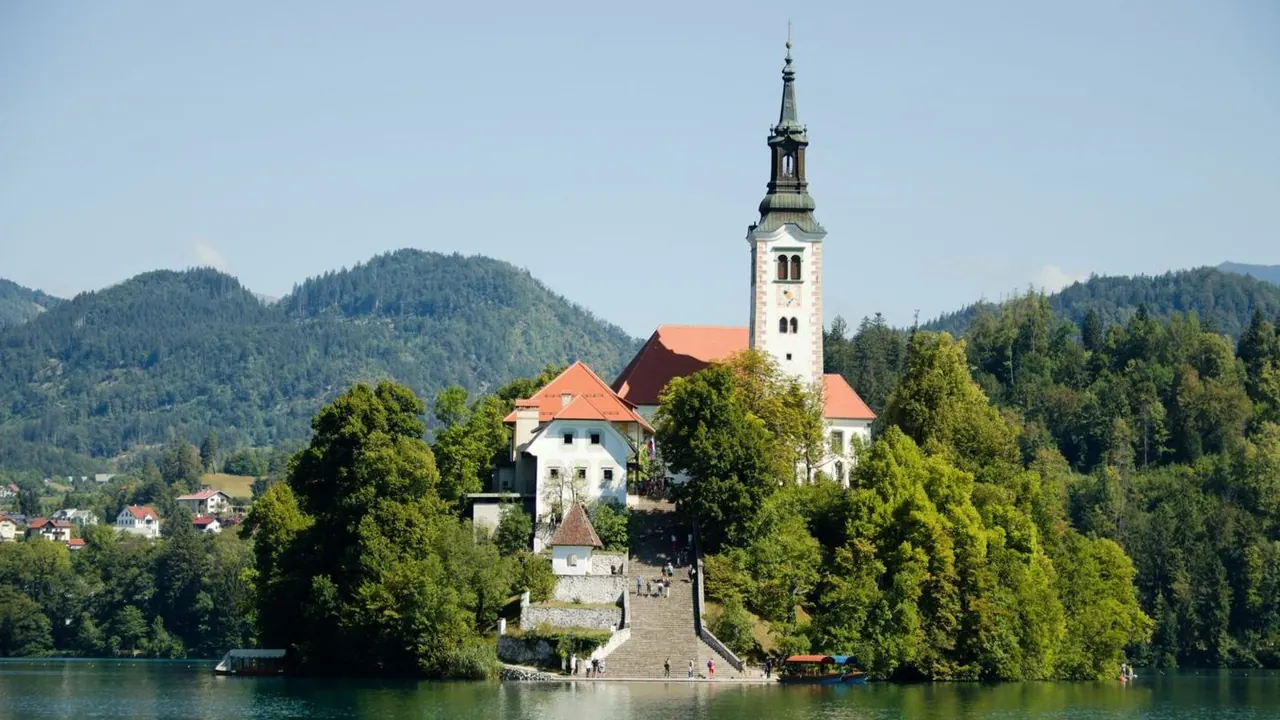
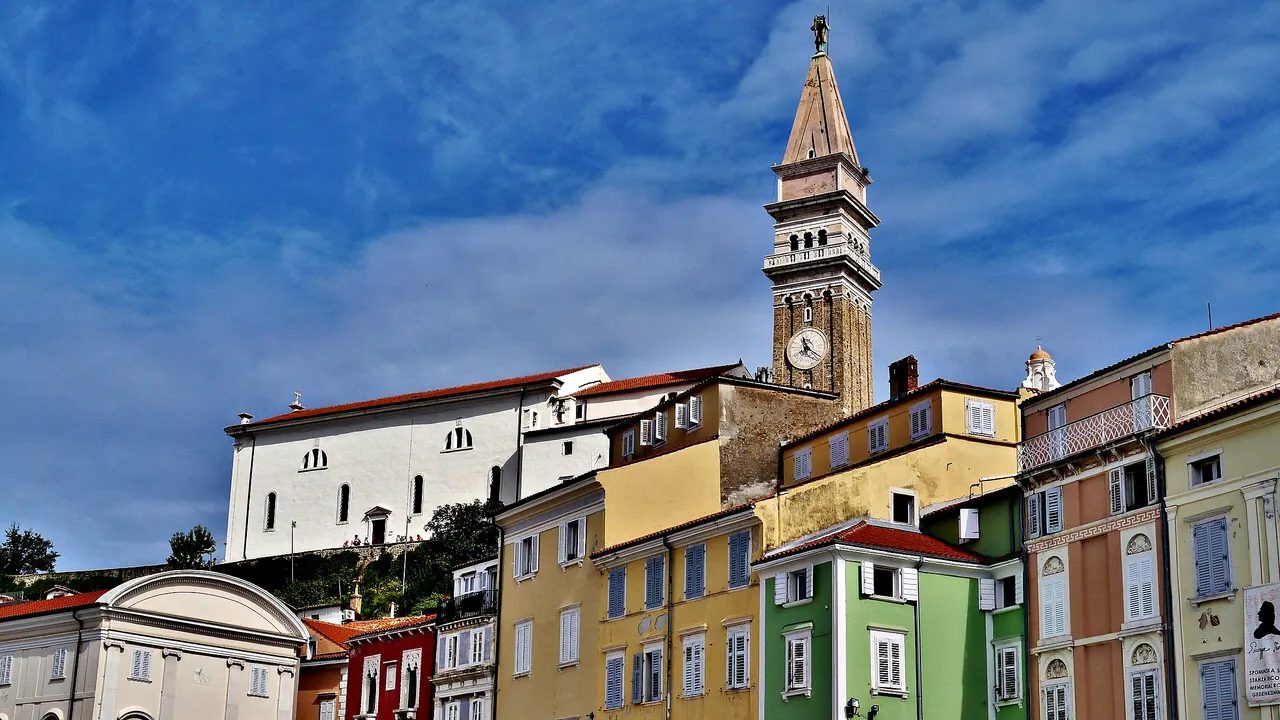
Photos: Bled by Luka Peternel, CC BY-SA 4.0, cropped; Piran by Zairon, CC BY-SA 4.0, cropped.
Bled or Piran?
Our verdict in twelve categories, each scored against the same fixed benchmark cities, and the climate month by month, so you can choose for your trip.
Choose Bled for
- nature and the outdoors
- families
Bled is for travellers who want mountains on the doorstep. Early walks round the lake, the Vintgar Gorge, Triglav National Park and Lake Bohinj are all within easy reach, and in winter there is skiing on Pokljuka and at Vogel. It suits active couples and families with children who love being outdoors. It also suits anyone happy to give up good restaurants and evenings out for early nights and long days on the trails.
Choose Piran for
- culture and sights
- food and drink
- nightlife
Pick Piran if the sea and an old town that people still live in matter more than peaks. Its Venetian lanes around Tartini Square, swimming off the rocks below the walls, seafood by the harbour and summer concerts give it more to offer at the table and after dark. Trieste and Croatian Istria are close enough for day trips. It is also the milder of the two, and the more comfortable choice in spring, autumn and winter.
Scoreboard
Twelve categories on one fixed scale from 0 to 100. The shaded stretch is the gap between the two.
Your match
Pick a travel style or drag the sliders, and both match scores follow your weighting.
Wins on nature and the outdoors and families with your weighting.
Wins on culture and sights and food and drink with your weighting.
What matters to you?
Category by category
What the scores mean for a trip.
Beaches & swimming
In both places you go for a swim rather than to lie on sand. At Bled the water is a lake, reached from grassy lidos and wooden piers, and the shallows at the western end suit nervous swimmers. Bohinj is close if you want colder, wilder water. The season is short, from late June to early September.
Piran comes out a little ahead because it has the sea. You climb down ladders and concrete platforms off the Punta into clear Adriatic water, Fiesa has a pebble cove, and there is some sand at Portoroz or on the quieter shore at Strunjan. The swimming season also starts earlier, in June.
Food & drink
Piran eats better, though neither is a food destination. Its strength is fish and shellfish from the gulf, such as scampi buzara and grilled squid, with Malvazija and Refosk wine from the hills behind and salt from the pans next door.
Bled serves mountain food such as trout, žlikrofi dumplings and buckwheat dishes, alongside pizzerias and hotel dining rooms, and its one famous item is the kremšnita cream slice. The best cooking near Bled is in the farm inns out in the valleys, so plan on driving for a good dinner.
Culture & sights
In Piran the whole peninsula is the sight: a tight web of Venetian Gothic houses around Tartini Square, the campanile of St George's and the old walls on the ridge, with a maritime museum and a monastery cloister for slower hours. You can wander it for a day and still find new corners.
Bled has fewer sights, but they are more dramatic. There is the clifftop castle with its printing workshop, and the island church, reached by pletna boat, where visitors ring the wishing bell. Each takes a morning or an afternoon, and what draws people here is the setting more than the buildings.
Nightlife
Neither suits a big night out, but Piran at least offers a sunset glass of wine on the Punta or Tartini Square. Portoroz next door has beach bars, a casino and a few summer clubs. In Bled the evening ends with a drink on a terrace and a walk along the lit shore, and the village is quiet well before midnight. A real night out from Bled means going to Ljubljana.
Nature & outdoors
This is Bled's great strength. It sits at the edge of the Julian Alps, with the Osojnica and Ojstrica viewpoints, the Vintgar Gorge and Triglav National Park nearby. Multi-day hut routes, rafting on the Sava, paragliding and winter skiing are all within easy reach.
Piran's outdoors is lower and gentler: cliff walks and sea kayaking at Strunjan, wading birds among the Secovlje salt pans, and cycling the Parenzana trail through olive groves. It is lovely in spring and autumn, but there are no real mountains within reach.
Day trips
Both are good bases, and Piran is slightly ahead because three countries meet at its door. Trieste is under an hour away, Rovinj, Porec and Motovun in Croatian Istria are an easy drive, and in summer boats cross the gulf to Venice.
Bled's day trips are more Slovenian and Alpine. Ljubljana is within the hour, medieval Radovljica is just down the road, and Austria's Wörthersee is through the Karawanks tunnel. The Postojna cave and Predjama Castle take a full day from Bled but are only about an hour from Piran, and each town can be visited as a long day trip from the other.
Good for families
Bled suits families slightly better, especially those whose children like being outside. Rowing out to the island, the toboggan run and rope park on Straža, the flat lake path for pushchairs and the shallow lidos fill several easy days.
Piran is car-free and safe, the aquarium keeps small children happy and Portoroz has a sandy beach. But swimming means climbing down ladders and the lanes are steep, so it works best for a short seaside stay. In both places a rainy day is hard to fill.
Getting around
Both are small and easy to walk around, so the difference is what lies beyond the centre. Piran's old town is entirely car-free. Cars stay in a garage outside town and a shuttle runs to Portoroz, so once you are there you will not need any transport, but there is no railway.
Bled has trains on two lines and buses to Ljubljana and Bohinj, but the trailheads, Pokljuka and the Vršič pass are poorly served. From either town, a car hired for a day or two opens up most of the trips.
Shopping & style
Bled's shopping comes down to a few lakeside stalls and gift shops selling honey, lace and painted beehive panels, plus a small supermarket for the basics. Piran has a little more to browse, with galleries and craft shops in its lanes. It also has better things to take home: salt flower from the Secovlje pans, Istrian olive oil and bottles of coastal wine.
For anything more, people staying in Bled go to Ljubljana, and those in Piran go to Trieste, just over the Italian border.
Affordability
Costs are much the same, and so is the pattern. Each is the expensive address in its part of Slovenia, dearest in July and August, and the view is reflected in the bill. The way to save is different. Around Bled you stay in a village guesthouse, at the lakeside campsite, or in Radovljica or Bohinj. On the coast you sleep in Portoroz, eat in simple konobas and come out of season.
In both, the main pleasures are free: the lake path and mountain trails at Bled, and the swimming and seafront walks at Piran. At Bled, though, the boat to the island, the castle and the gorge all charge entry.
Live music & performing arts
Piran has a modest summer programme built around Giuseppe Tartini, the violinist born in the town. There are classical concerts in its churches, the monastery cloister and on the main square, and the small Tartini Theatre puts on occasional plays and recitals. Bled has no venue at all, only an odd summer concert at the castle or a folk evening for visitors, so music lovers staying there end up in Ljubljana.
Wellness & relaxation
The two are close here and differ in kind. Bled's tradition goes back to Arnold Rikli's air and sun cures. Here that means hotel spas fed by the mild springs at the lake's eastern end, which day guests can sometimes use, and quiet mornings on still water below the mountains.
The coast offers sea-based treatments instead: seawater pools and brine baths in Portoroz, salt mud treatments in the open air at the Secovlje pans, and the seawater health resort at Strunjan. Piran adds its car-free lanes and long evenings by the bay, at their best in May, June and September.
When should you go?
Pick your month. The climate figures are measured averages, not a forecast.
Bled in July
Piran in July
Daytime high, °C
Rainfall in the month, mm
Where the figures come from
Bled's temperatures are measured 36 km from the centre, at Klagenfurt.
Bled has no rain gauge within 25 km of the centre, so its rainfall comes from a gridded climate dataset read at the city rather than from a gauge further away.
Temperature and rainfall are climate normals, averaged over the years shown. Bled: 1991-2020 normals, Klagenfurt (35.5 km from centre). Piran: 2005-2020 (sunshine 1991-2020, rainfall 1991-2020) normals, Portoroz (1.2 km from centre).
Bled has an Alpine year, and every warm month is wet. July and August reach about 27°C, good for hiking and swimming in the lake, but showers are frequent. From September the rain gets heavier, peaking at about 211mm in November, so autumn is the wettest time to visit. Late May and June are the most pleasant months for walking, with warm, long, sunny days and a little less rain than high summer. Even then, pack a rain jacket. Winter is the driest season, but with highs near 1°C in January it is a time for skiing and sledging, not strolling.
Piran is warmer, drier and sunnier for much more of the year. The sea is warm enough for swimming from June and reaches about 25°C in July and August. In those months days of around 30°C make the climb through the old town's lanes hard work at midday. June is the best all-round month, warm in and out of the water with modest rain, and May suits walking if you don't need to swim. September keeps the warm sea but is clearly wetter, and the rain stays heavy through to November. Winters are mild enough for comfortable walks.
Which traveller are you?
On an outdoors trip, pick Bled if you want proper mountain days, on foot, on the water or on skis, with the Julian Alps starting at the village edge. Piran suits gentler paddling, cycling and coastal walks, best in spring and autumn.
For a culture and arts trip, Bled's castle and island church fill one day, so Piran is the better base: Venetian lanes to wander slowly, Tartini concerts in summer, and Trieste and the Istrian hill towns within easy reach.
On a family trip with children, Bled suits families who want active days together, with the lake as a playground and snow in winter. Piran works for a short, calm seaside stay with small children rather than a long one with restless teenagers.
Before you go
| Measure | Bled | Piran |
|---|---|---|
| Official language | Slovene | Slovene |
| Currency | Euro (EUR) | Euro (EUR) |
| Sockets | CF230 V, 50 Hz | CF230 V, 50 Hz |
| Driving side | Right | Right |
| Time zone | UTC+1, UTC+2 in summer | UTC+1, UTC+2 in summer |
| Emergency number | 112 | 112 |
| Elevation | 501 m | 7 m |
| Main airport | Ljubljana Jože Pučnik Airport (LJU)31 km from centre32 non-stop destinations | Trieste Airport (TRS)34 km from centre32 non-stop destinations |
| Public holidays this year | 21 days | 21 days |
By the numbers
| Measure | Bled | Piran |
|---|---|---|
| City population | 4,969 | 3,787 |
| People per km² | 26 | 85 |
| Museums within 10 km | 4 | 5 |
| UNESCO World Heritage sites within 50 km | 3 | 4 |
| Swim season, months above 21 °C | - | 4 months |
Where else could you go?
Every comparison below shares a destination with this one, so you can follow Bled or Piran somewhere new.