Photos: Bonaire by Dronepicr, CC BY 3.0, cropped; Cozumel by Johnk996, CC BY 3.0, cropped.
Bonaire or Cozumel?
Our verdict in twelve categories, each scored against the same fixed benchmark cities, and the climate month by month, so you can choose for your trip.
Choose Bonaire for
- getting around
- nature and the outdoors
- culture and sights
Bonaire is the island for a trip built around the water itself. Its whole coastline is protected reef that starts a few metres off the shore, so divers and snorkellers can drive to a marked stone, wade in and go, as often as they like, with no boat to book. Lac Bay adds some of the best windsurfing anywhere. In return it asks for a hire car, a larger budget and a willingness to accept early nights, rocky entries and almost nothing to do away from the sea.
Choose Cozumel for
- day trips
- prices
- nightlife
Cozumel suits travellers who want reef diving as one part of a broader stay. Its drift dives along the southwest walls are famous, the west coast beach clubs give non-divers loungers and shade, and Chankanaab keeps children busy. The real advantage is the mainland: a short ferry puts Tulum, the cenotes and Playa del Carmen within a day, and eating where islanders eat in San Miguel keeps costs down.
Scoreboard
Twelve categories on one fixed scale from 0 to 100. The shaded stretch is the gap between the two.
Your match
Pick a travel style or drag the sliders, and both match scores follow your weighting.
Wins on getting around and nature and the outdoors with your weighting.
Wins on day trips and prices with your weighting.
What matters to you?
Category by category
What the scores mean for a trip.
Beaches & swimming
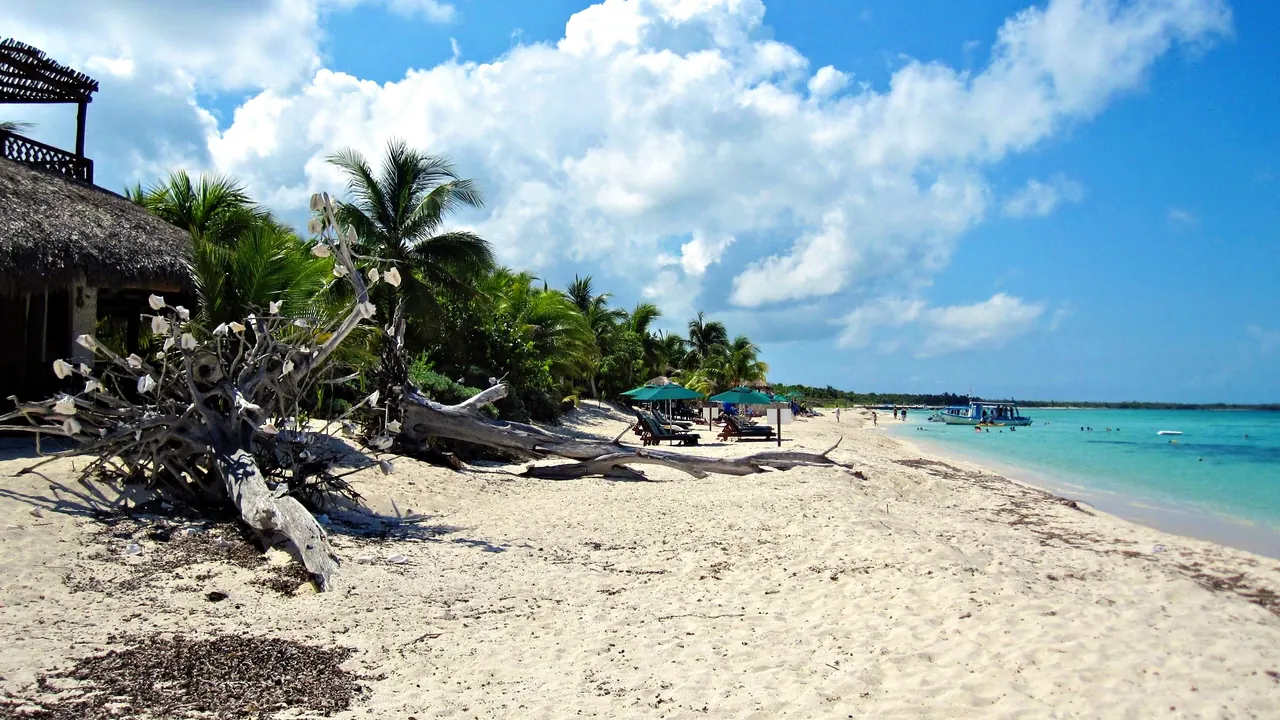
Neither island is a place of long sandy strands, but Cozumel gives the swimmer more comfort. South of San Miguel towards Palancar and Punta Sur, sandy stretches are set up as beach clubs with loungers, ladders into calm water and reef a few strokes out, so a day by the sea is easy to arrange.
Bonaire's west coast water is just as clear and warm, yet most entries are coral rubble or limestone ledges where water shoes help. Its real sand is at Sorobon on Lac Bay, on Klein Bonaire by water taxi, and at Pink Beach in the south. Both islands keep their windward east coasts for looking at rather than swimming.
Food & drink
Bonaire cooks Antillean and Cozumel cooks Yucatecan, and on both islands the best of it is found away from the harbour restaurants. On Bonaire that means goat stew, funchi and the island's iguana soup at roadside snack stands, while Kralendijk's waterfront serves grilled wahoo and Dutch-influenced menus to divers, and with most produce imported many visitors self-cater.
On Cozumel it means cochinita pibil and panuchos a few streets back in San Miguel, evening taco stands around the main square and whole fried fish from the morning's catch. The seafront strip, with its margaritas and Tex-Mex for cruise passengers, is the part to skip, and on neither island is the food a reason to go.
Culture & sights
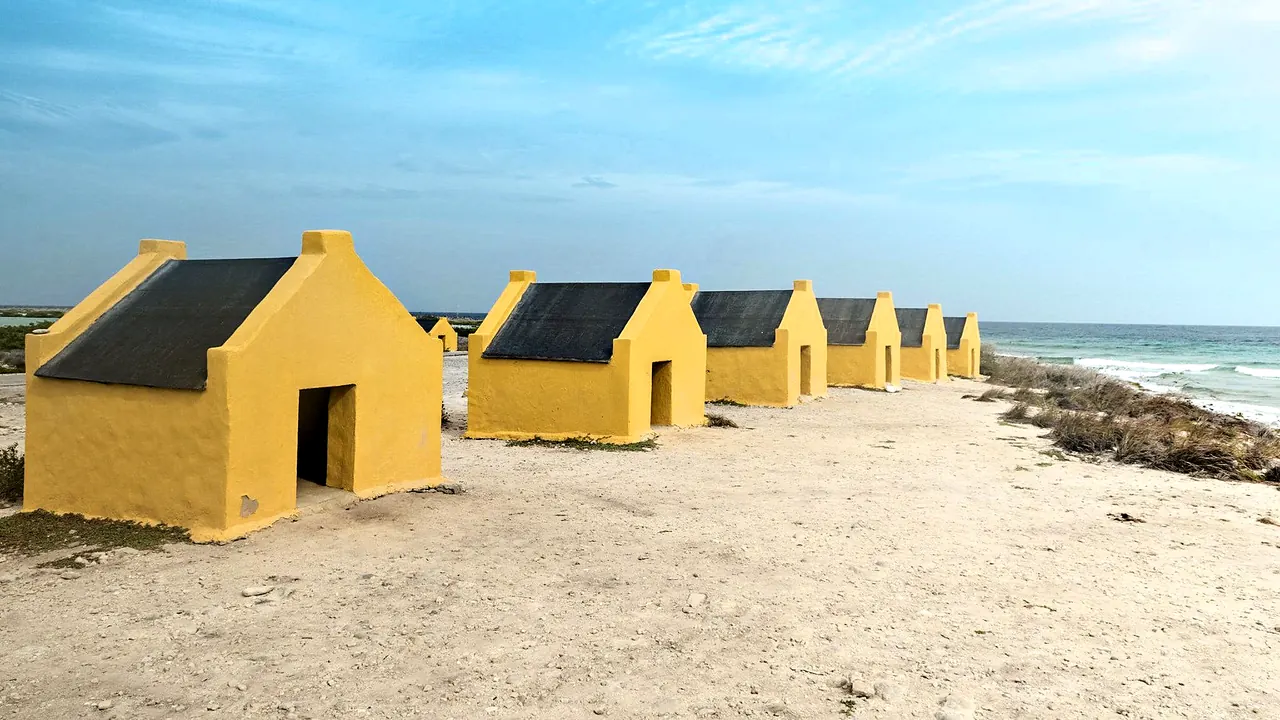
Each island has about half a day of sights, with very different stories behind them. Bonaire's most affecting is in the south, where the obelisks and tiny stone slave huts beside the salt pans recall the enslaved salt workers, with Fort Oranje, Rincon's cunucu houses and the Arawak inscriptions at Onima for the rest.
Cozumel's past is Maya: the low, scattered temples of San Gervasio in the forested interior were part of a pilgrimage to the goddess Ixchel, and the waterfront museum fills in the island's history.
Nightlife
Cozumel has a little more life after dark, though neither island is for a big night out. San Miguel's waterfront and main square have cover bands, rooftop terraces and loud tequila bars, busiest in the late afternoon when cruise passengers are ashore, and the square fills with local families on Sunday evenings.
Bonaire offers a sunset drink at a waterfront bar in Kralendijk and the occasional weekend dance night, and then it is quiet well before midnight. On either island, anyone wanting clubs is out of luck, although from Cozumel the mainland is a ferry ride away.
Nature & outdoors
Both are first-rate dive islands, but Bonaire offers more freedom in the water and more to do around it. Its entire coastline is protected, the reef begins just off the shore, and divers can make as many entries a day as they like from roadside stones without a boat. Lac Bay's steady trade winds over flat water draw windsurfers, and on land Washington Slagbaai, Brandaris and the flamingo-filled salt pans fill a day or two.
Cozumel's diving is boat-based and spectacular in its own way: currents carry divers along the coral walls of Palancar, Santa Rosa and Columbia past eagle rays and nurse sharks. Out of the water, the flat scrub island offers mainly Punta Sur's crocodile lagoons and a ride along the wild east coast.
Day trips
This is where the two islands differ most. From Cozumel, the ferry to Playa del Carmen takes under an hour, and from there Tulum's cliff-top ruins, the cenote coast and the jungle city of Coba all fit into a long day, with organised tours to smooth the logistics.
Bonaire offers Rincon, seen in an hour, and a boat out to Klein Bonaire to snorkel. Curacao and Aruba need a flight, so on Bonaire the whole stay is spent on the island itself.
Good for families
Cozumel is the easier island with children. Chankanaab's reef lagoon, sea lions and botanical garden, semi-submarine trips for non-swimmers and beach clubs with pools give families more to fill the days, and San Miguel's square has playgrounds in the evening.
Bonaire is safe and relaxed with very little traffic, and it is a wonderful place for older children learning to snorkel or dive. For younger ones it comes down to the shallow lagoon at Sorobon, the donkey sanctuary and flamingo spotting, and many swimming spots mean scrambling over coral rock.
Getting around
On both islands a visitor relies on wheels rather than buses, but Bonaire makes self-driving simpler and more useful. Its quiet, well-kept roads lead to dive sites marked by painted stones, so a hired pickup turns the whole coast into a series of shore dives. Only the rough tracks in the national park call for a high-clearance vehicle.
Cozumel has one paved loop road and plentiful taxis on fixed zone fares, and dive operators usually collect guests from their hotels. Seeing the far side means renting a car or scooter for a day, and the mainland ferry leaves from the San Miguel pier.
Shopping & style
Bonaire's shopping fits into a few streets of Kralendijk, while Cozumel's cruise port gives a browser far more to look at. On Bonaire that means dive gear, beachwear and some locally made art, enough to replace a lost mask or pick up a gift.
San Miguel's waterfront and the plazas by the piers are lined with duty-free jewellers, silver and tequila shops and stalls of hammocks, embroidered blouses and Mexican vanilla. The better-made pieces are in the small galleries on the side streets, away from the insistent sales pitch on cruise days.
Affordability
Cozumel is the gentler island on the wallet, provided you stay in San Miguel and eat at the taco stands, the market and local seafood places. Its resorts and boat dives are priced for foreigners, and several days of diving add up fast.
On Bonaire nearly everything is imported, so meals and groceries cost more, most lodging is mid-range or upmarket, and car hire is almost unavoidable. Shore diving without a boat is the main saving.
Live music & performing arts
Both islands are thin on performance, and the highlights are festivals rather than venues. Bonaire has Simadan, the harvest celebration of the north with its songs and dances, plus a small carnival.
Cozumel's pre-Lent carnival, one of the oldest in Mexico, fills San Miguel with parades and comparsa troupes, and mariachis play around the square during the rest of the year.
Wellness & relaxation
Rest on both islands comes from the slow pace rather than any spa culture, with treatments mostly inside resorts. Bonaire's calm is island-wide, with days set by sunrise dives and evenings ending early. On Cozumel the quiet is found away from the cruise piers, in the adults-only resorts on the southern hotel strip, on the empty east coast and in the occasional temazcal sweat lodge.
When should you go?
Pick your month. The climate figures are measured averages, not a forecast.
Bonaire in July
Cozumel in July
Daytime high, °C
Rainfall in the month, mm
Where the figures come from
Bonaire has no rain gauge within 25 km of the centre, so its rainfall comes from a gridded climate dataset read at the destination rather than from a gauge further away.
Bonaire's sunshine is measured 77 km from the centre, at Hato Airport, Curacao.
Cozumel has no weather station within reach, so its figures come from a gridded climate model rather than a measured record, and read a broad area rather than one spot.
Temperature and rainfall are climate normals, averaged over the years shown. Bonaire: 2009-2025 (sunshine 1991-2020, rainfall 1991-2020) normals, Flamingo Airport, Bonaire (2 km from centre). Cozumel: 2001-2020 normals, NASA POWER reanalysis grid, no weather station within 90 km.
Both islands are warm enough for the sea every month of the year, with water between 27°C and 29°C, so the question is rain and heat. Bonaire is the drier and hotter of the two. From February to September it sees little rain under steady sunshine, then a short wet spell runs from October into January, peaking in November at around 119mm. Daytime heat climbs to 33°C in September, so walking and hiking are best kept to the early morning.
Cozumel is a little milder, around 26°C in the winter months, which makes town strolls and ruins more comfortable. Its rainy season is longer and heavier, though: from May the showers build, June and September are wet, and October is the wettest month at about 224mm. February to April is the best window on both islands; for a summer or autumn trip, Bonaire is the safer bet for dry days.
Which traveller are you?
For an outdoors trip, Bonaire is the stronger pick. The entire coast is a marine park you can dive from the shore at will, Lac Bay is a world-class windsurfing spot, and Washington Slagbaai adds hikes, parrots and flamingos on land.
On a family trip with children, Cozumel works better. Beach clubs offer pools, shade and calm water, Chankanaab has sea lions and a reef lagoon, and glass-bottom boats show the reef to children too young to snorkel. Bonaire's offer beyond the sea is thinner.
On a tight budget, Cozumel is the easier island. Guesthouses in San Miguel, taco stands and the market keep daily costs modest, while Bonaire imports nearly everything and adds car hire to almost every stay.
Before you go
| Measure | Bonaire | Cozumel |
|---|---|---|
| Official language | English, Dutch, Papiamento | Spanish, Nahuatl, Yucatec Maya |
| Currency | US Dollar (USD) | Mexican Peso (MXN) |
| Sockets | - | AB127 V, 60 Hz |
| Driving side | Right | Right |
| Time zone | UTC-4 | UTC-5 |
| Emergency number | - | 911 |
| Main airport | Flamingo International Airport (BON)11 non-stop destinations | Cozumel International Airport (CZM)13 non-stop destinations |
| Public holidays this year | 13 days | 9 days |
By the numbers
| Measure | Bonaire | Cozumel |
|---|---|---|
| Population | 24,090 | 88,626 |
| People per km² | 84 | 164 |
| Swim season, months above 21 °C | 12 months | 12 months |
Where else could you go?
Every comparison below shares a destination with this one, so you can follow Bonaire or Cozumel somewhere new.
- Playa del Carmenvs Cozumel
- Riviera Mayavs Cozumel
- Tulumvs Cozumel
- Curaçaovs Bonaire
- Cancunvs Cozumel
- Isla Mujeresvs Cozumel