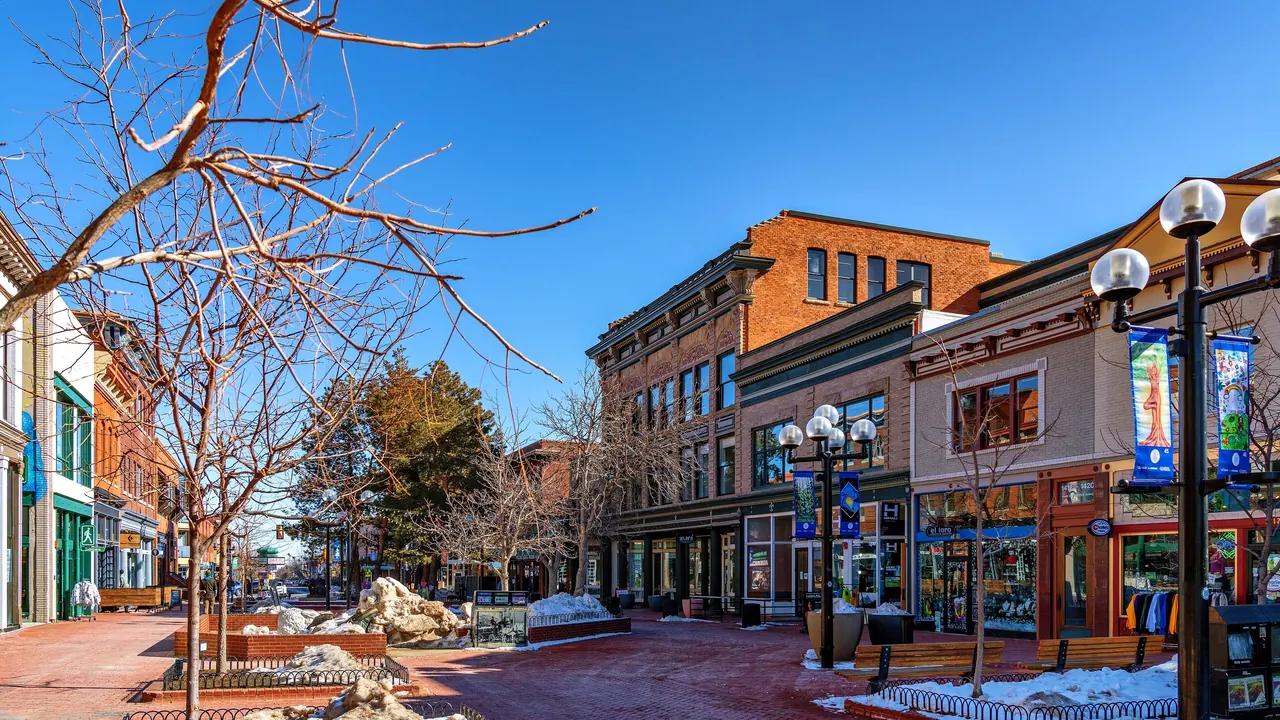
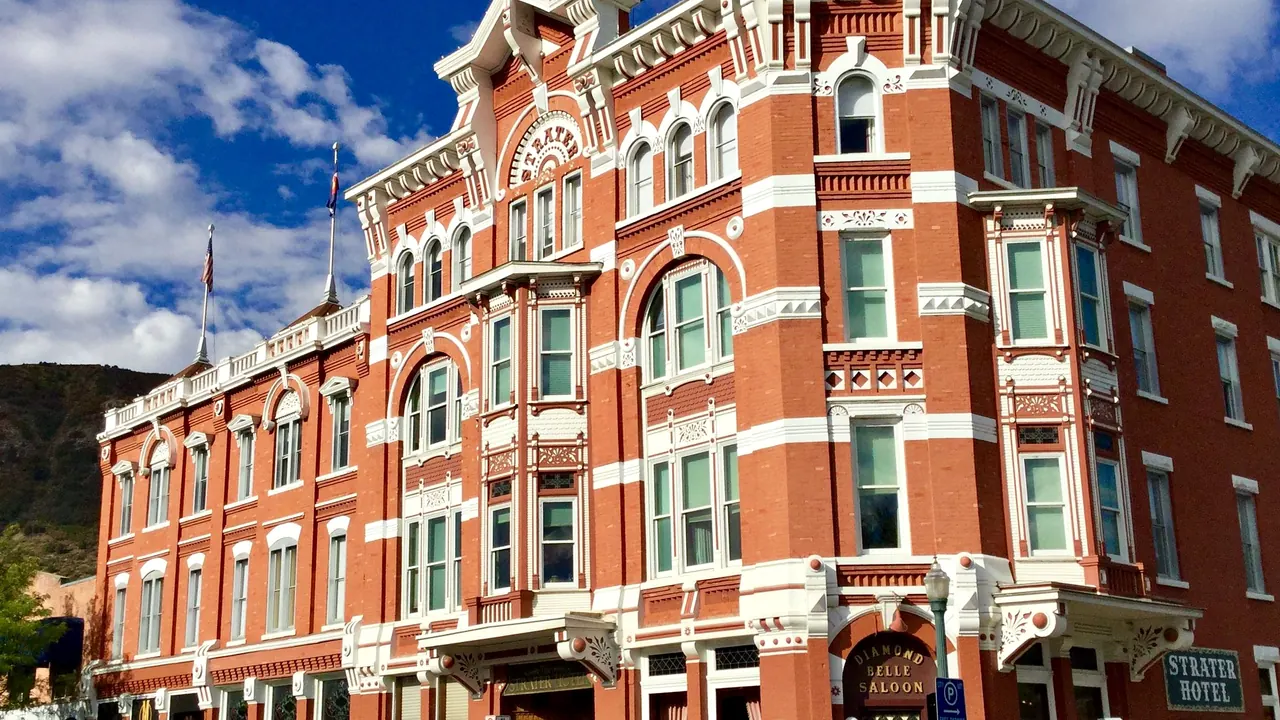
Photos: Boulder by Tony Webster, CC BY 2.0, cropped; Durango, Colorado by Adeledstarr, CC BY-SA 4.0, cropped.
Boulder or Durango, Colorado?
Our verdict in twelve categories, each scored against the same fixed benchmark cities, and the climate month by month, so you can choose for your trip.
Choose Boulder for
- getting around
- live music and the arts
- nightlife
Boulder suits travellers who want the mountains on the doorstep and a proper town around them. You can walk from Pearl Street to the Chautauqua trailheads, cycle the creek paths, hear touring bluegrass or rock in the evening and reach Denver by express bus, all without a car. It costs more, but for a mix of trails, live music and evenings out it is the stronger choice.
Choose Durango, Colorado for
- day trips
- prices
- wellness
Durango is the pick for a road trip into the deep Southwest. The San Juan Mountains are wilder, the river runs through the middle of town, and the outings are exceptional: the steam train to Silverton, the cliff dwellings at Mesa Verde and the hot-spring towns around it. Hire a car, expect quiet nights, and you get a slower, somewhat cheaper mountain vacation with more history in the surrounding country.
Scoreboard
Twelve categories on one fixed scale from 0 to 100. The shaded stretch is the gap between the two.
Your match
Pick a travel style or drag the sliders, and both match scores follow your weighting.
Too close to call, 2 points apart
Wins on getting around and live music and the arts with your weighting.
Wins on day trips and prices with your weighting.
What matters to you?
Category by category
What the scores mean for a trip.
Beaches & swimming
Neither town offers a beach, so treat swimming as a summer afternoon's add-on. Boulder has a sandy swim area at the reservoir and tubing on Boulder Creek, while Durango spreads its options more widely, from Lake Nighthorse and Vallecito Lake to floating the Animas through town, though its mountain water stays colder even in July.
Food & drink
The two are on a par, and both rely on good ingredients rather than a cuisine of their own. Boulder leans health-conscious: farm-to-table menus, plenty of vegetarian and vegan cooking, bakeries, a Saturday farmers' market by the creek and lunch in the hand-carved Dushanbe Teahouse.
Durango is heartier and more Western, with green-chile Southwestern plates, steakhouses, and Colorado lamb and trout on the better menus. Beer is a strength in both, though Durango's taprooms are the busier end-of-day ritual. For real range, Boulder has Denver within easy reach.
Culture & sights
Both are thin on sights, and an afternoon covers either town. Boulder's appeal is architectural and institutional: the 1898 Chautauqua colony under the Flatirons, the sandstone and red-tile campus, and I.M. Pei's atmospheric research laboratory on the mesa.
Durango's heritage is more theatrical. The steam locomotives and roundhouse museum at the old depot, the Victorian hotels and saloons of the mining boom and the college's Native American collection give it a stronger sense of frontier history, and the great Puebloan sites lie just beyond town.
Nightlife
Boulder gives you more to do after dark. Taprooms, cocktail bars and pubs fill the streets around Pearl Street, the student bars on University Hill are loud and cheerful during term, and a couple of venues pass for clubs. Denver is close enough for a bigger night.
Durango's evenings are a patio pint on Main Avenue or a drink in an old saloon with a piano player. It has charm but little dancing, and the town is mostly asleep well before midnight.
Nature & outdoors
Both towns are built for the outdoors, and the difference lies in character. Boulder's strength is access: the Flatirons rise straight behind town, the open-space trails start at Chautauqua, Eldorado Canyon is a world-class climbing wall ten minutes away, and road cyclists come to train on the canyon climbs. Rocky Mountain National Park is about an hour off.
Durango feels wilder. The San Juans are higher and more rugged, the singletrack makes it a mountain-biking centre, the Colorado Trail begins just north, and rafters run the Animas through the middle of town. Winter is stronger here too, with a full ski resort and deep snow half an hour away.
Day trips
Durango has the more memorable days out. Mesa Verde's cliff dwellings, the narrow-gauge steam train up the canyon to Silverton, Ouray beneath its cliffs and the Aztec ruins within the Chaco listing make a rich mix of history and scenery, though nearly all of it needs a car.
Boulder's outings are pleasant rather than remarkable. Denver, with its art museum and Union Station, is the main draw and reachable by bus, while Golden, Fort Collins and the silver-mining towns of Georgetown and Idaho Springs fill a half-day each by car.
Good for families
Both suit outdoor families equally well, with a different emphasis. Boulder has more for curious children on a wet day, with the planetarium, natural history museum and free weather exhibits, plus street performers on Pearl Street, and Denver's zoo and aquarium are close by.
Durango has the bigger thrills: the steam train, gentle rafting, an alpine coaster and ziplines at the ski resort, and climbing ladders at Mesa Verde. Its altitude of about 2,000m is noticeably higher than Boulder's 1,655m, and the long drives can test younger children.
Getting around
Boulder is much easier without a car. Its off-street bike paths along the creek, bike share and local buses link downtown, the campus and Chautauqua, and an express bus runs to Denver and its airport connections. Only the trailheads further out and the national park really call for a hire car.
Durango's centre is small and flat, with a riverside trail and a trolley on the main corridor, but almost everything else, from the ski area to Mesa Verde, lies along mountain highways with thin public transport. Most visitors drive in or rent at the regional airport.
Shopping & style
Boulder has the wider choice. The Pearl Street Mall offers independent bookshops, galleries and boutiques, the Twenty Ninth Street district adds chain stores, and its climbing, running and cycling shops are exceptional for a town its size.
Durango is a single stroll down Main Avenue, and its best buys are distinctly regional: Navajo and Pueblo silver, turquoise jewellery, rugs and Western boots, alongside good bike and fishing shops. Neither town has luxury or fashion shopping.
Affordability
Durango is the gentler on the wallet, though neither town is cheap. Boulder is one of the wealthier towns in the country, with scarce hotel rooms that climb further on graduation and football weekends, and many visitors save by staying in Denver.
Durango's rooms also tighten in summer and at the ski peak, and the steam train, guided trips and an almost compulsory hire car add up. Coming in spring or late autumn brings costs down noticeably. In both towns the trails themselves are free.
Live music & performing arts
Boulder has far more on stage. Small and mid-sized rooms book touring rock, bluegrass and roots acts most nights, the 1898 Chautauqua Auditorium hosts the Colorado Music Festival in summer, and the Shakespeare festival plays outdoors on campus. Red Rocks Amphitheatre is within an easy drive.
Durango's offering is smaller and mostly seasonal: a summer chamber and orchestral festival, touring acts at the college concert hall, a boo-the-villain Victorian melodrama and cowboy music with a chuckwagon supper. Outside summer, evenings are quiet.
Wellness & relaxation
The two are close, but they unwind in different ways. Boulder is a town of yoga and meditation studios, with a Buddhist-inspired university giving its contemplative side real depth. For a proper soak, though, you face an hour's drive to Idaho Springs.
Durango is the place for bathing. Natural mineral pools sit a few minutes north of town, and the terraced pools at Pagosa Springs and the springs at Ouray make easy outings. After a long ride or a day on the slopes, that counts for a lot.
When should you go?
Pick your month. The climate figures are measured averages, not a forecast.
Boulder in July
Durango, Colorado in July
Daytime high, °C
Rainfall in the month, mm
Where the figures come from
Boulder has no rain gauge within 25 km of the centre, so its rainfall comes from a gridded climate dataset read at the city rather than from a gauge further away.
Boulder's sunshine is measured 45 km from the centre, at Denver / Stapleton International, Co..
Durango, Colorado has no weather station within reach, so its figures come from a gridded climate model rather than a measured record, and read a broad area rather than the city itself.
Temperature and rainfall are climate normals, averaged over the years shown. Boulder: 2010-2025 (sunshine 1981-2010, rainfall 1991-2020) normals, Boulder / Valmont (6.1 km from centre). Durango, Colorado: 1991-2020 normals, TerraClimate 4 km grid at the town, no weather station within 90 km.
Both towns swing from chilly winters to hot summers, with Boulder peaking at about 31°C in July and Durango barely cooler. Boulder's wettest month is May, at about 61mm, and from June the summers are its sunniest stretch, though afternoon thunderstorms gather over the high trails. Winters are dry and bright, cold but often fine for walking around town. September is its best all-round month, still warm but past the midsummer heat.
Durango's rain falls on a different calendar. June is its driest month, with only about 12mm, and with warm days it is the clearest choice for hiking, riding and the river. From July the storms build, peaking in August at around 48mm, and September stays nearly as wet, so the golden aspens late in the month come with a fair chance of showers. Winters are colder than Boulder's, with highs near 5°C in December and January, and the steady winter precipitation brings snow to the ski resort to the north.
Which traveller are you?
For a short city break, Boulder works far better. The walkable centre, bike paths and express bus from the Denver side mean you can arrive without a car, hike the Flatirons in the morning and spend the evening on Pearl Street.
On a food and nightlife trip, Boulder again comes out ahead. Both towns pour excellent craft beer, but Boulder adds cocktail bars, the student bars on University Hill and live music most nights, while Durango's taprooms and saloons go quiet before midnight.
On a trip on a tight budget, Durango is the easier fit. Rooms and meals still cost what US mountain towns cost, but it is less expensive than wealthy Boulder, and spring and late autumn bring noticeably lower prices for the trails and river.
Before you go
| Measure | Boulder | Durango, Colorado |
|---|---|---|
| Currency | US Dollar (USD) | US Dollar (USD) |
| Sockets | AB120 V, 60 Hz | AB120 V, 60 Hz |
| Driving side | Right | Right |
| Time zone | UTC-7, UTC-6 in summer | UTC-7, UTC-6 in summer |
| Emergency number | 911 | 911 |
| Elevation | 1,655 m | 1,988 m |
| Main airport | Denver International Airport (DEN)56 km from centre231 non-stop destinations | Durango La Plata County Airport (DRO)18 km from centre4 non-stop destinations |
| Public holidays this year | 12 days | 12 days |
By the numbers
| Measure | Boulder | Durango, Colorado |
|---|---|---|
| City population | 108,250 | 19,071 |
| People per km² | 1,628 | 739 |
| Museums within 10 km | 4 | 2 |
| UNESCO World Heritage sites within 50 km | 0 | 1 |
Where else could you go?
Every comparison below shares a destination with this one, so you can follow Boulder or Durango, Colorado somewhere new.
- Denvervs Boulder
- Winter Park, Coloradovs Boulder
- Estes Parkvs Boulder
- Telluridevs Durango, Colorado
- Keystonevs Boulder
- Breckenridgevs Boulder