Brač or Ischia?
Our verdict in twelve categories, each scored against the same fixed benchmark cities, and the climate month by month, so you can choose for your trip.
Choose Brač for
- beaches
- families
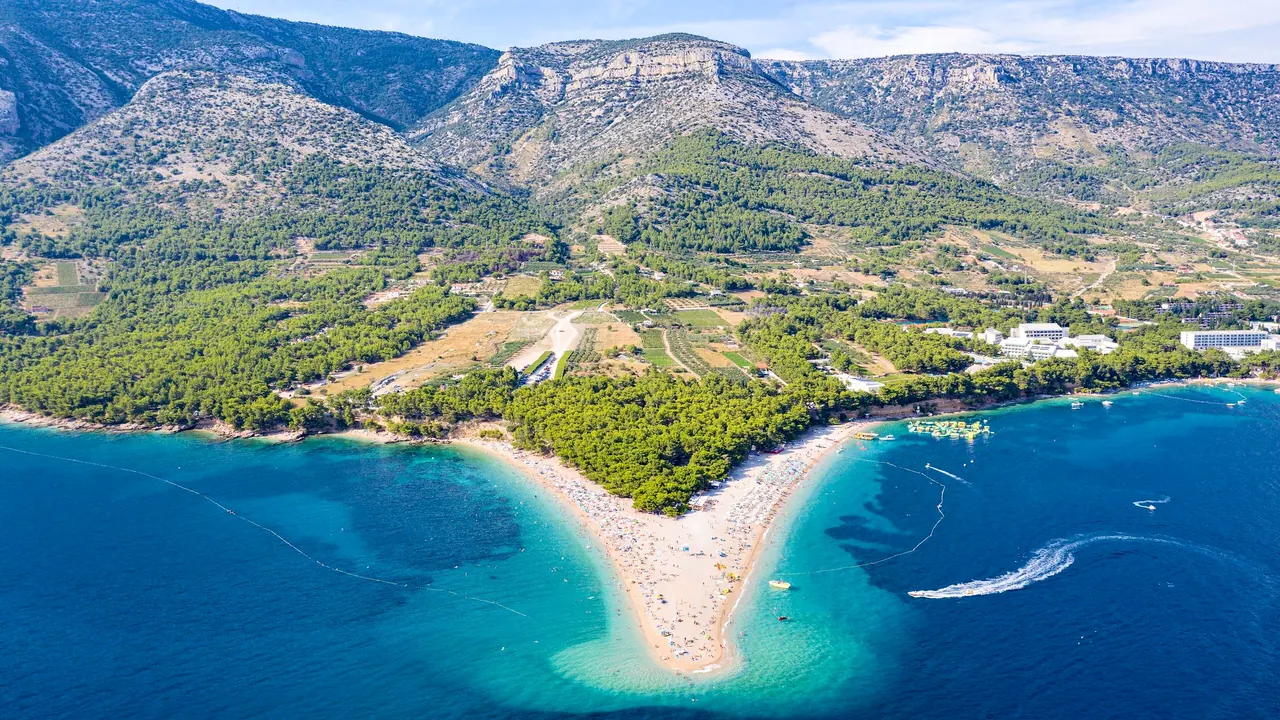
Brač is the better choice for a sea-and-sun trip with a car, built around Zlatni Rat, the long pebble beaches and the afternoon wind that makes Bol a windsurfing and kitesurfing spot. It gets more sunshine in midsummer, its north coast villages suit self-catering families, and its stone hamlets and karst plateau reward slow exploring. Expect less from it in the evenings, at the table and in sights.
Choose Ischia for
- wellness
- food and drink
- day trips
Choose Ischia if you want the water to do you good as well as cool you down. Its hot springs, thermal parks and wild bathing spots at Sorgeto and Cavascura have no real equal on Brač. It also eats better, has more history to see, and puts Naples, Procida, Capri and the Phlegraean Fields within a ferry ride. That makes it the stronger base for a varied week, as long as you are happy to travel by bus and boat rather than by car.
Scoreboard
Twelve categories on one fixed scale from 0 to 100. The shaded stretch is the gap between the two.
Your match
Pick a travel style or drag the sliders, and both match scores follow your weighting.
Wins on beaches and families with your weighting.
Wins on wellness and food and drink with your weighting.
What matters to you?
Category by category
What the scores mean for a trip.
Beaches & swimming
Both islands are serious beach destinations, but you swim from very different shores. Brač is nearly all pebble and rock. Zlatni Rat at Bol is its showpiece, a fine-pebble spit with pine shade and very clear water, and the north coast has shallow town beaches. Lovrečina is one of its few sandy stretches.
Ischia has more sand: the long dark volcanic curve of Maronti, with steam rising at its western end, the sunset beach at Citara and the calm bay of San Montano. Away from these, its coves are rocky and often easiest to reach by water taxi. Both islands are crowded at their famous beaches in high summer.
Food & drink
Ischia eats better and with more character. Rabbit braised in terracotta is its signature dish, fishing harbours such as Sant'Angelo and Forio serve fresh seafood, and white wines from the terraces of Monte Epomeo can be tasted at small wineries.
Brač's konobas do good grilled fish, lamb, spit-roasted vitalac and excellent olive oil, but the waterfronts at Bol and Supetar lean towards menus written for visitors, and many places close once summer ends. On both islands the best meals are found in the hill villages rather than on the harbours.
Culture & sights
Ischia has the stronger sights, though neither island takes long to see. The Aragonese Castle on its rock off Ischia Ponte is a proper half-day out, and the museum at Lacco Ameno holds Nestor's Cup, found at one of the earliest Greek settlements in the West.
Brač's heritage is quieter and built in its white limestone: the cliffside hermitage at Blaca, reached only on foot, the Illyrian walls and Venetian tower at Škrip, the stonemasons' harbour of Pučišća and a Tintoretto in the Dominican monastery at Bol. It works best as a few unhurried days of village wandering.
Nightlife
Neither island is a place for a big night out, and evenings on both revolve around a long dinner by the water. On Brač the late life is in Bol in July and August, with beach bars along the path to Zlatni Rat and a few open-air dance spots. Anyone after more takes the catamaran to Hvar.
On Ischia the action gathers around Ischia Porto, which has wine bars, cocktail terraces and a couple of summer discos. The passeggiata along the shopping street gives evenings there a more sociable, strolling character.
Nature & outdoors
These are two equally rewarding landscapes of very different kinds. Brač's interior is a dry, stony karst plateau of olive groves and dry-stone walls, rising to Vidova Gora, which looks straight down on Zlatni Rat. On the water, wind sports and gravel cycling are its specialities.
Ischia is volcanic, greener and steeper, with chestnut woods and vineyards on the paths up Monte Epomeo and steam vents on the south coast. Its marine protected area makes it the better island for snorkelling, diving and boat trips. On both islands, midsummer is too hot for serious walking.
Day trips
Ischia has far more within a boat ride. Procida is a short hop away, Naples is about an hour by fast ferry, and the boats to Pozzuoli reach the Roman amphitheatre, the Solfatara crater and sunken Baia. In summer there are direct boats to Capri and Sorrento as well.
From Brač, Split's Diocletian's Palace is the outstanding outing, and Trogir can be added on the same day. Hvar and the Makarska coast are also within reach. The choice is shorter, though, and it depends on ferry timetables that thin out quickly after summer.
Good for families
Both islands suit a slow beach vacation with children and offer little built specially for them. On Brač, the sheltered north coast towns such as Supetar and Postira have shallow water and apartments with kitchens, and a car makes outings easy. Zlatni Rat itself drops off fairly quickly.
Ischia's draw for families is sand at San Montano and Maronti, plus the thermal parks, which work as easy days in the water. Against that, some villages are all steps and the summer buses are packed.
Getting around
On both islands getting around takes some effort, but in opposite ways. Brač is an island for a car or scooter: the roads are quiet, buses are too infrequent to rely on, and the drive over the plateau to Bol is slow and winding. Long ferry queues at weekends are part of the deal.
On Ischia a car is more trouble than it is worth, with narrow roads, scarce parking and limits on visitors' cars in high season. Here you pick a base, walk within it, and rely on the loop bus, microtaxis and water taxis for everything else.
Shopping & style
Ischia has a proper shopping walk, along Via Roma and Corso Vittoria Colonna between the port and Ischia Ponte, with linen, leather sandals, resort fashion and jewellery, plus ceramics and cosmetics made with the island's thermal waters. It is pleasant on an evening stroll.
Brač offers little beyond what the island produces: carved stone from Pučišća, olive oil, honey and lavender. For anything more you would cross to Split.
Affordability
Ischia is a little easier on the wallet. Its many family-run spa hotels sell half-board stays that include thermal pools, and its buses and ferries are fairly priced. Brač in midsummer costs roughly what Western Europe does, and car ferry fares add up.
On Brač, private apartments in the north coast villages or inland are the way to save. On both islands, the months either side of high summer are noticeably cheaper.
Live music & performing arts
Neither island has a real programme, but Ischia offers a few more evenings out. There are chamber concerts in the Mortella gardens created by William Walton, and screenings and concerts at the Aragonese Castle during the summer film festival. Naples' opera house is across the water.
Brač has summer concerts on the squares of Bol and Supetar and the chance of hearing klapa singing. For opera and theatre, it relies on Split's summer festival.
Wellness & relaxation
Brač relaxes you by asking very little of you. A good day there is a morning swim, a long lunch in the shade, an hour among the olive groves and an evening on the harbour at Pučišća or Povlja, which go quiet early. Pampering is limited to massages and saunas in a few of the bigger hotels at Bol and Supetar. The calm also depends on the season, with June and September far more peaceful than midsummer.
On Ischia, rest is the reason for the trip rather than a side effect of it. Many visitors plan the whole day around warm water, moving between pools of different heat and the cool sea, with treatments booked in between, in a bathing culture that goes back centuries. That gives the island a pull well beyond summer, because the springs stay warm after the beaches empty, and April to June and October are its most restorative months.
When should you go?
Pick your month. The climate figures are measured averages, not a forecast.
Brač in July
Ischia in July
Daytime high, °C
Rainfall in the month, mm
Where the figures come from
Brač's temperatures are measured 34 km from the centre, at Split / Marjan.
Brač has no rain gauge within 25 km of the centre, so its rainfall comes from a gridded climate dataset read at the destination rather than from a gauge further away.
Brač's sunshine is measured 34 km from the centre, at Split / Marjan.
Ischia's temperatures are measured 36 km from the centre, at Grazzanise.
Ischia has no rain gauge within 25 km of the centre, so its rainfall comes from a gridded climate dataset read at the destination rather than from a gauge further away.
Temperature and rainfall are climate normals, averaged over the years shown. Brač: 1991-2020 (sunshine 1971-2000) normals, Split / Marjan (33.5 km from centre). Ischia: 1991-2020 normals, Grazzanise (36 km from centre).
The two islands follow much the same Mediterranean year, and on both the sea is warm enough for swimming from June to early October. July and August reach about 31°C on each. That is fine on the beach but hard going on Brač's bare plateau or up Ischia's stepped villages, so save the walking for spring and autumn. Brač gets more sunshine through midsummer. Ischia keeps its warmth for longer: September there is still around 28°C, a few degrees warmer than on Brač, and its sea stays slightly warmer all season.
Rain comes back on both islands in September and builds to a peak in November, when Ischia is the wetter of the two at about 148mm. Winters are cool and often grey, a little milder on Ischia, where the hot springs still give a reason to visit in the cold months. Brač's season is more tightly tied to summer.
Which traveller are you?
On a relaxing and wellness trip, Ischia is the clear pick. It has terraced thermal parks, hotel pools fed by hot springs, mud treatments and hot rock pools in the sea at Sorgeto. Brač offers quiet harbours and hotel spas, but no bathing tradition.
For a culture and arts trip, Ischia gives more. You get the Aragonese Castle, Greek finds from Pithekoussai and summer chamber concerts in the Mortella gardens, with Naples and its museums an hour away. Brač's stone villages and the Blaca hermitage make a gentler, smaller programme.
Windsurfers and kitesurfers should head for Brač. The channel off Bol gets a reliable westerly on summer afternoons, right beside Zlatni Rat, and there is nothing similar on Ischia, where the sea suits snorkelling and diving in its marine reserve better.
Before you go
| Measure | Brač | Ischia |
|---|---|---|
| Official language | Croatian | Italian |
| Currency | Euro (EUR) | Euro (EUR) |
| Sockets | CF230 V, 50 Hz | CFL230 V, 50 Hz |
| Driving side | Right | Right |
| Time zone | UTC+1, UTC+2 in summer | UTC+1, UTC+2 in summer |
| Emergency number | 112 | 112 |
| Main airport | Split Saint Jerome Airport (SPU)69 non-stop destinations | Naples International Airport (NAP)131 non-stop destinations |
| Public holidays this year | 14 days | 13 days |
By the numbers
| Measure | Brač | Ischia |
|---|---|---|
| Population | 14,434 | 62,027 |
| People per km² | 36 | 1,340 |
| Swim season, months above 21 °C | 4 months | 5 months |
Where else could you go?
Every comparison below shares a destination with this one, so you can follow Brač or Ischia somewhere new.