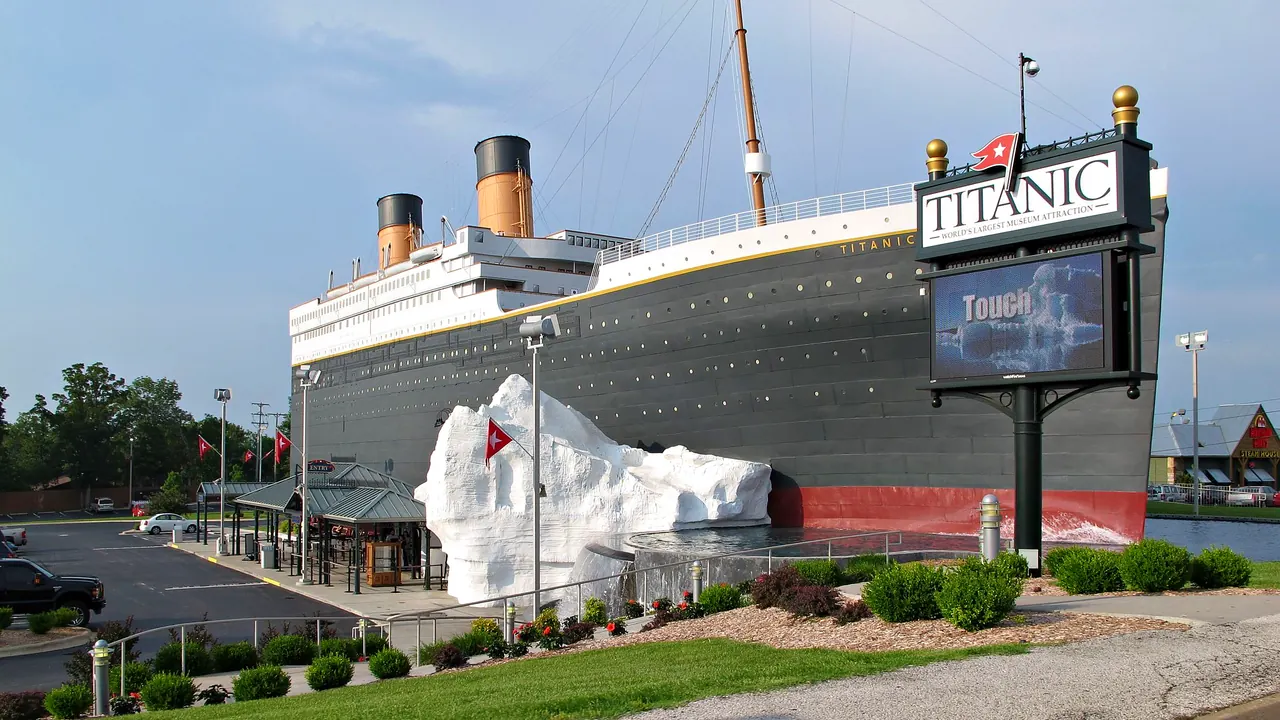
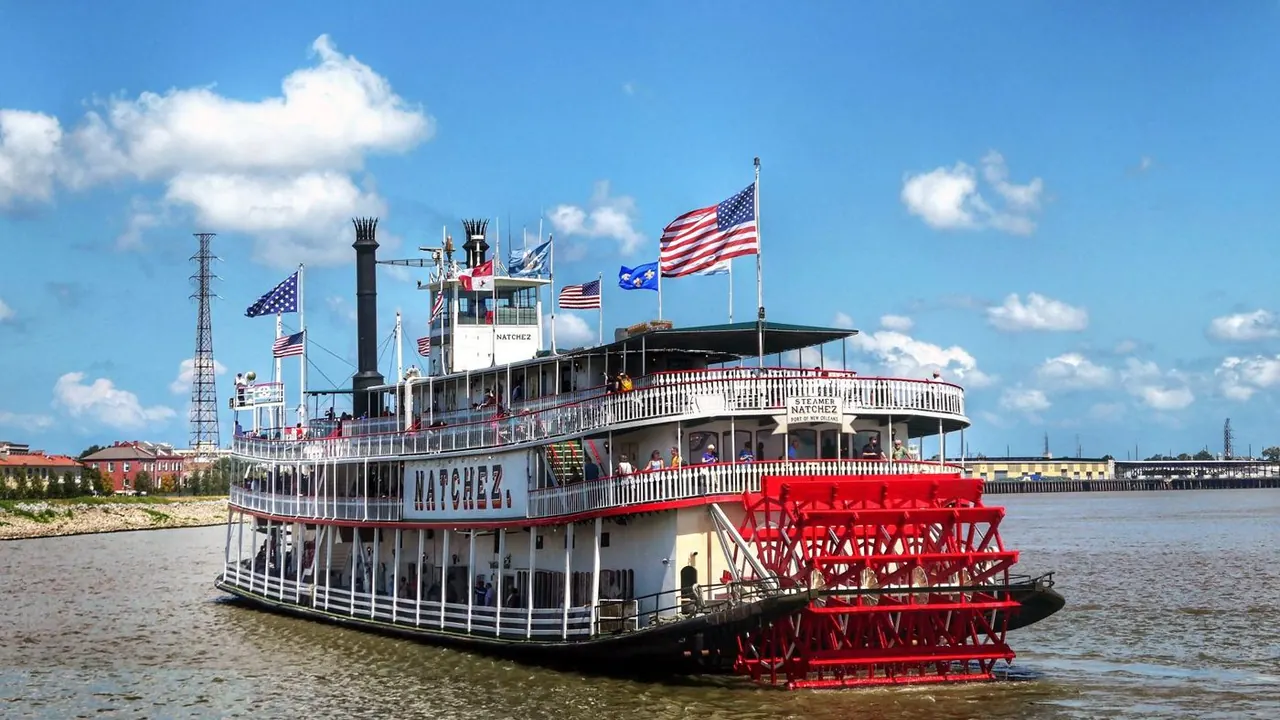
Photos: Branson by Brad A. Totman, Public domain; New Orleans by Bernard Spragg, CC0.
Branson or New Orleans?
Our verdict in twelve categories, each scored against the same fixed benchmark cities, and the climate month by month, so you can choose for your trip.
Choose Branson for
- families
- nature and the outdoors
- beaches
Branson suits a family road trip built around shows and the lake. Children are expected everywhere, the theatres put on wholesome country, gospel and variety from morning to evening, and Table Rock Lake and the Ozark hills give you boating, summer swimming and woodland walks. You will drive everywhere, though, and the town goes to bed when the shows end.
Choose New Orleans for
- nightlife
- food and drink
- culture and sights
Choose New Orleans if you are adults travelling to eat, drink and listen. Creole and Cajun cooking, jazz in the clubs of Frenchmen Street and bars with no closing time fill the evenings. By day, the French Quarter and the Garden District give you real history. You can get around on foot and by streetcar, where Branson needs a car, but the city is less suited to young children after dark.
Scoreboard
Twelve categories on one fixed scale from 0 to 100. The shaded stretch is the gap between the two.
Your match
Pick a travel style or drag the sliders, and both match scores follow your weighting.
Wins on families and nature and the outdoors with your weighting.
Wins on nightlife and food and drink with your weighting.
What matters to you?
Category by category
What the scores mean for a trip.
Beaches & swimming
Neither city is a beach destination, but Branson at least has summer swimming close by. Table Rock Lake warms to about 27°C from June to early September and the water is clear. You swim at public swim areas, many of them on brought-in sand, or from a rented pontoon in a quiet cove.
New Orleans has nothing like this in town. Lake Pontchartrain is used for sailing, and the Mississippi is a working river. The nearest sand is on the Mississippi Gulf Coast, more than an hour's drive away, where the water is warm but shallow and brownish. Most visitors end up in the hotel pool.
Food & drink
This is one of the widest gaps between the two. In Branson you eat to keep going: fried chicken, catfish, buffets and chain restaurants along Highway 76. The Ozark touches, such as skillet cooking, fudge and fresh trout, are the most memorable things on the table.
New Orleans has one of the most distinctive cuisines in the country, Creole and Cajun, served everywhere from century-old dining rooms in the French Quarter to po'boy shops in Mid-City. Crawfish boils come in spring and oysters in the cooler months. The Sazerac was born here, and the city takes its cocktail bars seriously in a way Branson has no equivalent for.
Culture & sights
Branson's sights are entertainment rather than heritage: wax museums, a museum shaped like the bow of an ocean liner, and frontier crafts demonstrated at the 1880s-themed park. The Ralph Foster Museum at College of the Ozarks is the closest it comes to a serious collection.
In New Orleans you walk through real history. The French Quarter is a rare intact colonial townscape, with St. Louis Cathedral and the Cabildo on Jackson Square. The Garden District mansions, the above-ground tombs and the National WWII Museum add to it. The list of museums is short, but the streets themselves are the main sight.
Nightlife
In Branson the night ends with the curtain call. A few brewpubs around the lakefront shopping district and some hotel lounges are all there is. New Orleans is the opposite: there is no legal closing time, and you can carry your drink along the street.
Bourbon Street is the loud, neon end of the city's nightlife, while locals head to Frenchmen Street, the dive bars of the Bywater and the old corner bars. Expect to wander from bar to bar on foot rather than spend the night in big clubs, and watch for pickpockets late on Bourbon Street.
Nature & outdoors
Branson has the better outdoors. Its Ozark setting gives you wooded ridges, limestone bluffs and caves, boating and bass fishing on Table Rock Lake, and walks in Hercules Glades. The bluffs of the Buffalo National River are about two hours south.
The nature around New Orleans is flat and watery: boat tours through cypress swamps and bayous with alligators, boardwalks in the Barataria Preserve, and the oaks and lagoons of City Park. It has plenty of atmosphere, but there are no hills, and the summer heat limits outdoor activity to spring and late autumn.
Day trips
From Branson, the best outings are Victorian Eureka Springs, the Crystal Bridges art museum in Bentonville and the Civil War battlefield at Wilson's Creek near Springfield. Every one of them needs a car.
New Orleans has the somewhat stronger list. The River Road plantations, including Oak Alley and the deeply moving Whitney, are about an hour away. Baton Rouge's Art Deco capitol, the small Gulf towns of Bay St. Louis and Ocean Springs, and the Cajun dance halls around Lafayette add variety. Even so, both lists run thin after a couple of days.
Good for families
Branson is built for children, and it shows. The themed park in the hills, the water parks, the aquarium, zip lines, go-karts, caves and dinner shows with horses can fill a week, and days on the lake in a rented boat round it off.
New Orleans does well for a city known for partying. It has Audubon Zoo, the Aquarium of the Americas, and the children's museum and antique carousel in City Park, along with streetcar rides and the Mardi Gras parades on St. Charles Avenue. But parents should keep children away from Bourbon Street at night and choose their streets carefully after dark.
Getting around
Branson is a car town. Its attractions are spread along Highway 76 over several hilly kilometres, the pavements are patchy and traffic on the strip crawls on show nights. Only Branson Landing and the small old downtown are easy to walk.
New Orleans is much easier without a car. The French Quarter, the Marigny and the Warehouse District are flat and walkable, and the historic St. Charles streetcar runs out to the Garden District. The streetcars are slow and the buses limited, so ride-hailing fills the gaps, and you need a hire car only for day trips.
Shopping & style
Shopping in Branson means outlet malls, mainstream stores at Branson Landing and souvenirs. The best buys are Ozark crafts such as hand-blown glass, quilts and woodcarving, often made in front of you.
New Orleans has more character. Royal Street has antique dealers and galleries, Magazine Street has miles of independent and vintage shops, and the French Market sells Mardi Gras masks and local hot sauces. Neither city is the place for designer labels.
Affordability
Branson comes out a little cheaper overall. Motels, condos and lake cabins are good value outside the peak weekends, and buffets keep meals modest. The costs come from the hire car you need and from paid entertainment: shows, theme and water parks, and boat hire.
In New Orleans, rooms are the main expense. French Quarter hotels are priced like a big American city, taxes are high, and rates rise sharply around Mardi Gras and Jazz Fest. Cheap po'boys, the streetcar and free street music help, but a stay usually costs more overall.
Live music & performing arts
Live performance is central to both cities, but in very different styles. Branson's dozens of theatres run country, gospel, variety revues, tribute acts and biblical productions with live animals from morning to night. The shows are polished and wholesome, and the Christmas season is as busy as summer.
New Orleans has the deeper and more varied scene. Traditional jazz, brass bands, funk, zydeco and blues play every night on Frenchmen Street and in Tremé, and there are second-line parades on Sundays and Jazz Fest in spring. Neither city has much opera or serious theatre, so in New Orleans the real offer is the music in the clubs and on the streets.
Wellness & relaxation
Neither city is a spa destination, but Branson gives you a little more rest if you stay on Table Rock Lake. The lodge resorts there have full spas, and a cabin on a wooded cove is truly quiet. The strip itself is anything but restful.
New Orleans has day spas in the larger hotels and little else. Its version of relaxation is a slow pace: a morning in a courtyard guesthouse, a streetcar ride under the oaks of St. Charles Avenue, an afternoon in City Park.
When should you go?
Pick your month. The climate figures are measured averages, not a forecast.
Branson in July
New Orleans in July
Daytime high, °C
Rainfall in the month, mm
Where the figures come from
Branson's station stands 174 m above the city centre, so the centre is likely a little warmer than the figures say.
Branson has no rain gauge within 25 km of the centre, so its rainfall comes from a gridded climate dataset read at the city rather than from a gauge further away.
Branson's sunshine is measured 69 km from the centre, at Springfield-Branson National.
Temperature and rainfall are climate normals, averaged over the years shown. Branson: 2014-2025 (sunshine 1991-2020, rainfall 1991-2020) normals, Branson West (14.8 km from centre). New Orleans: 1991-2020 (sunshine 1981-2010) normals, New Orleans Airport (2.7 km from centre).
Branson has four distinct seasons. Winters are cold, with January highs of about 7°C, so in the colder months the theatres and Christmas shows are the main reason to go. April, May and late September into October are the best times for walking the Ozark trails. From June to early September it is warm enough to swim in Table Rock Lake, though July reaches 32°C with heavy humidity and the sunniest skies of the year.
New Orleans stays mild while Branson is cold, with winter days in the high teens, so November to April is the comfortable time for walking the Quarter. From May to September the heat is oppressive, and summer is also the wettest stretch, with June the peak at around 194mm. The Gulf water reaches 30°C in summer, but the nearest beaches are over an hour away and the water is murky, so the heat does little for a beach lover.
Which traveller are you?
On a family trip with children, Branson is the stronger choice. The Ozarks-themed park, the water parks, the showboat cruises and the dinner shows with horses and stunts are all built for young visitors. New Orleans has a good zoo, but the Quarter at night is not for children.
For a food and nightlife trip, New Orleans is the clear choice: gumbo, po'boys and oysters by day, then jazz on Frenchmen Street and bars with no closing time. Branson offers buffets and chains, and the town goes quiet once the theatres empty.
On an outdoors trip, Branson's forested Ozark ridges give you more to do: kayaking and bass fishing on Table Rock Lake, trout fishing below the dam, walks in Hercules Glades and caves to explore. New Orleans has swamp boat tours and City Park, but the land is flat and summers are stifling.
Before you go
| Measure | Branson | New Orleans |
|---|---|---|
| Currency | US Dollar (USD) | US Dollar (USD) |
| Sockets | AB120 V, 60 Hz | AB120 V, 60 Hz |
| Driving side | Right | Right |
| Time zone | UTC-6, UTC-5 in summer | UTC-6, UTC-5 in summer |
| Emergency number | 911 | 911 |
| Elevation | 237 m | -2 m |
| Main airport | Springfield Branson National Airport (SGF)69 km from centre14 non-stop destinations | Louis Armstrong New Orleans International Airport (MSY)18 km from centre51 non-stop destinations |
| Public holidays this year | 14 days | 14 days |
By the numbers
| Measure | Branson | New Orleans |
|---|---|---|
| City population | 12,638 | 383,997 |
| People per km² | 234 | 423 |
| Museums within 10 km | 2 | 16 |
| UNESCO World Heritage sites within 50 km | 0 | 0 |
| Swim season, months above 21 °C | - | 7 months |
Where else could you go?
Every comparison below shares a destination with this one, so you can follow Branson or New Orleans somewhere new.
- Gulf Shoresvs New Orleans
- Orange Beachvs New Orleans
- Pensacolavs New Orleans
- Kansas Cityvs Branson
- Memphisvs Branson
- St. Louisvs Branson