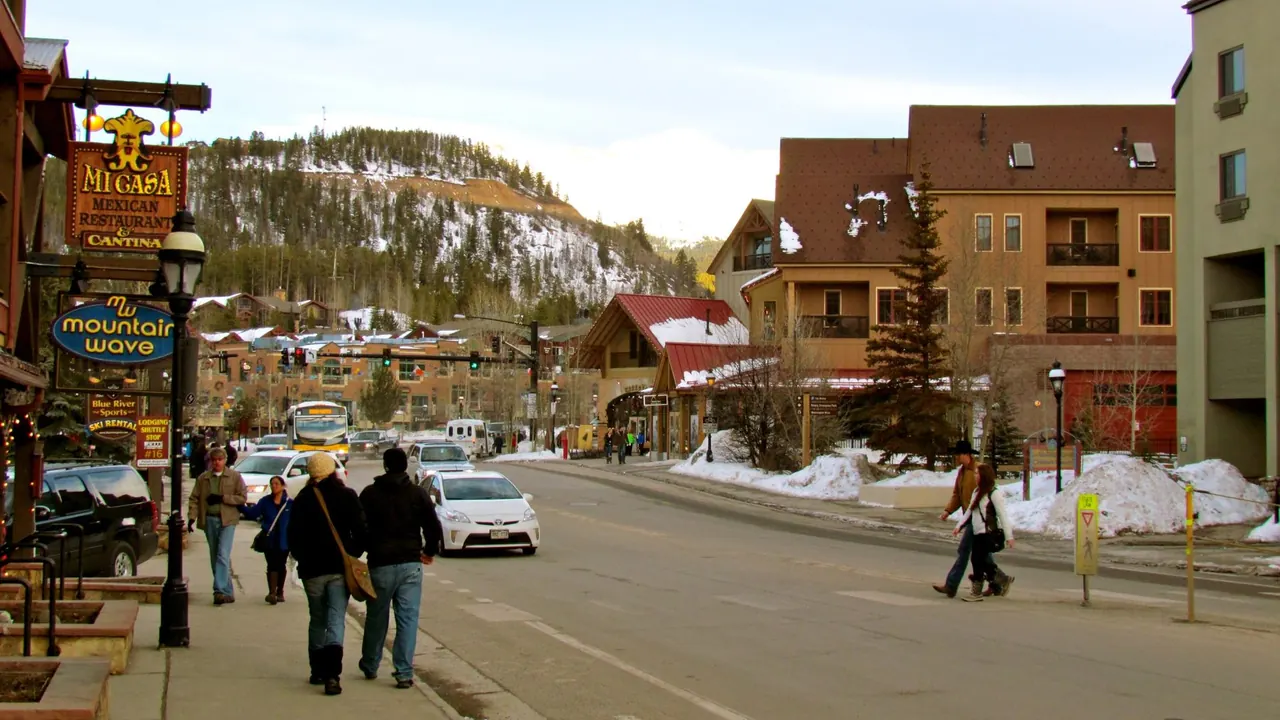
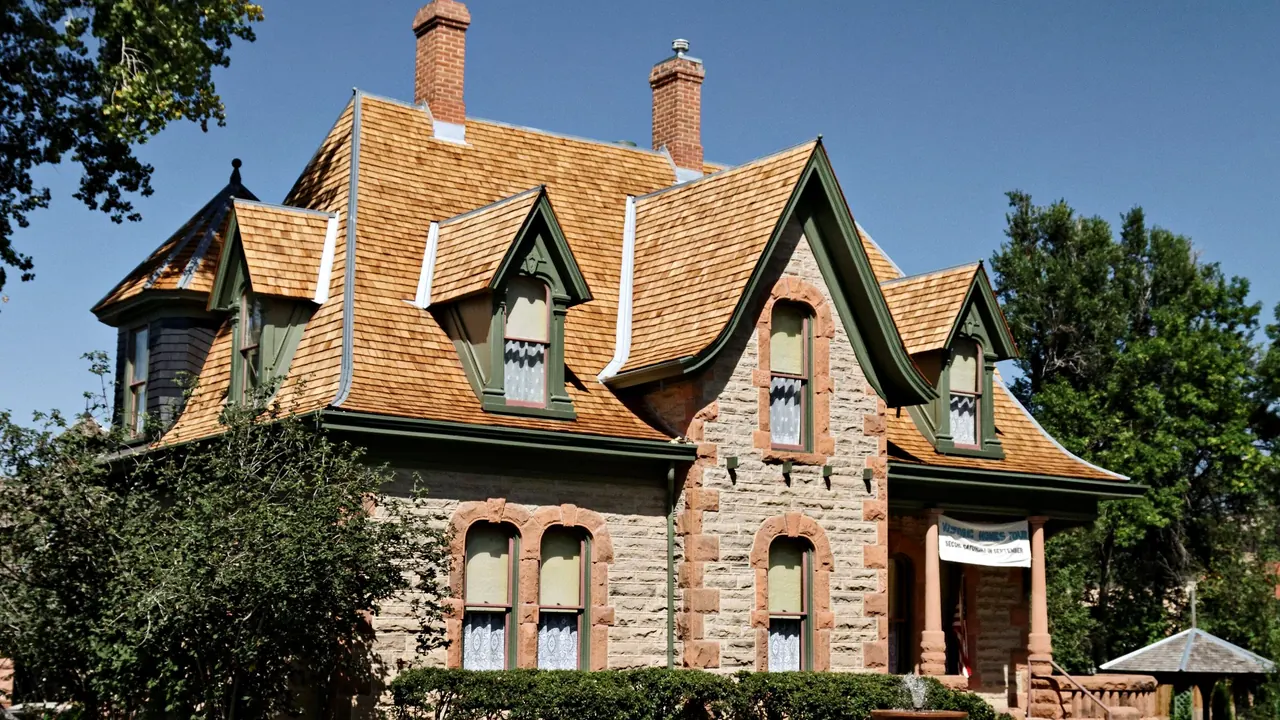
Photos: Breckenridge by Jeff Gunn, CC BY 2.0, cropped; Fort Collins by Gribeco, CC BY-SA 3.0, cropped.
Breckenridge or Fort Collins?
Our verdict in twelve categories, each scored against the same fixed benchmark cities, and the climate month by month, so you can choose for your trip.
Choose Breckenridge for
- getting around
- nature and the outdoors
- families
Breckenridge is the choice when the mountains themselves are the trip. It puts you at the foot of a big ski area, with Quandary Peak and a dense trail network on the doorstep in summer, and free gondolas and buses mean you can spend a week without a car. Families who ski will find it well organised for children. The price of all this is a steep bill and thin air.
Choose Fort Collins for
- prices
- food and drink
- nightlife
Fort Collins makes more sense for a relaxed, cheaper stay that mixes the outdoors with town life. Its craft-beer scene is famous, the university keeps Old Town busy at night, and foothills trails, the Poudre canyon and Rocky Mountain National Park are all within reach. Downhill skiing is a long drive away, though, and outside the centre you will want a car.
Scoreboard
Twelve categories on one fixed scale from 0 to 100. The shaded stretch is the gap between the two.
Your match
Pick a travel style or drag the sliders, and both match scores follow your weighting.
Too close to call, 2 points apart
Wins on getting around and nature and the outdoors with your weighting.
Wins on prices and food and drink with your weighting.
What matters to you?
Category by category
What the scores mean for a trip.
Beaches & swimming
Neither town is a swimming destination. Fort Collins has the edge, because Horsetooth Reservoir has a designated swim beach and warms up enough in July and August for a summer afternoon on the water.
At Breckenridge's altitude, Lake Dillon and the alpine lakes stay far too cold to swim in. Swimming there means the recreation centre's indoor pools or a hot tub.
Food & drink
Both towns serve casual food with no real culinary tradition, but Fort Collins is the better place to eat and especially to drink. Its long-established breweries and many smaller taprooms make beer a reason to come, and the summer farmers' markets bring in Colorado produce such as Palisade peaches.
Breckenridge brews and distils too, and a few chef-led kitchens cook elk, trout and bison. Most of its menus are built to feed hungry skiers, though, tables are hard to get in peak weeks, and some kitchens close between seasons.
Culture & sights
Neither is a sightseeing destination, and each fills an afternoon or a day. They differ in flavour. Breckenridge tells a gold-rush story through its painted Victorian storefronts, miners' cabins, a mine tour with gold panning and the old dredge remains on the Blue River.
Fort Collins has a red-brick Old Town around a pedestrian square and a few more indoor options, such as the Museum of Discovery, the Avery House and the university's art museum.
Nightlife
Fort Collins has the livelier evenings over a normal week. Thanks to its students, pubs, rooftop patios, cocktail bars and taprooms are busy around the main square, and there are a handful of dance clubs.
Breckenridge's evenings are après-ski in ski boots, with saloons and brewpubs that can run past midnight on a winter Saturday. Most of the crowd heads to bed early, and in spring and autumn the town is silent after dinner.
Nature & outdoors
Both are excellent bases for the outdoors, but Breckenridge is surrounded by high mountains. Its ski terrain climbs above the treeline, four more resorts are close, and summer brings 4,000m Quandary Peak and trails through aspen and wildflower meadows straight from town. The cost is altitude, which needs a day or two of adjustment.
Fort Collins sits at the meeting of the plains and the foothills. It offers Horsetooth Mountain and Lory State Park, rafting and fly fishing in the Poudre canyon, and Rocky Mountain National Park about an hour and a half away. There is no downhill skiing nearby.
Day trips
Fort Collins has slightly more variety within reach: Boulder beneath the Flatirons, Denver's big museums, Estes Park, Golden, and Cheyenne's frontier museum across the Wyoming line, though nearly all need a car.
Breckenridge's best outings are mining towns, with silver-boom Leadville over Hoosier Pass and Georgetown's narrow-gauge railway. Otherwise it is mostly neighbouring ski resorts, and winter weather can lengthen any drive.
Good for families
Breckenridge is the stronger family choice, provided the family skis. Ski schools take young children, the beginner slopes are gentle, and in summer the mountain turns into an activity park with an alpine coaster and climbing walls. Altitude sickness and the hassle of winter gear are the real drawbacks.
Fort Collins is easier going but has less of a headline. Its draws are flat river cycle paths, the farm at Lee Martinez Park, the children's garden at Gardens on Spring Creek and summer days at the reservoir.
Getting around
Breckenridge is easier once you arrive. The historic centre is compact, a free gondola runs to the ski base, and free town and county buses reach Frisco, Keystone and Copper Mountain, so many visitors never drive. The catch is the two-hour road from Denver's airport, which snow and traffic can stretch badly.
Fort Collins has a flat, bike-friendly centre with a rapid-bus line and long off-street trails. Beyond that it spreads into suburbs, and the foothills and canyon really need a hire car.
Shopping & style
Shopping is a browse in both, not a reason to visit. Breckenridge leans towards ski and outdoor gear, galleries of Western landscapes and souvenirs at resort prices, with outlet malls in Silverthorne nearby. Fort Collins has more independent character in Old Town, with bookshops, cycling shops, vintage clothing and Colorado-made gifts.
Affordability
This is the widest gap between the two, and it favours Fort Collins. A winter week in Breckenridge piles slope-side lodging on top of lift access, lessons and equipment hire, and the festive and spring-break weeks push the bill higher still. Booking lift access ahead takes some of the sting out, summer and the shoulder months cost far less, and the free gondola and buses mean there is no car to pay for.
Fort Collins spends your money differently. There are no lift passes, but a hire car is close to essential and becomes the largest single extra, and sit-down dinners grow once tax and tip are added. Room rates jump on university graduation and football weekends, while wandering Old Town costs nothing at all.
Live music & performing arts
The two are broadly level, but their seasons differ. Breckenridge comes alive in July and August, when a festival orchestra and a national orchestra academy play at the open-sided Riverwalk Center by the river. In winter there is little beyond bar bands.
Fort Collins spreads its programme across the year, with touring Broadway, dance and the symphony at the Lincoln Center, university concerts and opera, and indie and bluegrass bands on Old Town stages.
Wellness & relaxation
Neither has a bathing tradition, and the nearest natural springs are in Idaho Springs for both, though Breckenridge is a little closer. Breckenridge offers resort spas and nightly outdoor hot tubs in the snow, but full ski days and thin air leave many visitors tired. Fort Collins has only ordinary day spas and yoga studios, but its unhurried pace and shaded river paths make it a gentler place to slow down.
When should you go?
Pick your month. The climate figures are measured averages, not a forecast.
Breckenridge in July
Fort Collins in July
Daytime high, °C
Rainfall in the month, mm
Where the figures come from
Breckenridge's temperatures are measured 38 km from the centre, at Leadville / Stringtown.
Breckenridge has no rain gauge within 25 km of the centre, so its rainfall comes from a gridded climate dataset read at the destination rather than from a gauge further away.
Fort Collins has no rain gauge within 25 km of the centre, so its rainfall comes from a gridded climate dataset read at the destination rather than from a gauge further away.
Temperature and rainfall are climate normals, averaged over the years shown. Breckenridge: 2006-2020 (rainfall 1991-2020) normals, Leadville / Stringtown (37.7 km from centre). Fort Collins: 2006-2020 (rainfall 1991-2020) normals, Fort Collins / Redmond (16.1 km from centre).
Breckenridge is a winter destination first. Daytime highs sit around -2°C from December to February, which is exactly what keeps the snow dry and deep for skiing. Summer is short but lovely: July peaks near 21°C, ideal for hiking and biking, with brief afternoon showers in July and August. The months between, April to May and October to November, are cold, muddy and quiet.
Fort Collins, far lower on the plains, runs much warmer. July reaches about 32°C, hot for walking around town but the time to swim at Horsetooth Reservoir. Winters are mild for Colorado and very dry, while May is the wettest month at around 60mm. The most comfortable stretch for exploring is September, when days are still near 26°C, along with late spring once the May rain has passed.
Which traveller are you?
For skiers and snowboarders, Breckenridge wins outright. Five peaks rise directly above town, and Keystone, Copper Mountain and Arapahoe Basin are close by. Fort Collins offers only snowshoeing and cross-country trails, with the big resorts several hours away.
On a trip with a tight budget, Fort Collins is the far easier choice. Hotels and taproom meals are moderately priced and the trails cost nothing. Breckenridge charges full ski-resort prices, and even staying in Frisco only softens the bill.
For a food and nightlife trip, Fort Collins pulls ahead. Its long-established breweries and many taprooms can fill several days, and a large student population keeps Old Town bars and patios busy at weekends. Breckenridge's après-ski bars thin out after early nights and in the shoulder seasons.
Before you go
| Measure | Breckenridge | Fort Collins |
|---|---|---|
| Currency | US Dollar (USD) | US Dollar (USD) |
| Sockets | AB120 V, 60 Hz | AB120 V, 60 Hz |
| Driving side | Right | Right |
| Time zone | UTC-7, UTC-6 in summer | UTC-7, UTC-6 in summer |
| Emergency number | 911 | 911 |
| Elevation | 2,926 m | 1,525 m |
| Main airport | Denver International Airport (DEN)124 km from centre231 non-stop destinations | Denver International Airport (DEN)88 km from centre231 non-stop destinations |
| Public holidays this year | 12 days | 12 days |
By the numbers
| Measure | Breckenridge | Fort Collins |
|---|---|---|
| Population | 5,078 | 169,810 |
| People per km² | 332 | 1,181 |
| Museums within 10 km | 0 | 2 |
| UNESCO World Heritage sites within 50 km | 0 | 0 |
Where else could you go?
Every comparison below shares a destination with this one, so you can follow Breckenridge or Fort Collins somewhere new.
- Copper Mountainvs Breckenridge
- Keystonevs Breckenridge
- Vailvs Breckenridge
- Estes Parkvs Fort Collins
- Beaver Creekvs Breckenridge
- Winter Park, Coloradovs Breckenridge