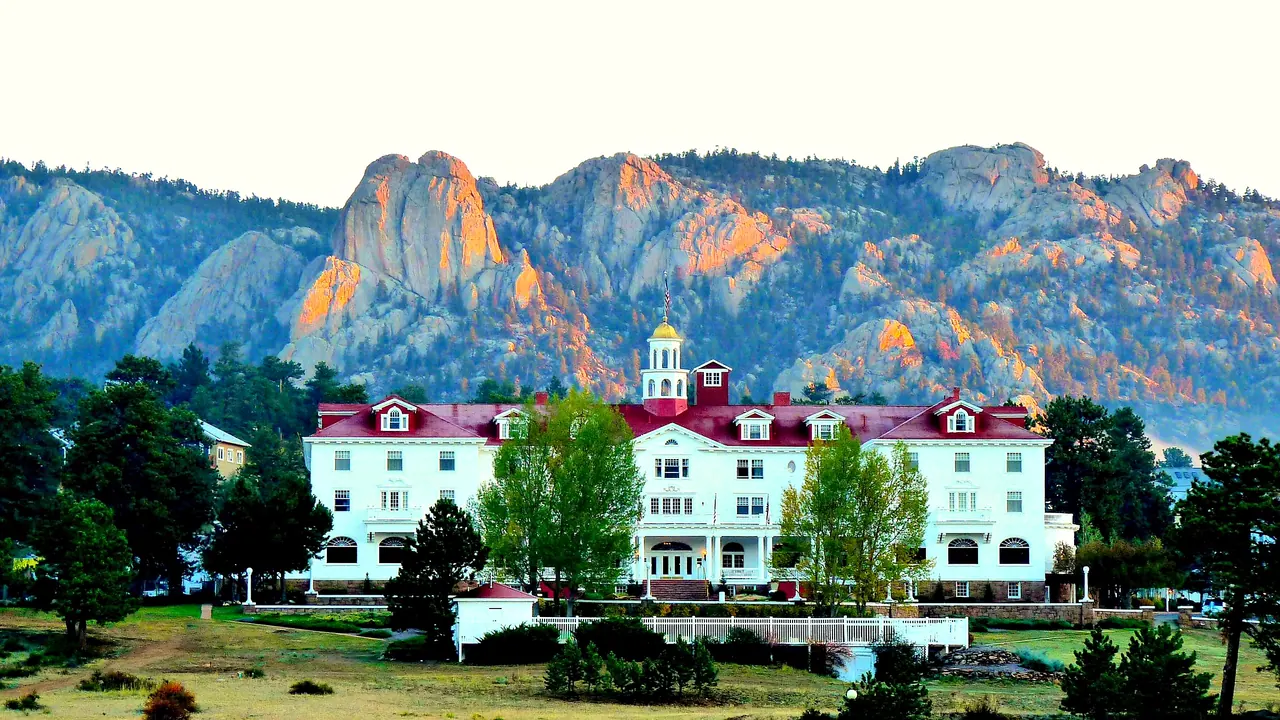
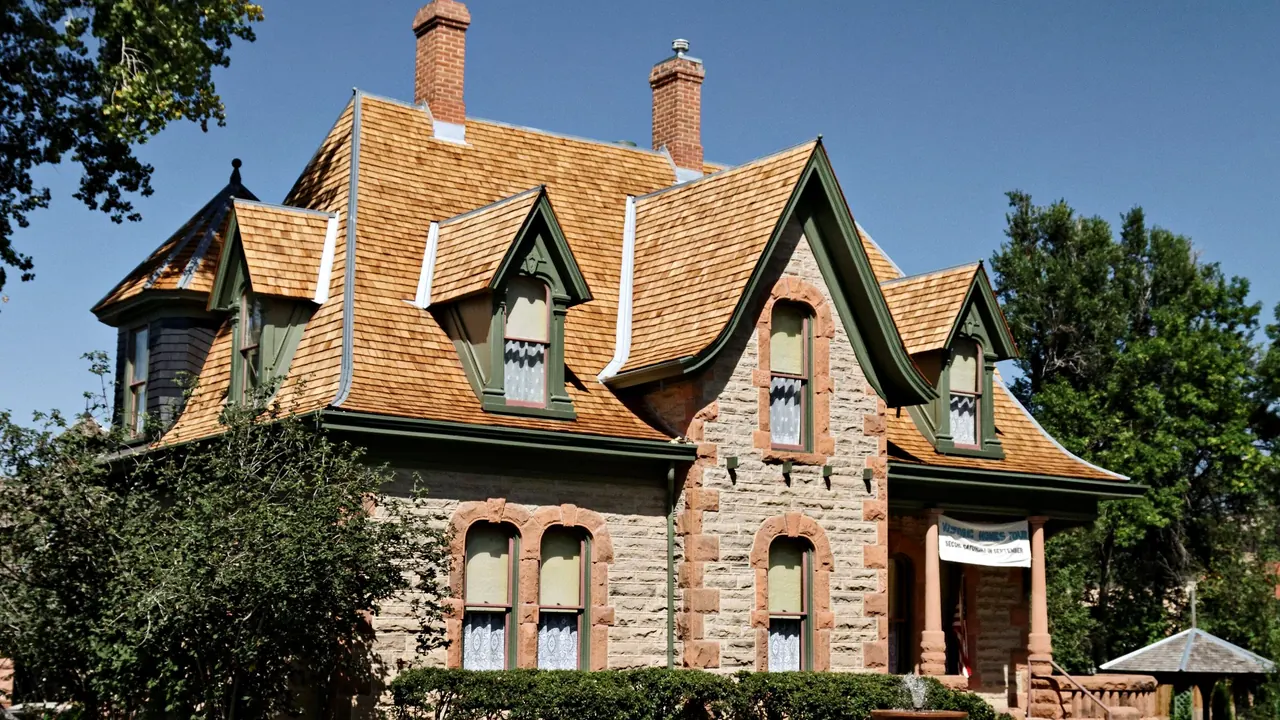
Photos: Estes Park by 1progressivedem1, CC BY-SA 4.0, cropped; Fort Collins by Gribeco, CC BY-SA 3.0, cropped.
Estes Park or Fort Collins?
Our verdict in twelve categories, each scored against the same fixed benchmark cities, and the climate month by month, so you can choose for your trip.
Choose Estes Park for
- nature and the outdoors
- families
- wellness
Estes Park is the choice for travellers whose days revolve around Rocky Mountain National Park: early starts for elk and alpine lakes, long trails above the treeline and quiet evenings in a cabin. It also suits families who want wildlife on the doorstep, as long as they accept a small town with little to do after dark or on a wet afternoon.
Choose Fort Collins for
- nightlife
- live music and the arts
- food and drink
Fort Collins makes more sense for a trip that mixes the outdoors with town life. The foothills and the Poudre Canyon are close by, but the city also has a deep craft-beer scene, a livelier Old Town in the evenings, a real concert and theatre programme and somewhat gentler prices. The national park is still within reach for a day.
Scoreboard
Twelve categories on one fixed scale from 0 to 100. The shaded stretch is the gap between the two.
Your match
Pick a travel style or drag the sliders, and both match scores follow your weighting.
Wins on nature and the outdoors and families with your weighting.
Wins on nightlife and live music and the arts with your weighting.
What matters to you?
Category by category
What the scores mean for a trip.
Beaches & swimming
Neither is a beach destination, and both are far from any coast. Fort Collins at least has somewhere to swim: Horsetooth Reservoir has a designated swim beach and warms up in July and August. Estes Park's snowmelt lakes are for paddling and fishing, so a swim there means a hotel pool or the indoor aquatic centre.
Food & drink
Fort Collins has the more interesting table, mainly because of its beer. Its long-established breweries and the many taprooms across the city make it a craft-beer destination in its own right. Old Town adds gastropubs, taco spots, a few farm-to-table kitchens and summer farmers' markets selling Palisade peaches.
Estes Park eats like the trailhead town it is: elk and bison burgers, barbecue, big breakfasts and taffy from Elkhorn Avenue, plus a few breweries of its own. The food is satisfying after a hike, but the range is narrow, and many kitchens close early or cut back outside summer.
Culture & sights
Neither will fill a sightseeing trip, and what they offer is different in kind. Estes Park has one famous landmark, the Stanley Hotel, known for its ghost stories and its link to The Shining, plus a small local museum and the historic MacGregor Ranch.
Fort Collins has a little more for a day of wandering. Its late nineteenth-century red-brick Old Town is pleasant in itself, and the Museum of Discovery, the Victorian Avery House and the university's art museum add some variety.
Nightlife
Of the two, only Fort Collins has nightlife worth going out for. University students fill Old Town's pubs, sports bars, rooftop patios and cocktail bars on weekends, and there are a few dance clubs, though weeknights and the summer break are calmer.
Estes Park keeps mountain hours. A beer in a taproom or saloon on Elkhorn Avenue after the trail is the whole evening, and most visitors go to bed early so they can be out for wildlife at dawn.
Nature & outdoors
Both are good bases for the outdoors, but Estes Park sits right at the entrance to Rocky Mountain National Park. Within minutes you are among alpine lakes, on the tundra along Trail Ridge Road or under the granite of Longs Peak, and elk, bighorn sheep and moose are everyday sightings.
Fort Collins has its own lower-altitude country: foothills trails in Horsetooth Mountain Open Space and Lory State Park, rafting and fly fishing in the Poudre Canyon, and cycle paths along the river through town. The high alpine scenery, though, is about an hour and a half away by car.
Day trips
Fort Collins has more within reach, and in more directions. Boulder, Denver and Golden lie to the south and Estes Park to the west. Across the Wyoming line, Cheyenne, with its frontier museum and summer rodeo, is under an hour away, and Laramie is a little further.
From Estes Park, every worthwhile day out means driving down a canyon to the plains: Boulder, Fort Collins, Denver or little Lyons. The one excursion it has that Fort Collins lacks is the summer drive over Trail Ridge Road to Grand Lake.
Good for families
Estes Park makes the bigger impression on children who love animals and the outdoors. Elk wander through town, the park runs junior ranger activities, and there are mini golf, go-karts, riding stables and the tramway up Prospect Mountain. The catches are the altitude, the long drives into the park and rainy days that are hard to fill.
Fort Collins is easier from day to day, with playgrounds in every neighbourhood, the Museum of Discovery and its dome theatre, the farm at Lee Martinez Park and gentle tubing on the river. What it lacks is the kind of wildlife encounter children talk about afterwards.
Getting around
Fort Collins is the easier place to manage without a car, at least in the centre. Old Town is flat and compact, and a frequent rapid-bus line runs north to south. With protected lanes, bike-share and long off-street trails, it is also one of the best cities in the country for cycling.
Estes Park's downtown is easy on foot, and in the warmer months free shuttles run to the Bear Lake corridor. Otherwise a car is close to essential, and traffic and parking get heavy on summer weekends. From both, the trailheads and day trips need a car.
Shopping & style
Estes Park's Elkhorn Avenue is a souvenir street, while Fort Collins's Old Town is a small cluster of independent shops. Along Elkhorn Avenue it is T-shirts, taffy and fudge, western wear, outdoor gear and galleries of wildlife photography and Native American-style jewellery, enough for an hour's stroll after a hike.
Fort Collins gives you more to browse. Within a few walkable blocks there are boutiques, bookshops, cycling shops, vintage clothing and Colorado-made gifts, which can fill an afternoon, and there is a regional mall on the edge of town. Neither has luxury shops or fashion streets, so for those you go to Denver.
Affordability
Fort Collins is the cheaper base. It has mid-priced chain hotels along the highways and reasonable taprooms, and its trails and river paths are free, though rooms get much dearer on graduation and football weekends.
Estes Park is expensive in summer and early autumn, when the lodges near the park fill up. Rooms are far cheaper in winter and spring, and cabins with kitchens help families keep costs down. In both, a hire car is the largest extra cost for most visitors.
Live music & performing arts
Fort Collins has a real programme, regional in scale. The Lincoln Center hosts touring Broadway shows, dance and the symphony, the university arts centre stages opera and theatre during term, and small Old Town stages book indie and bluegrass bands.
Estes Park has little outside summer: free riverside concerts, the occasional evening at the Stanley Hotel and the Scottish-Irish Highland Festival each September, with its pipe bands and dancing.
Wellness & relaxation
Neither has hot springs or a bathing tradition, and in both the spa choice comes down to a few day spas and massage studios. Where they differ is the kind of calm. Estes Park offers a cabin by a river, mountain air and elk at dusk, best outside the summer crowds. Fort Collins is relaxing in a more ordinary way, with quiet neighbourhoods, shaded river paths and long sunny days.
When should you go?
Pick your month. The climate figures are measured averages, not a forecast.
Estes Park in July
Fort Collins in July
Daytime high, °C
Rainfall in the month, mm
Where the figures come from
Estes Park's temperatures are measured 80 km from the centre, at Kremmling.
Estes Park has no rain gauge within 25 km of the centre, so its rainfall comes from a gridded climate dataset read at the destination rather than from a gauge further away.
Fort Collins has no rain gauge within 25 km of the centre, so its rainfall comes from a gridded climate dataset read at the destination rather than from a gauge further away.
Temperature and rainfall are climate normals, averaged over the years shown. Estes Park: 2006-2025 (rainfall 1991-2020) normals, Kremmling (80.4 km from centre). Fort Collins: 2006-2020 (rainfall 1991-2020) normals, Fort Collins / Redmond (16.1 km from centre).
Estes Park sits high in the mountains and has a short warm season. Days are good for hiking from June to September, with July highs around 29°C, but summer afternoons bring thunderstorms and July is the wettest month. Winter is properly cold, with January highs around -4°C. That suits snowshoeing more than strolling the streets, and spring stays chilly well into May.
Fort Collins, down on the plains, is several degrees warmer all year. July highs around 32°C make midday walking hot, but July and August are also when Horsetooth Reservoir is warm enough for a swim. May is the wettest month at about 60mm. Winter is very dry and often mild enough for a walk round Old Town, with January highs around 5°C. In both places September is a fine month: still warm, drier than midsummer, with autumn colour reaching the high country.
Which traveller are you?
For an outdoors trip, Estes Park wins. The national park starts minutes from town, with Trail Ridge Road, lakes such as Bear and Emerald, Longs Peak overhead and elk in the meadows. From Fort Collins the high country is a long drive away.
On a food and nightlife trip, Fort Collins is the clear pick. Its breweries and taprooms can fill several days, Old Town has gastropubs and rooftop patios, and students keep weekends busy. Estes Park offers hearty meals and is quiet by ten.
On a family trip with children who love animals, Estes Park comes out ahead, with junior ranger activities, flat lakeside walks, elk in town and the tramway up Prospect Mountain. Fort Collins copes better with rainy days, thanks to its hands-on science museum and children's farm.
Before you go
| Measure | Estes Park | Fort Collins |
|---|---|---|
| Currency | US Dollar (USD) | US Dollar (USD) |
| Sockets | AB120 V, 60 Hz | AB120 V, 60 Hz |
| Driving side | Right | Right |
| Time zone | UTC-7, UTC-6 in summer | UTC-7, UTC-6 in summer |
| Emergency number | 911 | 911 |
| Elevation | 2,293 m | 1,525 m |
| Main airport | Denver International Airport (DEN)92 km from centre231 non-stop destinations | Denver International Airport (DEN)88 km from centre231 non-stop destinations |
| Public holidays this year | 12 days | 12 days |
By the numbers
| Measure | Estes Park | Fort Collins |
|---|---|---|
| Population | 5,904 | 169,810 |
| People per km² | 335 | 1,181 |
| Museums within 10 km | 4 | 2 |
| UNESCO World Heritage sites within 50 km | 0 | 0 |
Where else could you go?
Every comparison below shares a destination with this one, so you can follow Estes Park or Fort Collins somewhere new.
- Bouldervs Estes Park
- Winter Park, Coloradovs Estes Park
- Bouldervs Fort Collins
- Denvervs Estes Park
- Denvervs Fort Collins
- Keystonevs Estes Park