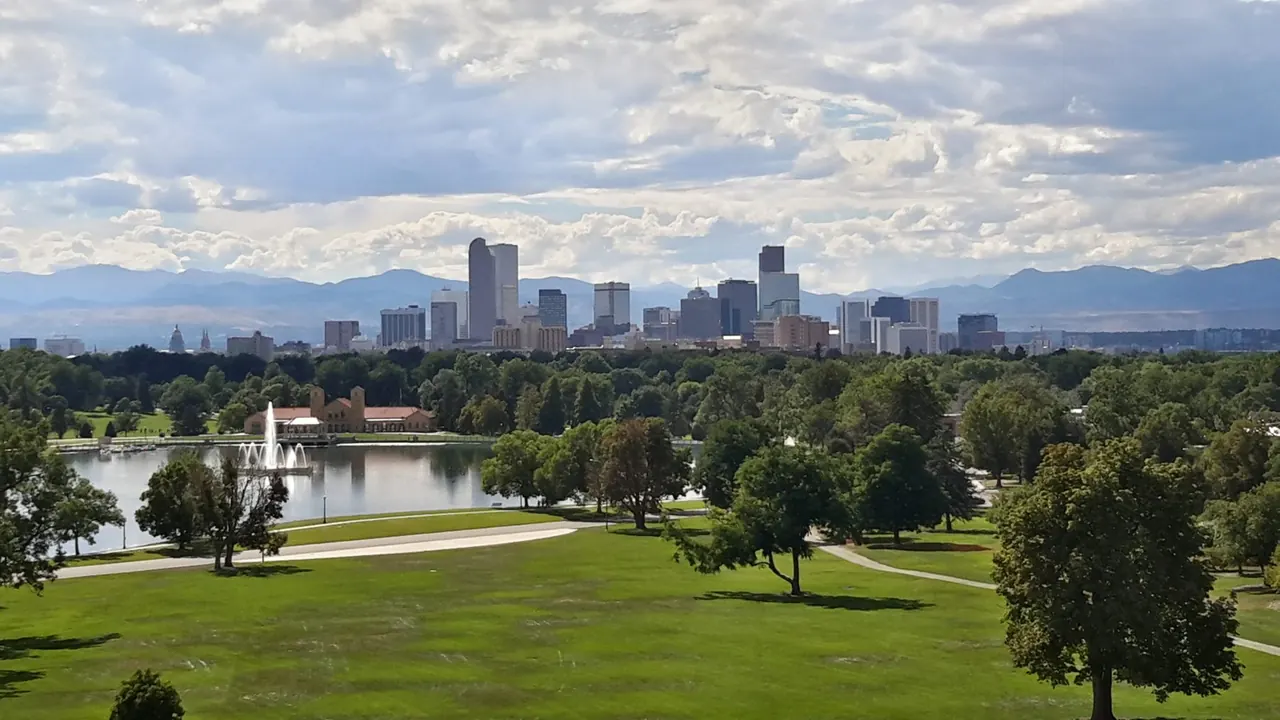
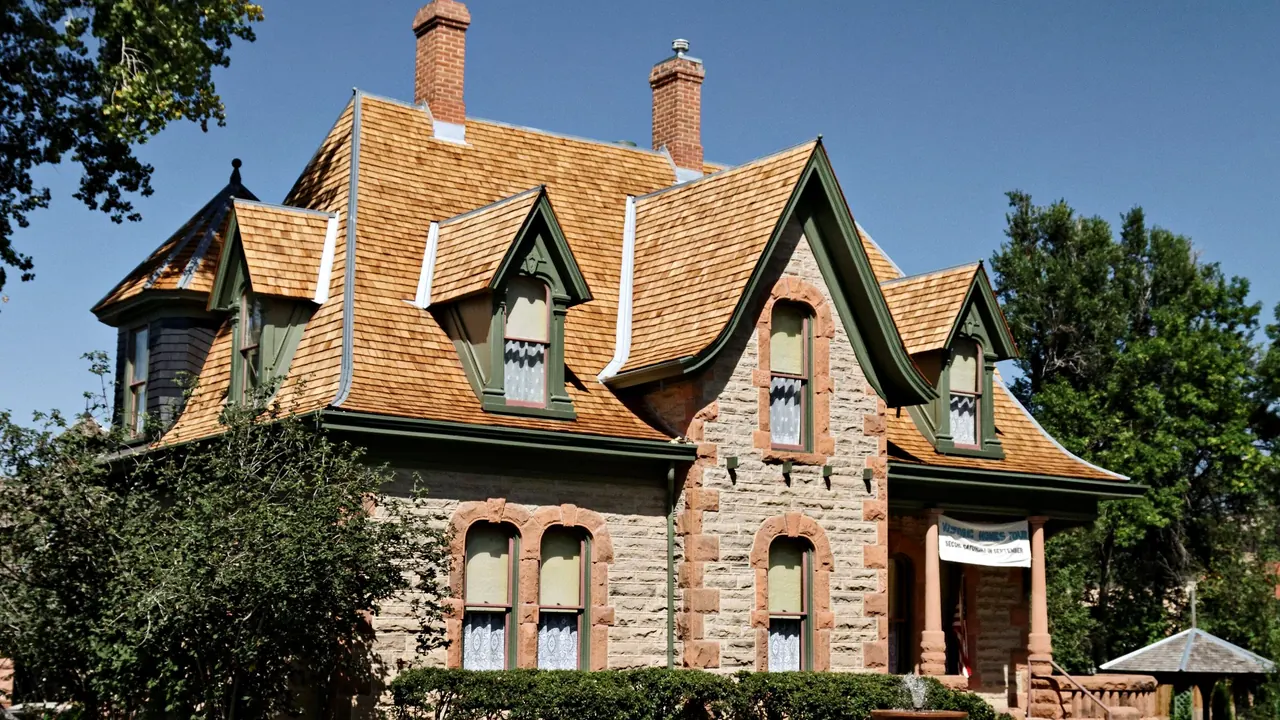
Photos: Denver by Zenhaus, CC BY-SA 4.0, cropped; Fort Collins by Gribeco, CC BY-SA 3.0, cropped.
Denver or Fort Collins?
Our verdict in twelve categories, each scored against the same fixed benchmark cities, and the climate month by month, so you can choose for your trip.
Choose Denver for
- live music and the arts
- culture and sights
- families
Denver suits travellers who want a proper city with the mountains as a bonus. It has the museums around Civic Center Park, touring Broadway and the symphony, summer concerts at Red Rocks, green chile cooking and bars spread across several neighbourhoods. It is also the better base with children, with the zoo and science museum in town, and in ski season, with the resorts within reach.
Choose Fort Collins for
- beaches
- getting around
- prices
Pick Fort Collins for a slower, smaller trip built around beer, bikes and the foothills. Old Town's brick square, the brewery tours, Horsetooth Reservoir and the Poudre canyon make for a relaxed summer stay. Anyone who wants a big museum or a major show can go to Denver for the day.
Scoreboard
Twelve categories on one fixed scale from 0 to 100. The shaded stretch is the gap between the two.
Your match
Pick a travel style or drag the sliders, and both match scores follow your weighting.
Wins on live music and the arts and culture and sights with your weighting.
Wins on beaches and getting around with your weighting.
What matters to you?
Category by category
What the scores mean for a trip.
Beaches & swimming
Neither city is a place for swimming, so the difference is where the water is. Denver has the sandy reservoir beaches at Cherry Creek and Chatfield state parks on the edge of the city, plus hotel and public pools. Fort Collins has Horsetooth Reservoir in the foothills just west of town, where the swim beach and coves turn a hot July afternoon with a paddleboard into a small outing.
Food & drink
Both are serious beer towns, so the gap opens up on the plate. Denver has a cooking style of its own in green chile, smothered burritos and Colorado lamb and bison. It also has Vietnamese and Mexican kitchens along Federal Boulevard and chef-run places in Highland and LoHi.
Fort Collins matches it pint for pint, with long-established brewery tours north of Old Town and family-friendly taprooms with food trucks outside. The food itself is mostly gastropubs and tacos, with a few farm-to-table kitchens. Its summer farmers' markets, with Palisade peaches, are a pleasure, but for a big dinner out, people drive to Denver.
Culture & sights
Denver has far more to see. Around Civic Center Park are the Denver Art Museum with its Native American collection, the Clyfford Still Museum, the gold-domed Capitol and History Colorado. Then there are the old warehouses of LoDo and the Beaux-Arts hall of Union Station, which together fill two or three days.
In Fort Collins the main sight is Old Town itself, a red-brick and sandstone district around a square that is good for an easy wander. The Museum of Discovery and the Avery House are the main stops. One day covers it, and many visitors make Denver's museums their cultural day out.
Nightlife
Denver gives an evening more range. There are game-night crowds in LoDo, warehouse taprooms and cocktail bars in RiNo, dive bars along East Colfax and a small club scene for dance music. Fort Collins keeps its nights to a few blocks around Old Town's square, where pubs, patios and taprooms fill with students at weekends and go quiet on weeknights and over the summer break.
Nature & outdoors
Both sit right against the Rockies, and both are within two hours of Rocky Mountain National Park, so the choice is about which mountains you want. From Denver, Red Rocks and the foothills above Golden are within half an hour. The high summits around Mount Blue Sky are further in, and the downhill ski resorts along I-70 are about two hours away when the traffic allows.
Fort Collins has the trails of Horsetooth Mountain and Lory State Park at the edge of town, and the Cache la Poudre canyon for rafting, fly fishing and camping. It is a calmer base for summer hiking and time on the water. In winter it means snowshoes and cross-country skis, because the big resorts are several hours away.
Day trips
Denver has the better range of outings. Boulder and Golden are close by, and further up the mountain road are the Victorian mining towns of Georgetown and Idaho Springs, with Georgetown's narrow-gauge railway. Colorado Springs and Manitou Springs lie to the south, and Breckenridge works as a mountain town in a day.
Fort Collins shares Boulder, Golden and Estes Park, and Denver itself makes a big-city day out. To the north it has Cheyenne and Laramie across the Wyoming line, which are pleasant rather than remarkable. From either city you need a car for nearly all of these.
Good for families
Denver is the easier choice with children because it has the big attractions. The zoo and the Museum of Nature & Science sit side by side in City Park, and the Children's Museum, an aquarium and an amusement park are grouped by the South Platte.
Fort Collins is gentle and safe, with a city farm at Lee Martinez Park, a children's garden at the Gardens on Spring Creek and tubing on calm stretches of the river. For a zoo or an aquarium, though, families drive to Denver.
Getting around
Both are hard to get around beyond the centre, and each deals with it in its own way. Denver relies on rail: a commuter train from the airport to Union Station, light rail to the suburbs, and a free shuttle along the 16th Street Mall through a compact, flat downtown.
Fort Collins is built for bikes. Protected lanes, a bike-share scheme and off-street river trails link Old Town, the campus and the breweries, and a rapid-bus line runs along the main corridor. In both cities, the mountains and the day trips need a hire car.
Shopping & style
Denver has more to buy. There is the Cherry Creek mall with the boutiques and galleries around it, vintage clothes and records on South Broadway, and big flagship stores for outdoor gear alongside cowboy boots and Western hats. Fort Collins has a few walkable Old Town blocks of independent boutiques, bookshops, cycling shops and Colorado-made gifts, which are pleasant for an hour's browsing but small in scale.
Affordability
Neither city is cheap, and there is little to choose between them on cost. In both, a hire car is the main extra expense. Denver's downtown hotels go up during conventions and ski season. Fort Collins rooms, mostly chain hotels along the highways with a few nicer places near Old Town, go up on graduation and football weekends. In both cities you save the same way, with taquerias, brewery taprooms and the free trails and parks.
Live music & performing arts
This is one of the widest gaps between the two. Denver has Red Rocks Amphitheatre, where a summer concert between the sandstone monoliths is something people travel for. It also has the Denver Center for the Performing Arts, with resident theatre, touring Broadway, the Colorado Symphony, opera and ballet, as well as jazz rooms in Five Points.
Fort Collins has the Lincoln Center and the university's arts centre in term time. Small Old Town stages book bluegrass and indie bands, and there are free outdoor concerts in summer. It is pleasant, but the big touring acts stop in Denver instead.
Wellness & relaxation
Denver is the better base for a soak, mainly because the hot springs are closer. The historic mineral pools and steam caves at Idaho Springs are under an hour west, the bigger hot-spring resorts in the mountains make an easy overnight trip, and the city has hotel spas and day spas.
Fort Collins has only a few day spas and yoga studios, and Idaho Springs is close to two hours away by car. What it offers instead is a slower everyday pace, with quiet neighbourhoods and shaded paths along the river.
When should you go?
Pick your month. The climate figures are measured averages, not a forecast.
Denver in July
Fort Collins in July
Daytime high, °C
Rainfall in the month, mm
Where the figures come from
Fort Collins has no rain gauge within 25 km of the centre, so its rainfall comes from a gridded climate dataset read at the destination rather than from a gauge further away.
Temperature and rainfall are climate normals, averaged over the years shown. Denver: 1991-2020 (sunshine 1981-2010) normals, Denver / Stapleton International, Co. (11.2 km from centre). Fort Collins: 2006-2020 (rainfall 1991-2020) normals, Fort Collins / Redmond (16.1 km from centre).
The two cities have almost the same climate, so the best months are the same for both. Late May to September is the warm stretch. July highs reach around 32°C, which makes midday walks hot, and reservoir swimming is best in July and August. May is the wettest month, with close to 60mm. June and September are the most comfortable months for the streets and the trails.
Winters are dry and cold. Daytime highs stay in single figures from December to February, while November and March still reach the low teens. Fort Collins runs a few degrees cooler in midwinter, at around 4°C in December. Denver gets plenty of sun all year, from about 190 hours a month in winter to over 300 in midsummer.
Which traveller are you?
On a culture and arts trip, Denver is the clear choice. Its main museums are a short walk from each other near downtown, the Denver Center stages theatre and music most nights, and a summer show at Red Rocks is worth planning a trip around.
For a family trip with children, stay in Denver. The big days out are minutes from your hotel instead of an hour's drive, so you can fit them around naps, bad weather and short attention spans, and the mountains are still close enough for an outing.
On an outdoors trip in summer, base yourself in Fort Collins. The trailheads and the river are a short drive or a bike ride away, so you skip the city traffic. You can also finish a day on the water with a quiet evening in Old Town.
Before you go
| Measure | Denver | Fort Collins |
|---|---|---|
| Currency | US Dollar (USD) | US Dollar (USD) |
| Sockets | AB120 V, 60 Hz | AB120 V, 60 Hz |
| Driving side | Right | Right |
| Time zone | UTC-7, UTC-6 in summer | UTC-7, UTC-6 in summer |
| Emergency number | 911 | 911 |
| Elevation | 1,609 m | 1,525 m |
| Main airport | Denver International Airport (DEN)30 km from centre231 non-stop destinations | Denver International Airport (DEN)88 km from centre231 non-stop destinations |
| Public holidays this year | 12 days | 12 days |
By the numbers
| Measure | Denver | Fort Collins |
|---|---|---|
| Population | 715,522 | 169,810 |
| People per km² | 1,783 | 1,181 |
| Museums within 10 km | 26 | 2 |
| UNESCO World Heritage sites within 50 km | 0 | 0 |
Where else could you go?
Every comparison below shares a destination with this one, so you can follow Denver or Fort Collins somewhere new.
- Bouldervs Denver
- Estes Parkvs Fort Collins
- Bouldervs Fort Collins
- Winter Park, Coloradovs Denver
- Estes Parkvs Denver
- Keystonevs Denver