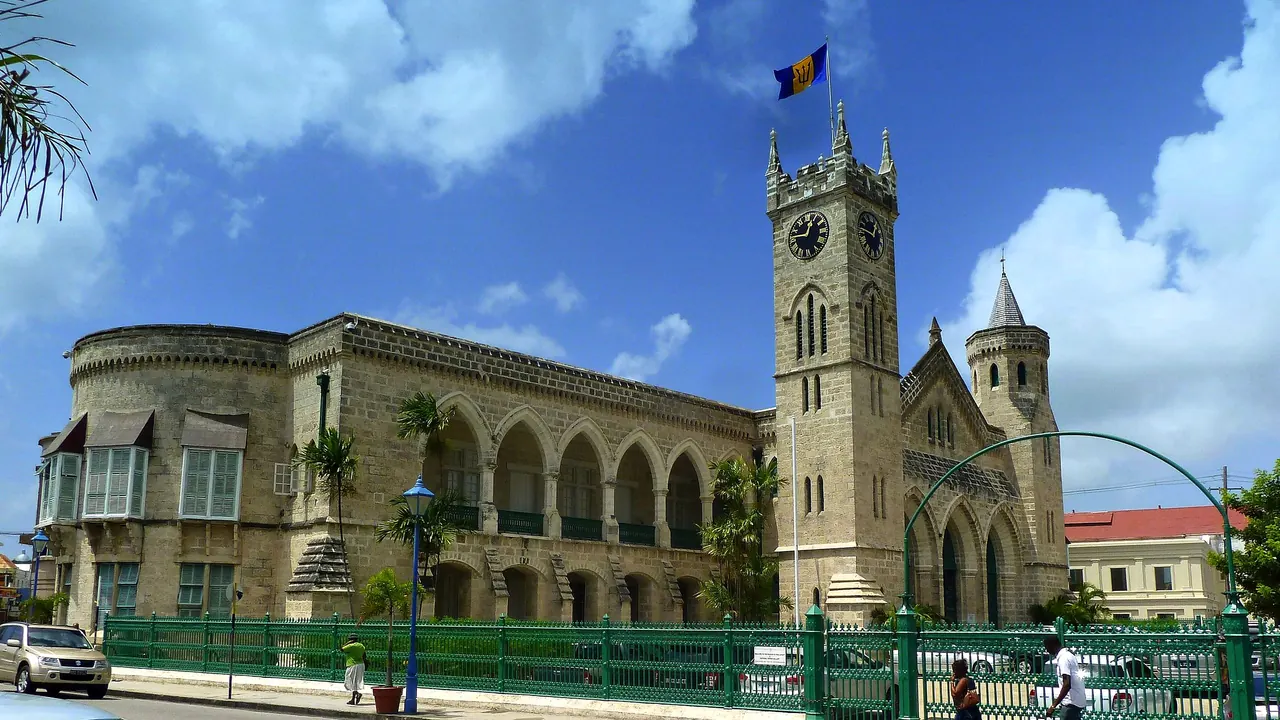
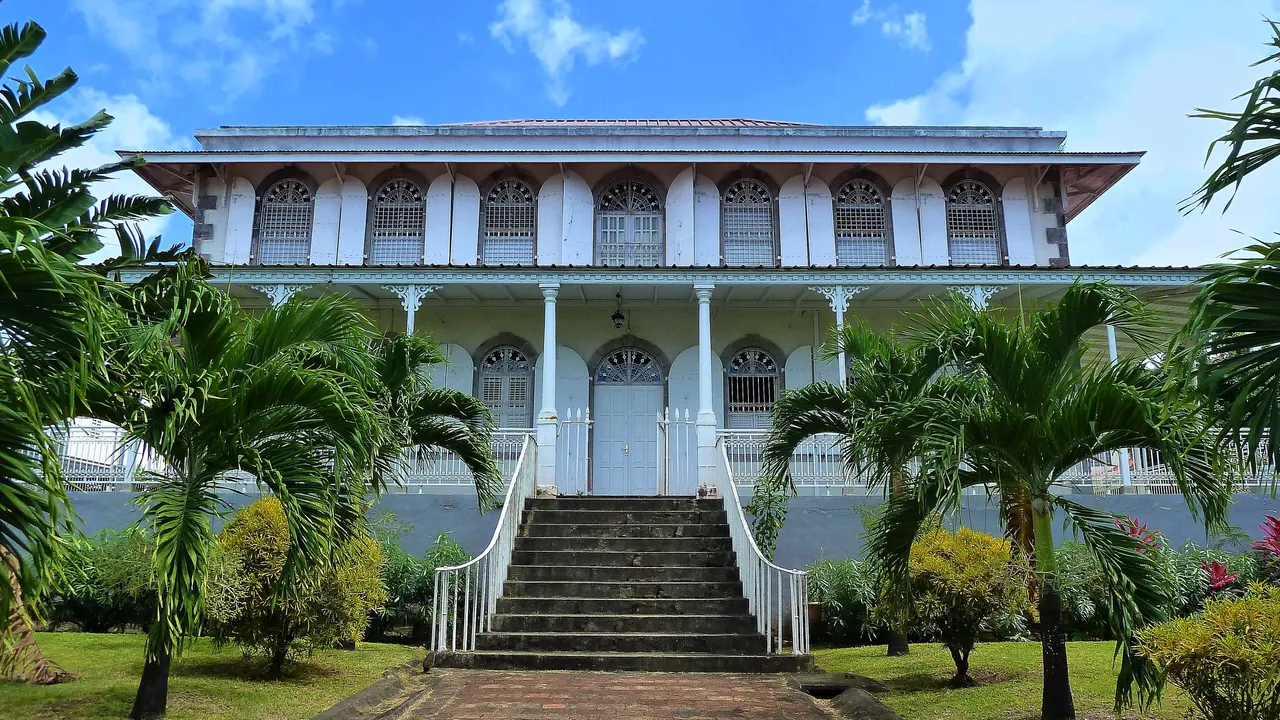
Photos: Bridgetown by giggel, CC BY 3.0, cropped; Roseau by Edgar El, CC BY 3.0, cropped.
Bridgetown or Roseau?
Our verdict in twelve categories, each scored against the same fixed benchmark cities, and the climate month by month, so you can choose for your trip.
Choose Bridgetown for
- beaches
- families
- nightlife
Bridgetown is the choice for a classic Caribbean beach vacation. Carlisle Bay's calm, clear water is a short walk from town, the sheltered west coast suits young swimmers, and the Oistins fish fry and St Lawrence Gap take care of the evenings. Buses run along both coasts. It costs more and the inland walking is mild, but everything is easy.
Choose Roseau for
- nature and the outdoors
- prices
- wellness
Roseau rewards travellers who come for the land rather than the shore. Rainforest starts right behind the town, with waterfalls, Titou Gorge, the Boiling Lake trek and hot sulphur pools in the Roseau Valley, and whales offshore. In return you get dark sand, quiet nights, winding roads and more rain, though a stay costs less than one in Barbados.
Scoreboard
Twelve categories on one fixed scale from 0 to 100. The shaded stretch is the gap between the two.
Your match
Pick a travel style or drag the sliders, and both match scores follow your weighting.
Wins on beaches and families with your weighting.
Wins on nature and the outdoors and prices with your weighting.
What matters to you?
Category by category
What the scores mean for a trip.
Beaches & swimming
Bridgetown has a proper beach on the edge of town. Brownes and Pebbles beaches on Carlisle Bay are a short walk from the centre, and north of town the west coast is a line of calm, sheltered bays. The south coast has a little more wave, and Crane Beach makes a fine half-day out.
Around Roseau the shore is volcanic: dark sand, pebbles and a steep drop-off, so near town you swim off the rocks. The sea has its own rewards, like the bubbling gas at Champagne Reef and Scotts Head, but the nearest real beach is Mero, and the pale-sand bays are a long drive away on the north coast.
Food & drink
Both islands serve hearty home cooking, but Bridgetown gives you more to choose from. Flying fish with cou-cou, fish cutters, pudding and souse on Saturdays, the Friday fish fry at Oistins and rum shops everywhere are backed up by more refined international dining on the west coast.
Roseau's food is narrower and more homely: callaloo soup, saltfish and bakes, fish with dasheen and breadfruit, and excellent juices made from fresh fruit. The Saturday market by the river is a pleasure, but beyond a few lunch spots and hotel dining rooms you run out of options within a few days.
Culture & sights
Neither town is a major sightseeing stop, but Bridgetown's UNESCO-listed centre and Garrison fill a full day. You can see the Parliament Buildings by the Careenage, the Nidhe Israel Synagogue with its restored mikveh, and the Barbados Museum in the old military prison.
Roseau takes half a day at most. There are the balconied wooden houses of the French Quarter, the Dominica Museum's short introduction to the Kalinago and the history of slavery, and the cathedral built of volcanic stone. The island's weightier heritage, Fort Shirley and the Kalinago Territory, is well outside town.
Nightlife
Bridgetown has the livelier nights, though neither place is a clubbing destination. St Lawrence Gap has a strip of bars and a few clubs that stay open late at weekends, and on Fridays the Oistins fish fry turns into a street party. Crop Over brings weeks of summer fetes.
In Roseau most evenings end early after a drink at a rum shop or a bayfront bar, with the odd weekend bouyon party. The exception is Mas Domnik, the Carnival before Lent, when jump-ups fill the streets until dawn.
Nature & outdoors
This is Roseau's great strength. Rainforest mountains rise straight behind the town, and Morne Trois Pitons National Park is about half an hour away. Within reach are Trafalgar Falls, the swim up Titou Gorge, the Boiling Lake trek across the Valley of Desolation and the Waitukubuli Trail, which runs the length of the island. Sperm whales live offshore all year. The trade-off is mud and frequent rain.
Barbados is low coral limestone, and most of its outdoors is in the sea: turtles off the west coast, shallow wrecks in Carlisle Bay, kitesurfing at Silver Sands and surf at the Soup Bowl. Harrison's Cave and the gardens are pleasant, but walkers will find the trails short.
Day trips
Day trips are modest from either town, but they differ in character. From Bridgetown they lean towards sugar and rum history: St Nicholas Abbey, Sunbury, Gun Hill and the old distilleries, plus quiet Holetown and Speightstown. All are easy drives on a small, gentle island.
From Roseau the heritage outings are Fort Shirley on the Cabrits peninsula and the Kalinago Territory, but mountain roads make even short distances slow. Roseau does have ferries to Martinique and Guadeloupe, a long day but a real option. From Barbados, other islands can only be reached by plane.
Good for families
Bridgetown is much easier with children. Small swimmers can paddle in the shallow, calm water of the west coast, and there are a few reliable outings: the tram through Harrison's Cave, the green monkeys at the wildlife reserve and a submarine dive off town. A resort pool is always there to fall back on.
Roseau suits active families with older children, who will enjoy swimming through Titou Gorge, warm river pools and the bubbles at Champagne Reef. Nothing there is built for children, though, and long, winding drives and rough trails are hard on young ones.
Getting around
Both town centres are small enough to walk, but Bridgetown's buses do far more of the work. Blue government buses, yellow private ones and the ZR vans run along the south and west coasts. The east coast and the interior are slower to reach, and many visitors still hire a car.
In Roseau the minibuses keep no timetable and thin out in the evening and on Sundays. Trailheads and waterfalls usually mean a taxi, a guide or a hire car on steep, narrow roads with sharp bends. Both islands drive on the left.
Shopping & style
Neither place is worth visiting for the shopping, but Bridgetown at least has a shopping street. Broad Street has duty-free jewellery and perfume, the long-established Cave Shepherd department store and the Pelican Craft Centre nearby, and Holetown has a small upscale mall. Rum, pepper sauce and Earthworks pottery all travel well.
Roseau has only craft stalls and the old market, though what they sell is distinctive: Kalinago baskets woven from larouma reed, bay rum, and local cocoa and coffee.
Affordability
Roseau is the cheaper stay, though not a budget one. Local lunches, market fruit and minibuses cost little, and guesthouses in town are fairly priced. Costs climb with the things most visitors come for: taxis, guides, whale-watching and the eco-lodges in the hills.
Barbados is expensive across the board, with west coast hotels and restaurant meals well above Western European prices. Flat-fare buses, fish cutters, the Oistins fry and self-catering apartments on the south coast soften the bill, but the total stays high.
Live music & performing arts
Live music on both islands is Caribbean and built around festivals, and neither has a theatre scene. In Bridgetown the high point is the build-up to Crop Over, with calypso tents and soca everywhere. The rest of the year there are tuk bands, steel pan and recitals at Frank Collymore Hall.
Dominica is where cadence-lypso and bouyon were born, and Roseau's big moment is the World Creole Music Festival each autumn. Independence season adds quadrille and bélé drum dancing. Outside those dates there is little more than the odd band in a bar.
Wellness & relaxation
Roseau has something Barbados lacks: hot sulphur springs about twenty minutes uphill in Wotten Waven and the Roseau Valley. They feed simple pools in the rainforest where bathing is an ordinary local habit, and there are more at Trafalgar and Soufrière. Eco-lodges in the hills add yoga and massage, though nothing is polished.
Barbados has no bathing tradition, so relaxing there means resort spas and the unhurried pace of the coast. The St James shoreline and the east coast around Bathsheba are calmest, away from Bridgetown's traffic and cruise crowds.
When should you go?
Pick your month. The climate figures are measured averages, not a forecast.
Bridgetown in July
Roseau in July
Daytime high, °C
Rainfall in the month, mm
Where the figures come from
Roseau's temperatures are measured 80 km from the centre, at Caravelle.
Roseau has no rain gauge within 25 km of the centre, so its rainfall comes from a gridded climate dataset read at the destination rather than from a gauge further away.
Roseau's sunshine is measured 88 km from the centre, at Le Lamentin.
Temperature and rainfall are climate normals, averaged over the years shown. Bridgetown: 1991-2020 normals, Grantley Adams (14.8 km from centre). Roseau: 1991-2020 normals, Caravelle (80 km from centre).
Bridgetown is the drier and sunnier of the two all year. The heat barely changes from month to month, with highs of about 31°C at most, so it is warm enough for the beach in every season. The best stretch is February to April, and March gets only about 36mm of rain. Rain builds from June and peaks in October at about 181mm, but there are still plenty of sunshine hours.
Roseau is wetter than Bridgetown in every month and gets fewer hours of sun. This matters more here because the trails turn muddy. February to April is again the driest window. The wet season runs from June through November, with August bringing about 251mm. The sea around both islands stays at 27°C or warmer all year, so swimming is never off the table.
Which traveller are you?
On a beach and sun trip, Bridgetown is the clear pick. Pale-sand bays from Carlisle Bay to Paynes Bay and Crane Beach are close by, and the sun shines more. Roseau's dark, steeply shelving shore is for snorkelling off rocks, not lazing on sand.
For an outdoors trip, Roseau wins easily. Morne Trois Pitons, the Boiling Lake trek, Titou Gorge and the Waitukubuli Trail are all close by, with whale-watching and wall dives offshore. Barbados has turtles, wrecks and surf, but its inland trails are short and few.
On a family trip with young children, Bridgetown is far easier. The west coast's shallow, calm water, Harrison's Cave and the monkeys at the wildlife reserve fill the days, and the drives are short. Roseau's rough hikes and long mountain roads suit older, active children better.
Before you go
| Measure | Bridgetown | Roseau |
|---|---|---|
| Official language | English, Bajan Creole | English |
| Currency | Barbados Dollar (BBD) | East Caribbean Dollar (XCD) |
| Sockets | AB115 V, 50 Hz | G230 V, 50 Hz |
| Driving side | Left | Left |
| Time zone | UTC-4 | UTC-4 |
| Emergency number | 911 | 999 |
| Elevation | 1 m | 43 m |
| Main airport | Grantley Adams International Airport (BGI)14 km from centre38 non-stop destinations | Douglas-Charles Airport (DOM)29 km from centre13 non-stop destinations |
| Public holidays this year | 12 days | 12 days |
By the numbers
| Measure | Bridgetown | Roseau |
|---|---|---|
| Population | 98,511 | 16,571 |
| People per km² | 2,539 | 3,069 |
| Museums within 10 km | 1 | 0 |
| UNESCO World Heritage sites within 50 km | 1 | 1 |
| Swim season, months above 21 °C | 12 months | 12 months |
Where else could you go?
Every comparison below shares a destination with this one, so you can follow Bridgetown or Roseau somewhere new.
- Martiniquevs Roseau
- Guadeloupevs Roseau
- Castriesvs Roseau
- Kingstownvs Bridgetown
- Castriesvs Bridgetown
- St. John's, Antiguavs Roseau