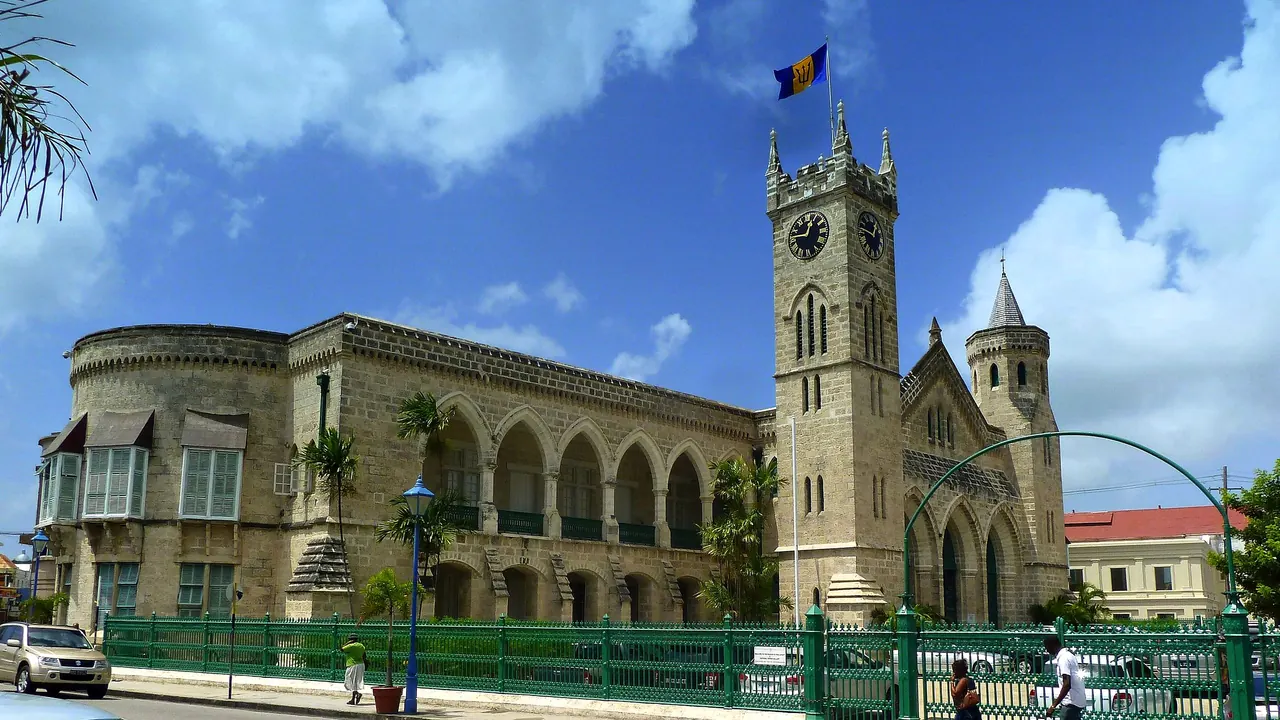
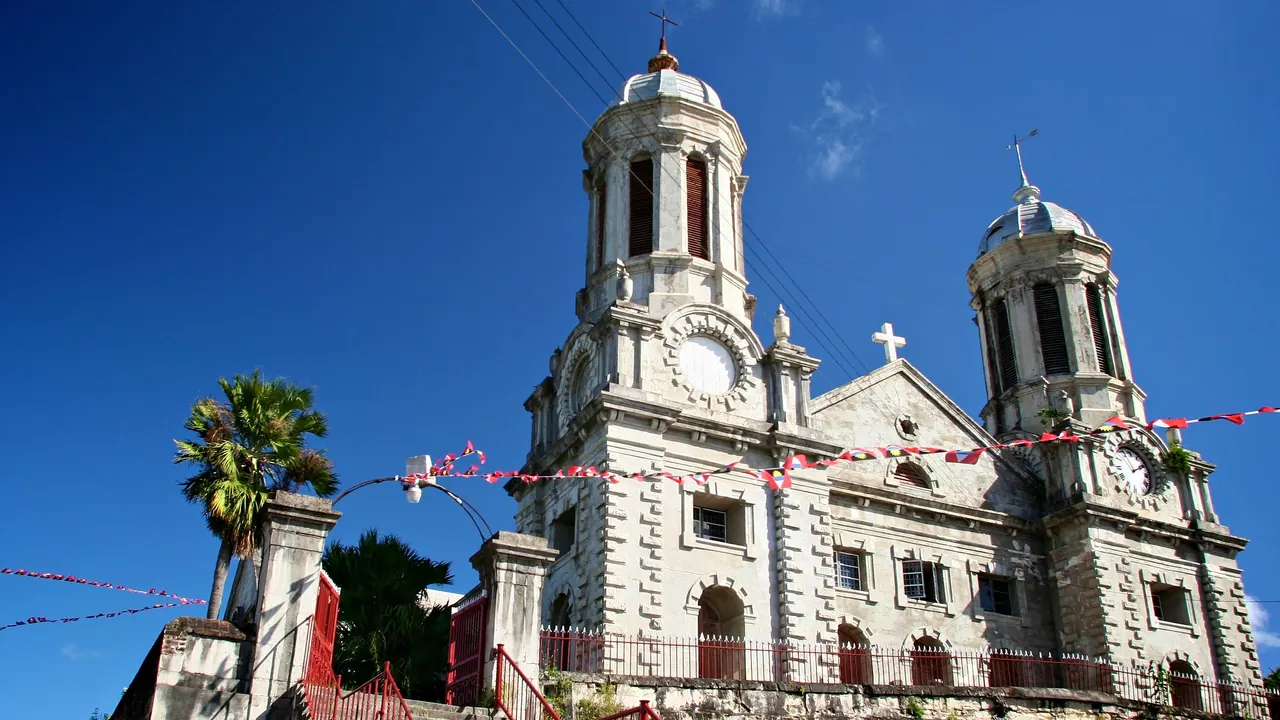
Photos: Bridgetown by giggel, CC BY 3.0, cropped; St. John's, Antigua by D'Arcy Norman, CC BY 2.0, cropped.
Bridgetown or St. John's, Antigua?
Our verdict in twelve categories, each scored against the same fixed benchmark cities, and the climate month by month, so you can choose for your trip.
Choose Bridgetown for
- getting around
- food and drink
- culture and sights
Bridgetown suits travellers who want the beach and a real town in the same stay. Carlisle Bay is a walk from the centre, buses run along both coasts, and evenings have more to them, from the Oistins fish fry to the bars of St Lawrence Gap. Families, and anyone who would rather not hire a car, will find it the easier island to manage.
Choose St. John's, Antigua for
- day trips
- nature and the outdoors
- prices
Antigua is the pick for a vacation built around a resort, a bay and a boat, with St. John's as a practical base rather than a place to linger. Its sailing, its reefs and the day out at Nelson's Dockyard in English Harbour give it the better excursions. If you are happy to rely on taxis or a hire car and end the day at a beach bar, you will not miss much of what Bridgetown adds.
Scoreboard
Twelve categories on one fixed scale from 0 to 100. The shaded stretch is the gap between the two.
Your match
Pick a travel style or drag the sliders, and both match scores follow your weighting.
Wins on getting around and food and drink with your weighting.
Wins on day trips and nature and the outdoors with your weighting.
What matters to you?
Category by category
What the scores mean for a trip.
Beaches & swimming
For swimming, the two are about equal. What differs is where the sand is. In Bridgetown, Carlisle Bay runs along the edge of town, so Brownes and Pebbles Beach are a walk from the centre, with the sheltered west-coast bays such as Paynes Bay to the north and the breezier south coast towards Oistins.
St. John's is a base rather than a beach town. Fort James is close, but Dickenson Bay, Runaway Bay and the Darkwood to Turners stretch all mean a drive. Antigua's reef-sheltered Atlantic bays at Half Moon and Long Bay are wild but still swimmable, which Barbados's own Atlantic shore at Bathsheba is not.
Food & drink
Barbados gives you more to eat your way around. The Friday fish fry at Oistins is a night out in itself, roti and fish cutters from snack bars make easy lunches, and the west coast adds a layer of polished, international dining. Its rum shops also make drinking more a part of daily island life.
Antigua has good Creole dishes of its own, such as fungee and pepperpot, ducana and saltfish, goat water and the sweet black pineapple, but the choice runs out sooner. The best meals come from the Saturday market, roadside barbecue and lunch counters. Restaurants near the cruise piers mostly serve day visitors, and the more ambitious kitchens are spread among the resorts and English Harbour.
Culture & sights
Neither town is a cultural heavyweight, but Bridgetown fills a day where St. John's fills a morning. Its UNESCO-listed centre and Garrison take in the Parliament Buildings by the Careenage, the Nidhe Israel Synagogue with its restored mikveh, the Barbados Museum in a former military prison and George Washington House.
St. John's has the twin-towered cathedral on its hill, the national museum in the 1750 courthouse, the stone warehouses of Redcliffe Quay and the ruins of Fort James. Antigua's most important history lies out at English Harbour, not in the town.
Nightlife
Bridgetown has more to go out for. St Lawrence Gap, a short ride south, has a strip of bars and a few clubs that stay busy late at weekends, and on Fridays Oistins turns into a street party. St. John's goes quiet once the ships leave, so evenings move to the beach bars of Dickenson Bay or to the Sunday sunset party at Shirley Heights, forty minutes away.
Both islands come alive in summer. In Barbados it is the weeks of Crop Over fetes that end with Grand Kadooment, and in Antigua it is Carnival.
Nature & outdoors
On both islands, the outdoors is mostly about the sea, though each has different strengths. Antigua is a sailing island, with day sails round the coast, snorkelling and diving at Cades Reef, kitesurfing on the trade winds and mangrove trips to Great Bird Island. It also has a little more height on land in the Shekerley hills, and the frigate birds of Barbuda.
Barbados is flatter inland but has its own draws: turtles and shallow wrecks in the Carlisle Bay marine park, surf at the Soup Bowl, the caverns of Harrison's Cave, gardens such as Hunte's and Andromeda, and green monkeys in the gullies.
Day trips
Antigua has the stronger outings. English Harbour, about forty minutes from St. John's, makes a full day with Nelson's Dockyard, its forts and the Shirley Heights lookout. The ferry to Barbuda adds a long day on pink sand, and Betty's Hope covers the plantation story.
From Bridgetown the trips are shorter and quieter: the great house at St Nicholas Abbey, Sunbury, Gun Hill Signal Station, the rum distilleries and the old ports of Holetown and Speightstown. Reaching another island from Barbados means flying, so there is nothing like the Barbuda ferry.
Good for families
Both work as calm-water beach vacations, but Barbados gives families more to do away from the sand. The tram through Harrison's Cave, the green monkeys at the Wildlife Reserve and the submarine off Bridgetown make proper outings, and the town beaches are close at hand.
In Antigua the days revolve around resort kids' clubs and the boats, with stingray swims and catamaran trips. There are no zoos or children's attractions, and St. John's, with its narrow streets and crowded cruise days, is hard going with small children.
Getting around
Getting about is clearly easier from Bridgetown. Government buses, private buses and the ZR route vans run often along both the south and west coasts, so a beach stay without a car is realistic, even if the east coast and the plantations take longer to reach.
Antigua's minibuses keep no timetable, serve the beaches unevenly and thin out in the evenings and on Sundays. Most visitors end up using taxis or hiring a car, which needs a local permit. Both islands drive on the left on narrow roads, and Antigua's are also potholed.
Shopping & style
Neither island is a shopping destination, though Bridgetown has slightly more range. Broad Street combines duty-free stores with Cave Shepherd, the department store founded in 1906, the Pelican Craft Centre sells pottery and mahogany carvings, and Holetown adds a small upscale mall.
St. John's has duty-free at Heritage Quay, more appealing boutiques in the old warehouses of Redcliffe Quay, and crafts at the Saturday market. Rum and hot sauce are the souvenirs on both islands. Earthworks pottery is the Barbadian extra, and handmade pottery from the south of the island is the Antiguan one.
Affordability
Both are expensive, and neither makes a cheap vacation. They differ in how you can trim the bill. Barbados has flat-fare buses that reach the beaches, self-catering apartments on the south coast, and the Oistins fish fry.
Antigua's places to stay are mostly resorts, many all-inclusive, with few guesthouses. Still, the beaches are public, the lunch counters and market are cheap, and travelling outside the winter high season lowers room rates.
Live music & performing arts
Live performance is modest on both islands, but Barbados offers a little more. Frank Collymore Hall in Bridgetown hosts concerts and recitals, local theatre groups stage small productions, and tuk bands keep a folk tradition going. Before Crop Over, the calypso tents set singers of satirical songs against each other.
Antigua's high point is Carnival in late July and early August, with the calypso monarch contest and the Panorama steel band competition. Outside that season you hear steel pan and reggae at resorts and Shirley Heights, but there is no programme to plan around.
Wellness & relaxation
The two are restful in much the same way: neither has a bathing tradition, so wellness means resort spas and the slow island pace, and each capital is the least peaceful place on its island to stay. To unwind in Barbados, look to the St James shore or the east coast around Bathsheba. In Antigua, look to a quiet bay or the south coast, where many resorts offer yoga by the sea.
When should you go?
Pick your month. The climate figures are measured averages, not a forecast.
Bridgetown in July
St. John's, Antigua in July
Daytime high, °C
Rainfall in the month, mm
Where the figures come from
St. John's, Antigua has no rain gauge within 25 km of the centre, so its rainfall comes from a gridded climate dataset read at the destination rather than from a gauge further away.
Temperature and rainfall are climate normals, averaged over the years shown. Bridgetown: 1991-2020 normals, Grantley Adams (14.8 km from centre). St. John's, Antigua: 1991-2020, 14 years observed normals, Vc Bird International Airport Antigua (6.5 km from centre).
Both islands are warm enough for the beach in every month, with daytime highs of about 28-31°C and a sea that never drops below about 27°C. So the choice of month comes down to rain more than heat. Bridgetown is driest from February to April, with only about 36mm in March and plenty of sunshine. Its wet season builds from June and peaks in October and November, at around 180mm a month.
St. John's is a degree or so cooler in winter and also driest from February to April. Its rain peaks earlier, in September, and eases a little sooner through the autumn, while December and January bring some showers to both. From May to October the midday heat makes walking either town tiring, so plan sightseeing for the morning.
Which traveller are you?
On a family trip with young children, Bridgetown is the easier choice. Calm water is a walk from town, there are more outings on land for a day off the sand, and the buses mean you can manage without a hire car.
For a food and nightlife trip, Bridgetown is the better base. A meal out can easily turn into a party, late bars are a short ride away, and drinking with locals is part of island life. St. John's, by contrast, goes quiet after dark.
On an outdoors trip, St. John's is the stronger base, especially if you want to spend time on the water. Antigua is a sailing island, so a day on a boat is easy to arrange. Its reefs and steady trade winds reward time in the sea, and the offshore islands add variety.
Before you go
| Measure | Bridgetown | St. John's, Antigua |
|---|---|---|
| Official language | English, Bajan Creole | Spanish, English |
| Currency | Barbados Dollar (BBD) | East Caribbean Dollar (XCD) |
| Sockets | AB115 V, 50 Hz | AB230 V, 60 Hz |
| Driving side | Left | Left |
| Time zone | UTC-4 | UTC-4 |
| Emergency number | 911 | Police 911/999, ambulance 911/999, fire 911/999 |
| Elevation | 1 m | 0 m |
| Main airport | Grantley Adams International Airport (BGI)14 km from centre38 non-stop destinations | V. C. Bird International Airport (ANU)6 km from centre34 non-stop destinations |
| Public holidays this year | 12 days | 12 days |
By the numbers
| Measure | Bridgetown | St. John's, Antigua |
|---|---|---|
| Population | 98,511 | 21,394 |
| People per km² | 2,539 | 2,139 |
| Museums within 10 km | 1 | 1 |
| UNESCO World Heritage sites within 50 km | 1 | 1 |
| Swim season, months above 21 °C | 12 months | 12 months |
Where else could you go?
Every comparison below shares a destination with this one, so you can follow Bridgetown or St. John's, Antigua somewhere new.
- Basseterrevs St. John's, Antigua
- Kingstownvs Bridgetown
- Castriesvs Bridgetown
- Roseauvs St. John's, Antigua
- St. George's, Grenadavs Bridgetown
- Roseauvs Bridgetown