Canada
Prince Edward Island
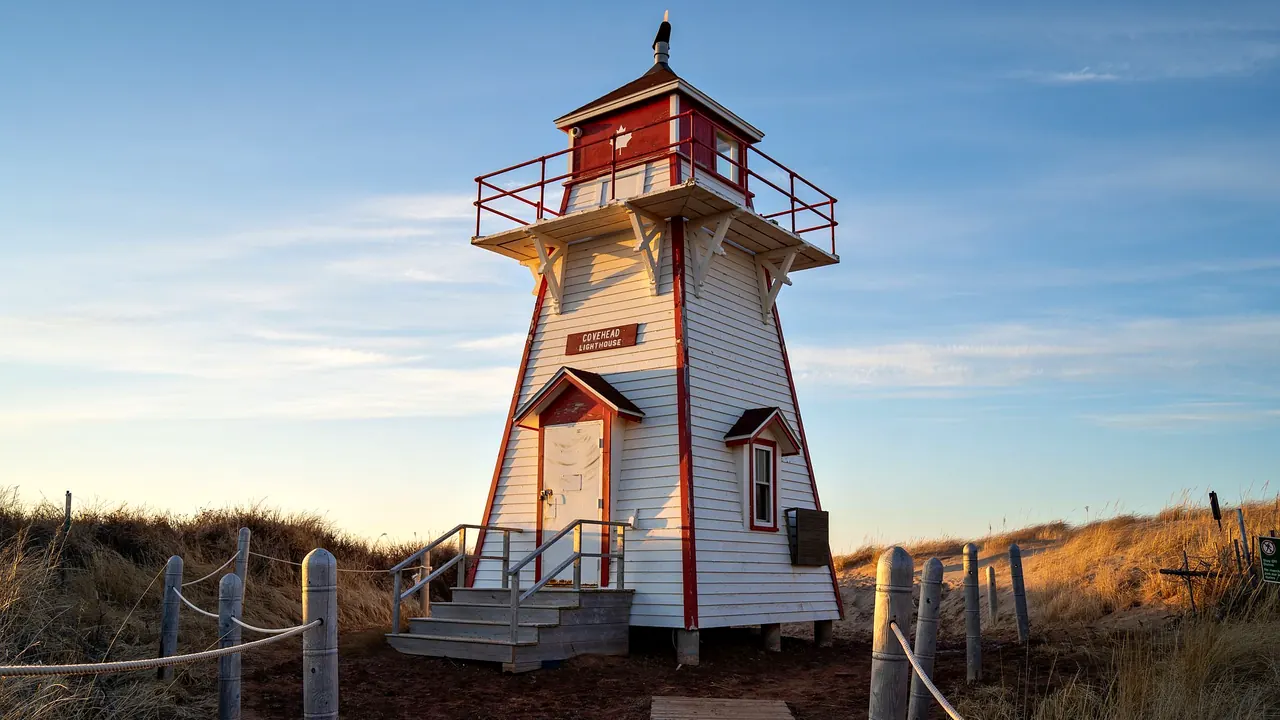
Covehead Harbour lighthouse at sunset
- Families70
- Beaches68
- Food & drink55
Photo: Sebastian Velandia, Pexels License
Match
46
Every category weighted equally
- Beach & sun49
- Culture & arts44
- Food & nightlife43
- Family trip52
- Outdoors48
- Relax & unwind48
- Shopping & style43
- On a budget45
Prince Edward Island in twelve categories
Our verdict on each, scored 0 to 100 against the same fixed benchmark cities, so a score means the same thing on every page.
Beaches & swimming. Scores 68 out of 100.
Food & drink. Scores 55 out of 100.
Culture & sights. Scores 37 out of 100.
Nightlife. Scores 27 out of 100.
Nature & outdoors. Scores 52 out of 100.
Day trips. Scores 40 out of 100.
Good for families. Scores 70 out of 100.
Getting around. Scores 55 out of 100.
Shopping & style. Scores 25 out of 100.
Affordability. Scores 40 out of 100.
Live music & performing arts. Scores 44 out of 100.
Wellness & relaxation. Scores 40 out of 100.
Prince Edward Island category by category
Beaches & swimming
68In summer, beaches are the main reason people come. The north shore inside Prince Edward Island National Park, around Cavendish, Brackley and Dalvay, has long runs of red and pink sand backed by dunes and sandstone cliffs. In the east, Basin Head's white sand squeaks underfoot, and families jump off the bridge over its tidal channel. The south shore along the Northumberland Strait has calm, shallow water that warms quickly. Spots such as Argyle Shore and Panmure Island are quieter than the busy north.
The water is often above 20°C in August, which is warm for this latitude. The season is short, though. Swimming is comfortable from about early July to early September. Before and after that the beaches are for walking.
Food & drink
55Shellfish is the reason to eat here. Malpeque oysters, cultivated mussels from the island's bays and lobster from the spring and early summer fishery are served on the wharves and in harbour villages such as North Rustico, Souris and Victoria-by-the-Sea. Lobster suppers in church halls and community centres are a long-standing island custom. The red soil also grows the potatoes the island is known for, and dairy farms supply a strong ice-cream habit.
Charlottetown has the widest choice, with farm-to-table restaurants, a farmers' market and craft breweries. Outside the capital, eating is mostly seafood shacks, chowder houses and family restaurants, and many open only from late spring to early autumn.
Culture & sights
37The heritage here is small and local. Charlottetown's Victorian brick and wooden streets are where Canadian Confederation was first discussed in 1864, and that story is told around Province House and the Confederation Centre of the Arts, which also has the island's main art gallery. In Cavendish, Green Gables Heritage Place celebrates Lucy Maud Montgomery's Anne novels and draws readers from as far away as Japan.
Around the island you'll find wooden lighthouses, Acadian heritage in the Évangéline region, the pioneer village at Orwell Corner and small museums on fishing and shipbuilding. Most visitors see what they want in a couple of days.
Nightlife
27Going out happens mainly in Charlottetown. On summer evenings the pubs and patios along Victoria Row and the downtown streets fill up, and a few bars stay open past midnight on weekends. Beyond the capital, evenings end with dinner, a sunset on the shore or a kitchen-party ceilidh in a village hall. Clubs are few and nothing runs very late.
Nature & outdoors
52The island is gentle farmland of red soil, potato fields and small harbours, edged by sandstone cliffs and dune systems. The parabolic dunes at Greenwich, with a boardwalk across a floating wetland, are the most striking landscape. The north shore inside the national park is good for coastal walks and birdwatching.
Cycling is the main outdoor activity. The Confederation Trail follows the old railway bed tip to tip, flat and gravelled, through woods and villages. Kayaking in the sheltered bays, deep-sea fishing from the eastern harbours and clam digging fill the rest. There are no hills worth the name, so serious hikers will find the walking mild.
Day trips
40Day trips are mostly to the island's own small places, and from a central base nothing is far. Summerside has a waterfront and heritage homes. Victoria-by-the-Sea is a tiny harbour village with craft studios. The Acadian communities lie around Mont-Carmel, and Georgetown and Souris are fishing towns on the quiet eastern end.
The Confederation Bridge leads to New Brunswick, where the beach town of Shediac and the city of Moncton are within about an hour and a half of Charlottetown. A summer ferry from Wood Islands crosses to Nova Scotia's north shore. It's a pleasant range of outings, but there are no major heritage sites or cities among them.
Good for families
70Families make up a large share of summer visitors. The Cavendish area on the north shore is set up for them, with a small amusement park, a water park, mini-golf, go-karts and cottages close to the national park beaches. Green Gables gives children who know the Anne stories a place to explore. The south-shore beaches have shallow water that stays calm at low tide, which suits small children.
The island is quiet and safe, drives are short, and farm visits, clam digging and lighthouse stops fill days without much planning. There are no big zoos or aquariums.
Getting around
55A car is the practical way to see the island. Roads are quiet and well kept, and the longest drive, tip to tip, is a few hours, while most beaches are within an hour of Charlottetown. Downtown Charlottetown is compact and easy to walk. Buses run mainly within the capital area, and shuttles to the beaches are limited, so travellers without a car usually rely on tours or cycle the Confederation Trail. Arrival is by the bridge from New Brunswick, the summer ferry from Nova Scotia or the small airport near Charlottetown.
Shopping & style
25Shopping is small-scale. Downtown Charlottetown has a few streets of independent shops and galleries. Around the island, potters, weavers and woodworkers sell from studios, and the Cavendish area sells Anne of Green Gables souvenirs. Good things to take home include preserves, sea-glass jewellery and knitwear. Anyone wanting fashion or department stores won't find much.
Affordability
40Prince Edward Island is moderately expensive in summer. Demand is packed into a short season, so cottages and inns near the north-shore beaches book up early and cost more in July and August. Eating out is at Canadian prices, and a car adds rental and fuel costs. Most beaches, trails and the national park cost little, and chowder and seafood at harbour counters are cheaper than formal restaurants. June and September are noticeably easier on the budget.
Live music & performing arts
44Live performance happens mostly in summer and has two sides. At the Confederation Centre of the Arts in Charlottetown, the Charlottetown Festival stages musical theatre, with Anne of Green Gables at the heart of its history. Across the island, ceilidhs in parish and community halls offer fiddle, step dancing and Celtic and Acadian music on most summer evenings. A wooden concert hall at Indian River runs a respected summer season of classical, choral and folk music.
Outside the warm months the programme becomes local and occasional. There's no opera company or year-round orchestra season.
Wellness & relaxation
40The island has a slow pace but little spa culture. There's no bathing tradition, and spa treatments mostly mean a handful of resort and country-inn spas. What it does offer is quiet: few crowds, empty country roads, sunsets over the strait and evenings with nothing to do. Late June and September are the calmest times to visit.
Where to stay in Prince Edward Island
The island is small enough that one base usually does, and most visitors choose between the capital and the north shore. Charlottetown suits a first visit, food lovers and anyone without a car. The compact old centre is easy to walk, it has the island's widest choice of restaurants and almost all of its evening life, and the Charlottetown Festival is on the doorstep. Most beaches are within an hour's drive.
Cavendish and the stretch of north shore by the national park are where families and beach lovers stay. Cottages sit close to the red sand, and the amusements and Green Gables keep children busy, though evenings are quiet and July and August book up early. Nearby North Rustico is a calmer harbour village with seafood on the wharf.
For a quiet stay or a second visit, look east to Souris and the coast around Basin Head, with fishing harbours, white sand, empty roads and the far end of the Confederation Trail. On the south shore, Victoria-by-the-Sea and the beaches along the strait offer warm, shallow water for small children and slow evenings. Outside Charlottetown you will need a car, but because no drive is long, moving bases is rarely worth it.
When should you go?
Pick a month to see what it is like. The climate figures are measured averages, not a forecast.
Prince Edward Island in July
Daytime high, °C
Rainfall in the month, mm
The whole year
Shaded against this destination’s own year: the deepest cell is its best month for that figure and the palest its weakest.
Temperature and rainfall are climate normals, averaged over the years shown. Prince Edward Island: 1991-2020 normals, Charlottetown Airport (5.6 km from centre).
Before you go
| Measure | Prince Edward Island |
|---|---|
| Official language | French, English |
| Currency | Canadian Dollar (CAD) |
| Sockets | AB120 V, 60 Hz |
| Driving side | Right |
| Time zone | UTC-4, UTC-3 in summer |
| Emergency number | 911 |
| Main airport | Charlottetown Airport (YYG)6 non-stop destinations |
| Public holidays this year | 13 days |
By the numbers
| Measure | Prince Edward Island |
|---|---|
| Population | 154,331 |
| People per km² | 27 |
| Swim season, months above 21 °C | None |
Compare Prince Edward Island with
Every comparison with a written verdict behind it.