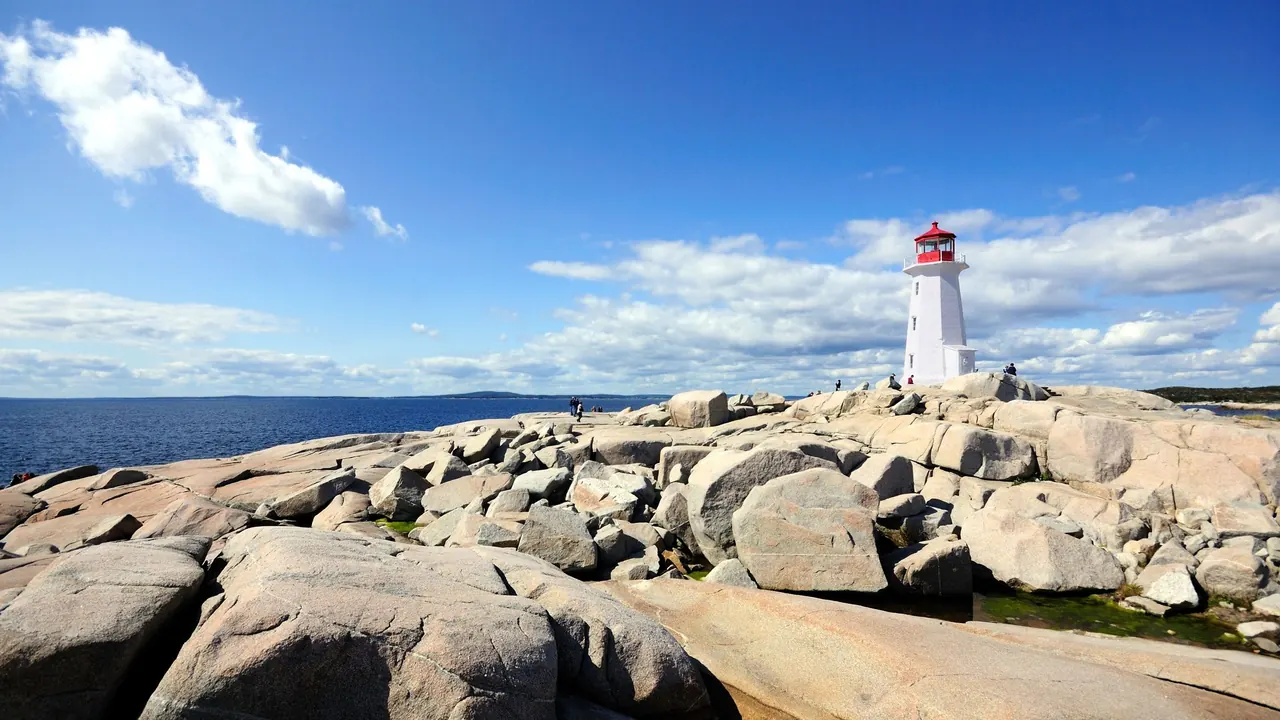
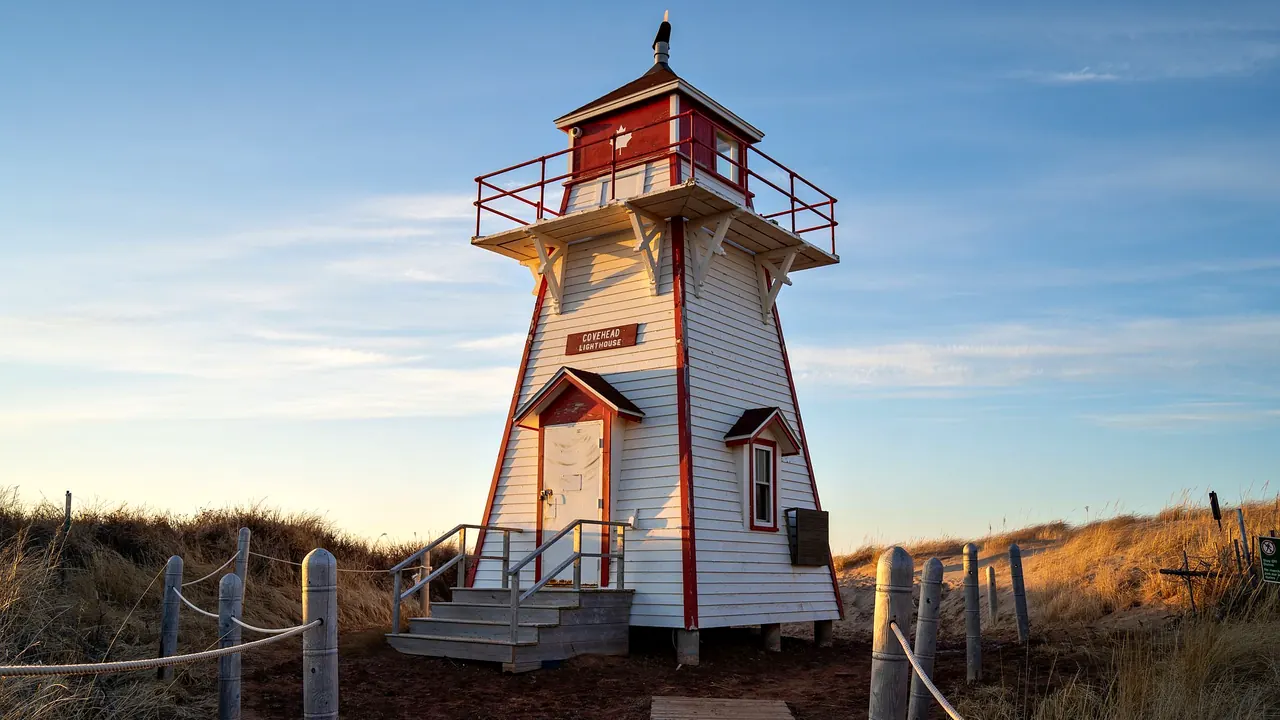
Photos: Nova Scotia by Taxiarchos228, CC BY-SA 3.0, cropped; Prince Edward Island by Sebastian Velandia, Pexels License.
Nova Scotia or Prince Edward Island?
Our verdict in twelve categories, each scored against the same fixed benchmark cities, and the climate month by month, so you can choose for your trip.
Choose Nova Scotia for
- nature and the outdoors
- culture and sights
- day trips
Nova Scotia suits a touring trip by car of a week or more, for travellers who want scenery and history more than a beach. The Cabot Trail, the Bay of Fundy tides, whale boats off Digby Neck, UNESCO-listed Lunenburg and the Fortress of Louisbourg give it far more range, and Halifax adds a proper night out. The cost is long drives and a cold Atlantic, unless you base yourself on the warm Northumberland shore.
Choose Prince Edward Island for
- beaches
- families
- getting around
Prince Edward Island is the better choice for a slower summer beach vacation, above all with children. The national park beaches, calm south-shore water and the Cavendish attractions sit within easy reach of each other, so days need little planning and little driving. In return you get gentle farmland rather than dramatic coast, heritage you can see in a couple of days and quiet evenings.
Scoreboard
Twelve categories on one fixed scale from 0 to 100. The shaded stretch is the gap between the two.
Your match
Pick a travel style or drag the sliders, and both match scores follow your weighting.
Wins on nature and the outdoors and culture and sights with your weighting.
Wins on beaches and families with your weighting.
What matters to you?
Category by category
What the scores mean for a trip.
Beaches & swimming
Nova Scotia's best-known sand, at Crystal Crescent, Carters Beach and Lawrencetown, faces a cold Atlantic, so it is better for surfing and walking than for swimming. The warm water is on its north side, along the red-sand Northumberland shore around Pugwash and Tatamagouche. Inverness, on Cape Breton's west coast, is a separate long sandy beach on similarly mild water. A beach week there means choosing one of those two coasts.
Prince Edward Island has the stronger beaches, and they shape the whole trip. Its south shore faces the same warm, shallow strait. The north shore inside the national park adds long red-sand runs backed by dunes, and Basin Head in the east has white sand that squeaks underfoot.
Food & drink
Both are shellfish places with equally good eating, but the menus differ. Nova Scotia brings Digby scallops from the Bay of Fundy, Halifax's late-night donair, North America's oldest continuously running farmers' market and Tidal Bay wine from the Annapolis Valley vineyards.
Prince Edward Island is about Malpeque oysters, mussels from its bays and lobster suppers in church halls, with its famous potatoes and a love of ice cream alongside. Outside Charlottetown many of its seafood shacks open only in the warmer months.
Culture & sights
Nova Scotia has much more to see. Three World Heritage sites, Lunenburg, Grand-Pré and the Joggins Fossil Cliffs, sit alongside the reconstructed French town at Louisbourg and Halifax's Citadel, Pier 21 and the Titanic and Halifax Explosion galleries. That is several days of history spread across the province.
Prince Edward Island's story is smaller and more focused: the 1864 Confederation talks around Province House in Charlottetown, and Green Gables in Cavendish for readers of the Anne novels. Most visitors cover both in a couple of days.
Nightlife
Neither has a real club scene, but Halifax gives Nova Scotia the livelier nights. Pubs, taprooms and cocktail bars cluster downtown and in the North End along Gottingen Street, and the student crowd keeps weekends going until closing time. In Charlottetown, going out mostly means summer patios on Victoria Row, and only a few bars stay open past midnight. Away from the two capitals, evenings in both end with music in a village hall.
Nature & outdoors
Nova Scotia has far wilder country. The Cabot Trail runs over highland plateaus that end in cliffs above the Gulf of St Lawrence, moose graze the barrens, and you can walk the Fundy sea floor at low tide or raft the Shubenacadie tidal bore. Whale boats work Digby Neck from June to October.
Prince Edward Island is farmland of red soil and potato fields, with no hills to speak of. Its highlights are the dunes and floating boardwalk at Greenwich and long, flat rides on the Confederation Trail, which make it better for easy cycling than for serious hiking.
Day trips
From Halifax, Nova Scotia has the better-known day out along the South Shore, taking in Peggy's Cove, Chester and the three churches of Mahone Bay. The orchards and wineries around Wolfville and the old garrison at Annapolis Royal lie the other way. None of these is a major destination, but the lighthouse at Peggy's Cove alone draws visitors from across the country.
On Prince Edward Island the outings are smaller and closer: Summerside, Victoria-by-the-Sea and the Acadian villages around Mont-Carmel. The Confederation Bridge to Shediac and Moncton, or the Wood Islands ferry to Nova Scotia's north shore, can take you beyond the island.
Good for families
Prince Edward Island makes family days simpler. The Cavendish area has a small amusement park, a water park, go-karts and cottages close to the national park beaches, the south-shore shallows suit toddlers, and nothing is more than a short drive away.
Nova Scotia has excellent single experiences, such as the costumed soldiers and musket fire at Louisbourg, fossil hunting on the Fundy flats and whale watching from Digby. Reaching them means long drives, though, so families do best there with one or two bases.
Getting around
Both need a hire car, but on Prince Edward Island the distances stay small. Most beaches are within an hour of Charlottetown, the whole island can be crossed in a few hours, and without a car you can still cycle the Confederation Trail.
In Nova Scotia the drives are long. Halifax to the Cabot Trail takes about four and a half hours before the slow trail itself, so most visitors plan a loop. Halifax's compact, hilly centre and the harbour ferry to Dartmouth are the only easy car-free part.
Shopping & style
Crafts dominate in both, and Nova Scotia offers a little more. Spring Garden Road in Halifax has local designers and bookshops, and there are studios around Mahone Bay and Lunenburg selling tartan and hooked rugs. Prince Edward Island's choice is a few independent streets in Charlottetown, potters and weavers in the countryside, and Anne of Green Gables souvenirs in Cavendish.
Affordability
Costs are much the same, with high-season pressure in July and August and car hire on top in both. The ways to save differ a little. In Nova Scotia, rural motels, cottages and campgrounds keep costs down away from Halifax, Lunenburg and Baddeck. On Prince Edward Island, harbour seafood counters cost less than restaurants, and the national park beaches cost little. June and September are kinder to the budget in both.
Live music & performing arts
Nova Scotia has the deeper music tradition. On Cape Breton's west coast, around Mabou, Judique and Inverness, fiddlers and step dancers play summer ceilidhs, and the Celtic Colours festival fills October. Halifax adds a symphony orchestra, regional theatre and nightly pub sessions.
Prince Edward Island's season is shorter and more staged. The Charlottetown Festival puts on musical theatre at the Confederation Centre, the wooden hall at Indian River hosts summer concerts, and the village ceilidhs fade once the warm months end.
Wellness & relaxation
Neither has a spa or bathing tradition beyond a few resort and inn spas, so rest in both means quiet surroundings rather than treatments. In Nova Scotia that means settling into one South Shore fishing village or Cape Breton inn, since the distances there are large. Prince Edward Island offers empty country roads and sunsets over the strait, and is calmest in late June and September.

When should you go?
Pick your month. The climate figures are measured averages, not a forecast.
Nova Scotia in July
Prince Edward Island in July
Daytime high, °C
Rainfall in the month, mm
Temperature and rainfall are climate normals, averaged over the years shown. Nova Scotia: 1991-2020 (sunshine 1981-2010) normals, Shearwater Airport (6 km from centre). Prince Edward Island: 1991-2020 normals, Charlottetown Airport (5.6 km from centre).
The two share a short northern summer, and only July and August are really warm enough for the beach. Prince Edward Island runs slightly warmer in July, around 24°C against 22°C, and its sea reaches about 19°C in August. Nova Scotia's measured sea is about 17°C, which is the cold Atlantic side; its Northumberland shore is warmer. June and September are mild and good for walking, cycling and touring. Early October brings the autumn colour on Cape Breton, but it is also the point when Nova Scotia's rain sets in, at around 144mm a month.
Winters are long and freezing in both, and too cold for sightseeing on foot. The island is the colder of the two, staying below zero through January and February. Nova Scotia is the wetter, with heavy rain or snow from October to March. Its sunshine peaks in July and August, which makes high summer the safest time for the Cabot Trail views.
Which traveller are you?
On a beach and sun trip, Prince Edward Island is the clear pick. The north shore's red-sand beaches and the calm, shallow south shore are the whole point of a visit there, while most of Nova Scotia's coast is too cold for more than a paddle.
For an outdoors trip, choose Nova Scotia. The cliffs and plateaus of the Cabot Trail, the world's highest tides, humpback whales off Brier Island and canoeing in Kejimkujik go well beyond the island's gentle cycling and coastal walks.
On a family trip with young children, Prince Edward Island is the easier choice, above all for a settled week of beach days from one cottage. Nova Scotia suits families with older children who are happy in the car and will enjoy forts, fossils and whales.
Before you go
| Measure | Nova Scotia | Prince Edward Island |
|---|---|---|
| Official language | French, English | French, English |
| Currency | Canadian Dollar (CAD) | Canadian Dollar (CAD) |
| Sockets | AB120 V, 60 Hz | AB120 V, 60 Hz |
| Driving side | Right | Right |
| Time zone | UTC-4, UTC-3 in summer | UTC-4, UTC-3 in summer |
| Emergency number | 911 | 911 |
| Main airport | Halifax / Stanfield International Airport (YHZ)37 non-stop destinations | Charlottetown Airport (YYG)6 non-stop destinations |
| Public holidays this year | 12 days | 13 days |
By the numbers
| Measure | Nova Scotia | Prince Edward Island |
|---|---|---|
| Population | 969,383 | 154,331 |
| People per km² | - | 27 |
| Swim season, months above 21 °C | None | None |
Where else could you go?
Every comparison below shares a destination with this one, so you can follow Nova Scotia or Prince Edward Island somewhere new.
- Acadiavs Nova Scotia
- Acadiavs Prince Edward Island
- Cape Codvs Nova Scotia
- Cape Codvs Prince Edward Island
- Vancouver Islandvs Nova Scotia