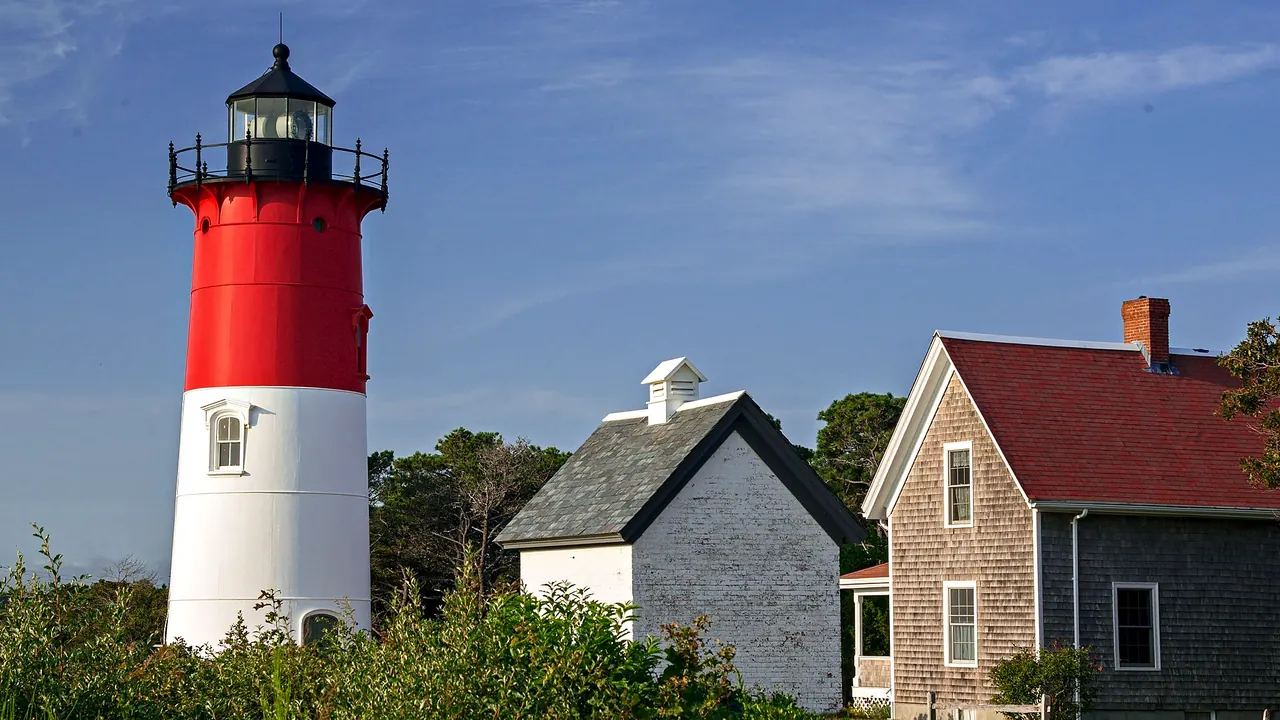
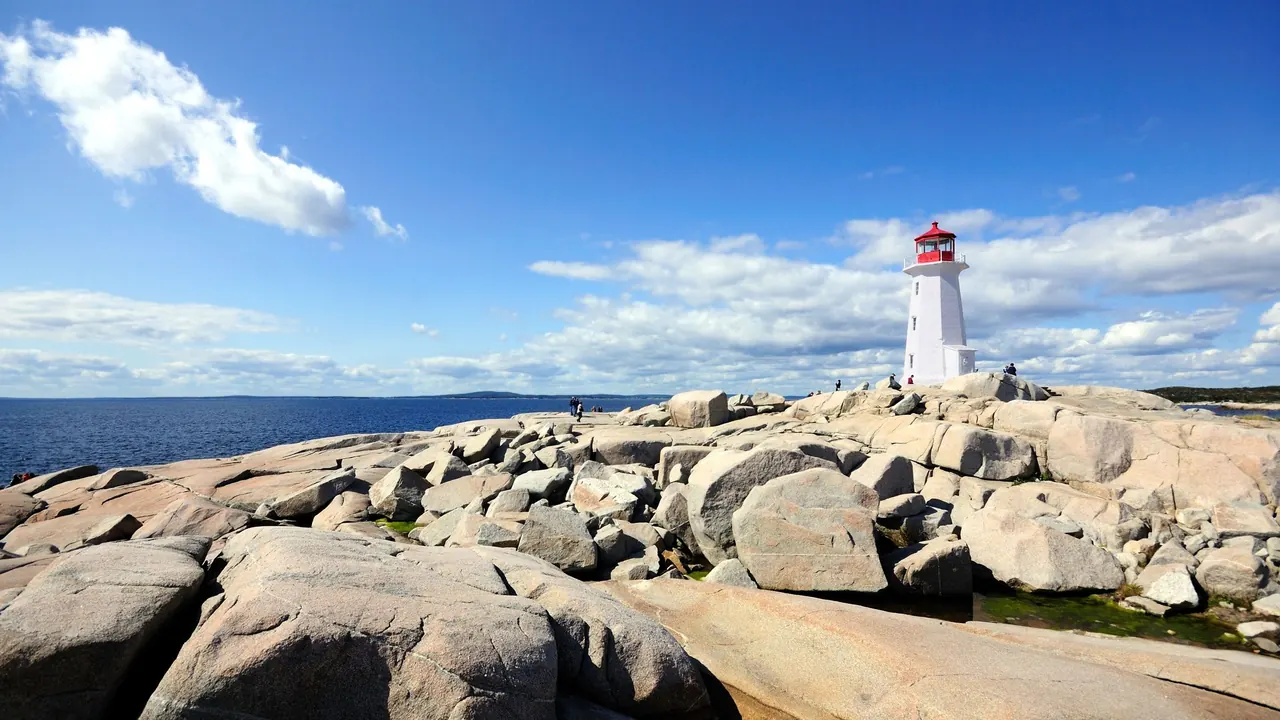
Photos: Cape Cod by Peter K Burian, CC BY-SA 4.0, cropped; Nova Scotia by Taxiarchos228, CC BY-SA 3.0, cropped.
Cape Cod or Nova Scotia?
Our verdict in twelve categories, each scored against the same fixed benchmark cities, and the climate month by month, so you can choose for your trip.
Choose Cape Cod for
- beaches
- families
- day trips
Cape Cod is the better pick for a summer beach vacation, above all with children. The sound and bay beaches warm up enough for proper swimming, and the calm tide flats, freshwater ponds and flat bike paths make long, easy days. Nantucket and Martha's Vineyard are a ferry ride away, and Provincetown keeps the evenings lively. The price is a costly week and a lot of time in traffic on summer weekends.
Choose Nova Scotia for
- prices
- culture and sights
- nature and the outdoors
Travellers who want landscape and history on a road trip should lean towards Nova Scotia. The Cabot Trail, the Fundy tides and the whale grounds off Brier Island are wilder than anything on the Cape. Lunenburg, Louisbourg and Grand-Pré give it far more heritage to explore, and Cape Breton's fiddle music is a reason to go in itself. The sea is mostly too cold for swimming and the distances are long, but it is easier on the budget and the roads are quiet.
Scoreboard
Twelve categories on one fixed scale from 0 to 100. The shaded stretch is the gap between the two.
Your match
Pick a travel style or drag the sliders, and both match scores follow your weighting.
Too close to call, 1 point apart
Wins on beaches and families with your weighting.
Wins on prices and culture and sights with your weighting.
What matters to you?
Category by category
What the scores mean for a trip.
Beaches & swimming
Cape Cod is the place to swim. Falmouth, Craigville and Harwich on Nantucket Sound have warm, gentle water, and the bay shore near Brewster is calmer still. The surf beaches of the National Seashore and the kettle ponds around Wellfleet are close by for variety, so a week can be spent on a different beach every day.
Nova Scotia has warm water too, on the red-sand beaches of the Northumberland Strait, but you have to choose that shore as your base. On the Atlantic side, from Crystal Crescent to Lawrencetown, the sand is lovely but the sea is for paddling. There a beach is one afternoon in a touring trip.
Food & drink
The two are broadly level, and both are built on cold-water seafood. They differ in setting. On Cape Cod you eat Wellfleet oysters and fried clams at clam shacks with picnic tables, and Provincetown has the most varied dining rooms.
Nova Scotia's best food is in Halifax, with modern restaurants using local produce, the waterfront farmers' market and the late-night donair. Add Digby scallops and the Annapolis Valley's Tidal Bay white wine. Outside their main towns, both narrow to simple fish places.
Culture & sights
Nova Scotia has much more to see. Lunenburg's painted harbour town, the Acadian landscape at Grand-Pré and the Joggins Fossil Cliffs are all World Heritage sites. Louisbourg's reconstructed French fortress is staffed by costumed interpreters, and in Halifax there are the Citadel, Pier 21 and the maritime museum.
Cape Cod's history sits mostly in the captains' houses and white churches along Route 6A, plus the Pilgrim Monument and the art museum in Provincetown. Its lighthouses and small museums work best as stops between swims.
Nightlife
Cape Cod has the bigger night out, but only in one town and one season. In July and August, Provincetown's Commercial Street, waterfront tea dances, gay and lesbian bars and dance clubs run later than anywhere else on the Cape. Hyannis has a smaller bar strip.
Nova Scotia's evenings mean Halifax, where pubs, taprooms and cocktail bars on Argyle Street and in the North End fill with students at weekends. It is friendlier and more pub-based, with little club life, and the rest of the province goes to bed early.
Nature & outdoors
Nova Scotia's landscapes are bigger and wilder. The Cabot Trail climbs over the Cape Breton Highlands to cliffs above the Gulf of St Lawrence, with moose on the barrens. The Bay of Fundy's tides let you walk the sea floor at Burntcoat Head, and Kejimkujik offers lake canoeing under dark skies.
Cape Cod's nature is softer: Province Lands dunes, salt marshes, cranberry bogs and long, flat bike trails, with no high ground at all. Both are excellent for whales. Provincetown boats go out to Stellwagen Bank, and Nova Scotia's go out from Digby Neck and Brier Island.
Day trips
Cape Cod has the stronger day trips, mainly because of its islands. Fast ferries from Hyannis and Woods Hole reach Nantucket's whaling town and Martha's Vineyard's gingerbread cottages. Plymouth and New Bedford are close across the canal, and Boston can be done by road or by summer ferry.
Nova Scotia's outings are pleasant but smaller. From Halifax you can reach Peggy's Cove, Chester and Mahone Bay to the south, or Wolfville's wineries in the Annapolis Valley. There is no second city to escape to.
Good for families
Cape Cod is the easier family vacation. Shallow bay beaches with tide flats for crab hunting, warmer sound water for young swimmers, ponds and flat bike paths make days simple from one rented cottage. Whale boats, mini-golf and summer fireworks add to it, though the outer surf needs care.
Nova Scotia suits children who like being outdoors, with Northumberland beaches, fossil hunting on Fundy and musket fire at Louisbourg. The long drives between these places mean families should pick one or two bases.
Getting around
In both places you need a car, but Nova Scotia's driving is calmer. Its roads are good and quiet, but the distances are real: getting from Halifax to the Cabot Trail takes most of a day's driving. Halifax itself is compact and walkable, with a harbour ferry to Dartmouth.
On Cape Cod everything is closer, but the canal bridges and main roads jam on summer weekends and village parking is tight. If you choose your base well, Provincetown by bike and the island ferries can make part of the trip car-free.
Shopping & style
Neither place is for fashion, but Cape Cod gives a shopper a little more. Galleries line Provincetown's Commercial Street and Wellfleet, and antique shops run along the Old King's Highway. Hyannis has a mall and there are outlets near the canal.
Nova Scotia's shopping is studio crafts: pottery and weaving around Mahone Bay and Lunenburg, hooked rugs, tartan and sea-glass jewellery. Spring Garden Road in Halifax is its only proper shopping street.
Affordability
Nova Scotia is the cheaper of the two, though it is not cheap in July and August. Car hire and sales tax add up, but rural motels, cottages, campgrounds and free coastal walks keep the costs down.
Cape Cod in high summer is expensive. Weekly cottage rentals with long minimum stays, daily beach parking, seafood meals and island ferries all add to the bill. In both places June and September bring noticeable relief.
Live music & performing arts
Nova Scotia is the stronger choice for live performance, because its music is a living tradition rather than a summer season. Cape Cod's stages are busy in July and August, with musicals and plays at the Cape Playhouse in Dennis, drag, cabaret and comedy in Provincetown and touring bands in the Hyannis tent. Once summer ends the theatre thins sharply, and little but the Cape Cod Symphony carries on.
In Nova Scotia the music belongs to the communities. Fiddlers and step dancers play ceilidhs in the village halls of Mabou, Judique and Inverness, and the college at St Ann's keeps Gaelic alive. The Celtic Colours festival brings concerts to Cape Breton in October, and Halifax pubs host Celtic and folk sessions most nights, alongside the city's symphony and professional theatre.
Wellness & relaxation
For rest, the two are much alike: both offer slow days rather than spa culture, and neither has any bathing tradition. On Cape Cod that means a shingled cottage in Truro or Brewster and empty early-morning sand, at its best in September once the summer traffic has gone. In Nova Scotia it means a fishing village or country inn on the South Shore or in Cape Breton, where evenings are truly silent.

When should you go?
Pick your month. The climate figures are measured averages, not a forecast.
Cape Cod in July
Nova Scotia in July
Daytime high, °C
Rainfall in the month, mm
Where the figures come from
Cape Cod has no rain gauge within 25 km of the centre, so its rainfall comes from a gridded climate dataset read at the destination rather than from a gauge further away.
Temperature and rainfall are climate normals, averaged over the years shown. Cape Cod: 2006-2020 (rainfall 1991-2020) normals, Hyannis (2 km from centre). Nova Scotia: 1991-2020 (sunshine 1981-2010) normals, Shearwater Airport (6 km from centre).
Cape Cod has the warmer summer. Days reach about 26°C in July and August, and the sea warms to around 20°C in August. That gives a comfortable swimming season from early July to mid-September, and the beaches on Nantucket Sound are warmer than the open ocean. July is also its driest month. Spring warms slowly. From October the rain picks up, though late September and early October are still mild enough for walking the dunes and villages. Winter is cold.
Nova Scotia stays a few degrees cooler, peaking near 23°C in August. That suits hiking and driving more than lying on the sand. The sea in these figures reaches only about 17°C, so swimming waits for the warmer Northumberland shore. July and August are the sunniest months and August the driest. Then autumn turns wet, with about 144mm of rain in October, and winter days hover around freezing.
Which traveller are you?
On a beach and sun trip, Cape Cod wins clearly. Warm, gentle water on Nantucket Sound, calm bay beaches, surf on the National Seashore and clear kettle ponds are all close together, while most of Nova Scotia's Atlantic shore is too cold for more than a paddle.
For an outdoors trip, Nova Scotia has more to offer. You can hike the Cabot Trail's highland cliffs, walk the Fundy sea floor at low tide, raft the tidal bore and canoe in Kejimkujik. Cape Cod's dunes, marshes and rail trails are gentler and entirely flat.
On a culture and arts trip, Nova Scotia gives you more to see and hear. It has three World Heritage sites, the living fortress at Louisbourg and the museums of Halifax, and Cape Breton's ceilidhs carry a real music tradition. Cape Cod's sights are mostly village architecture and lighthouses.
Before you go
| Measure | Cape Cod | Nova Scotia |
|---|---|---|
| Official language | - | French, English |
| Currency | US Dollar (USD) | Canadian Dollar (CAD) |
| Sockets | AB120 V, 60 Hz | AB120 V, 60 Hz |
| Driving side | Right | Right |
| Time zone | UTC-5, UTC-4 in summer | UTC-4, UTC-3 in summer |
| Emergency number | 911 | 911 |
| Main airport | Boston Logan International Airport (BOS)144 non-stop destinations | Halifax / Stanfield International Airport (YHZ)37 non-stop destinations |
| Public holidays this year | 12 days | 12 days |
By the numbers
| Measure | Cape Cod | Nova Scotia |
|---|---|---|
| Population | - | 969,383 |
| Swim season, months above 21 °C | None | None |
Where else could you go?
Every comparison below shares a destination with this one, so you can follow Cape Cod or Nova Scotia somewhere new.
- Martha's Vineyardvs Cape Cod
- Nantucketvs Cape Cod
- The Hamptonsvs Cape Cod
- Prince Edward Islandvs Nova Scotia
- Catskillsvs Cape Cod
- Acadiavs Cape Cod