Canada
Halifax
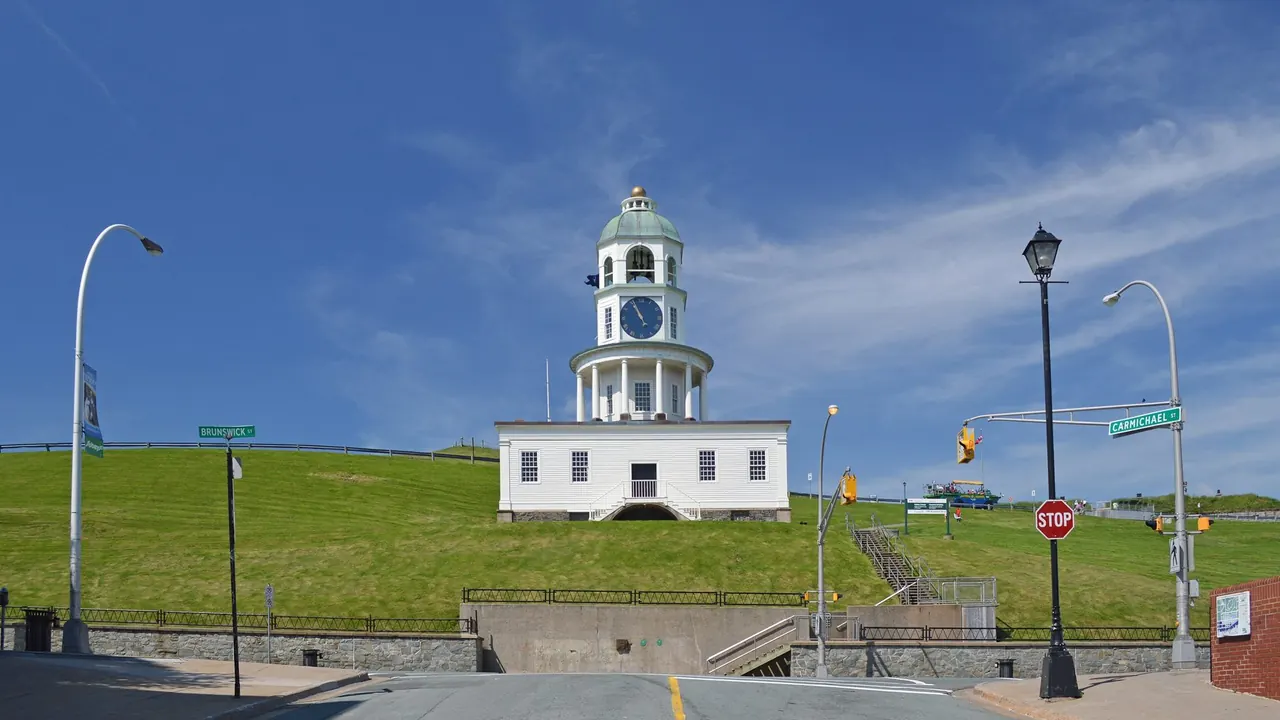
The Old Town Clock on Citadel Hill
- Day trips63
- Nature & outdoors62
- Families55
Photo: Danieljmacdonald, CC BY-SA 3.0, cropped
Match
45
Every category weighted equally
- Beach & sun43
- Culture & arts46
- Food & nightlife45
- Family trip47
- Outdoors49
- Relax & unwind43
- Shopping & style44
- On a budget45
Halifax in twelve categories
Our verdict on each, scored 0 to 100 against the same fixed benchmark cities, so a score means the same thing on every page.
Beaches & swimming. Scores 32 out of 100.
Food & drink. Scores 50 out of 100.
Culture & sights. Scores 42 out of 100.
Nightlife. Scores 46 out of 100.
Nature & outdoors. Scores 62 out of 100.
Day trips. Scores 63 out of 100.
Good for families. Scores 55 out of 100.
Getting around. Scores 48 out of 100.
Shopping & style. Scores 35 out of 100.
Affordability. Scores 38 out of 100.
Live music & performing arts. Scores 46 out of 100.
Wellness & relaxation. Scores 28 out of 100.
Halifax category by category
Beaches & swimming
32Halifax sits on the open Atlantic, and the sea stays cold. Even in August the water at the nearest ocean beaches is usually about 16-19°C, which is bracing rather than comfortable. The beaches themselves are good: Crystal Crescent's pale sand and granite to the south-west, and Rainbow Haven, Lawrencetown and the long arc of Martinique Beach to the east, all within an hour by car. Lawrencetown is a surf beach more than a swimming one.
For most locals, summer swimming means a lake. Chocolate Lake, Lake Banook in Dartmouth and others inside the city warm up well in July and August and have supervised areas. The season is short, though, and beach days are an extra on a Halifax trip, not the reason for it.
Food & drink
50Seafood is the reason to eat in Halifax. Lobster comes as rolls, boiled whole or in chowder. There are Nova Scotia oysters, Digby scallops and fried haddock from simple waterfront counters. The donair, a sweet-sauced take on the doner kebab, is the city's own late-night food. The Seaport Farmers' Market traces its roots to the 1750s and is a good Saturday morning out for local produce, cheese and baking. The city has a deep craft brewing scene, and Annapolis Valley wines and ciders turn up on many menus.
Beyond seafood the range is modest. There are good modern bistros downtown and in the North End, but international depth is limited and the fine-dining tier is thin.
Culture & sights
42Halifax's sights tell the story of a naval port and an immigration gateway. The star-shaped Citadel on its hill overlooks downtown, with costumed garrison soldiers and the noon gun. On the waterfront, the Maritime Museum of the Atlantic covers shipwrecks, the Titanic and the 1917 Halifax Explosion. The Canadian Museum of Immigration at Pier 21 occupies the shed where about a million newcomers first arrived in Canada. The Art Gallery of Nova Scotia keeps Maud Lewis's tiny painted house.
Add St Paul's Church, Province House, the Victorian Public Gardens and the Titanic graves at Fairview Lawn Cemetery, and that is most of the list. It is a satisfying two days, but there is no sight of world rank.
Nightlife
46Going out in Halifax means pubs. Several universities keep the downtown busy, and the area around Argyle Street, Grafton Street and the waterfront fills with pub crowds, brewery taprooms and patios on summer weekends. The North End along Gottingen and Agricola Streets has smaller cocktail and wine bars with a more local crowd. It is friendly, easy and fairly late at weekends. The club scene is small, though, and midweek nights in winter are quiet.
Nature & outdoors
62Halifax's landscape is rocky Atlantic coast and lakes in boreal forest. Inside the city, Point Pleasant Park covers the tip of the peninsula with wooded trails above the harbour mouth. McNabs Island, a short boat ride away, has old forts and empty shoreline paths. On the city's edge, the Blue Mountain-Birch Cove wilderness has lakes and granite barrens. The coastal trails at Duncan's Cove are about half an hour's drive, and the bare granite headlands at Peggy's Cove and Polly's Cove are under an hour away.
Sea kayaking along the indented south shore, surfing at Lawrencetown and rail-trail cycling are all easy to arrange. Kejimkujik National Park is about two hours inland. There are no real hills. Autumn colour is the best season, and winters are raw and grey.
Day trips
63The best day out is the South Shore. Lunenburg is about an hour and a quarter away, a UNESCO-listed colonial town of painted wooden houses on a working harbour. Mahone Bay, with its three churches by the water, and the yachting village of Chester are on the way. The fishing village of Peggy's Cove, with its lighthouse on bare rock, is under an hour away.
In the other direction, about an hour away, the Annapolis Valley has Wolfville's wineries and the UNESCO landscape of Grand Pré, remembered for the Acadian deportation. Historic Annapolis Royal is at the edge of a day. Almost all of these need a car or a tour, and the list ends there.
Good for families
55Halifax is a small, safe and relaxed city with children, and the harbour does much of the entertaining. The ferry across to Dartmouth is a cheap thrill, and the waterfront boardwalk has ships, tugboats and ice cream. At the Citadel, children can watch soldiers in kilts drill and fire the noon gun. The Discovery Centre is a good hands-on science museum, and the Maritime Museum's shipwreck and Titanic displays appeal to older children.
Point Pleasant Park, the Public Gardens and the supervised lakes fill summer afternoons. There is no aquarium or theme park, though, and the main zoo is far out of town. Most families find a few days enough before heading out along the coast.
Getting around
48The core of Halifax is compact. Downtown, the waterfront boardwalk, the Citadel, Spring Garden Road and the North End are all within walking distance, though the streets climb steeply from the harbour. The harbour ferry to Dartmouth is the oldest saltwater passenger ferry service in North America and doubles as a sightseeing trip.
Past the peninsula, things get harder. City buses are adequate but slow and thin at weekends, and there is no rail transit. Peggy's Cove, the beaches, Lunenburg and the Annapolis Valley need a hired car or a tour, and most visitors who want to see the province drive.
Shopping & style
35Shopping in Halifax is small-scale and local. Spring Garden Road and Barrington Street have the main high-street shops. The North End and the Hydrostone, an Edwardian street rebuilt after the 1917 explosion, have independent boutiques, bookshops and design stores. The farmers' market and craft galleries sell Nova Scotian pottery, pewter, woollens, tartan and maple products. There is little luxury retail and no department store worth seeking out, and most visitors buy a few crafts rather than set aside a day to shop.
Affordability
38Halifax is not a cheap city. Hotel rooms downtown are expensive in summer and early autumn, when cruise ships and festivals fill the city, and there is not much budget accommodation. Restaurant meals cost about what they do elsewhere in Canada, and sales tax and tipping add a noticeable amount on top. Lobster is good value compared with most places, but it is not cheap.
The museums are moderately priced, and walking and the ferry cost little. Hiring a car to see the coast adds a lot to the budget. Visiting in late spring or after mid-October brings noticeably lower room rates.
Live music & performing arts
46Live music is Halifax's real strength in this area. Fiddles, guitars and Celtic and East Coast songs can be heard in pubs downtown most nights of the week, and a strong local songwriting and indie scene plays in small clubs. Symphony Nova Scotia performs at the Rebecca Cohn Auditorium on the Dalhousie campus. Neptune Theatre stages plays and musicals, and there are smaller independent companies.
Summer is the busiest time, with a long-running jazz festival and outdoor concerts on the waterfront. There is no resident opera company and big touring productions are few, so people who love classical music and theatre will find only a small programme.
Wellness & relaxation
28Halifax has no bathing or spa tradition. Wellness here means a handful of day spas and hotel spas, plus yoga studios. What it does offer is an unhurried pace. The city is small, mornings on the waterfront are quiet, and the Public Gardens and harbour-edge parks are restful. In summer, a cold swim in a lake or the sea followed by a slow afternoon is about as restorative as it gets. Anyone after a proper spa vacation should look elsewhere.
When should you go?
Pick a month to see what it is like. The climate figures are measured averages, not a forecast.
Halifax in July
Daytime high, °C
Rainfall in the month, mm
The whole year
Shaded against this city’s own year: the deepest cell is its best month for that figure and the palest its weakest.
Temperature and rainfall are climate normals, averaged over the years shown. Halifax: 1991-2020 normals, Shearwater Airport (6 km from centre).
Before you go
| Measure | Halifax |
|---|---|
| Official language | French, English |
| Currency | Canadian Dollar (CAD) |
| Sockets | AB120 V, 60 Hz |
| Driving side | Right |
| Time zone | UTC-4, UTC-3 in summer |
| Emergency number | 911 |
| Elevation | 28 m |
| Main airport | Halifax / Stanfield International Airport (YHZ)26 km from centre40 non-stop destinations |
| Public holidays this year | 12 days |
By the numbers
| Measure | Halifax |
|---|---|
| City population | 440,072 |
| People per km² | 80 |
| Museums within 10 km | 15 |
| UNESCO World Heritage sites within 50 km | 0 |
| Swim season, months above 21 °C | None |
Compare Halifax with
Every comparison with a written verdict behind it.