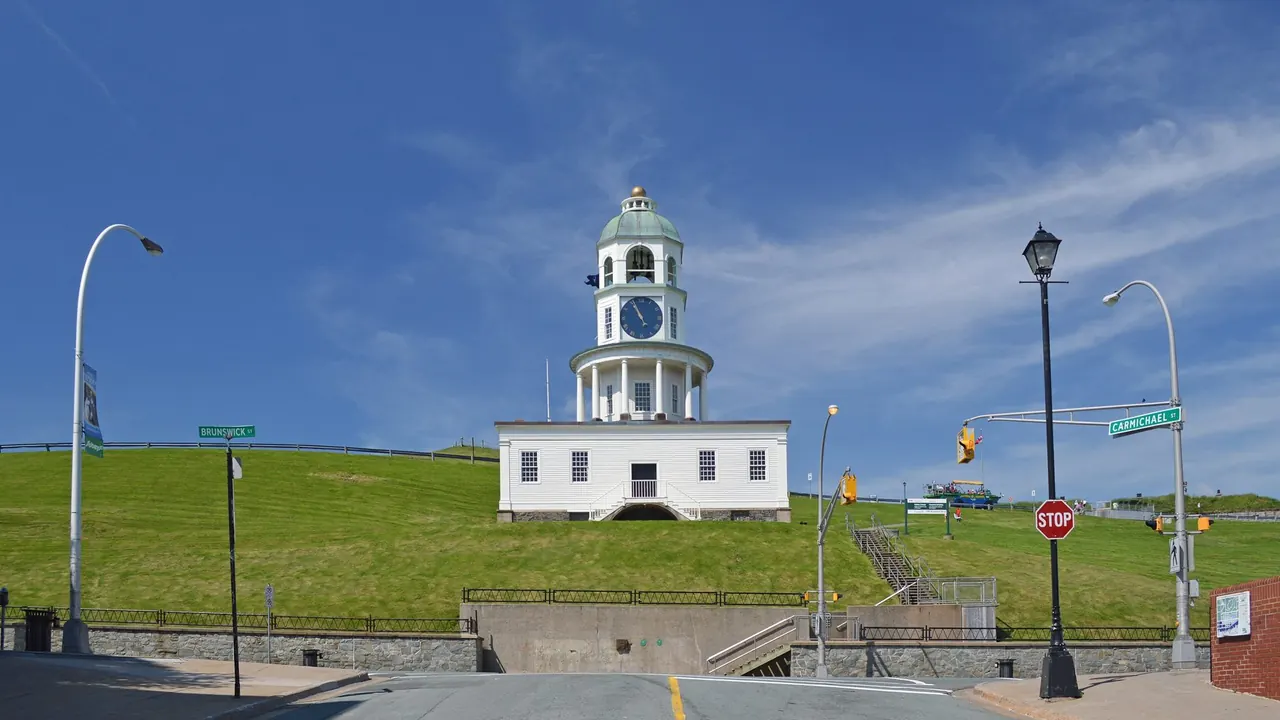
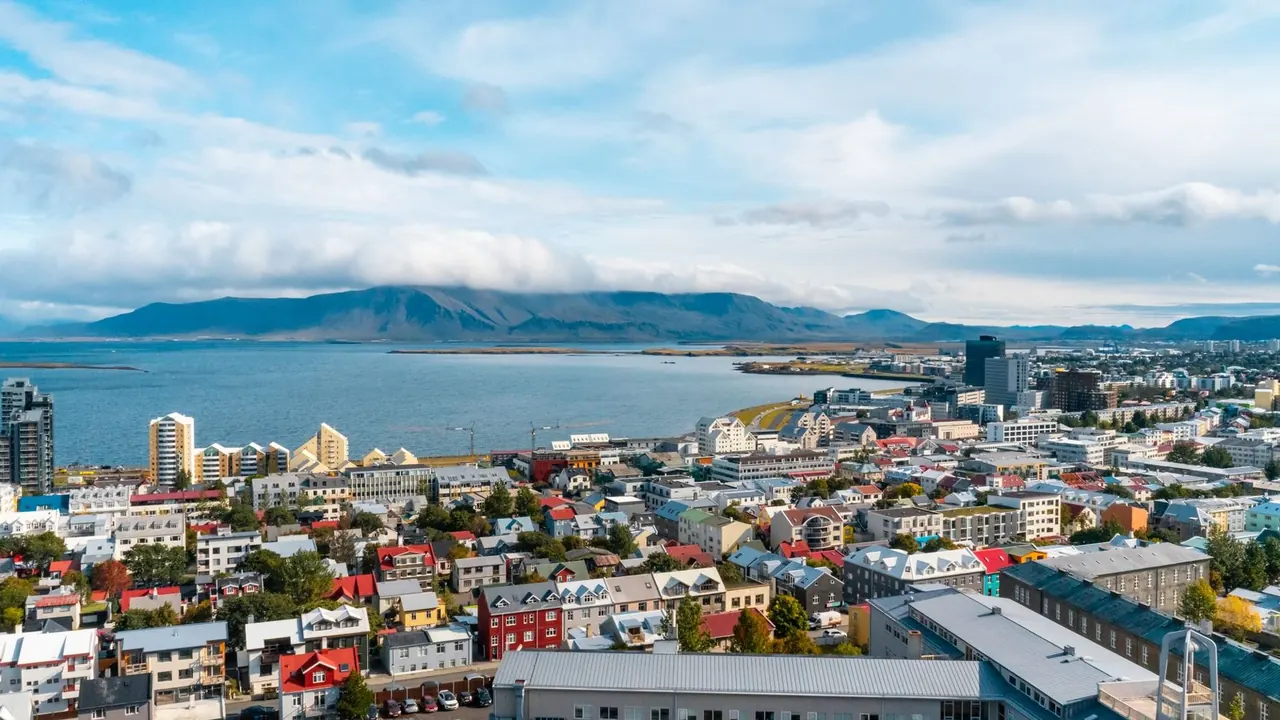
Photos: Halifax by Danieljmacdonald, CC BY-SA 3.0, cropped; Reykjavik by Atlantic Ambience, Pexels License.
Halifax or Reykjavik?
Our verdict in twelve categories, each scored against the same fixed benchmark cities, and the climate month by month, so you can choose for your trip.
Choose Halifax for
- prices
- day trips
- beaches
Halifax suits a traveller who wants an easy harbour city with a past, good seafood and a coast worth driving. The Citadel, Pier 21 and the Maritime Museum fill two days, Lunenburg and Peggy's Cove make fine excursions, lobster and pub fiddle music fill the evenings, and the bill stays within reason. Summer is warm enough for a swim in a city lake.
Choose Reykjavik for
- wellness
- nature and the outdoors
- getting around
Choose Reykjavik when the landscape and the hot water are the point of the trip. Rift valleys, geysers, glaciers and lava fields are close by, and every day can end in a geothermal pool. The city's own sights are slight and the prices are steep, so it suits travellers who come for the country around it and budget for that from the start.
Scoreboard
Twelve categories on one fixed scale from 0 to 100. The shaded stretch is the gap between the two.
Your match
Pick a travel style or drag the sliders, and both match scores follow your weighting.
Too close to call, 1 point apart
Wins on prices and day trips with your weighting.
Wins on wellness and nature and the outdoors with your weighting.
What matters to you?
Category by category
What the scores mean for a trip.
Beaches & swimming
Neither city is a beach destination, but Halifax at least gives you a summer swim. Its ocean beaches, Crystal Crescent's pale sand and the long arc of Martinique, are good for walking, and in August the sea is warm enough for a bracing dip. Comfortable swimming happens in the city's lakes, Chocolate Lake and Lake Banook.
Reykjavik's shore is rock, black sand and harbour wall, and the sea stays colder still. Nauthólsvík's geothermally warmed lagoon is fun for an hour, but in Reykjavik real swimming means the heated pools.
Food & drink
Both kitchens are built on North Atlantic fish, but Halifax gives you more ways to eat it: lobster in rolls and chowder, Digby scallops, oysters, the sweet-sauced donair late at night, and a Saturday at the Seaport Farmers' Market, with craft beer and Annapolis Valley cider alongside.
Reykjavik cooks superb fish, lamb and greenhouse vegetables in a spare New Nordic style, and lamb soup or plokkfiskur makes a good lunch. The choice soon runs out beyond the centre around Laugavegur, though, and high prices push many visitors to cook for themselves, which few people visiting Halifax feel they need to do.
Culture & sights
Halifax has the fuller set of sights, built around its history as a naval port and an arrival point for immigrants. You get the star-shaped Citadel with its noon gun, the Maritime Museum's Titanic and 1917 Explosion galleries, and Pier 21, where about a million newcomers landed. Together they fill two satisfying days.
Reykjavik's list is shorter and more modern: the basalt-like tower of Hallgrímskirkja, the glass front of Harpa and the Settlement Exhibition around its Viking-age longhouse. Most visitors give the city a day and spend the rest of the trip out in the landscape.
Nightlife
The two are similar in size but go out at different times. Halifax is a pub town, with student crowds, taprooms and patios around Argyle Street on summer weekends and smaller cocktail bars in the North End, friendly and fairly late.
Reykjavik saves itself for Friday and Saturday, when the runtur along Laugavegur turns small bars into dance floors after midnight, and in midsummer you walk out into daylight. Weeknights are quiet in both cities, and Reykjavik's heavy tax on alcohol makes a night out there much more expensive.
Nature & outdoors
Halifax offers gentler country: the bare granite headlands at Peggy's Cove, wooded trails in Point Pleasant Park above the harbour mouth, sea kayaking along the indented south shore and fine autumn colour. It makes for good walking and paddling, though there are no real hills.
Reykjavik has far more to offer outdoors. Within a couple of hours are the rift valley at Þingvellir, the Strokkur geyser, Gullfoss and the south-coast waterfalls, with ice walks on Sólheimajökull, steaming lava country on Reykjanes, and whale and puffin boats from the Old Harbour. Midnight daylight in summer and the northern lights in winter give a reason to go in either season, although the weather will shape every plan.
Day trips
Halifax has the better towns to drive to. The South Shore links UNESCO-listed Lunenburg, Mahone Bay and Chester, and the Annapolis Valley adds Wolfville's wineries and the Acadian landscape of Grand Pré. Each makes a full day of harbours, painted houses and history.
Trips out of Reykjavik are mostly about scenery, and the towns along the way are slight. Þingvellir, where the parliament met in the open air from 930, is the outstanding historic stop. Borgarnes, Reykholt and the wooden merchant houses of Eyrarbakki make pleasant pauses rather than reasons to go.
Good for families
Both are safe, relaxed cities for children, but the fun takes different forms. In Halifax it centres on the harbour: the Dartmouth ferry, tugboats along the boardwalk, the Citadel's kilted soldiers and the hands-on Discovery Centre, with supervised lakes for summer afternoons.
In Reykjavik it centres on the pools, warm and outdoors in any weather, along with Laugardalur's farm animals and the ice cave at Perlan. The drawbacks there are long coach days to the waterfalls and steep food bills. In Halifax the main drawback is that families run out of things to do after a few days.
Getting around
Both have small centres you can walk, and both need a car beyond them, but Reykjavik is a little easier. Its main sights lie within a half-hour walk, and the yellow buses reliably reach the pools and Perlan.
Halifax's core is compact too, but the streets climb steeply from the harbour and the buses thin out at weekends, though the Dartmouth ferry is a pleasure in itself. In both cities the coast or the Golden Circle means hiring a car or joining a tour, and Reykjavik's winter ice and short days make that driving harder.
Shopping & style
Halifax gives a shopper more streets to work through: high-street shops on Spring Garden Road, independent boutiques and bookshops in the North End and the Edwardian Hydrostone, and Nova Scotian pottery, pewter and tartan at the market.
Reykjavik's choice is narrower and dearer, centred on Laugavegur and Skólavörðustígur, but its best buy, a hand-knitted lopapeysa, is more distinctive than anything Halifax sells. In both cities shopping fills an afternoon rather than a trip.
Affordability
Halifax is not cheap. Summer hotel rates are high, and sales tax and tipping add to every bill. Still, lobster is fair value, walking and the ferry cost little, and room rates drop in late spring and after mid-October.
Reykjavik costs a great deal more. In Halifax a restaurant meal costs about what it would anywhere in Canada, but in Reykjavik a plain one costs what a smart dinner would elsewhere. A round of drinks is far dearer than in a Halifax pub, and the car hire both cities need for the coast weighs much heavier once Icelandic fuel is added. The pools are the one real bargain, and supermarkets and bakeries keep lunches affordable.
Live music & performing arts
Each city gives you about as much to hear, but Halifax's music lives mostly in its pubs: fiddles and Celtic and East Coast songs downtown most nights, songwriters in small clubs and a summer jazz festival. Symphony Nova Scotia and Neptune Theatre add a modest formal programme.
Reykjavik has the grander stage in Harpa, home to the Iceland Symphony Orchestra and to opera, and the city is best known for alternative and electronic bands, which fill the central venues during Iceland Airwaves in late autumn. Its theatre is almost always in Icelandic, so visitors usually go for the music instead.
Wellness & relaxation
Here the two are far apart. Reykjavik's neighbourhood pools, from Laugardalslaug to Vesturbæjarlaug, give every visitor hot tubs, cold plunges and steam rooms to use each day, and the Blue Lagoon is on the airport road. Bathing is part of daily life there.
Halifax has no such tradition, only a few day spas and yoga studios. Its restfulness comes from an unhurried pace, quiet mornings on the waterfront and the Victorian Public Gardens.
When should you go?
Pick your month. The climate figures are measured averages, not a forecast.
Halifax in July
Reykjavik in July
Daytime high, °C
Rainfall in the month, mm
Temperature and rainfall are climate normals, averaged over the years shown. Halifax: 1991-2020 normals, Shearwater Airport (6 km from centre). Reykjavik: 1991-2020 normals, Reykjavik (2.3 km from centre).
Halifax has a real summer. July and August reach about 23°C, warm enough for lake swimming and comfortable walking on the steep streets, and the sea peaks around 17°C in August, bracing but swimmable for the hardy. September stays mild and is perhaps the most pleasant month overall. Rain falls steadily all year and is heaviest from October to December, and winter highs sit around freezing, which makes the city raw and grey.
Reykjavik never really warms up. Even July reaches only about 15°C, so jackets are needed in every month and the beach is not part of the plan. Its driest and brightest stretch runs from May to July, with June rainfall around 41mm and long sunny days that suit hiking and driving. From November it turns wet and dark, and December manages barely 13 hours of sunshine in the whole month, which is the season for hot pools and the northern lights rather than sightseeing.
Which traveller are you?
On a trip on a tight budget, Halifax goes much further. Fried haddock from a waterfront counter or a late-night donair makes a cheap meal, and Point Pleasant Park and the supervised city lakes fill free summer afternoons. Reykjavik stays costly even if you self-cater and skip the tours.
On a relaxing and wellness trip, Reykjavik is the obvious choice. Halifax offers a slow pace and a cold lake swim. In Reykjavik you soak at dawn and again after dark, chatting with locals between hot tub and cold plunge, with wilder hot springs out along the Golden Circle.
For an outdoors trip, Reykjavik is the stronger base. Halifax suits paddlers and gentle walkers, with sea kayaking on the south shore and autumn colour in the woods. From Reykjavik you can walk on a glacier, watch Strokkur erupt and climb Mount Esja in late-evening summer light.
Before you go
| Measure | Halifax | Reykjavik |
|---|---|---|
| Official language | French, English | Icelandic |
| Currency | Canadian Dollar (CAD) | Iceland Krona (ISK) |
| Sockets | AB120 V, 60 Hz | CF230 V, 50 Hz |
| Driving side | Right | Right |
| Time zone | UTC-4, UTC-3 in summer | UTC |
| Emergency number | 911 | 112 |
| Elevation | 28 m | 8 m |
| Main airport | Halifax / Stanfield International Airport (YHZ)26 km from centre40 non-stop destinations | Keflavik International Airport (KEF)37 km from centre88 non-stop destinations |
| Public holidays this year | 12 days | 16 days |
By the numbers
| Measure | Halifax | Reykjavik |
|---|---|---|
| City population | 440,072 | 138,772 |
| People per km² | 80 | 569 |
| Museums within 10 km | 15 | 23 |
| UNESCO World Heritage sites within 50 km | 0 | 1 |
| Swim season, months above 21 °C | None | None |
Where else could you go?
Every comparison below shares a destination with this one, so you can follow Halifax or Reykjavik somewhere new.