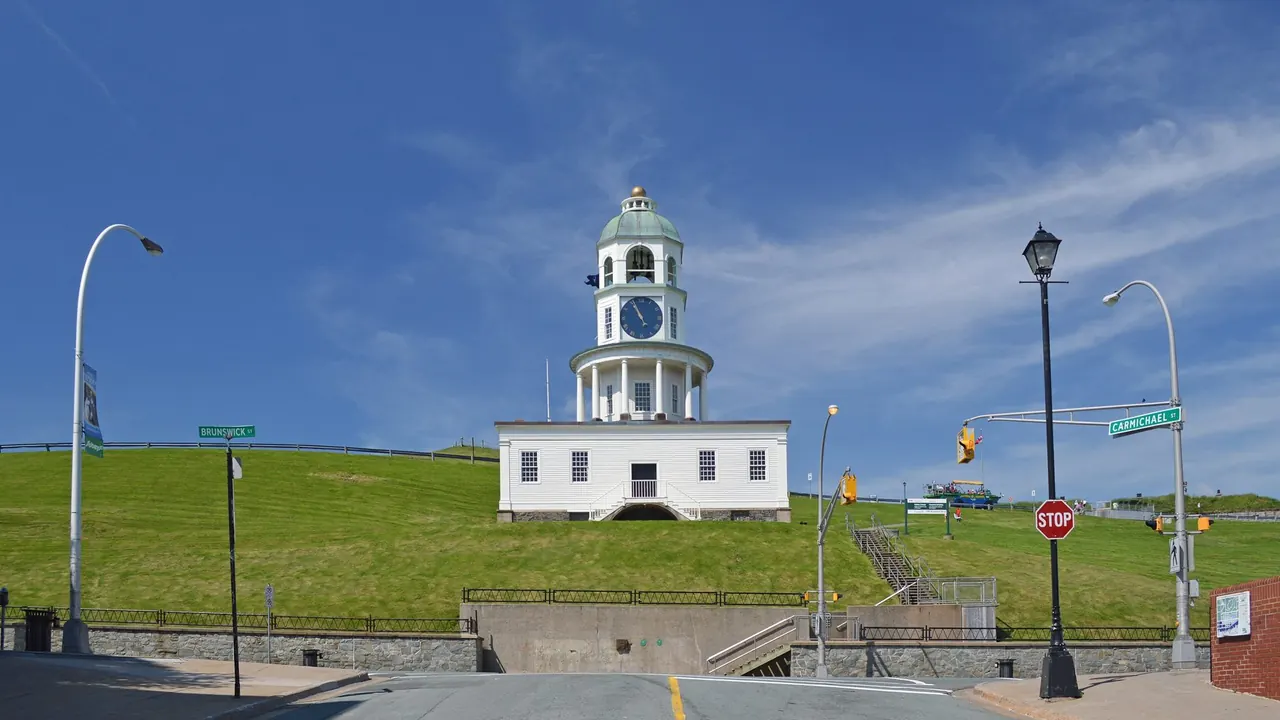
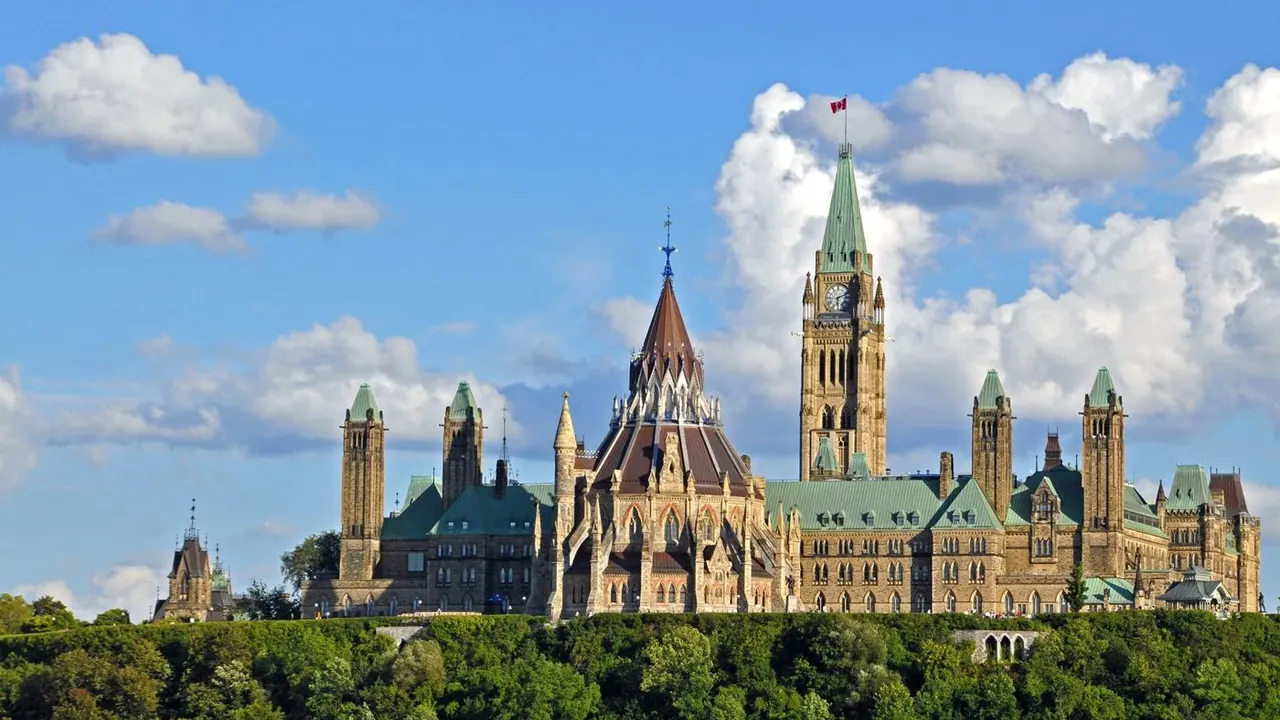
Photos: Halifax by Danieljmacdonald, CC BY-SA 3.0, cropped; Ottawa by Dennis G. Jarvis, CC BY-SA 2.0, cropped.
Halifax or Ottawa?
Our verdict in twelve categories, each scored against the same fixed benchmark cities, and the climate month by month, so you can choose for your trip.
Choose Halifax for
- nightlife
- day trips
- food and drink
Halifax suits travellers who want the sea in every part of the trip. You eat lobster and oysters by the harbour, hear fiddle music in a downtown pub, then hire a car for the granite at Peggy's Cove and the painted houses of Lunenburg. It is a small city, best enjoyed as a base for the coast, and it gives more back to those who like pubs and road trips than to those who like museums.
Choose Ottawa for
- wellness
- culture and sights
- getting around
Ottawa is the better pick for a trip built around museums, children or a slower pace. The national collections, Parliament Hill and the Rideau Canal fill several days, and Gatineau Park's forests and lakes begin just across the river. A Nordic spa in the woods, easy cycling and winter skating make it the calmer and more varied stay, and most of it is reachable without a car.
Scoreboard
Twelve categories on one fixed scale from 0 to 100. The shaded stretch is the gap between the two.
Your match
Pick a travel style or drag the sliders, and both match scores follow your weighting.
Wins on nightlife and day trips with your weighting.
Wins on wellness and culture and sights with your weighting.
What matters to you?
Category by category
What the scores mean for a trip.
Beaches & swimming
Neither city is a beach destination, and the swimming differs in kind. Halifax has the real sand, at Crystal Crescent, Martinique Beach and Lawrencetown, all within an hour's drive. The open Atlantic stays cold even in August, though, so most swims are short, and locals head for Chocolate Lake or Lake Banook instead.
Ottawa has no coast, only supervised river beaches such as Mooney's Bay and Petrie Island, which can close after heavy rain. Its best water is in Gatineau Park, where Meech Lake and Lac Philippe warm up far more than the sea off Nova Scotia. Choose Halifax for a walk on a wild shore and Ottawa for a comfortable swim.
Food & drink
The two eat about equally well, but in different ways. In Halifax it is all about the sea: lobster rolls and chowder, Digby scallops, Nova Scotia oysters, Saturday mornings at the Seaport Farmers' Market and Annapolis Valley cider with dinner.
Ottawa offers more variety but no signature dish. Expect shawarma, Little Italy on Preston Street and the ByWard Market's stalls, plus Québécois cooking and late-winter sugar shacks across the river in Gatineau. Neither city has a fine-dining scene worth building a trip around.
Culture & sights
Here Ottawa is well ahead. As the national capital it holds the National Gallery, the Canadian Museum of History with its hall of totem poles, the War Museum and the Museum of Nature, as well as Parliament Hill and the UNESCO-listed Rideau Canal. That is enough for three or four full days.
Halifax tells one story well: a naval port and immigration gateway. The Citadel, the Maritime Museum's Titanic and Halifax Explosion galleries and Pier 21 make a satisfying two days, but nothing in the city matches the depth of Ottawa's collections.
Nightlife
Halifax is the better night out. Students from several universities fill the pubs, taprooms and patios around Argyle and Grafton Streets, the North End has smaller cocktail bars, and weekends run fairly late.
Ottawa's evenings centre on the ByWard Market and the pubs of Elgin Street, with a few dance clubs, but bars shut earlier than in Quebec, so late crowds cross to Gatineau. Both go quiet in winter, Ottawa more so.
Nature & outdoors
Ottawa has the slight edge, because Gatineau Park's forest, lakes and ridges begin just across the river. They offer hiking and lookouts in summer and a large network of groomed cross-country ski trails in winter. Riverside cycling paths, skating on the canal and whitewater rafting upstream add to it.
Halifax's outdoors are coastal rather than forested. Think wooded trails in Point Pleasant Park, empty paths on McNabs Island, the bare granite at Peggy's Cove, and sea kayaking and surfing. There are no real hills, but the ocean scenery is something Ottawa cannot offer.
Day trips
Halifax has the better day trips, in two directions: the coast to the south-west and the farmland of the Annapolis Valley about an hour inland. The South Shore drive takes in Peggy's Cove, Chester, Mahone Bay and UNESCO-listed Lunenburg, while the Valley offers Wolfville's wineries and the Acadian landscape of Grand Pré. You will need a car or a tour for almost all of them.
From Ottawa, the standout is Montreal, about two hours away by train, followed by Kingston and the Thousand Islands. The canal towns such as Merrickville and Perth, and Wakefield in the Gatineau Hills, are pleasant outings rather than highlights.
Good for families
Ottawa is the stronger choice with children, mainly because its national museums are built for them. The Museum of Nature has dinosaurs, the Science and Technology Museum is hands-on, the Aviation and Space Museum has a hangar full of aircraft, and the Children's Museum sits inside the Museum of History. Add canal skating, tobogganing and the drive-through wildlife park at Parc Omega.
Halifax keeps young children happy for a few days, with the ferry to Dartmouth, the noon gun at the Citadel and the Discovery Centre. After that most families head off along the coast.
Getting around
Both cities have walkable centres, but Ottawa is much easier beyond them. Its light rail line runs across the city, a bike-share system and long riverside paths make cycling practical, and a car is only worth it for the further lakes and surrounding towns.
In Halifax the core is small but climbs steeply from the harbour. The historic ferry to Dartmouth is a pleasure, but buses are slow, there is no rail, and the coast and the Valley realistically mean hiring a car.
Shopping & style
Neither city is worth a trip for its shopping, and they differ mainly in scale. Ottawa has a proper downtown mall in the Rideau Centre, Indigenous art galleries around the ByWard Market, and independent shops in the Glebe and Wellington West.
Halifax is smaller and more craft-led. It has boutiques in the Hydrostone and the North End, and Nova Scotian pottery, pewter, woollens and tartan from the market and galleries.
Affordability
Costs are similar in both, and in both sales tax and tipping add noticeably to every meal. Ottawa's savings come from free Parliament tours, free museum hours, cheaper weekend hotel rates and meals in Gatineau.
In Halifax, summer rooms are expensive and budget beds are scarce, and hiring a car for the coast adds a lot. Lobster is good value, though, and late spring or the weeks after mid-October bring lower hotel rates.
Live music & performing arts
Ottawa leads for formal performance, while Halifax wins on music in the pubs. The National Arts Centre gives Ottawa an orchestra, English, French and Indigenous theatre companies and a dance series. In summer, Bluesfest and Chamberfest add big names and chamber music.
Halifax's strength is informal: fiddle, Celtic and East Coast songs in downtown pubs most nights, and an indie scene in small clubs. Symphony Nova Scotia and Neptune Theatre cover the classical side and theatre, but the programme is small.
Wellness & relaxation
Ottawa is clearly better for a restful stay. The outdoor Nordic spa at Chelsea, on the edge of Gatineau Park, has hot pools, saunas and cold plunges among the trees and is especially good on a snowy day. The quiet paths by the canal and river add to the calm.
Halifax has only a few day spas and hotel spas. Rest there means a quiet morning on the waterfront, the Public Gardens, or a cold lake swim followed by an easy afternoon.
When should you go?
Pick your month. The climate figures are measured averages, not a forecast.
Halifax in July
Ottawa in July
Daytime high, °C
Rainfall in the month, mm
Temperature and rainfall are climate normals, averaged over the years shown. Halifax: 1991-2020 normals, Shearwater Airport (6 km from centre). Ottawa: 1991-2020 normals, Ottawa CDA RCS (5.3 km from centre).
Halifax is a summer and early-autumn city. Highs only reach about 23°C in August, and the sea peaks at around 17°C, so beach days stay brisk even at their best. September holds most of that warmth and is a fine month for walking and coastal drives. Rain falls steadily all year and gets heavier from October to December, at about 140mm a month, and the winter months are cold, raw and grey.
Ottawa swings much further through the year. July is properly warm at around 27°C, warm enough for the forest lakes and the river beaches, and May to September is the comfortable span for long days on foot or by bike. Winter is harder than in Halifax, with January highs of about -5°C, but it is also drier, and that freeze is what brings canal skating and cross-country skiing. Late September and early October bring the autumn colour to both cities.
Which traveller are you?
On a culture and arts trip, Ottawa is the clear choice. The National Gallery, the Museum of History and the War Museum sit close to Parliament Hill, and the National Arts Centre adds orchestra, theatre and dance once the museums close.
For a food and nightlife trip, Halifax has the edge. Fresh seafood, donair after midnight and a deep craft brewing scene go with lively pubs around Argyle Street and live Celtic music most nights, while Ottawa's bars close earlier and quieten midweek.
On a relaxing and wellness trip, Ottawa wins easily. The Nordic spa at Chelsea, with hot pools and saunas in the woods, is about fifteen minutes from downtown. Halifax offers a quiet waterfront and a cold swim, but no real spa culture.
Before you go
| Measure | Halifax | Ottawa |
|---|---|---|
| Official language | French, English | French, English |
| Currency | Canadian Dollar (CAD) | Canadian Dollar (CAD) |
| Sockets | AB120 V, 60 Hz | AB120 V, 60 Hz |
| Driving side | Right | Right |
| Time zone | UTC-4, UTC-3 in summer | UTC-5, UTC-4 in summer |
| Emergency number | 911 | 911 |
| Elevation | 28 m | 70 m |
| Main airport | Halifax / Stanfield International Airport (YHZ)26 km from centre40 non-stop destinations | Ottawa Macdonald-Cartier International Airport (YOW)12 km from centre46 non-stop destinations |
| Public holidays this year | 12 days | 11 days |
By the numbers
| Measure | Halifax | Ottawa |
|---|---|---|
| City population | 440,072 | 1,017,449 |
| People per km² | 80 | 366 |
| Museums within 10 km | 15 | 20 |
| UNESCO World Heritage sites within 50 km | 0 | 1 |
| Swim season, months above 21 °C | None | - |
Where else could you go?
Every comparison below shares a destination with this one, so you can follow Halifax or Ottawa somewhere new.