Canada
Nova Scotia
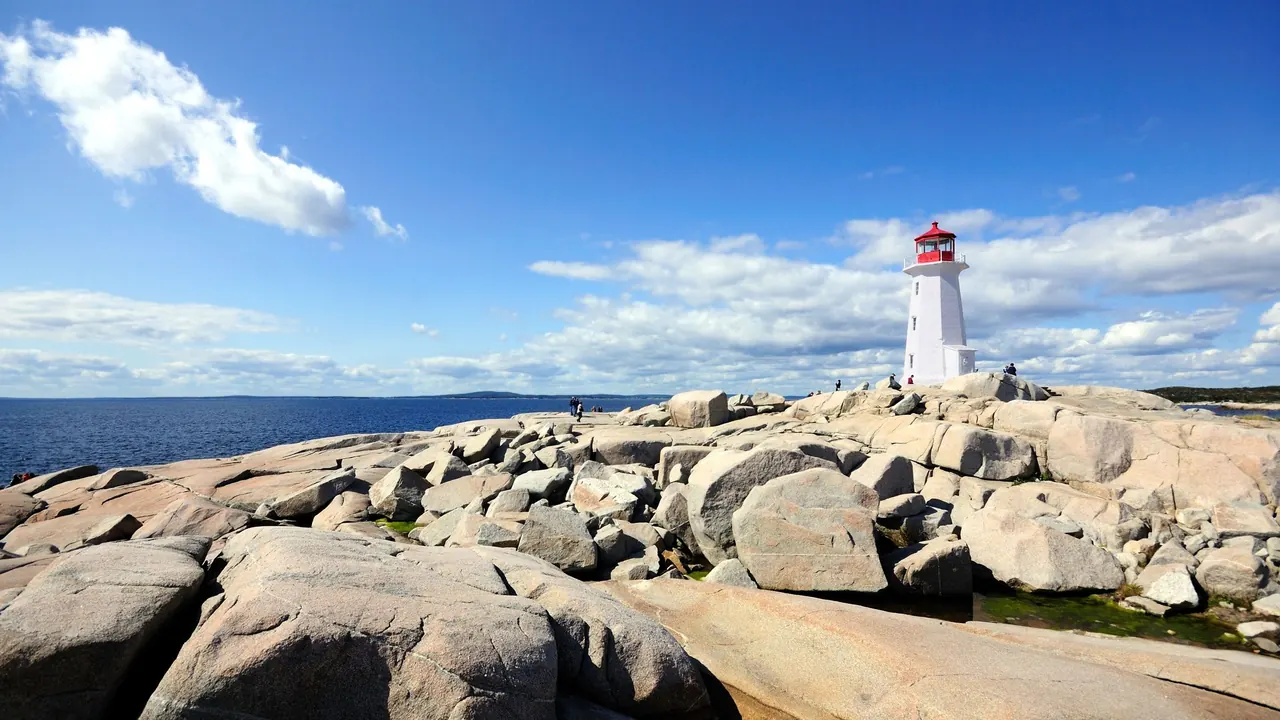
The granite rocks and lighthouse at Peggy's Cove
- Nature & outdoors80
- Day trips58
- Food & drink55
Photo: Taxiarchos228, CC BY-SA 3.0, cropped
Match
50
Every category weighted equally
- Beach & sun50
- Culture & arts50
- Food & nightlife48
- Family trip52
- Outdoors55
- Relax & unwind51
- Shopping & style47
- On a budget49
Nova Scotia in twelve categories
Our verdict on each, scored 0 to 100 against the same fixed benchmark cities, so a score means the same thing on every page.
Beaches & swimming. Scores 45 out of 100.
Food & drink. Scores 55 out of 100.
Culture & sights. Scores 55 out of 100.
Nightlife. Scores 40 out of 100.
Nature & outdoors. Scores 80 out of 100.
Day trips. Scores 58 out of 100.
Good for families. Scores 55 out of 100.
Getting around. Scores 45 out of 100.
Shopping & style. Scores 32 out of 100.
Affordability. Scores 42 out of 100.
Live music & performing arts. Scores 55 out of 100.
Wellness & relaxation. Scores 40 out of 100.
Nova Scotia category by category
Beaches & swimming
45Nova Scotia has two very different seas. The Atlantic shore, from the white sand of Crystal Crescent and Carters Beach on the South Shore to the surf beaches at Lawrencetown east of Halifax, is beautiful but cold, rarely much above 18°C even in August, so most people paddle rather than swim. The warm water is on the north side, along the Northumberland Strait, where shallow sandbars and long red-sand beaches such as Melmerby and those around Pugwash and Tatamagouche reach about 22°C to 24°C in late summer. Inverness on Cape Breton's west coast adds a long sandy beach on similarly mild water.
The swimming season is short, running from July to early September, and outside it the shore is for walking. A family that wants a beach-centred week should stay on the Northumberland shore; elsewhere a beach is an afternoon within a touring trip.
Food & drink
55Seafood is the reason to eat here: lobster boiled whole or served in a roll, Digby scallops from the Bay of Fundy, oysters from the cold inlets of the Eastern Shore and Cape Breton, and fish chowder on almost every menu. Halifax adds its own late-night street food, the donair, and the oldest continuously running farmers' market in North America on the waterfront. Halifax is where the range is widest, with good modern restaurants built around local produce.
The Annapolis Valley around Wolfville grows cool-climate grapes, and Tidal Bay, a crisp white made to an appellation standard, suits the seafood well; craft breweries and cideries are spread through the province. Beyond Halifax and the Valley, choice narrows to fish shacks, diners and inn dining rooms, good when the catch is fresh but rarely more.
Culture & sights
55Nova Scotia's heritage is colonial and maritime, and it is scattered rather than concentrated. Lunenburg is the highlight, a UNESCO-listed planned British colonial town of brightly painted wooden houses climbing from the harbour. The Grand-Pré landscape, also UNESCO-listed, tells the story of the Acadians and their deportation, and the Joggins Fossil Cliffs on the Bay of Fundy are a third World Heritage site. On Cape Breton, the Fortress of Louisbourg is a large reconstruction of an eighteenth-century French fortified town, staffed in summer by costumed interpreters.
In Halifax, the star-shaped Citadel overlooks the harbour, the Maritime Museum of the Atlantic covers the Titanic and the 1917 Halifax Explosion, and Pier 21 recalls the immigrants who landed there. Annapolis Royal and the Port-Royal habitation add early French history. None of it is grand, but it rewards a curious traveller.
Nightlife
40Going out means Halifax. Downtown around Argyle Street and the waterfront, and the North End along Gottingen and Agricola streets, have a dense cluster of pubs, taprooms and cocktail bars, and the universities keep weekends lively until the bars close in the early hours. The scene is friendly and pub-centred, with a few dance clubs rather than a serious club culture, and it finishes with a donair on the walk home.
Outside Halifax, evenings end early. Small towns have a pub or a brewery taproom, and summer nights in Cape Breton revolve around music rather than bars. A visitor who wants late nights should book a few of them in the city.
Nature & outdoors
80The Cabot Trail around the Cape Breton Highlands is the centrepiece: a coastal road over forested plateaus that drop in cliffs to the Gulf of St Lawrence, with the Skyline Trail's headland boardwalk, moose in the barrens and pilot whales offshore. The Bay of Fundy has the highest tides in the world, and at Burntcoat Head the sea floor can be walked at low tide; on the Shubenacadie River the incoming tidal bore is ridden in rafts. Digby Neck and Brier Island are among the best places in the region for humpback and fin whales from June to October.
Inland, Kejimkujik offers canoe routes through lakes and forest and dark night skies. The Atlantic coast is a long line of granite headlands, islands and coves suited to sea kayaking, coastal walks and surfing at Lawrencetown. Summer and the bright colour of early October are the seasons; winters are long and grey.
Day trips
58From Halifax, the classic day out runs along the South Shore: the granite and lighthouse at Peggy's Cove, the yachting village of Chester and the three churches of Mahone Bay, each under an hour or so away. The other direction leads to the Annapolis Valley, about an hour away, where Wolfville is a university town surrounded by wineries and orchards, and the old garrison town of Annapolis Royal lies at the far end in a little over two hours.
From a base in Baddeck on Cape Breton, outings reach the Gaelic villages of the west coast and the Acadian fishing community of Cheticamp. The places are pleasant small towns and villages rather than major destinations, and there is no second city to visit.
Good for families
55Nova Scotia is a safe, easy-going place to travel with children, and the best of it is outdoors. The warm, shallow beaches of the Northumberland Strait suit small children, the Bay of Fundy's tidal flats invite fossil and shell hunting, and whale-watching boats run from the Digby area. The Fortress of Louisbourg, with soldiers, cooks and musket firing in summer, brings history to life better than any museum.
Halifax has a hands-on science centre on the waterfront and a harbour ferry that children enjoy, and the Annapolis Valley has a small amusement park and pick-your-own farms. There is no large zoo, aquarium or theme park, and touring the province means long drives, so families do best choosing one or two bases.
Getting around
45A car is needed for almost everything outside Halifax. Roads are good and traffic light, so driving is relaxed, but distances add up: Halifax to the Cabot Trail is about four and a half hours, and the trail itself is a full day of slow, winding driving. Intercity buses connect the main towns but not the coast, parks and villages people come to see.
Halifax itself is easy. The downtown and waterfront are compact and walkable, if hilly up to the Citadel, and a harbour ferry crosses to Dartmouth. Most visitors fly into Halifax, hire a car there and plan a loop rather than day trips from one base.
Shopping & style
32Shopping is mostly about crafts. Potters, weavers, woodworkers and painters work in studios along the South Shore, around Mahone Bay and Lunenburg, and in the Cape Breton villages, and Nova Scotia tartan, hooked rugs, sea glass jewellery and maple products make the typical things to take home. Halifax has the province's main shopping streets around Spring Garden Road and the waterfront market, with local designers and bookshops but little fashion or luxury. Nobody comes here to shop.
Affordability
42Nova Scotia is mid-priced to expensive in its summer season. Hotels in Halifax and inns in popular towns such as Lunenburg and Baddeck fill up and charge accordingly in July and August, and car hire, which most visitors need, is a significant extra. Seafood is fresh but not cheap at sit-down restaurants, and sales tax is added to most prices at the till. Motels, cottages and campgrounds in rural areas keep costs down, as do the many free coastal walks and beaches, and travelling in June or late September eases prices noticeably.
Live music & performing arts
55Celtic music is the province's living art. On Cape Breton, especially along the west coast around Mabou, Judique and Inverness, fiddlers and step dancers play at summer ceilidhs in village halls, and the Gaelic tradition is kept alive at the college in St Ann's. Each October the Celtic Colours festival spreads concerts through the island's communities in the autumn colours, the best time to hear the music at its strongest.
In Halifax, pubs host live Celtic and folk sessions most nights, and the city has a regional professional theatre, a symphony orchestra and a summer jazz festival. Outside these, formal performance is limited, so a visitor plans around the music rather than a theatre season.
Wellness & relaxation
40There is no bathing or spa tradition here. Spa treatments come mostly from resort hotels and a handful of day spas around Halifax and the larger inns. What Nova Scotia does offer is quiet: small fishing villages, waterfront cottages and country inns on the South Shore and in Cape Breton, where days pass slowly and evenings are silent. A visitor looking for rest does best choosing one such base and staying put, rather than looking for treatments.
Where to stay in Nova Scotia
Most trips begin in Halifax, and a few nights there at the start or end of the trip suit a first visit. The downtown and waterfront are compact enough to walk, the city has the widest choice of restaurants in the province, and it is the only place for late evenings in pubs and taprooms. Peggy's Cove, Chester and the Annapolis Valley are all easy day trips.
For a quieter stay, Lunenburg or Mahone Bay on the South Shore suit couples and slow travellers, with painted harbour towns, craft studios and coastal walks. Wolfville in the Annapolis Valley suits anyone who comes for wine, orchards and food. Families who want a beach week should stay on the Northumberland Strait around Tatamagouche or Pugwash, where the water is the warmest in the province.
Cape Breton needs its own base, since it is about four and a half hours' drive from Halifax. Baddeck suits drivers doing the Cabot Trail, while the west coast around Inverness and Mabou suits walkers and anyone who comes for the summer ceilidhs. On a first visit, most people pair Halifax with one other base. A second visit can give Cape Breton a full week. Two moves in a week is usually enough.
When should you go?
Pick a month to see what it is like. The climate figures are measured averages, not a forecast.
Nova Scotia in July
Daytime high, °C
Rainfall in the month, mm
The whole year
Shaded against this destination’s own year: the deepest cell is its best month for that figure and the palest its weakest.
Temperature and rainfall are climate normals, averaged over the years shown. Nova Scotia: 1991-2020 (sunshine 1981-2010) normals, Shearwater Airport (6 km from centre).
Before you go
| Measure | Nova Scotia |
|---|---|
| Official language | French, English |
| Currency | Canadian Dollar (CAD) |
| Sockets | AB120 V, 60 Hz |
| Driving side | Right |
| Time zone | UTC-4, UTC-3 in summer |
| Emergency number | 911 |
| Main airport | Halifax / Stanfield International Airport (YHZ)37 non-stop destinations |
| Public holidays this year | 12 days |
By the numbers
| Measure | Nova Scotia |
|---|---|
| Population | 969,383 |
| Swim season, months above 21 °C | None |
Compare Nova Scotia with
Every comparison with a written verdict behind it.