Photos: Acadia by Plh1234us, CC BY-SA 3.0, cropped; Nova Scotia by Taxiarchos228, CC BY-SA 3.0, cropped.
Acadia or Nova Scotia?
Our verdict in twelve categories, each scored against the same fixed benchmark cities, and the climate month by month, so you can choose for your trip.
Choose Acadia for
- getting around
- nature and the outdoors
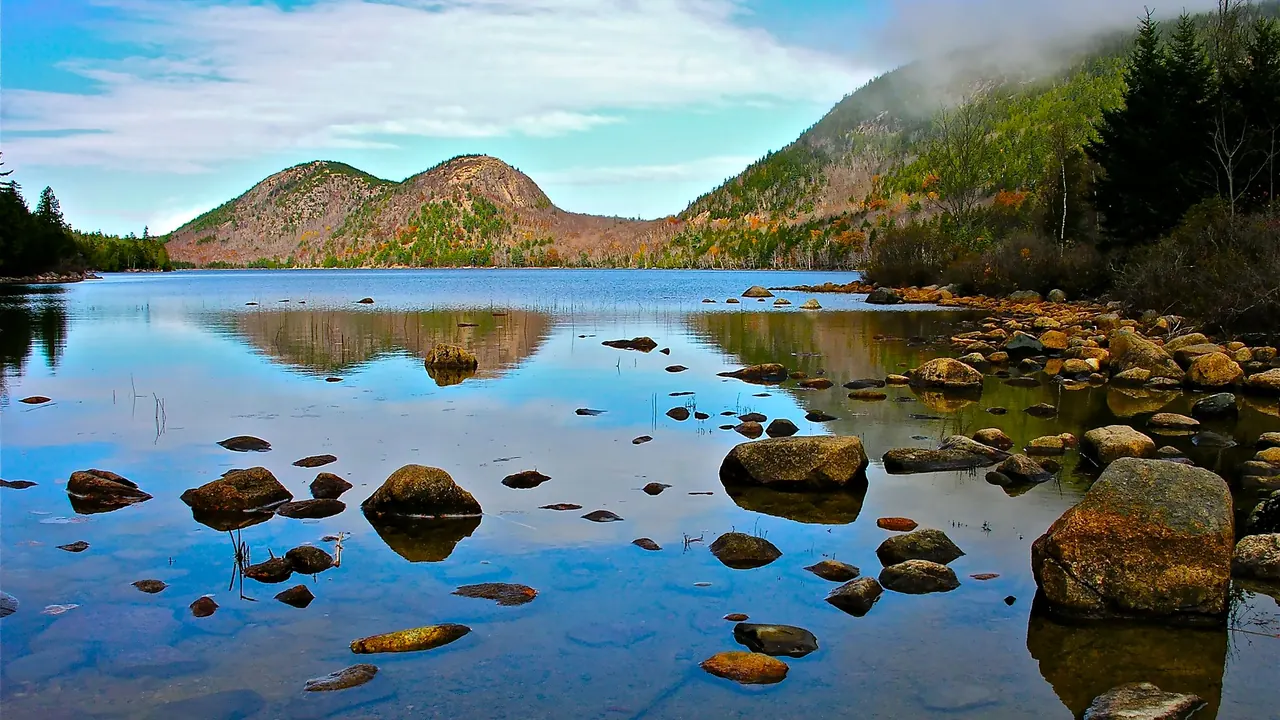
Acadia suits travellers who want the landscape to be the whole trip. Mount Desert Island puts granite summits, glacial lakes, a rocky shore and car-free carriage roads within a short ride of each other, so a week can be spent hiking, cycling and paddling from one base with almost no driving. Expect quiet evenings, few sights beyond the park and little to do on a foggy day.
Choose Nova Scotia for
- live music and the arts
- culture and sights
- nightlife
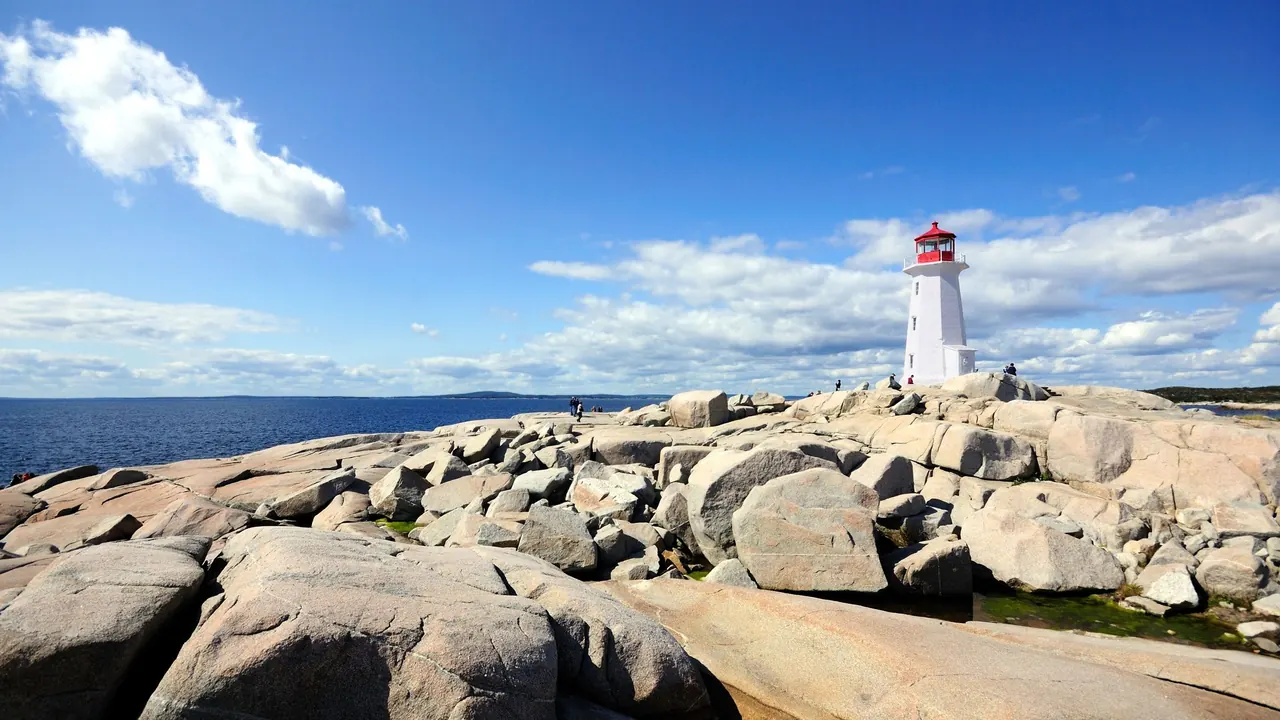
Nova Scotia is the better pick for a touring trip that mixes the outdoors with towns, history and music. Its scenery is just as strong but spread across a province, from the Cabot Trail to the Fundy tides, with Lunenburg, Louisbourg and the Halifax waterfront in between. It also has warm beaches on the Northumberland shore, Celtic fiddling in Cape Breton and a proper night out in Halifax. The cost is long drives and a car for almost everything.
Scoreboard
Twelve categories on one fixed scale from 0 to 100. The shaded stretch is the gap between the two.
Your match
Pick a travel style or drag the sliders, and both match scores follow your weighting.
Wins on getting around and nature and the outdoors with your weighting.
Wins on live music and the arts and culture and sights with your weighting.
What matters to you?
Category by category
What the scores mean for a trip.
Beaches & swimming
Acadia's coast is pink granite with one real ocean beach, Sand Beach, and the Gulf of Maine there is too cold for more than a quick paddle. The most pleasant swimming is in fresh water at Echo Lake, which gets reasonably warm by midsummer.
Nova Scotia gives a beach lover more to work with. Its Atlantic sands, such as Crystal Crescent and Lawrencetown, are as cold as Acadia's, but the red-sand beaches along the Northumberland Strait warm to about 22°C to 24°C in late summer. A family there can actually spend a week on the beach.
Food & drink
Lobster is the centre of the table in both. In Acadia it comes steamed at waterside shacks around Southwest Harbor and Bernard, with popovers at Jordan Pond as the local ritual. Beyond that, Bar Harbor's restaurants are few, much alike and often closed out of season.
Nova Scotia eats more widely. Halifax has modern restaurants, the donair and its old waterfront farmers' market, Digby scallops and Eastern Shore oysters add variety, and the Annapolis Valley makes Tidal Bay white wine and cider to go with it all.
Culture & sights
In Acadia the culture fits around the hiking. Rockefeller's carriage roads and their hand-cut granite bridges, the Gilded Age cottages along the Shore Path and the Abbe Museum's Wabanaki history make a pleasant half day or so.
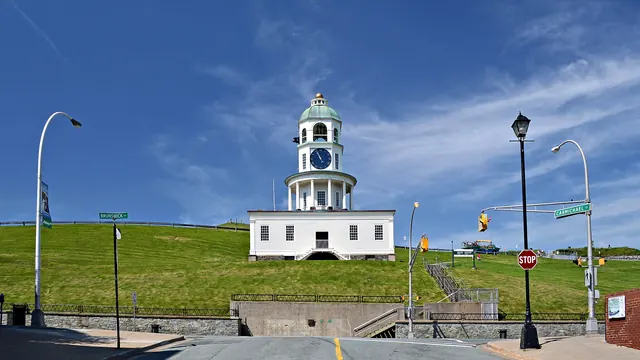
Nova Scotia has far more to see. Lunenburg's painted colonial town, the Grand-Pré landscape of the Acadian deportation and the Joggins Fossil Cliffs are all World Heritage sites. Louisbourg recreates a French fortified town with costumed staff, and Halifax adds the Citadel and the Titanic and Explosion displays at the Maritime Museum.
Nightlife
Acadia hardly has a night scene: a few taprooms and pub bars in Bar Harbor, full of hikers who want an early night before the Cadillac sunrise.
Nova Scotia has Halifax, where the downtown and the North End have plenty of pubs, cocktail bars and university crowds until the early hours, though only a few dance clubs. Outside the city, nights are as quiet as Acadia's, or spent at a fiddle session in Cape Breton.
Nature & outdoors
Both are first-rate outdoors, but in different ways. Acadia is compact: bare summits, Somes Sound, lakes, spruce and surf-battered shore all sit on one island, with the Precipice and Beehive for scrambling, carriage roads for car-free cycling and boats out to the seals and puffins.
Nova Scotia is spread across a whole province. The Cabot Trail's highland cliffs and moose, the Bay of Fundy's record tides and tidal-bore rafting, canoeing and dark skies at Kejimkujik, and humpbacks off Brier Island are each a separate journey. You get more variety, but much of it is seen through a windscreen.
Day trips
From Acadia the outings are small and mostly by water: mail boats to the Cranberry Isles, or a drive to Stonington's granite harbour and colonial Castine.
Nova Scotia has more choice from a Halifax base, with Peggy's Cove, Chester and Mahone Bay along the South Shore and Wolfville's wineries and orchards in the Annapolis Valley. Cape Breton adds the Acadian village of Cheticamp and the Gaelic west coast. Neither has a second city within reach.
Good for families
Both work equally well for outdoor families. Acadia's advantage is that everything is close by: tide pools at Wonderland, flat walks round Jordan Pond, bike rides on the carriage roads and ranger programmes, though a foggy day leaves little to do indoors.
Nova Scotia offers warm, shallow Northumberland beaches, musket firing at Louisbourg and a science centre in Halifax for wet days, but children have to sit through long drives between bases.
Getting around
Getting around is about equally easy in both, but the logistics differ. On Mount Desert Island distances are short, a free shuttle reaches the trailheads in summer and Bar Harbor is walkable. Outside the shuttle season, or for the western side of the island and the mainland villages, you need a car, and the single bridge onto the island gets slow in high summer.
In Nova Scotia the car is essential from the start. Roads are quiet and easy, but the Cabot Trail is about four and a half hours from Halifax, so most visitors drive a loop.
Shopping & style
Neither is a shopping destination, though Nova Scotia offers a little more. Acadia's Main Street in Bar Harbor is mostly souvenirs and outdoor gear, and the better pottery and jewellery is in the studios around Blue Hill and Deer Isle. Nova Scotia's craft trail is longer, with hooked rugs, tartan and sea glass from the South Shore and Cape Breton, and Spring Garden Road in Halifax adds bookshops and local designers.
Affordability
Neither is cheap in summer, but Acadia is harder on the budget. Bar Harbor rooms are scarce and expensive from July through the foliage weeks, so savings mean camping or motels further out.
Nova Scotia gives more room to manoeuvre. Rural cottages, motels and campgrounds are plentiful, and June or late September brings noticeably lower prices, although car hire and sales tax add to the bill.
Live music & performing arts
Acadia's live music is a short summer season of chamber concerts in churches and in Kneisel Hall's wooden hall at Blue Hill. Outside July and August there is little to attend.
Nova Scotia has a tradition you can travel for. Fiddlers and step dancers play summer ceilidhs in Mabou, Judique and Inverness, the Celtic Colours festival fills Cape Breton in October, and Halifax adds nightly pub sessions, a symphony orchestra and theatre.
Wellness & relaxation
Neither has a spa culture beyond a few resort hotels, so in both places rest comes from the slow pace. In Acadia that means a porch in Northeast or Southwest Harbor, or a room on the Schoodic side, with the park trails a short walk away. In Nova Scotia it means a cottage or country inn in a South Shore or Cape Breton fishing village, chosen as a base and left only for walks.
When should you go?
Pick your month. The climate figures are measured averages, not a forecast.
Acadia in July
Nova Scotia in July
Daytime high, °C
Rainfall in the month, mm
Where the figures come from
Acadia has no rain gauge within 25 km of the centre, so its rainfall comes from a gridded climate dataset read at the destination rather than from a gauge further away.
Temperature and rainfall are climate normals, averaged over the years shown. Acadia: 2006-2020 (rainfall 1991-2020) normals, Bar Harbor / Trenton (14.7 km from centre). Nova Scotia: 1991-2020 (sunshine 1981-2010) normals, Shearwater Airport (6 km from centre).
The two follow almost the same year. Around Mount Desert Island, Acadia warms to 24°C in July and August, which are also its driest months, but the sea there barely passes 13°C, so swimming means the lakes. Nova Scotia's measured coast reaches 17°C in August, and the Northumberland shore is warmer still, while July is the sunniest month. June and September are mild and comfortable for walking in both, and early October adds the leaf colour.
From October the rain climbs in both places, past 150mm a month in Acadia through late autumn. From December to March daytime highs sit around freezing in both, which is too cold and grey for walking the coast or touring by car.
Which traveller are you?
On a culture and arts trip, Nova Scotia is the clear choice. It has three World Heritage sites, the living fortress of Louisbourg and the museums of Halifax, plus Cape Breton ceilidhs and the Celtic Colours festival. Acadia's culture is mostly summer chamber concerts and the Abbe Museum.
For a food and nightlife trip, Nova Scotia again. Halifax pairs Digby scallops, oysters and a long-running farmers' market with crowded pubs on Argyle Street and in the North End, and the Annapolis Valley makes its own wine. Bar Harbor is quiet well before midnight.
On an outdoors trip without long drives, Acadia has the edge. Summits, iron-rung scrambles, lake walks and carriage-road cycling are packed onto one small island and linked by a summer shuttle. Nova Scotia's wild places are just as fine but take hours to reach.
Before you go
| Measure | Acadia | Nova Scotia |
|---|---|---|
| Official language | - | French, English |
| Currency | US Dollar (USD) | Canadian Dollar (CAD) |
| Sockets | AB120 V, 60 Hz | AB120 V, 60 Hz |
| Driving side | Right | Right |
| Time zone | UTC-5, UTC-4 in summer | UTC-4, UTC-3 in summer |
| Emergency number | 911 | 911 |
| Main airport | Hancock County-Bar Harbor Airport (BHB) | Halifax / Stanfield International Airport (YHZ)37 non-stop destinations |
| Public holidays this year | 13 days | 12 days |
By the numbers
| Measure | Acadia | Nova Scotia |
|---|---|---|
| Population | - | 969,383 |
| Swim season, months above 21 °C | None | None |
Where else could you go?
Every comparison below shares a destination with this one, so you can follow Acadia or Nova Scotia somewhere new.
- Prince Edward Islandvs Nova Scotia
- Cape Codvs Acadia
- Nantucketvs Acadia
- Martha's Vineyardvs Acadia
- Prince Edward Islandvs Acadia
- Adirondacksvs Acadia