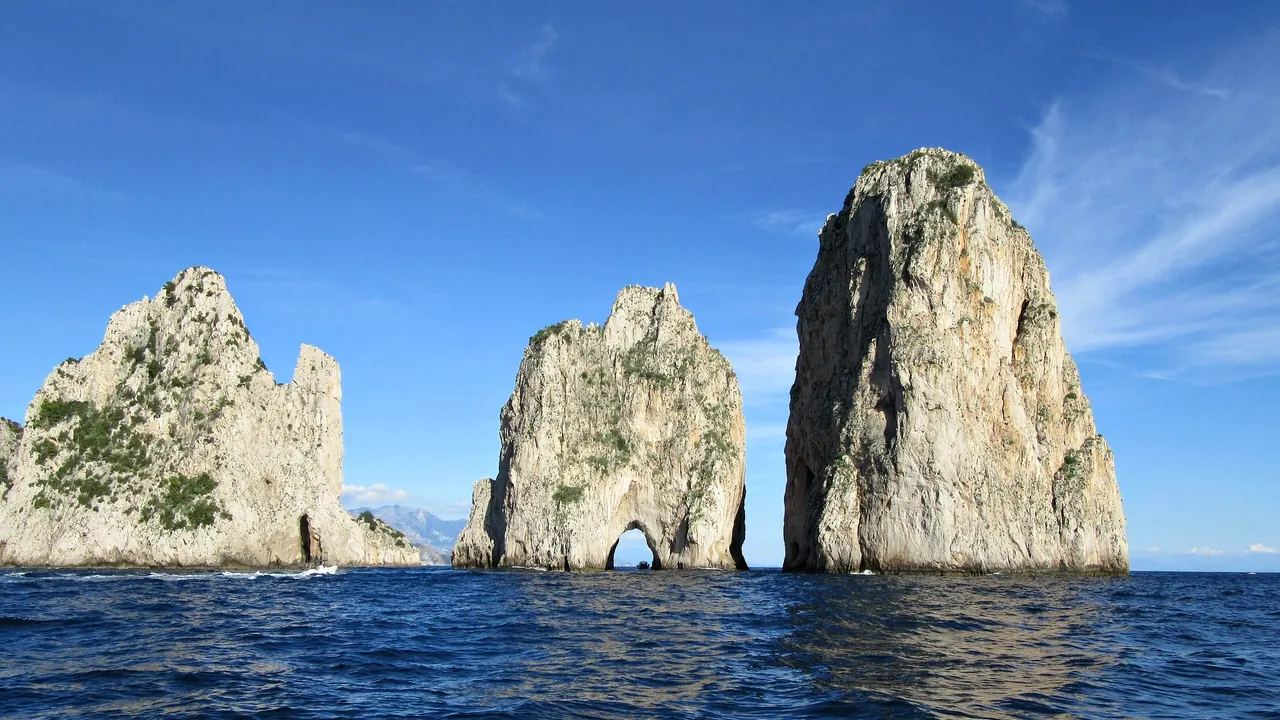
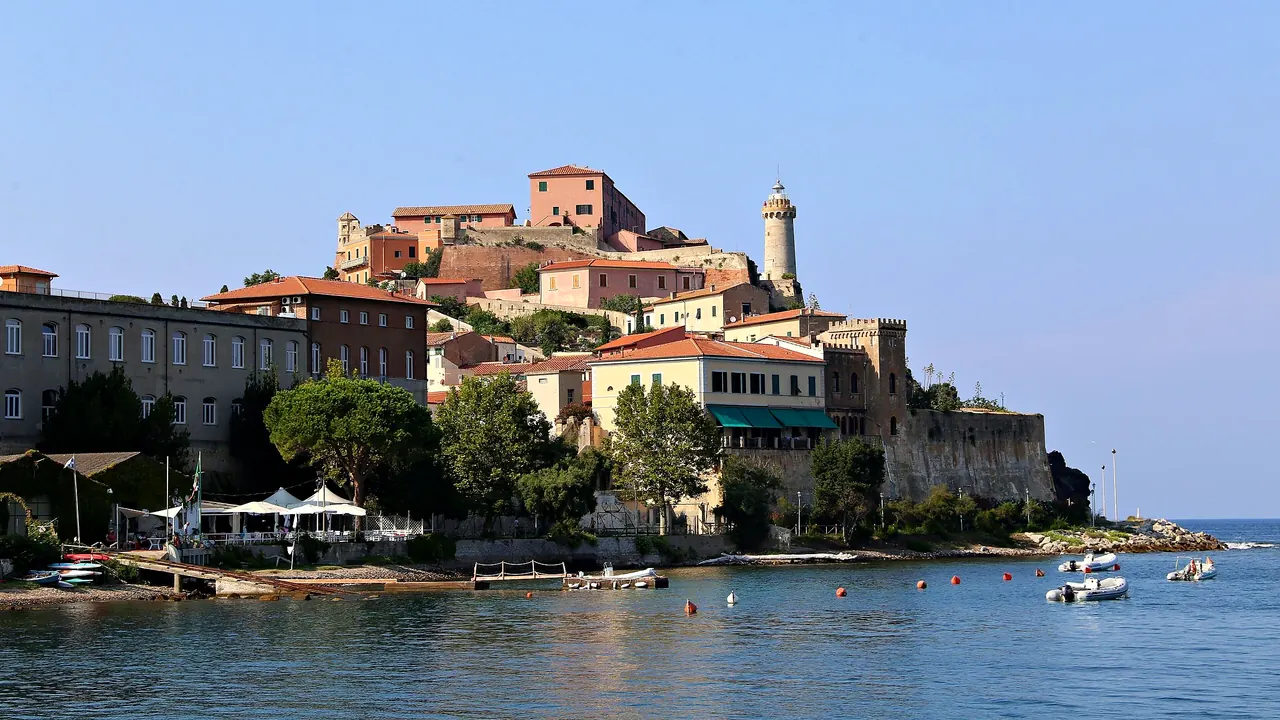
Photos: Capri by Sheeba Samuel, CC BY-SA 4.0, cropped; Elba by Sailko, CC BY 3.0, cropped.
Capri or Elba?
Our verdict in twelve categories, each scored against the same fixed benchmark cities, and the climate month by month, so you can choose for your trip.
Choose Capri for
- day trips
- shopping
- getting around
Capri suits a short, polished stay for adults who want famous scenery, swimming off rocks into deep blue water, evenings on the Piazzetta and luxury boutiques on a few lanes. Distances are short and visitors don't need a car, since the funicular, small buses and open taxis cover the island. The whole Bay of Naples is a boat ride away, so Sorrento, Naples and the Amalfi Coast fit easily around a stay. The trade-off is that it is very expensive, hard work with small children, and short of sand.
Choose Elba for
- families
- prices
- beaches
For a longer beach vacation, especially with a family or on a tighter budget, Elba is the better pick. Its long coast has gently shelving sandy bays, there are mountain walks and a real thermal spa at San Giovanni, and campsites and apartments keep the cost down. You will want a car, and the nightlife is quiet. Once you have crossed by ferry you mostly stay on the island, because there are few outings to the mainland.
Scoreboard
Twelve categories on one fixed scale from 0 to 100. The shaded stretch is the gap between the two.
Your match
Pick a travel style or drag the sliders, and both match scores follow your weighting.
Too close to call, level with your weighting
Wins on day trips and shopping with your weighting.
Wins on families and prices with your weighting.
What matters to you?
Category by category
What the scores mean for a trip.
Beaches & swimming
Elba is the beach island of the two. Its 150km coast has pale sand and turquoise shallows at Fetovaia, Cavoli and Seccheto, a long town beach at Marina di Campo and white pebble coves near Portoferraio, and you can still find a quiet cove at the end of a track in August.
Capri has barely any sand. Swimming there means pebble coves at the two marinas, rock platforms with ladders run as bathing clubs, or a dip from a boat under the Faraglioni. The water is superb and deep, but space is tight in summer, and anyone who wants to lie on sand should pick Elba.
Food & drink
Elba eats a little better, mainly because it has more of its own. Cacciucco, stuffed squid and gurguglione are on the menus, and the island makes its own wines: Ansonica with the fish, Aleatico Passito to take home. The hill villages of Capoliveri and Marciana have the most characterful trattorias.
Capri's short list is famous: insalata caprese, ravioli capresi and torta caprese, with limoncello from its lemons. Near the Piazzetta, though, you mostly pay for the view, and the good meals are in Anacapri family trattorias under lemon pergolas. Neither island has a market or fine-dining scene to explore.
Culture & sights
The two are evenly matched, each with a few good sites rather than a historic town to fill a week. Capri's are Roman and romantic: Tiberius's Villa Jovis on its cliff, Villa San Michele in Anacapri, the Certosa and the Gardens of Augustus, all covered in a couple of days.
Elba's story is Napoleon's exile, with his town residence and his summer villa at San Martino, set against the Medici bastions of Portoferraio, a Spanish fortress at Porto Azzurro and mining museums going back to the Etruscans. These are spread across the island and work best as half-days between beach days.
Nightlife
Capri has more of an evening, though of a particular kind. After the last ferries leave, the Piazzetta fills with dressed-up people having aperitivo, and the piano taverns keep Neapolitan songs going late. It is glamorous and costly, with no clubs.
Elba's nights are a stroll, a gelato and a late dinner in Capoliveri's piazza or along the harbours of Porto Azzurro and Marina di Campo. A few seasonal open-air discos near Marina di Campo and Procchio run later on summer weekends, but neither island suits anyone who wants to party.
Nature & outdoors
Both islands are strong outdoors, but on different scales. Capri's scenery is concentrated drama: the Faraglioni, the Arco Naturale and sheer cliffs, with the chairlift up Monte Solaro and the Sentiero dei Fortini, all walkable in a few days.
Elba is bigger and more mountainous. Monte Capanne rises to about 1,000m, the Grande Traversata Elbana crosses the ridges and the iron-red east has rough mountain-bike tracks. Elba has more room for a week of walking, cycling and diving, while Capri gives you its famous views in fewer days.
Day trips
Capri is far better placed. Sorrento is about half an hour away by fast ferry and Naples under an hour, and in season boats reach Positano, Amalfi and Ischia, with Pompeii and Herculaneum possible on a long day. The catch is that rough seas cancel sailings.
From Elba every outing starts with the hour-long ferry to Piombino. From there Populonia, Campiglia Marittima and the Bolgheri wine estates are within reach, and boats go to Pianosa and Capraia, but Pisa, Lucca and Siena are too far for comfort. Most visitors stay on the island.
Good for families
Elba is much the easier island with children. Its gently shelving sandy bays let small children paddle safely, campsites and apartments are set up for families, and the lift up Monte Capanne, boat trips and the small aquarium at Marina di Campo fill half-days. Winding roads can be hard on car-sick children.
Capri has nothing made for children, and its rocky bathing, steps and crowded buses make it hard going with a pushchair. Older children who swim well will enjoy the Blue Grotto and snorkelling, ideally from a base in quieter Anacapri.
Getting around
Capri is easier to get around without a car. The funicular climbs from Marina Grande to the town, small buses and open taxis link everything else, and much of Capri town is pedestrian. The problems are steep walking and long summer queues.
Elba is about 27km long, but its buses are too sparse to build a stay around, so most visitors bring a car across on the ferry or hire one. Twisting hill roads, August traffic into Portoferraio and full beach car parks slow things down, and scooters and e-bikes are the usual alternative.
Shopping & style
Capri is a real shopping stop for its size. The lanes off the Piazzetta are lined with Italian and international luxury labels in a resort style, and the local crafts are distinctive: handmade sandals, linen, ceramics and perfumes made from the island's flowers.
Elba's shopping is a browse on an evening walk through Capoliveri, Porto Azzurro or old Portoferraio, with linen, beachwear and summer evening markets. Its best souvenirs are edible or mineral: Aleatico wine, honey, schiaccia briaca and crystals from the old mines.
Affordability
Elba is the more affordable of two pricey islands. It is expensive in summer, especially August, and the car ferry, hire car and sunbeds add up, but campsites and self-catering apartments are common and June and September cost noticeably less.
Capri sits near the top of the price range in Italy. Rooms are scarce, and view restaurants, Piazzetta cocktails and boat trips are priced for a wealthy crowd. Buses, walks and Anacapri bakeries keep costs down, and sleeping in Sorrento saves money but costs you the island's evenings.
Live music & performing arts
Neither island is a place to come for performance. Capri offers occasional summer concerts at the Certosa or Villa San Michele and Neapolitan song in its piano taverns, with Naples a boat ride away for opera. Elba has summer shows in squares and Portoferraio's fortresses, and a long-standing classical festival that brings chamber concerts in late summer.
Wellness & relaxation
Elba has a slight edge because it has a real treatment tradition of its own: the thermal establishment at San Giovanni, using mineral mud and seawater from the old salt pans. Add a quiet June or September stay in Marciana, Sant'Ilario or a vineyard farmhouse and the island is very restful.
Capri relies on hotel spas and on its quiet mornings and evenings, when the lanes empty and smell of lemon and jasmine. Stay several nights and keep to gardens in the middle of the day. For thermal baths, Ischia is across the bay.
When should you go?
Pick your month. The climate figures are measured averages, not a forecast.
Capri in July
Elba in July
Daytime high, °C
Rainfall in the month, mm
Where the figures come from
Capri has no rain gauge within 25 km of the centre, so its rainfall comes from a gridded climate dataset read at the destination rather than from a gauge further away.
Capri's sunshine is measured 58 km from the centre, at Grazzanise.
Elba's temperatures are measured 62 km from the centre, at Grosseto.
Elba has no rain gauge within 25 km of the centre, so its rainfall comes from a gridded climate dataset read at the destination rather than from a gauge further away.
Temperature and rainfall are climate normals, averaged over the years shown. Capri: 2005-2025 (sunshine 1991-2020, rainfall 1991-2020) normals, Capri (3.6 km from centre). Elba: 1991-2020 (sunshine 1961-1990) normals, Grosseto (61.7 km from centre).
On Capri the sea is warm enough to swim from June, reaches about 26°C in August and stays pleasant into early October. July and August are the hottest and sunniest months, near 30°C, so the climbs to Villa Jovis or along the Fortini path are best started early. May and late September are the best months for walking, warm without the summer heat. Rain returns in September and builds through autumn to about 146mm in November, and the winter stays wet and cool, with highs only in the low teens.
Around Elba's main resorts the swimming season is much the same, from June to late September, with the water a degree cooler than Capri's. Summer is hotter, around 32°C in August, which makes midday on the open slopes of Monte Capanne heavy going. Autumn is drier than on Capri, but the rain still climbs through October to about 92mm in November, which is the wettest month on both islands. Elba's spring is also drier, so April joins May and late September as good months for walking and cycling.
Which traveller are you?
On a family trip with young children, Elba is the clear choice. Marina di Campo, Lacona and Biodola have gently shelving sand for paddling and family campsites, while Capri's ladders into deep water, steep steps and packed buses make life with toddlers difficult.
For a shopping trip, Capri wins easily. Via Camerelle and Via Vittorio Emanuele hold a remarkable number of luxury boutiques, and sandals are made to measure while you wait. Elba offers little beyond linen, local wine and minerals on an evening stroll.
On a trip on a tight budget, Elba is much easier to manage. Campsites, self-catering apartments and inland trattorias are common, and June and September cost less. Capri's rooms and bathing clubs are priced for the wealthy, and staying cheaply on the mainland means giving up its evenings.
Before you go
| Measure | Capri | Elba |
|---|---|---|
| Official language | Italian | Italian |
| Currency | Euro (EUR) | Euro (EUR) |
| Sockets | CFL230 V, 50 Hz | CFL230 V, 50 Hz |
| Driving side | Right | Right |
| Time zone | UTC+1, UTC+2 in summer | UTC+1, UTC+2 in summer |
| Emergency number | 112 | 112 |
| Main airport | Naples International Airport (NAP)131 non-stop destinations | Pisa International Airport (PSA)82 non-stop destinations |
| Public holidays this year | 13 days | 13 days |
By the numbers
| Measure | Capri | Elba |
|---|---|---|
| Population | 12,903 | 32,000 |
| People per km² | 1,241 | 143 |
| Swim season, months above 21 °C | 5 months | 4 months |
Where else could you go?
Every comparison below shares a destination with this one, so you can follow Capri or Elba somewhere new.