Italy
Capri
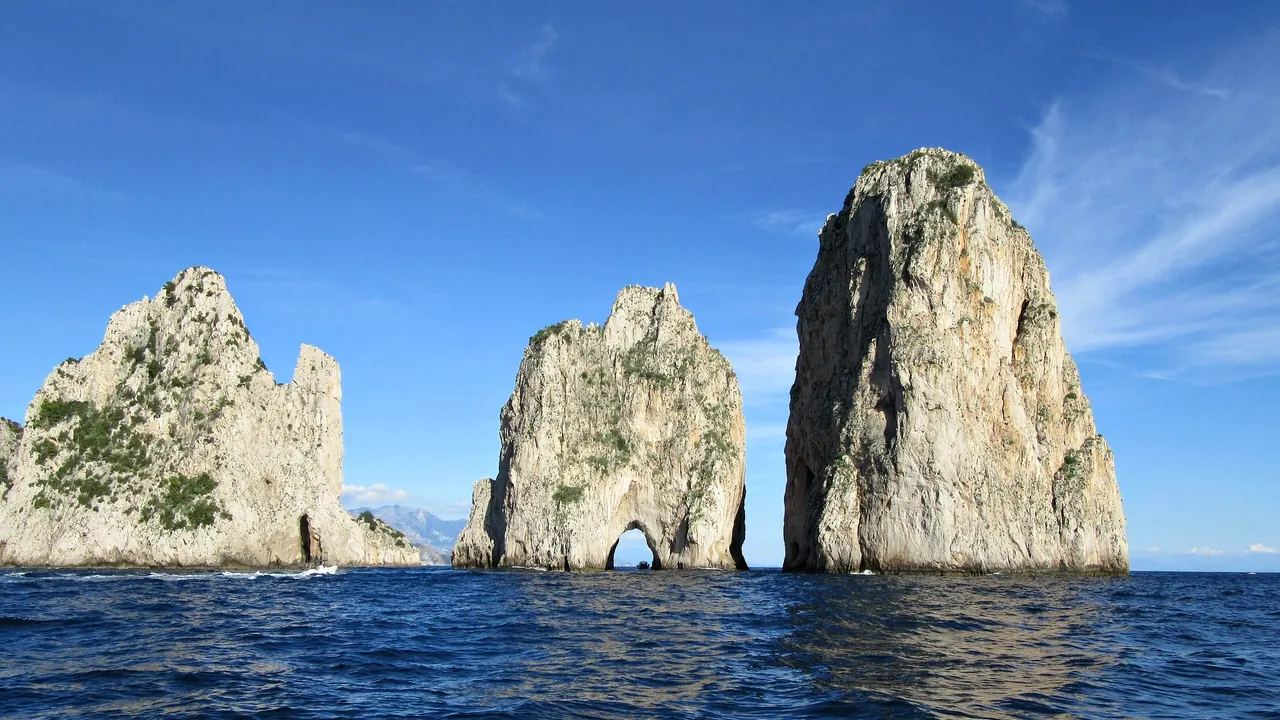
The Faraglioni rocks seen from the sea
- Day trips72
- Beaches68
- Nature & outdoors65
Photo: Sheeba Samuel, CC BY-SA 4.0, cropped
Match
44
Every category weighted equally
- Beach & sun47
- Culture & arts42
- Food & nightlife42
- Family trip45
- Outdoors50
- Relax & unwind47
- Shopping & style44
- On a budget41
Capri in twelve categories
Our verdict on each, scored 0 to 100 against the same fixed benchmark cities, so a score means the same thing on every page.
Beaches & swimming. Scores 68 out of 100.
Food & drink. Scores 45 out of 100.
Culture & sights. Scores 42 out of 100.
Nightlife. Scores 38 out of 100.
Nature & outdoors. Scores 65 out of 100.
Day trips. Scores 72 out of 100.
Good for families. Scores 28 out of 100.
Getting around. Scores 56 out of 100.
Shopping & style. Scores 55 out of 100.
Affordability. Scores 12 out of 100.
Live music & performing arts. Scores 12 out of 100.
Wellness & relaxation. Scores 40 out of 100.
Capri category by category
Beaches & swimming
68Capri is a place for swimming rather than for beaches. There is barely any sand. The bathing spots are small pebble coves at Marina Piccola and Marina Grande, and concrete or rock platforms with ladders into deep water, mostly run as bathing clubs with sunbeds. The water is the reason to go. It is very clear and deep blue, and warm enough to swim from June to early October, at about 25°C in August.
The best swimming is off the rocks at Punta Carena below the lighthouse on the Anacapri side, which gets the afternoon sun, and from boats moored under the Faraglioni or near the grottoes on a trip round the island. Space is tight in high summer. Anyone who wants long walks on sand will find this frustrating.
Food & drink
45The island has a short list of dishes of its own. Insalata caprese started here, made with local tomatoes and mozzarella. Ravioli capresi are filled with caciotta cheese and marjoram, the flourless chocolate and almond torta caprese is served everywhere, and the island's lemons go into limoncello and granita. Seafood, fried anchovies and spaghetti with clams fill most menus.
Around the Piazzetta and the marinas, the restaurants are built for day-trippers and charge for the view. The better meals are in family trattorias in Anacapri and along the lanes away from the centre, often under lemon pergolas. There are a few elegant hotel dining rooms, but no market, street food or depth to explore beyond this.
Culture & sights
42Capri's heritage is a handful of good sites rather than a dense historic town. The emperor Tiberius ruled Rome from the island, and the ruins of his Villa Jovis sit high on the eastern headland above a sheer drop. On the Anacapri side, Villa San Michele is a house and garden built by a Swedish doctor on the remains of a Roman villa, full of antiquities and with a famous view. The Certosa di San Giacomo, a fourteenth-century Carthusian monastery, holds paintings by Karl Wilhelm Diefenbach.
The Gardens of Augustus, the hairpins of Via Krupp, the whitewashed lanes and domed churches of Capri town and Anacapri, and the outline of Casa Malaparte on its cliff complete the picture. Two days covers it.
Nightlife
38Going out on Capri means the Piazzetta. Once the last ferries leave, the square's café tables fill with people in their best clothes having aperitivo and lingering into the night. After that there are a few piano bars and taverns, where Neapolitan songs and dancing on the tables can carry on until the early hours. The atmosphere is glamorous, dressed-up and expensive rather than wild.
The season runs from about May to September, peaking in July and August. Outside it the island goes to bed early. There are no proper clubs, and anyone looking for a party scene will run out of options in a night or two.
Nature & outdoors
65The island is a limestone block rising sheer from the sea. Its scenery is world-famous, with the three Faraglioni stacks, the Arco Naturale rock arch and cliffs dropping hundreds of metres into the water. A chairlift runs from Anacapri up Monte Solaro, the highest point at 589m. From there a path leads down through the woods to the hermitage of Cetrella.
The best walks are the Pizzolungo path past the Faraglioni, the climb to the Arco Naturale and the Sentiero dei Fortini, which follows the wilder western coast between old forts. A boat trip around the island passes the Blue Grotto and other sea caves, and the clear water is good for snorkelling and kayaking. All of this fits into a few days, as distances are short.
Day trips
72From Capri, the whole Bay of Naples is reachable by boat. Sorrento is the easiest outing, about half an hour away by fast ferry. Naples is about fifty minutes by hydrofoil and has enough for many days out. In season, boats run to Positano and Amalfi on the Amalfi Coast. Ischia, the larger and greener island, is another option.
Pompeii and Herculaneum can be done in a day by ferry to Sorrento and then the local train, though it is a long day. All of this depends on the sea. Rough weather cancels sailings, and the coastal routes run mainly from spring to autumn. In summer the boats back are crowded with the same day-trippers going the other way.
Good for families
28Capri is not built for children. There is nothing made for them, the bathing spots are mostly rocks and ladders into deep water rather than shallow sand, and the island is a maze of steps and narrow lanes that are hard work with a pushchair. The buses and funicular are packed in summer.
Older children who can swim well enjoy the boat trip round the island, the Blue Grotto, snorkelling and the chairlift up Monte Solaro. A family is happiest staying in Anacapri, which is calmer, and keeping days short. With small children, the mainland coast is easier.
Getting around
56Everything on the island is close, and most visitors never need a car. Ferries and hydrofoils arrive at Marina Grande, where a funicular climbs to Capri town in a few minutes. Small orange buses link the marinas, Capri town and Anacapri, and open-topped taxis fill the gaps. Much of Capri town is pedestrian, with lanes, steps and paths reaching the viewpoints and walks.
The difficulties are the gradients and the crowds. The walking is steep, and in July and August the queues for the funicular and the cramped buses can be long. Staying overnight, and setting out early or late, makes the island far easier to manage.
Shopping & style
55Shopping on Capri means the few lanes running off the Piazzetta, especially Via Camerelle and Via Vittorio Emanuele. For a place this small they hold a striking number of Italian and international luxury boutiques, and resort fashion is the house style.
The local crafts give the island its own character. Leather sandals are made to measure by hand while you wait. There are linen clothes, ceramics, limoncello and lemon-scented soaps, and perfumes made on the island from its flowers and herbs. Beyond these streets there is little to shop for, and nothing is cheap.
Affordability
12Capri is one of the most expensive places to stay in Italy. Rooms are few and sought after, and in summer hotel rates are among the highest anywhere in the Mediterranean. Restaurants with a view, cocktails on the Piazzetta, sunbeds at the bathing clubs and private boat trips are all priced for a wealthy crowd.
There are ways to spend less. Buses and the funicular are cheap, the walks cost nothing, and simple trattorias and bakeries in Anacapri are reasonable. Some visitors save by staying in Sorrento or Naples and coming over for the day, but they then miss the island's evenings.
Live music & performing arts
12There is very little performing arts on Capri. In summer there are occasional concerts in the cloisters of the Certosa, at Villa San Michele or in the gardens. Neapolitan song is performed in the piano taverns late at night. The island has no theatre or regular concert season. Opera and serious music mean the boat to Naples.
Wellness & relaxation
40Capri has no thermal springs or bathing tradition of its own. Its wellness is the spas of its upmarket hotels and the slow rhythm of a stay. The island has two moods. From late morning to late afternoon, day-trippers crowd the centre and the marinas. Early in the morning and in the evening it becomes quiet, scented with lemon and jasmine, and the lanes empty.
Anyone coming to unwind should stay several nights, preferably in Anacapri or above the town, and keep to gardens, terraces and the quieter paths in the middle of the day. For real thermal bathing, Ischia is across the bay.
Where to stay in Capri
Capri town is the natural base for a first visit and for anyone who wants the evenings. Staying near the Piazzetta puts the boutique lanes, the aperitivo tables and the late piano bars a short walk away, with the funicular down to the ferries at Marina Grande. The centre is pedestrian, steep and crowded with day-trippers from late morning, so it suits couples and night owls more than families. Rooms a little above the town, on the lanes towards Villa Jovis or the Arco Naturale, are quieter and still close to the walks.
Anacapri, higher up on the western side, is the calmer choice. Its whitewashed lanes have the island's better family trattorias, Villa San Michele and the chairlift up Monte Solaro, and a short bus ride takes you to the rocks at Punta Carena for afternoon swimming. It suits families with older children, walkers and anyone who wants a quiet, unhurried stay, with the Piazzetta a bus or taxi ride away when you want an evening out.
Marina Grande, down at the harbour, is practical for early boats to Sorrento, Naples or the Amalfi Coast and has its own pebble cove, but it is a ride uphill from everything else. The island is small enough that one base covers it all, and there is no need to move. Staying on the mainland costs less, but you miss Capri's quiet mornings and evenings.
When should you go?
Pick a month to see what it is like. The climate figures are measured averages, not a forecast.
Capri in July
Daytime high, °C
Rainfall in the month, mm
The whole year
Shaded against this city’s own year: the deepest cell is its best month for that figure and the palest its weakest.
Where the figures come from
Capri has no rain gauge within 25 km of the centre, so its rainfall comes from a gridded climate dataset read at the destination rather than from a gauge further away.
Capri's sunshine is measured 58 km from the centre, at Grazzanise.
Temperature and rainfall are climate normals, averaged over the years shown. Capri: 2005-2025 (sunshine 1991-2020, rainfall 1991-2020) normals, Capri (3.6 km from centre).
Before you go
| Measure | Capri |
|---|---|
| Official language | Italian |
| Currency | Euro (EUR) |
| Sockets | CFL230 V, 50 Hz |
| Driving side | Right |
| Time zone | UTC+1, UTC+2 in summer |
| Emergency number | 112 |
| Main airport | Naples International Airport (NAP)131 non-stop destinations |
| Public holidays this year | 13 days |
By the numbers
| Measure | Capri |
|---|---|
| Population | 12,903 |
| People per km² | 1,241 |
| Swim season, months above 21 °C | 5 months |
Compare Capri with
Every comparison with a written verdict behind it.