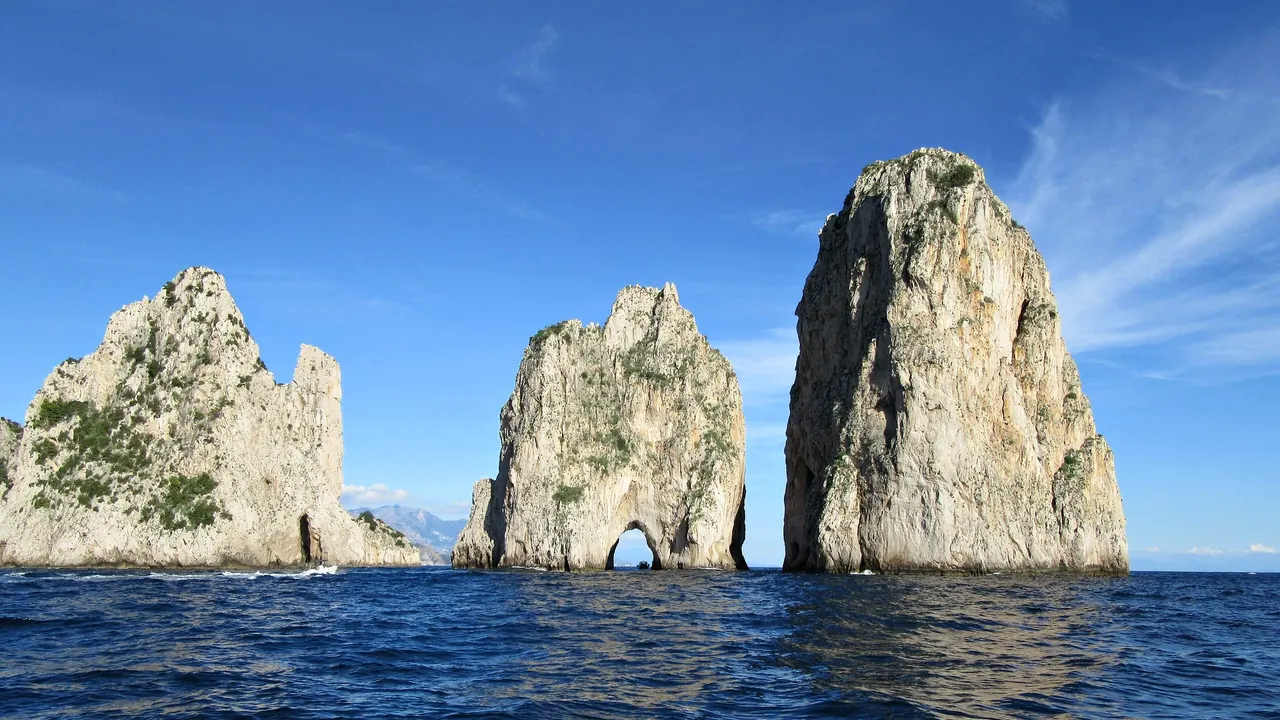
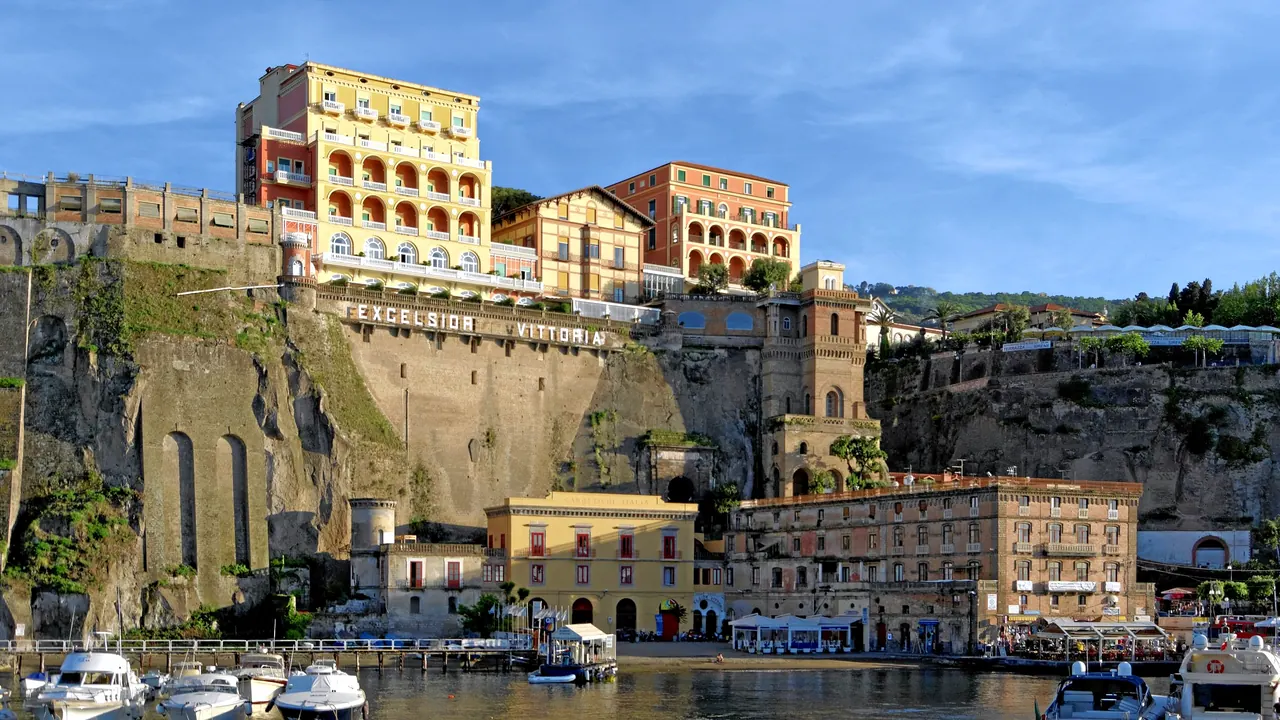
Photos: Capri by Sheeba Samuel, CC BY-SA 4.0, cropped; Sorrento by Berthold Werner, CC BY-SA 3.0, cropped.
Capri or Sorrento?
Our verdict in twelve categories, each scored against the same fixed benchmark cities, and the climate month by month, so you can choose for your trip.
Choose Capri for
- shopping
- culture and sights
- nightlife
Capri suits a traveller who wants to stay on the island itself, not just see it. The payoff comes when the day boats have gone: an evening on the Piazzetta, a morning swim off the rocks at Punta Carena, quiet lanes in Anacapri. Add the luxury boutiques and a handful of fine Roman and monastic sites and you have a short, polished stay for people who don't mind paying heavily for it.
Choose Sorrento for
- day trips
- prices
- food and drink
Sorrento is the better choice if you want a base rather than a destination. Pompeii, Herculaneum, Vesuvius, Naples, the Amalfi Coast and Capri itself are all a train or ferry ride away, and the peninsula behind the town has far more walking. It also eats better, costs less and is easier with children, though its own evenings and sights are modest.
Scoreboard
Twelve categories on one fixed scale from 0 to 100. The shaded stretch is the gap between the two.
Your match
Pick a travel style or drag the sliders, and both match scores follow your weighting.
Wins on shopping and culture and sights with your weighting.
Wins on day trips and prices with your weighting.
What matters to you?
Category by category
What the scores mean for a trip.
Beaches & swimming
Neither place has a sandy beach, and confusingly both have a Marina Piccola and a Marina Grande. Capri has the better swimming. The water is clearer and bluer, the rocks at Punta Carena catch the afternoon sun, and boat trips let you swim under the Faraglioni and near the sea caves.
In Sorrento you mostly swim from paid lidos on wooden piers below the cliff, reached by lift or stairs, or from the rocks at the Bagni della Regina Giovanna with its Roman ruins. For a real pebble cove, Sorrento visitors take a bus to Marina del Cantone or a boat over to Capri.
Food & drink
Sorrento eats better and offers more choice. Alongside gnocchi alla sorrentina and fish cooked all'acqua pazza, it has fresh mozzarella and provolone from the hill dairies, Neapolitan-style pizza, fish restaurants at Marina Grande, and the hill villages of the peninsula, home to some of southern Italy's most celebrated fine dining.
Capri has a few signature dishes, including insalata caprese, ravioli capresi and torta caprese, but much less else. Around the Piazzetta the view is often better than the meal. The good food is in the family trattorias of Anacapri, under lemon pergolas, and a few days exhausts it.
Culture & sights
Capri has the stronger sights for its size. There are Tiberius's ruined Villa Jovis on its headland, Axel Munthe's Villa San Michele full of antiquities, and the Certosa di San Giacomo with its Diefenbach paintings. The whitewashed lanes, the Gardens of Augustus and Via Krupp make a pleasant two days.
Sorrento's own sights are quieter: the Roman street grid of the old centre, the mixed arches of the San Francesco cloister, the Museo Correale's Neapolitan paintings and porcelain, and the ravine of the Vallone dei Mulini with its ruined mill. Most of the area's famous history lies outside the town.
Nightlife
Capri's evenings have more glamour. Once the ferries leave, the Piazzetta fills with dressed-up people taking aperitivo, and the piano taverns can run Neapolitan songs and table-dancing until the early hours. There are no clubs, though.
Sorrento is gentler: a passeggiata along Corso Italia, a drink on a terrace over the bay, wine bars, a few British-style pubs and, in summer, one or two late clubs. Both places go quiet early out of season. Because the last boats stop in the evening, a night on Capri from Sorrento means staying over.
Nature & outdoors
Sorrento wins for walking because it has a whole peninsula behind it. Trails run between lemon-terraced villages to Punta Campanella and down to the protected bay of Ieranto. The Path of the Gods, the beech woods of Monte Faito and the crater rim of Vesuvius are all within reach.
Capri's scenery is more famous but fits into a few days. You can walk the Pizzolungo path past the Faraglioni, climb to the Arco Naturale, follow the Sentiero dei Fortini, and take the chairlift up Monte Solaro at 589m. Its clear water makes it the better place for snorkelling and kayaking straight from shore.
Day trips
Sorrento is one of the best bases in Italy. The Circumvesuviana train reaches Pompeii in about half an hour, and Herculaneum and Vesuvius fit into the same outing. Naples is about an hour away, ferries reach Capri and the Amalfi Coast, and Paestum makes a full day by road.
From Capri, everything depends on boats and weather. Sorrento, Naples, Ischia and the Amalfi towns are easy in calm seas, but Pompeii takes a ferry plus a train and makes a long day. Rough weather can cancel sailings entirely.
Good for families
Sorrento is the easier choice with children. The centre is flat and largely pedestrian, hotels with pools get round the deep-water swimming, and a train to Pompeii's ruins or a boat to Capri makes a good outing.
Capri suits older children who swim well and will enjoy the Blue Grotto, the snorkelling and the Monte Solaro chairlift. With toddlers, its steps, rocky ladders and crowded buses become a struggle, and Anacapri is the calmer place to stay.
Getting around
Neither place needs a car, but the difficulties differ. Capri is compact and steep. A funicular climbs from Marina Grande, small orange buses and open-topped taxis link the villages, and in July and August the queues are the problem.
Sorrento's centre is flat and easy to walk. The trouble starts when you leave it: the old, crowded Circumvesuviana, slow buses on the Amalfi road, and shuttles or taxis for hotels up in the hills.
Shopping & style
For shopping, Capri is the destination and Sorrento the souvenir stop. In a few lanes, Via Camerelle and Via Vittorio Emanuele pack in a striking number of luxury boutiques, plus linen, ceramics and perfumes made on the island.
Sorrento's lanes around Via San Cesareo sell mostly lemon-themed goods, plus its own tradition of intarsia woodwork, coral and cameo. Both towns have workshops that make leather sandals to measure while you wait.
Affordability
On Capri the biggest cost is staying the night. There are only a few rooms and plenty of people who want them, so a summer stay on the island costs as much as almost anywhere in the Mediterranean. During the day, the sunbeds at the bathing clubs, cocktails on the Piazzetta and private boats keep adding to the bill. The cheap parts of a visit are getting about by bus and funicular, walking the island's paths, and eating in Anacapri's bakeries rather than at the tables with a view in town.
Sorrento is a resort too, and you pay extra for a sea-view room or a sunbed at a lido. Still, it costs less to sleep there, and the money saved can go on getting out and about. Many visitors use it as the cheap way to see Capri, crossing over for the day. What they give up is the island at its best, because the quiet lanes and the evening on the Piazzetta only come after the last boats have left.
Live music & performing arts
Capri has almost nothing to watch. In summer there are a few concerts in the Certosa cloisters, at Villa San Michele or in the gardens, and Neapolitan song in the piano taverns late at night. Sorrento has a little more. It stages evenings of Neapolitan song and tarantella and holds summer chamber concerts in the San Francesco cloister, and hotel-bar singers keep 'Torna a Surriento' in the repertoire.
For opera or a full concert, both send you to Naples and the Teatro di San Carlo. The last boats to Capri and the last trains and ferries to Sorrento leave in the evening, so an evening performance means a night in Naples from either place.
Wellness & relaxation
Capri has two moods, and a restful stay depends on catching the right one. From late morning to late afternoon, day-trippers fill the centre and the marinas. Early and late in the day, the lanes of Anacapri empty and smell of lemon and jasmine. That calm belongs to guests who stay several nights and spend the middle of the day in gardens, on terraces and on the quieter paths.
Sorrento is a little easier to unwind in. The cliff-top hotels have spas, pools and terraces over the bay, and the old villa gardens and lemon groves set a slow pace, though in July and August the centre is crowded and noisy. Neither has hot springs of its own, so for thermal bathing both look across the water to Ischia.
When should you go?
Pick your month. The climate figures are measured averages, not a forecast.
Capri in July
Sorrento in July
Daytime high, °C
Rainfall in the month, mm
Where the figures come from
Capri has no rain gauge within 25 km of the centre, so its rainfall comes from a gridded climate dataset read at the destination rather than from a gauge further away.
Capri's sunshine is measured 58 km from the centre, at Grazzanise.
Sorrento has no rain gauge within 25 km of the centre, so its rainfall comes from a gridded climate dataset read at the destination rather than from a gauge further away.
Sorrento's sunshine is measured 54 km from the centre, at Grazzanise.
Temperature and rainfall are climate normals, averaged over the years shown. Capri: 2005-2025 (sunshine 1991-2020, rainfall 1991-2020) normals, Capri (3.6 km from centre). Sorrento: 2005-2025 (sunshine 1991-2020, rainfall 1991-2020) normals, Capri (17 km from centre).
The two places sit across a narrow strait, and their weather is almost identical, so the choice between them won't depend on climate. The sea is warm enough to swim from June to early October, peaking at about 26°C in August. July and August bring highs near 30°C, long sunny days and almost no rain. That's ideal for swimming but tiring for the steep lanes of Capri or the exposed trails of the Sorrento peninsula.
April, May and late September to October are the comfortable months for walking, in the high teens to low twenties. Rain returns in September and peaks in November at roughly 150mm, and winter days are short, around 13°C. Sorrento is a touch wetter through the cool months, but not enough to notice on a visit.
Which traveller are you?
On a shopping trip, Capri is the clear pick. Via Camerelle and the lanes off the Piazzetta pack in Italian and international luxury labels and resort fashion. Sorrento offers mostly lemon souvenirs and inlaid woodwork, and its keener shoppers take the ferry to Capri.
On a tight budget, choose Sorrento. It's still pricey in summer, but cheap trains and buses, fairly priced pizza and trattorias, and lower hotel rates in spring and late autumn make it far gentler than Capri, which is among Italy's most expensive places to stay.
For a family trip with children, Sorrento works better. Its flat, largely pedestrian centre suits a pushchair, hotels with pools solve the swimming, and Pompeii is a short train ride away. Capri's steps, deep-water ladders and packed buses are hard work with little ones.
Before you go
| Measure | Capri | Sorrento |
|---|---|---|
| Official language | Italian | Italian |
| Currency | Euro (EUR) | Euro (EUR) |
| Sockets | CFL230 V, 50 Hz | CFL230 V, 50 Hz |
| Driving side | Right | Right |
| Time zone | UTC+1, UTC+2 in summer | UTC+1, UTC+2 in summer |
| Emergency number | 112 | 112 |
| Elevation | - | 50 m |
| Main airport | Naples International Airport (NAP)131 non-stop destinations | Naples International Airport (NAP)30 km from centre131 non-stop destinations |
| Public holidays this year | 13 days | 13 days |
By the numbers
| Measure | Capri | Sorrento |
|---|---|---|
| Population | 12,903 | 15,407 |
| People per km² | 1,241 | 1,541 |
| Museums within 10 km | - | 6 |
| UNESCO World Heritage sites within 50 km | - | 5 |
| Swim season, months above 21 °C | 5 months | 5 months |
Where else could you go?
Every comparison below shares a destination with this one, so you can follow Capri or Sorrento somewhere new.
- Positanovs Sorrento
- Amalfivs Sorrento
- Amalfi Coastvs Sorrento
- Positanovs Capri
- Naplesvs Sorrento
- Procidavs Capri