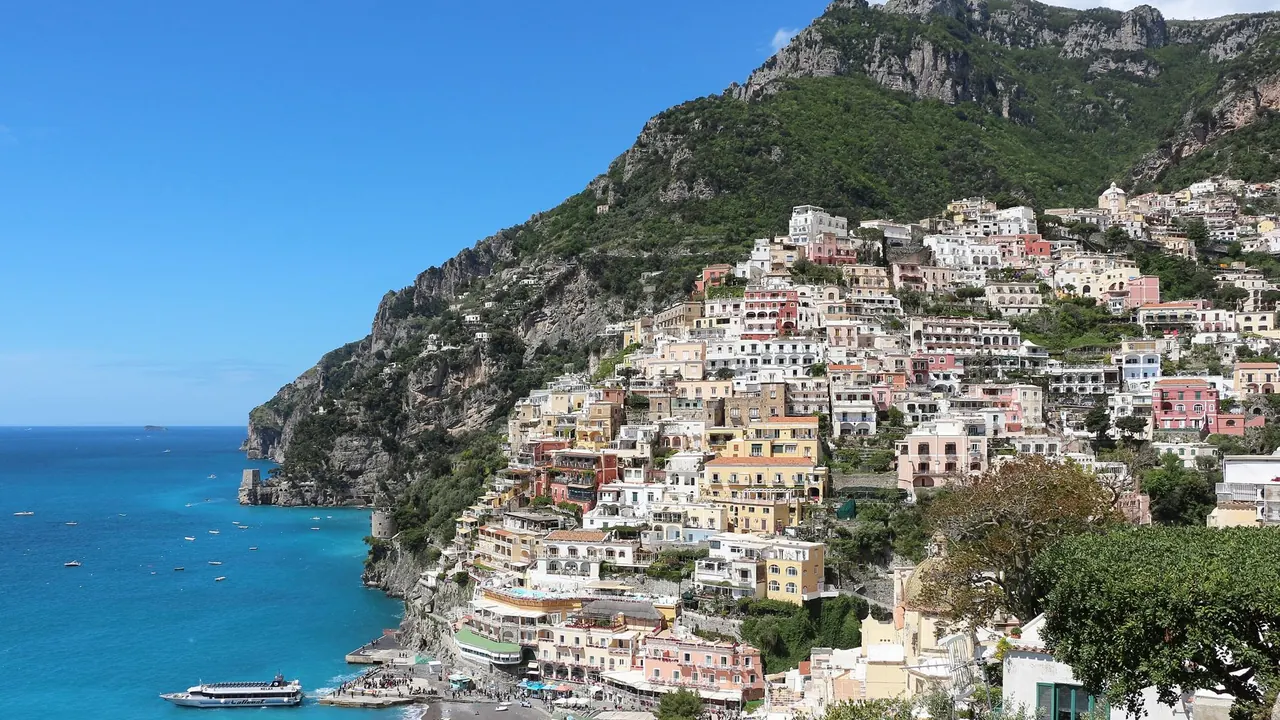
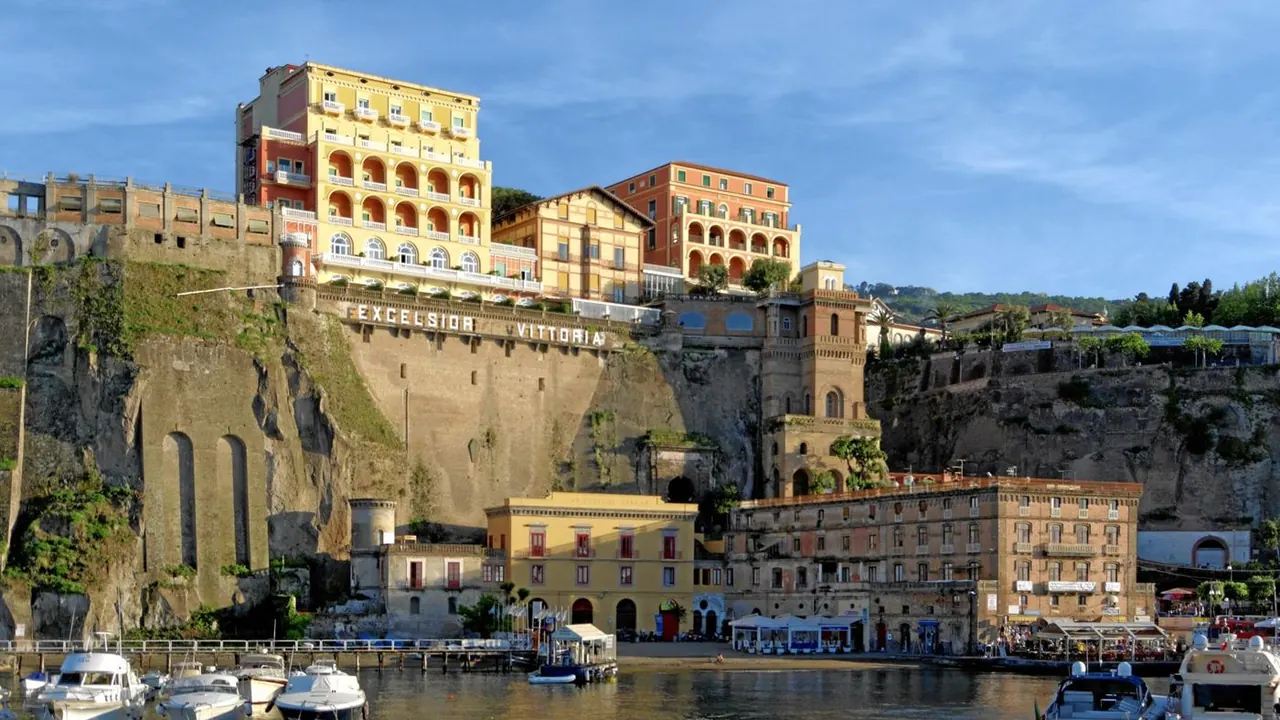
Photos: Positano by Bernard Gagnon, CC BY 4.0, cropped; Sorrento by Berthold Werner, CC BY-SA 3.0, cropped.
Positano or Sorrento?
Our verdict in twelve categories, each scored against the same fixed benchmark cities, and the climate month by month, so you can choose for your trip.
Choose Positano for
- beaches
- shopping
Positano is the choice for a trip built around the sea and the view. Its own beaches under the town, the boats to coves and to Capri, and the linen boutiques on the lanes down to Spiaggia Grande make it a place to stay put, swim and dress for dinner. It suits couples and adults who can manage endless stairs, don't need much to do in the evening and are willing to pay heavily for the setting.
Choose Sorrento for
- getting around
- prices
- food and drink
Sorrento works better as a base for exploring. The Circumvesuviana puts Pompeii and Herculaneum close by, Naples is an easy trip, and the flat centre is far easier to get around with a pushchair or tired legs. The cooking has more depth, the town has a cloister and a museum to fill a rainy afternoon, and rooms and meals cost noticeably less. You give up a proper beach in return, because the swimming is from piers and rocks.
Scoreboard
Twelve categories on one fixed scale from 0 to 100. The shaded stretch is the gap between the two.
Your match
Pick a travel style or drag the sliders, and both match scores follow your weighting.
Wins on beaches and shopping with your weighting.
Wins on getting around and prices with your weighting.
What matters to you?
Category by category
What the scores mean for a trip.
Beaches & swimming
Positano wins clearly on swimming because it has real beaches. Spiaggia Grande is a broad curve of grey sand and pebbles right under the town, a cliff path leads to the quieter Fornillo, and stairways or short boat rides reach Arienzo and Laurito. The shore is coarse and shelves steeply, so water shoes help.
Sorrento sits on a tufa cliff, so here you swim by stepping off a wooden pier at Marina Piccola or Marina Grande into deep, clear water, or by lying on the rocks at the Bagni della Regina Giovanna. For a proper beach you take a bus to Marina del Cantone. Both towns get crowded in high summer.
Food & drink
Sorrento eats better and more widely. It has gnocchi alla sorrentina, fish cooked all'acqua pazza at Marina Grande, provolone del Monaco from the hill dairies and pizza in the Naples tradition. The hill villages behind the town add some of southern Italy's most celebrated fine dining. Avoid the tourist menus around Piazza Tasso and walk into the back lanes.
Positano's terraces serve fine spaghetti with clams and lemon desserts, but most menus repeat the same handful of coastal dishes. There is little everyday eating or market life, and many kitchens close between November and Easter.
Culture & sights
Neither town is a cultural destination, but Sorrento has more to see. Its old centre keeps the Roman street grid, and along it are the cathedral, the Sedile Dominova loggia and the San Francesco cloister. The Museo Correale and the wood inlay museum can fill a day or two at a gentle pace.
In Positano the town itself is the sight: the majolica dome of Santa Maria Assunta and the painted Roman villa excavated beneath it. A couple of hours covers both, and for anything more you take a trip out of town.
Nightlife
Both towns are quiet after dinner. Sorrento has a little more going on, with the passeggiata on Corso Italia, wine bars, pubs for British visitors and piano bars playing Neapolitan songs. Positano's summer evenings come down to aperitivo, a few beach bars and the cave club at the end of Spiaggia Grande, where people dress up. In both towns the last transport leaves early, so a big night in Naples or on Capri means staying over.
Nature & outdoors
Both towns have the same outstanding landscape, seen from different sides. Positano sits right where the Lattari mountains drop into the sea, so the Path of the Gods to Nocelle and the climbs through chestnut woods to Montepertuso start almost at your door.
Sorrento faces the Bay of Naples and Vesuvius. Its walks run out along the peninsula to Punta Campanella and down to the protected bay of Ieranto, and Monte Faito and the crater rim of Vesuvius are within reach. In both towns, spring and autumn are the seasons for walking.
Day trips
Both are excellent bases, but Sorrento has the edge because the train makes it easy. The Circumvesuviana reaches Pompeii in about half an hour, Naples and its archaeological museum are about an hour away, and the Capri ferries run all year.
From Positano, Amalfi and Ravello are a short boat ride along the coast, but Pompeii takes about an hour and a half via Sorrento. Most ferries stop outside the season, so winter trips mean slow buses.
Good for families
Sorrento is clearly the easier town with children. The flat, largely pedestrian centre suits a pushchair, and a train ride to Pompeii's ruins or a boat to Capri makes a good day out. The deep water off the piers still means watching small swimmers closely.
Positano is built almost entirely of stairs, has nothing aimed at children, and its pebbly beaches drop off quickly. It works for older children who love swimming and boats, but much less well for toddlers.
Getting around
Sorrento is much easier to get around. The centre is flat, a lift goes down to the marinas, and the Circumvesuviana links the town to Pompeii and Naples, although the trains are old and crowded.
Positano has one looping bus road and coast buses that crawl in summer, and nearly every walk means hundreds of steps. Boats from the main beach are the best way out, and only in season. Neither town is a good place to have a car.
Shopping & style
Positano is the more rewarding place to shop, because it has a look of its own. The lanes down to the beach are lined with boutiques selling moda Positano, the loose white linen and printed resortwear the town is known for.
Sorrento's shops along Via San Cesareo are mostly lemon-themed, but they also sell intarsia boxes and trays, a local craft found nowhere else on the coast. Both towns have sandal makers who will make a pair to fit while you wait. Serious shoppers from Sorrento go to Naples or Capri.
Affordability
Sorrento is the cheaper town to stay in by some distance, although it is not cheap in summer. Trains and buses cost little, and pizzerias and family trattorias away from the main squares are fairly priced.
Positano is among the most expensive places to stay in Italy. Sea-view rooms, sunbeds, terrace tables and boat transfers all cost a lot. Many visitors stay in Sorrento and come over to Positano for the day.
Live music & performing arts
Neither town offers much live performance, and the difference is in what little there is. Sorrento puts on shows of Neapolitan song and tarantella for visitors, summer chamber concerts in the San Francesco cloister, and pianists in hotel bars. Positano's best option is an evening at the Ravello festival up the coast. From either town, opera at the San Carlo in Naples is the serious choice.
Wellness & relaxation
For a restful stay the two towns are close, and both rely on cliff-top hotel spas and pools rather than any bathing tradition. Positano's rest comes from a long lunch on a terrace over the sea, though the stairs make even short walks tiring. Sorrento has lemon groves, old villa gardens and the ferry to Ischia's thermal gardens. Both are crowded in July and August and calmest in late spring and autumn.
When should you go?
Pick your month. The climate figures are measured averages, not a forecast.
Positano in July
Sorrento in July
Daytime high, °C
Rainfall in the month, mm
Where the figures come from
Positano's temperatures are measured 25 km from the centre, at Capri.
Positano has no rain gauge within 25 km of the centre, so its rainfall comes from a gridded climate dataset read at the city rather than from a gauge further away.
Positano's sunshine is measured 59 km from the centre, at Grazzanise.
Sorrento has no rain gauge within 25 km of the centre, so its rainfall comes from a gridded climate dataset read at the city rather than from a gauge further away.
Sorrento's sunshine is measured 54 km from the centre, at Grazzanise.
Temperature and rainfall are climate normals, averaged over the years shown. Positano: 2005-2025 (sunshine 1991-2020, rainfall 1991-2020) normals, Capri (25.3 km from centre). Sorrento: 2005-2025 (sunshine 1991-2020, rainfall 1991-2020) normals, Capri (17 km from centre).
The two towns share the same temperatures, the same sea and the same sunshine, so their seasons run in step. The sea is warm enough for swimming from June to early October. July and August are the driest and sunniest months, with highs near 30°C. That suits a day on the beach or a lido, but it makes Positano's stairs and the open hill trails hard work around midday. May and late September are warm without the worst of the heat, and they are the best months for walking the streets and the cliff paths.
Rain returns in September and is heaviest from October to December. Positano is slightly the drier of the two, and Sorrento's wettest month, November, brings around 151mm. November is still mild at about 18°C, so it is fine for sightseeing between showers. From December to March days reach only 13°C to 15°C, which is comfortable for walking but too cool for the sea.
Which traveller are you?
On a beach and sun trip, Positano is the better choice. Spiaggia Grande and Fornillo are right below the town, and boats go to Arienzo, Laurito and the coves. In Sorrento you swim from lido piers or rocks, or take a bus to reach real pebbles.
On a family trip with children, Sorrento is clearly easier. A pushchair works in the flat centre, and the train to Pompeii makes a day out children enjoy. Positano is almost all stairs and has little for young children apart from the sea.
On a tight budget, Sorrento is the realistic option. The trains and buses cost little, the pizzerias and back-lane trattorias are fairly priced, and it makes a sensible base for visiting Positano. Staying in Positano itself, sea-view rooms and terraces are among the most expensive in Italy.
Before you go
| Measure | Positano | Sorrento |
|---|---|---|
| Official language | Italian | Italian |
| Currency | Euro (EUR) | Euro (EUR) |
| Sockets | CFL230 V, 50 Hz | CFL230 V, 50 Hz |
| Driving side | Right | Right |
| Time zone | UTC+1, UTC+2 in summer | UTC+1, UTC+2 in summer |
| Emergency number | 112 | 112 |
| Elevation | 142 m | 50 m |
| Main airport | Naples International Airport (NAP)33 km from centre131 non-stop destinations | Naples International Airport (NAP)30 km from centre131 non-stop destinations |
| Public holidays this year | 13 days | 13 days |
By the numbers
| Measure | Positano | Sorrento |
|---|---|---|
| City population | 3,729 | 15,407 |
| People per km² | 429 | 1,541 |
| Museums within 10 km | 10 | 6 |
| UNESCO World Heritage sites within 50 km | 5 | 5 |
| Swim season, months above 21 °C | 5 months | 5 months |
Where else could you go?
Every comparison below shares a destination with this one, so you can follow Positano or Sorrento somewhere new.
- Amalfivs Positano
- Amalfivs Sorrento
- Salernovs Positano
- Naplesvs Sorrento
- Naplesvs Positano
- Salernovs Sorrento