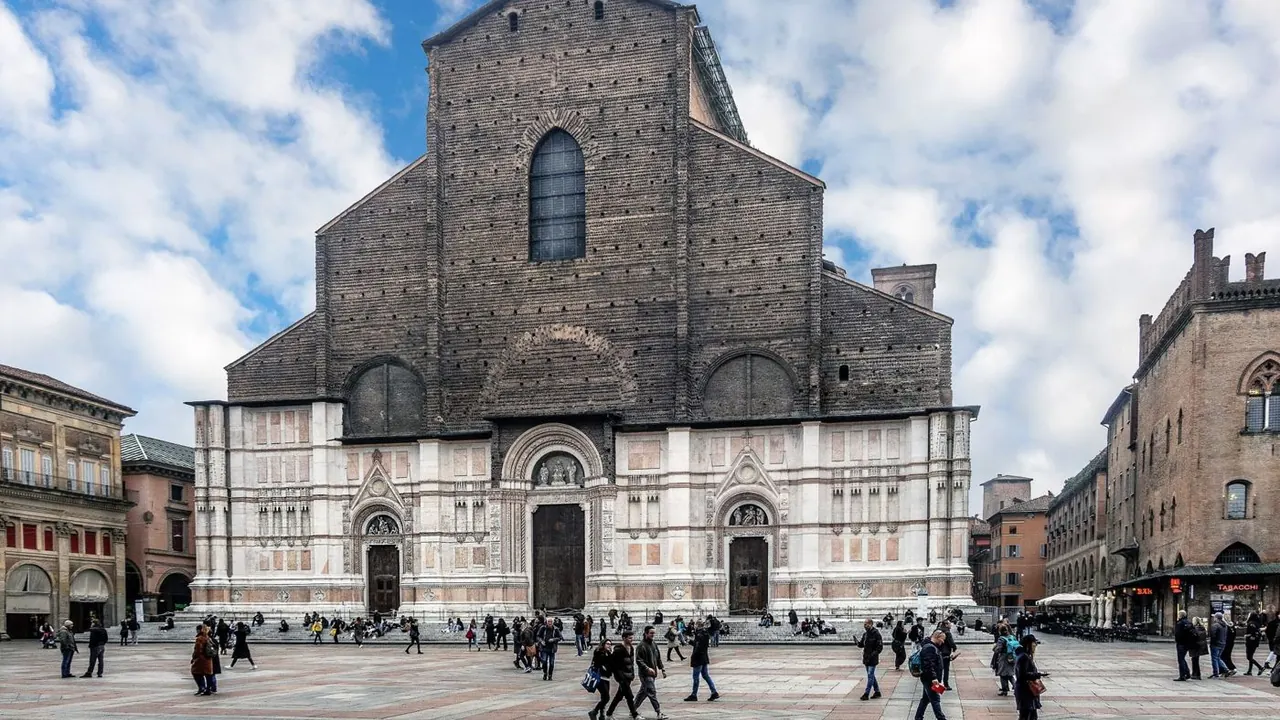
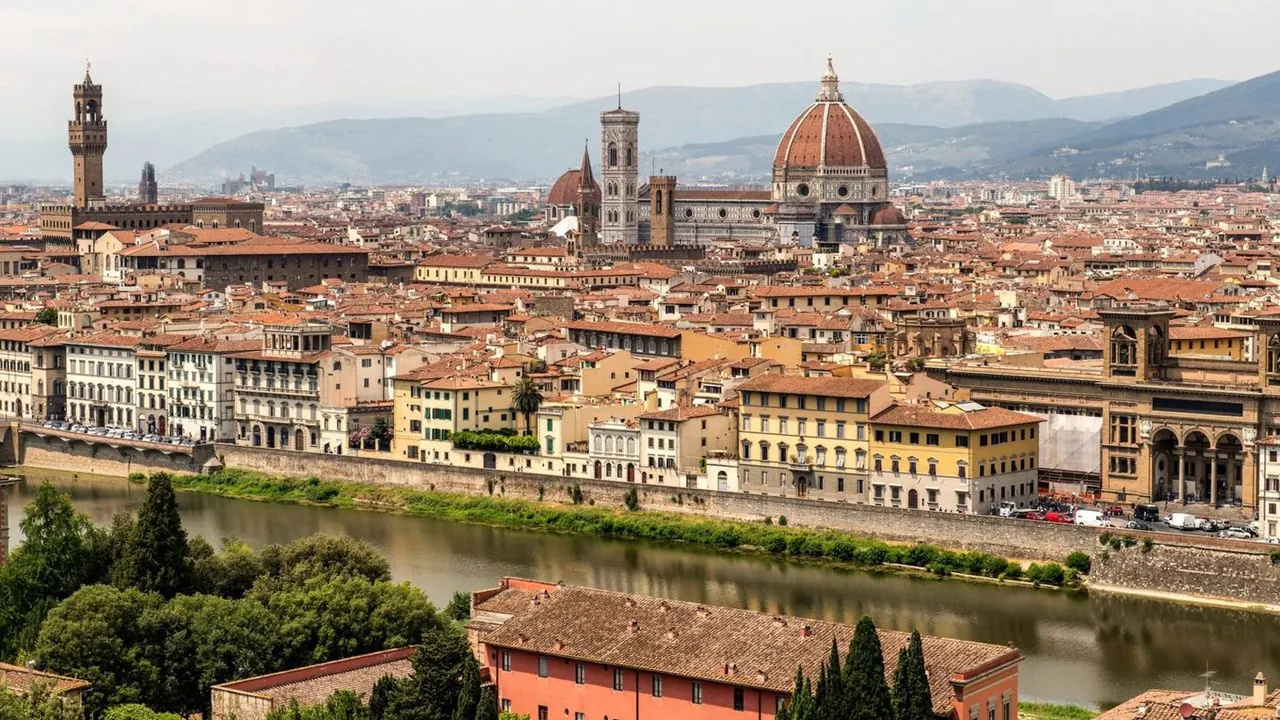
Photos: Bologna by Vanni Lazzari, CC BY-SA 4.0, cropped; Florence by Wolfgang Weiser, Pexels License.
Bologna or Florence?
Our verdict in twelve categories, each scored against the same fixed benchmark cities, and the climate month by month, so you can choose for your trip.
Choose Bologna for
- beaches
- nightlife
- prices
Bologna suits travellers who plan their days around the table. The fresh pasta, cured meats and market lanes are reason enough to come, and evenings in the student quarter go on longer than Florence's do. It is also the gentler city on the wallet, and its station puts Ravenna, Ferrara, Verona and Venice within easy reach. Here the city itself is the sight, so expect arcades and brick streets rather than famous masterpieces.
Choose Florence for
- culture and sights
- shopping
- nature and the outdoors
Florence is the choice for anyone who wants great art. The Uffizi, the Accademia, the Bargello and Brunelleschi's dome add up to a week of first-rank sights in a few walkable streets. It also suits shoppers looking for leather and handmade crafts, and anyone who wants Siena, Lucca and the Chianti hills on the doorstep. Accept higher costs, quieter nights and heavy summer crowds in return.
Scoreboard
Twelve categories on one fixed scale from 0 to 100. The shaded stretch is the gap between the two.
Your match
Pick a travel style or drag the sliders, and both match scores follow your weighting.
Too close to call, 1 point apart
Wins on beaches and nightlife with your weighting.
Wins on culture and sights and shopping with your weighting.
What matters to you?
Category by category
What the scores mean for a trip.
Beaches & swimming
Neither city is a place for swimming, but Bologna makes a seaside day easier. Rimini and the Romagna Riviera are about an hour away by train, close enough to escape the August heat for an afternoon. The Adriatic there is shallow and warm, but it is lined with organised lidos and the water is often greenish.
From Florence the Versilia coast around Viareggio is further, about an hour and a half by train. That makes it a full day out, though the beaches are long and sandy. Most visitors there cool off in a hotel or public pool instead.
Food & drink
Bologna has the edge for anyone who travels to eat. Hand-rolled tagliatelle, tortellini in brodo, lasagne verdi and mortadella are the core of a stay. The Quadrilatero and Mercato delle Erbe sit right behind Piazza Maggiore, and Parma and Modena produce their ham, cheese and vinegar less than an hour away. Its weakness is range: there is little beyond Emilian cooking, and it is rich food for a hot day.
Florence eats more simply. Thick bistecca, bread soups and lampredotto from the carts are the classics, the Mercato Centrale and Sant'Ambrogio show what the city cooks, and Chianti reds come from the hills just south. Near the Duomo, set tourist menus are everywhere, so the good meals are mostly found in the Oltrarno trattorie.
Culture & sights
Florence is in another league here. Brunelleschi's dome, the Uffizi's Botticellis and Leonardos, the David in the Accademia and the Bargello's sculpture make a run of Renaissance art no Italian city outside Rome can match. The Brancacci Chapel, the Medici Chapels and Santa Croce are enough to stretch a visit to a week, though the big museums need booking and the summer queues are long.
Bologna's appeal is quieter and more about the whole townscape: red-brick streets under kilometres of UNESCO-listed porticoes, the leaning Two Towers, the seven churches of Santo Stefano and the wooden anatomical theatre of Europe's oldest university. It rewards two or three unhurried days rather than a list of masterpieces.
Nightlife
Bologna goes out harder, thanks to its large student population. The crowds outside the cheap bars around Piazza Verdi and the string of taverns on Via del Pratello keep the centre busy late. The exception is August, when the students leave and the city goes very quiet.
Florence's evenings are about aperitivo and a glass of Tuscan red. Piazza Santo Spirito is the liveliest spot on warm nights, and in summer bars open along the Arno. The club scene is small and most nights wind down early, so the city suits long dinners more than late drinking.
Nature & outdoors
Florence has the more inviting countryside. The olive terraces of Fiesole are a short bus ride up, the cypress lanes of Chianti make classic walking and cycling country, and the beech forests of the Casentino and the marble peaks of the Apuan Alps are within reach. It is a cultivated, postcard landscape rather than wild country.
Bologna has easy hill walks of its own, up the arcade to San Luca, in the Colli Bolognesi and among the gypsum caves of the Parco dei Gessi. The Via degli Dei sets off from Piazza Maggiore across the Apennines to Florence. In winter there is modest skiing at Corno alle Scale. North of the city, though, the plain is flat farmland.
Day trips
Both cities make outstanding bases, and the real difference is where they lead. From Bologna, the trains run along the Via Emilia to Modena and Parma, across to Ravenna's Byzantine mosaics and Renaissance Ferrara, and north to Verona, Padua and Venice. Almost everything is reachable without a car.
From Florence, the outings are Tuscan: Siena's Campo, Pisa, walled Lucca, then San Gimignano, Volterra and the Val d'Orcia towns. Some of the hill villages and wineries really need a car or a tour. The fast train links the two cities in well under an hour, so either can be a day trip from the other.
Good for families
With children, the two are about level, and in both the main sights are made for adults. Bologna is the easier city to move around in: its centre is flat and largely car-free, and the porticoes give shade. For something aimed squarely at children, families head to the Mirabilandia theme park or the beach at Rimini.
Florence has more to engage curious older children: climbing the dome, the secret passages of Palazzo Vecchio, the globes at the Museo Galileo and the Boboli Gardens to run around in. Pinocchio's park at Collodi is the classic family day out. Narrow pavements and summer crowds make it harder going with a pushchair.
Getting around
Both centres are best crossed on foot. Neither city has a metro, and in both a car is more trouble than help. In Bologna, the porticoes let you walk most streets in shade or out of the rain, though you need to watch for the bikes under the arches. Buses climb into the hills and a shuttle runs to the airport.
Florence packs its sights more tightly. The Duomo, the Uffizi and the Pitti Palace are all within about twenty minutes' walk of each other, but the pavements are narrow and the stone paving is tiring. Trams link Santa Maria Novella with the airport, and small buses make the climb to Fiesole and Piazzale Michelangelo.
Shopping & style
Florence is the better city to shop in, because much of what it sells is still made there. Leather goods come from workshops and the San Lorenzo stalls, though quality varies. There is marbled paper, gold on the Ponte Vecchio and restorers and gilders at work in the Oltrarno, along with the fashion houses on Via de' Tornabuoni.
In Bologna, most of what visitors carry home is food, from aged Parmigiano to vacuum-packed tortellini from the Quadrilatero. The luxury cluster around Galleria Cavour is small, so it is a city for pleasant browsing rather than a shopping trip.
Affordability
Bologna is the easier city on the budget. Trattoria meals and aperitivo with food are fairly priced, and most of the great sights are churches and squares you can walk into for free. Rooms are the expense, especially when a trade fair fills the city.
Florence costs more across the board. Centre hotels are dear from spring to autumn, and admissions to the Uffizi, the Accademia and the dome climb add up over a few days. Lampredotto stalls, market lunches and cheap house wine help, and a winter visit cuts the bill most.
Live music & performing arts
The two are evenly matched, and the difference is in style. Bologna is UNESCO's City of Music, with opera and ballet at the Teatro Comunale. Its real everyday strength is jazz in small basement clubs and student indie gigs, which give a visitor something on most nights.
Florence is the more classical city: opera was born here, and the Maggio Musicale is among Europe's oldest festivals. Away from the main season, though, many visitors only find church concerts staged for tourists, and there is little live jazz or rock.
Wellness & relaxation
Neither city is a place to unwind in itself, and both rely on hotel spas and the thermal towns nearby. From Bologna, Castel San Pietro Terme is about twenty minutes away and old Porretta Terme an hour into the Apennines, an easy half day either way.
Florence's options are grander but further: the spa halls of Montecatini Terme, and the hot sulphur pools of Bagno Vignoni and Saturnia, which work best as an overnight stay. A few nights on a Tuscan farm stay are a calmer escape than anything near Bologna.
When should you go?
Pick your month. The climate figures are measured averages, not a forecast.
Bologna in July
Florence in July
Daytime high, °C
Rainfall in the month, mm
Where the figures come from
Bologna has no rain gauge within 25 km of the centre, so its rainfall comes from a gridded climate dataset read at the city rather than from a gauge further away.
Bologna's sunshine is measured 82 km from the centre, at Cervia.
Florence has no rain gauge within 25 km of the centre, so its rainfall comes from a gridded climate dataset read at the city rather than from a gauge further away.
Florence's sunshine is measured 71 km from the centre, at Pisa / S. Giusto.
Temperature and rainfall are climate normals, averaged over the years shown. Bologna: 1991-2020, 14 years observed normals, Bologna / Borgo Panigale (5.5 km from centre). Florence: 1995-2020 (sunshine 1991-2020, rainfall 1991-2020) normals, Firenze / Peretola (5.6 km from centre).
Spring and early autumn suit both cities best. May, June and September are warm enough to spend whole days outdoors without the heat wearing you down. July and August are hot in both, with afternoons around 32°C that make long walks hard going, though they are also the only months when a trip to the coast makes sense. Bologna's arcades give some shade. Bologna is noticeably colder in winter, with January highs near 7°C against about 11°C in Florence, and it gets fewer sunny hours from November to January.
The rain sets the two apart in autumn. Florence turns properly wet from September, with October and November bringing around 124mm or more a month. Bologna stays drier, at about 90 to 95mm in its wettest months. For a late-autumn trip, Bologna is the steadier choice. For a winter city break, Florence is milder and brighter.
Which traveller are you?
On a culture and arts trip, choose Florence. The Uffizi, Michelangelo's David, the Bargello's sculpture and the San Marco frescoes fill a week. Bologna's porticoes, Archiginnasio and Pinacoteca are fine, but you will have seen them well in two or three days.
For a food and nightlife trip, Bologna wins. Tagliatelle al ragù, tortellini and mortadella are cooked here at their source, and the Quadrilatero markets are right in the centre. After dinner, Piazza Verdi and Via del Pratello stay lively long after Florence's wine bars have closed.
On a shopping trip, go to Florence. Leather workshops, marbled paper, the goldsmiths on the Ponte Vecchio and the craftsmen of the Oltrarno give you things worth carrying home. In Bologna, most of what you take away is cheese, vinegar and pasta from the delicatessens.
Before you go
| Measure | Bologna | Florence |
|---|---|---|
| Official language | Italian | Italian |
| Currency | Euro (EUR) | Euro (EUR) |
| Sockets | CFL230 V, 50 Hz | CFL230 V, 50 Hz |
| Driving side | Right | Right |
| Time zone | UTC+1, UTC+2 in summer | UTC+1, UTC+2 in summer |
| Emergency number | 112 | 112 |
| Elevation | 54 m | 50 m |
| Main airport | Bologna Guglielmo Marconi Airport (BLQ)6 km from centre98 non-stop destinations | Florence Airport, Peretola (FLR)6 km from centre46 non-stop destinations |
| Public holidays this year | 13 days | 13 days |
By the numbers
| Measure | Bologna | Florence |
|---|---|---|
| City population | 387,971 | 360,930 |
| People per km² | 2,754 | 3,528 |
| Museums within 10 km | 68 | 141 |
| UNESCO World Heritage sites within 50 km | 3 | 6 |
Where else could you go?
Every comparison below shares a destination with this one, so you can follow Bologna or Florence somewhere new.