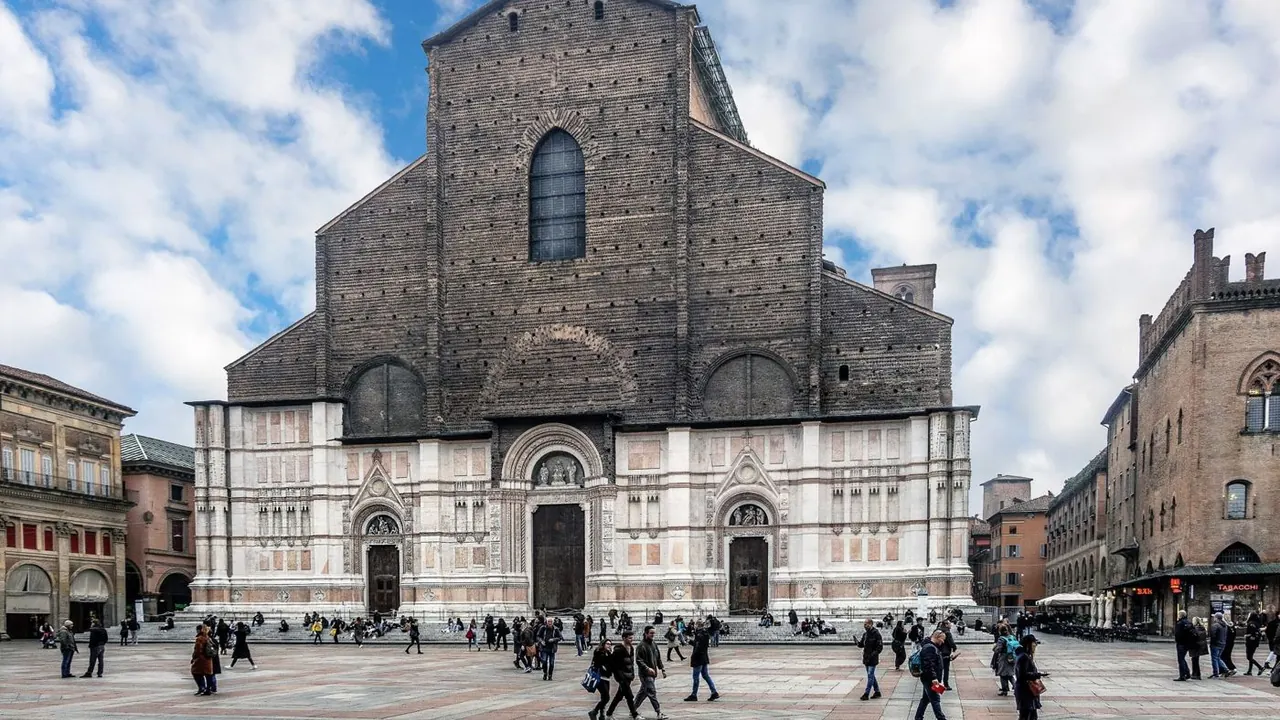
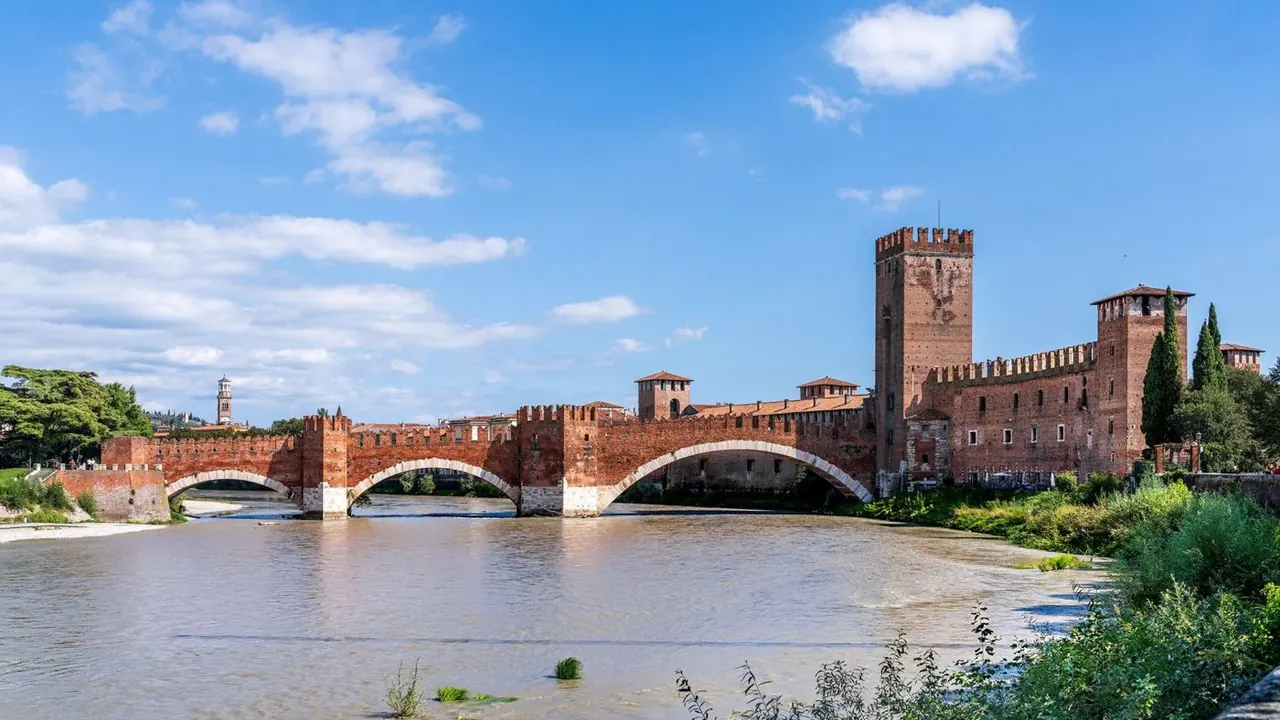
Photos: Bologna by Vanni Lazzari, CC BY-SA 4.0, cropped; Verona by NorbertNagel, CC BY-SA 4.0, cropped.
Bologna or Verona?
Our verdict in twelve categories, each scored against the same fixed benchmark cities, and the climate month by month, so you can choose for your trip.
Choose Bologna for
- nightlife
- food and drink
- getting around
Bologna suits travellers who plan their days around the table. This is the home of tagliatelle al ragù and tortellini, with the Quadrilatero's delicatessens for the morning and a student crowd that keeps the bars of Piazza Verdi and Via del Pratello busy long after Verona has gone to bed. Its central station also makes it the easier base if you want to see Florence and the art towns of Emilia-Romagna without a car.
Choose Verona for
- families
- beaches
- nature and the outdoors
Choose Verona if you want a Roman city with lakes and mountains close by. Lake Garda, Monte Baldo and the Valpolicella vineyards are all near, and families have Gardaland and a safari zoo about half an hour away. On summer evenings there is opera on the stone tiers of the Arena, and Bologna has nothing quite like it.
Scoreboard
Twelve categories on one fixed scale from 0 to 100. The shaded stretch is the gap between the two.
Your match
Pick a travel style or drag the sliders, and both match scores follow your weighting.
Too close to call, 1 point apart
Wins on nightlife and food and drink with your weighting.
Wins on families and beaches with your weighting.
What matters to you?
Category by category
What the scores mean for a trip.
Beaches & swimming
Neither city is on the water, but Verona makes swimming the easier side trip. The southern shore of Lake Garda is about half an hour away, with calm, clear water, grassy lawns, small pebble beaches and the flat limestone shelves at Sirmione.
From Bologna, a swim means an hour on the train to Rimini or Cervia. There you find warm, shallow Adriatic water, often greenish, and long rows of rented umbrellas in organised lidos. It is a useful escape from the July heat rather than a beach vacation.
Food & drink
Bologna eats better, and food is one of the main reasons to go. Tortellini in brodo, lasagne verdi, mortadella and fresh pasta rolled in shop windows are all made to a high standard. The Parmigiano and Parma ham country is less than an hour away, and the Quadrilatero and Mercato delle Erbe are among the most enjoyable food streets in Italy.
Verona's cooking is plainer and comes from the Veneto countryside: Amarone risotto, bigoli with duck, and bollito misto with pearà. Its real strength is the glass, because Valpolicella, Soave and Bardolino are all made close by. Watch out for tired tourist cooking around the Arena, which Bologna has much less of.
Culture & sights
The two are evenly matched, but they offer different kinds of history. Bologna is a medieval brick city of red and ochre, held together by its UNESCO-listed porticoes. Its sights are the Two Towers, the seven churches of Santo Stefano and the old university, with the wooden anatomical theatre in the Archiginnasio.
Verona's story starts earlier, with the Roman Arena on Piazza Bra and the Roman theatre on the hillside across the Adige. Above those sit the Scaliger tombs, the Romanesque basilica of San Zeno and Castelvecchio's art museum in Carlo Scarpa's setting. Each needs two or three unhurried days.
Nightlife
Bologna has the much livelier night, thanks to its large student population. Crowds stand outside the cheap bars of Piazza Verdi and Via Petroni, and the taverns along Via del Pratello stay busy until late. The catch is August, when the students leave and the city goes quiet.
Verona's evening is built around the aperitivo. People take a spritz or a Valpolicella at tables in Piazza delle Erbe, then perhaps move on to a wine bar in Veronetta. There is no real dance scene in the centre, and the streets empty early, except on summer opera nights when the Arena lets out near midnight.
Nature & outdoors
Verona has more of the outdoors within easy reach. The Valpolicella vineyards are just north of town and the Lessinia plateau offers beech woods and gorges. An hour away, Monte Baldo rises steeply above Lake Garda, with ridge walks, paragliding and reliable sailing winds at the lake's northern end.
Bologna's countryside is gentler. You can walk to San Luca and through the Colli Bolognesi, explore the gypsum caves of the Parco dei Gessi, or set out on the Via degli Dei trail to Florence from Piazza Maggiore. For anything higher, you have to travel to Corno alle Scale.
Day trips
Both are excellent rail bases, so the real choice is where you want to go. From Bologna, Florence is barely half an hour away, and Ravenna's mosaics, Ferrara, Modena and Parma are all short trips. That makes it the base for Tuscany and Emilia-Romagna.
Verona looks the other way, towards the Veneto and the lake. Venice is just over an hour away, Vicenza and Padua are closer still, and Sirmione and Malcesine on Garda make easy outings. The two cities are within reach of each other, so you can combine them on one trip.
Good for families
Verona gives children more to do, though most of it is outside the city. Gardaland, the water parks around the southern shore of Garda and the drive-through safari at Parco Natura Viva are all about half an hour away, and the Roman Arena tends to impress young visitors.
Bologna is pleasant with children but offers less for them. The arcades give shade, and climbing the Asinelli tower is a good outing for older children. For a theme park or the beach, though, families have to travel further, to Mirabilandia near Ravenna or to Rimini.
Getting around
Both centres are flat, compact and mostly closed to cars, and neither city has a metro. Bologna is the easier of the two. Its main station sits on the edge of the old town, so you can walk from the train to Piazza Maggiore, and the porticoes keep you out of the sun and rain on most streets.
In Verona, Porta Nuova station is about twenty minutes' walk from Piazza Bra, or a short bus ride. The trains to Venice, Milan and Peschiera are excellent. The Valpolicella villages, the Lessinia and some of the Garda attractions are poorly served by bus, so a car helps there in a way it rarely does from Bologna.
Shopping & style
Shopping is a side pleasure in both cities, and in both the best things to take home are edible. In Bologna that means mortadella, aged Parmigiano and fresh tortellini from the Quadrilatero, and the Galleria Cavour has a small cluster of luxury fashion. The university quarter adds vintage shops and bookshops.
Verona's shopping is concentrated on the marble-paved Via Mazzini, which has smart Italian labels. Visitors tend to leave with bottles of Amarone, Garda olive oil and pandoro. For serious fashion, people from both cities go to Milan.
Affordability
The cost of a trip is much the same, and in both cities hotel rooms are the expensive part, especially during the big trade fairs. Bologna's savings come from its trattorias and from an aperitivo that usually includes food. Most of its churches and squares are free to enter.
Verona has an extra pressure on summer opera nights, when central rooms fill up and the restaurants facing the Arena charge for the view. Staying across the river in Veronetta, or near the station, keeps the bill down. Local wine is good value in both cities.
Live music & performing arts
Verona edges ahead because of one great event. From June to early September, grand productions of Verdi and Puccini fill the Roman Arena, with thousands of people on the stone tiers. In summer the Roman theatre also hosts a festival of Shakespeare, dance and jazz.
Bologna's music is spread more evenly through the year. The Teatro Comunale is one of Italy's historic opera houses, small jazz clubs play most nights, and students keep indie gigs going in small venues. Outside summer the gap between the two cities is small.
Wellness & relaxation
Verona has the better thermal waters nearby. At Sirmione, the old spa town on Garda, warm pools face the lake, and near Lazise there is a spring-fed lake in a villa garden. In town, the terraces of the Giardino Giusti and an evening stroll by the river keep the pace gentle.
Bologna's springs are smaller outings: the pools at Castel San Pietro Terme, or the old spa town of Porretta Terme in its Apennine valley. Within the city, the noise of the university quarter and the heavy summer heat make it the less restful of the two.
When should you go?
Pick your month. The climate figures are measured averages, not a forecast.
Bologna in July
Verona in July
Daytime high, °C
Rainfall in the month, mm
Where the figures come from
Bologna has no rain gauge within 25 km of the centre, so its rainfall comes from a gridded climate dataset read at the city rather than from a gauge further away.
Bologna's sunshine is measured 82 km from the centre, at Cervia.
Temperature and rainfall are climate normals, averaged over the years shown. Bologna: 1991-2020, 14 years observed normals, Bologna / Borgo Panigale (5.5 km from centre). Verona: 1991-2020 normals, Verona / Villafranca (11.6 km from centre).
The two cities follow the same pattern through the year. Winters are cold and grey, with daytime highs near 7°C in January. The best times for walking the streets all day are late April to early June and mid-September through October. Summer is hot in both, but Bologna is harder going. It reaches 32°C in July and August against Verona's 30°C, and the humid air of the plain makes midday sightseeing tiring. Plan the early mornings and evenings for walking, and use the shade of the arcades in between.
The rain comes at different times. Bologna's summers are its driest and sunniest months, and then the rain arrives in autumn, with about 71mm in both September and October. Verona has showers and thunderstorms through spring and summer, so a July day there is more likely to be broken up by rain. Its wettest month is September. For a day at the beach or the lake, the warm months are June to September near Verona and July and August from Bologna.
Which traveller are you?
For a food and nightlife trip, Bologna is the clear choice. It has the deeper and more serious cooking, from hand-rolled pasta to the market lanes of the Quadrilatero. Its student quarter also keeps the bars full and loud late into the night, while Verona's evenings mostly end after aperitivo.
On a family trip with children, Verona works better. Gardaland, the water parks and Parco Natura Viva's safari section are all about half an hour away, and the lake gives calm swimming. Bologna's nearest theme park and beach are a longer trip towards Ravenna and Rimini.
For an outdoors trip, Verona has more variety. There are vineyard walks in Valpolicella, ridge paths on Monte Baldo, sailing winds at the top of Garda and the Lessinia gorges. Bologna has pleasant hill walks and the Via degli Dei trail, but the plain to its north is flat.
Before you go
| Measure | Bologna | Verona |
|---|---|---|
| Official language | Italian | Italian |
| Currency | Euro (EUR) | Euro (EUR) |
| Sockets | CFL230 V, 50 Hz | CFL230 V, 50 Hz |
| Driving side | Right | Right |
| Time zone | UTC+1, UTC+2 in summer | UTC+1, UTC+2 in summer |
| Emergency number | 112 | 112 |
| Elevation | 54 m | 59 m |
| Main airport | Bologna Guglielmo Marconi Airport (BLQ)6 km from centre98 non-stop destinations | Verona Villafranca Valerio Catullo Airport (VRN)10 km from centre96 non-stop destinations |
| Public holidays this year | 13 days | 13 days |
By the numbers
| Measure | Bologna | Verona |
|---|---|---|
| City population | 387,971 | 255,588 |
| People per km² | 2,754 | 1,285 |
| Museums within 10 km | 68 | 18 |
| UNESCO World Heritage sites within 50 km | 3 | 5 |
Where else could you go?
Every comparison below shares a destination with this one, so you can follow Bologna or Verona somewhere new.