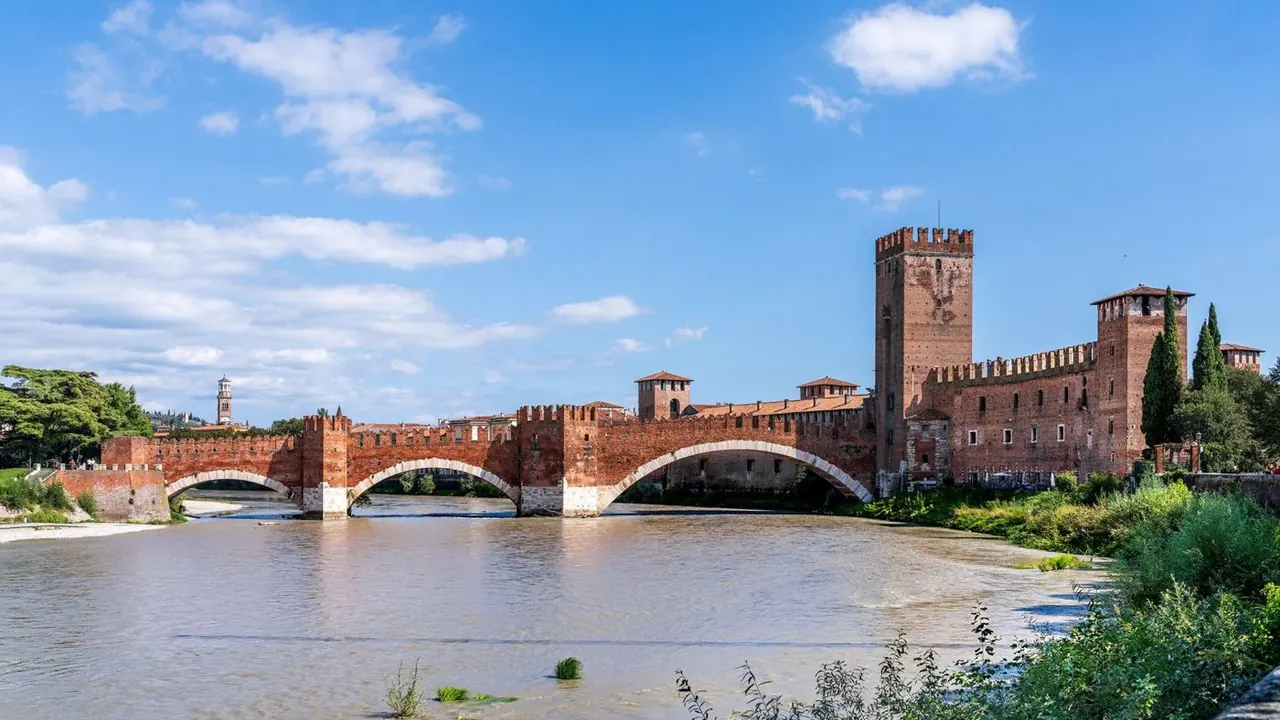
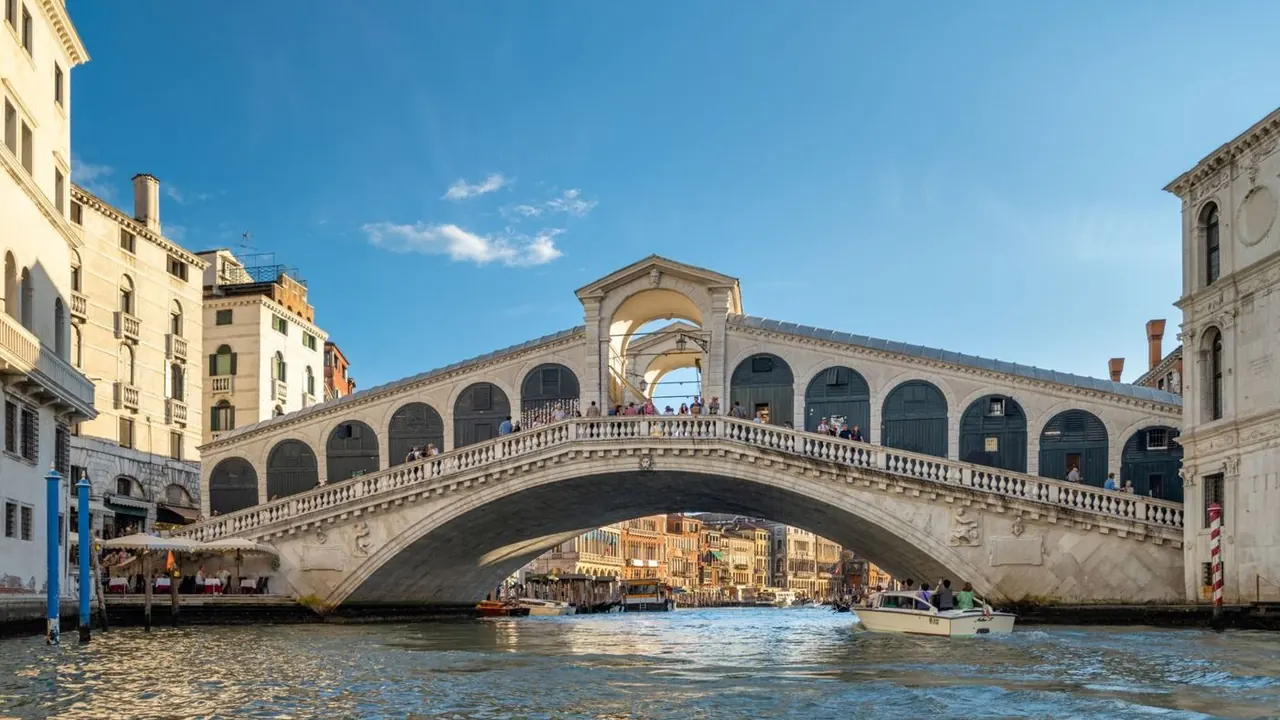
Photos: Verona by NorbertNagel, CC BY-SA 4.0, cropped; Venice by David Vives, Pexels License.
Verona or Venice?
Our verdict in twelve categories, each scored against the same fixed benchmark cities, and the climate month by month, so you can choose for your trip.
Choose Verona for
- prices
- families
- nature and the outdoors
For a longer, easier stay with more variety, Verona works better. Rooms cost less, the centre is flat and simple with a pushchair, and the city is ringed by vineyards, Lake Garda, theme parks and the Monte Baldo ridges, with Venice itself an easy train ride away. Families, wine lovers and anyone who wants opera under the stars in summer will find it the more comfortable base.
Choose Venice for
- culture and sights
- beaches
- shopping
Venice is the choice for a trip built around art and the strangeness of a city standing on water. Its churches, palaces and galleries go far deeper than Verona's, and the lagoon islands and the Lido beach are a boat ride away. It suits couples and culture lovers who will accept high costs, steps on every bridge and quiet nights in return for a setting with no equal.
Scoreboard
Twelve categories on one fixed scale from 0 to 100. The shaded stretch is the gap between the two.
Your match
Pick a travel style or drag the sliders, and both match scores follow your weighting.
Wins on prices and families with your weighting.
Wins on culture and sights and beaches with your weighting.
What matters to you?
Category by category
What the scores mean for a trip.
Beaches & swimming
Venice has the better swimming because it has a real sea beach. The Lido's long sandy shore faces the Adriatic a short vaporetto ride from San Marco, shallow and warm in summer, with quieter Pellestrina beyond. The water is greenish, though, and it makes a good afternoon rather than a reason to come.
Verona has to borrow Lake Garda, half an hour away at Peschiera, Lazise or Sirmione. The lake is clearer and calm, but the shore is lawns, lidos and narrow pebble strips that fill up at weekends, so it is a day out rather than a beach base.
Food & drink
Venice cooks from the lagoon: cuttlefish blackened with its own ink, sarde in saor, and cicchetti eaten standing up in the bacari of Cannaregio and Castello, all supplied by the Rialto market. The weak point is the sit-down meal. The routes around San Marco are full of picture-menu restaurants, and good tables take some hunting.
Verona eats a little more reliably, with the heartier cooking of the inland Veneto: Amarone risotto, bigoli with duck, bollito with pearà and horse stewed in red wine, served in plain osterie off Piazza delle Erbe and in Veronetta. Its real strength is wine, with Valpolicella, Soave and Bardolino all made a short drive away.
Culture & sights
Venice is the greater sight by a wide margin. The whole city is the monument, from the Basilica and the Doge's Palace to the palazzi along the Grand Canal. Its painting runs deeper than almost anywhere, with the Accademia, the Titians in the Frari, Tintoretto at San Rocco and modern art at the Guggenheim and Punta della Dogana.
Verona offers an older and different layering: the Roman Arena and theatre, the Scaliger tombs, the bronze doors of San Zeno and Castelvecchio in its Scarpa setting. It is excellent but compact, and two or three days do it justice where Venice can fill a week.
Nightlife
Neither city is made for late nights, and in both the evening revolves around the aperitivo hour. Venice fades sooner. Once the spritz crowds leave the Misericordia and the Rialto bacari, only Campo Santa Margherita stays busy, and the canals are silent by midnight.
Verona keeps going a little longer. Across the Ponte Pietra, Veronetta's student wine bars and pubs fill up later, and on summer opera nights the crowd leaving the Arena near midnight brings the centre back to life. For clubbing, you have to leave town from either city.
Nature & outdoors
In Venice the outdoors means the lagoon: kayaking or learning Venetian rowing among the marshes near Torcello and Sant'Erasmo, watching for egrets and flamingos, and cycling the sea walls of the Lido and Pellestrina. The land is flat and the nearest hills are an hour off.
Verona sits at the foot of the Alps and has far more terrain to use. The Valpolicella vineyards and the Adige cycle route start just outside the city, and the Lessinia plateau has beech woods and gorges. Monte Baldo above Lake Garda adds ridge walks and paragliding, and the northern end of the lake has serious windsurfing.
Day trips
Both sit on the same fast rail line, so many outings are shared: Padua, Vicenza and each other. Venice adds days out that need no train at all, by boat to the glass furnaces of Murano, the painted houses of Burano and the lonely cathedral at Torcello, with Treviso and the Brenta villas close by.
Verona has the wider spread. Venice and Mantua are each about an hour away, Milan and Bologna are within reach, and the harbour towns of Lake Garda and the cellars of Valpolicella and Soave are on the doorstep. Over a week you can mix art cities, lakes and wine tastings.
Good for families
For a child, Venice itself is the entertainment. The bus is a boat, the glass furnaces on Murano put on a real show, and the dinosaurs at the natural history museum fill a spare hour. The rest is what wears families down. Summer brings humid heat and crowded main routes, and with so few parks or playgrounds there is little room for children to run about. A couple of days with older children is about right.
Verona is the fuller family stay, though most of what makes it so lies outside the old walls. In town, the Arena and the Roman theatre on the hillside capture children's imaginations, and the terraces of the Giardino Giusti give some shade. The theme parks, water parks and calm, shallow swimming along Lake Garda's southern shore mean planning a car or a transfer for each outing. City afternoons in July get just as hot as in Venice.
Getting around
Both are cities you explore on foot, but in very different ways. Venice is a car-free maze where the vaporetto does the job of a bus and the traghetto ferries you across the Grand Canal, while hundreds of stepped bridges punish suitcases, pushchairs and wheelchairs.
Verona's centre inside the Adige loop is small and flat, with ordinary buses to the station and airport. Its weak point is the countryside: the Valpolicella villages, the Lessinia and some Garda sights are far easier to reach by car.
Shopping & style
Neither is a major shopping city, and they sell very different things. Venice is the place for crafts made on site: Murano glass, Burano lace, papier-mâché masks, marbled paper and furlane slippers from workshops in Dorsoduro and Castello, though the main routes are full of imported copies. Designer labels line Calle Larga XXII Marzo and the Mercerie.
Verona is smart rather than artisanal, with Italian fashion along the marble-paved Via Mazzini and boutiques on Corso Porta Borsari. Its best souvenirs are edible: Amarone and Valpolicella, olive oil from the Garda shore and the star-shaped pandoro.
Affordability
Venice is among the most expensive places to stay in Italy, and the cost runs through everything: hotels in the centre, water transport priced for visitors, entry to most sights and churches, and steep table service on Piazza San Marco. The usual ways round it are eating cicchetti at the counter and sleeping in Mestre.
Verona is clearly easier on the wallet, though it is not cheap. Walking replaces transport, the osterie and wine counters in Veronetta are fairly priced, and the local wine is good value. Rooms are its sore point, especially on summer opera nights and during the trade fairs.
Live music & performing arts
The two are close here, but they offer very different evenings. Venice has year-round depth at La Fenice, where Verdi and Rossini held premieres, with opera, ballet and concerts through the season. It adds the Biennale festivals and nightly Vivaldi concerts in churches, which range from fine to routine.
Verona's draw is seasonal and spectacular: grand opera on the stone tiers of the Arena all summer, with Shakespeare, dance and jazz in the Roman theatre alongside. Outside summer, the season at the Teatro Filarmonico is modest, so when you go matters more than it does in Venice.
Wellness & relaxation
Spas in Venice are hotel spas, in palazzi and on the Lido and Giudecca, and real thermal bathing is an hour away at Abano and Montegrotto. The city's calm comes from having no traffic, and you feel it most in the early morning in Castello, Cannaregio or on Giudecca.
Verona has warm water closer to hand: Sirmione's thermal pools facing Lake Garda, the spring-fed lake in a villa garden near Lazise and the old Roman springs at Caldiero. With long lunches and evening walks along the Adige as well, it is the more restful stay.
When should you go?
Pick your month. The climate figures are measured averages, not a forecast.
Verona in July
Venice in July
Daytime high, °C
Rainfall in the month, mm
Temperature and rainfall are climate normals, averaged over the years shown. Verona: 1991-2020 normals, Verona / Villafranca (11.6 km from centre). Venice: 1991-2020 (sunshine 1971-2000, rainfall 1981-2010) normals, Venezia / Tessera (6.7 km from centre).
The two cities share almost the same calendar. Both reach about 29°C in July and August, which is hot and sticky for long days of sightseeing, and in winter both drop to around 7°C, cold but fine for museums and churches. May, June and September are the best months for walking. Venice also has the Adriatic: the sea is around 23°C by June and reaches 26°C in August, so afternoons on the Lido work from June to September.
The differences are in rain and sun. Venice gets wetter in autumn, with October at 93mm and only June, at 96mm, rainier. Verona's autumn is about as wet, and from March to October it gets a little more sunshine than Venice every month. For a spring or autumn trip, Verona's weather is slightly kinder.
Which traveller are you?
On a culture and arts trip, Venice is the clear pick. The Accademia, Titian in the Frari, Tintoretto at San Rocco, the Guggenheim and the Biennale give it far more depth than Verona's Arena, San Zeno and Castelvecchio, and enough to fill a week.
On a family trip with young children, Verona is much easier. Its centre is flat and easy with a pushchair, unlike Venice's stepped bridges, and Gardaland, the Parco Natura Viva safari zoo and calm lake swimming are all about half an hour away.
For a trip on a tight budget, Verona makes money go much further. Rooms across the river or near the station, Veronetta's student osterie and good local wine keep costs down, while Venice charges heavily for hotels, water transport and entry to its churches.
Before you go
| Measure | Verona | Venice |
|---|---|---|
| Official language | Italian | Italian |
| Currency | Euro (EUR) | Euro (EUR) |
| Sockets | CFL230 V, 50 Hz | CFL230 V, 50 Hz |
| Driving side | Right | Right |
| Time zone | UTC+1, UTC+2 in summer | UTC+1, UTC+2 in summer |
| Emergency number | 112 | 112 |
| Elevation | 59 m | 2 m |
| Main airport | Verona Villafranca Valerio Catullo Airport (VRN)10 km from centre96 non-stop destinations | Venice Marco Polo Airport (VCE)7 km from centre103 non-stop destinations |
| Public holidays this year | 13 days | 13 days |
By the numbers
| Measure | Verona | Venice |
|---|---|---|
| City population | 255,588 | 250,369 |
| People per km² | 1,285 | 602 |
| Museums within 10 km | 18 | 52 |
| UNESCO World Heritage sites within 50 km | 5 | 5 |
| Swim season, months above 21 °C | - | 4 months |
Where else could you go?
Every comparison below shares a destination with this one, so you can follow Verona or Venice somewhere new.