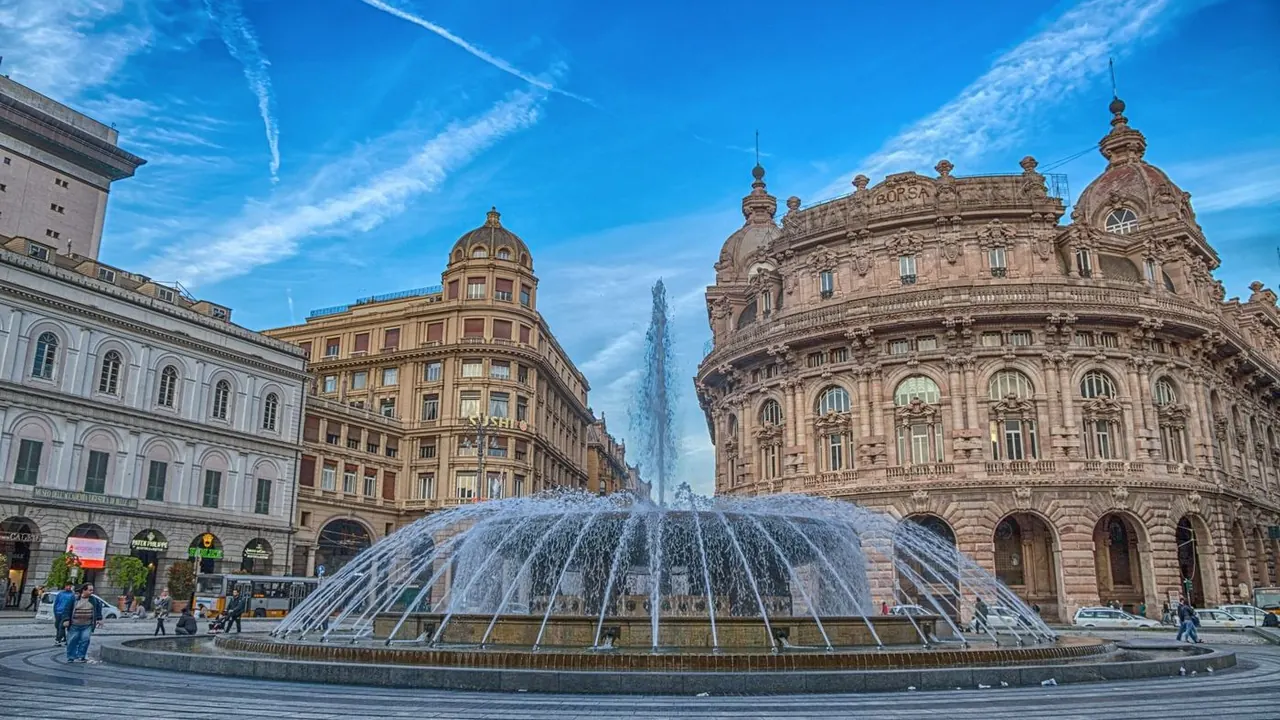
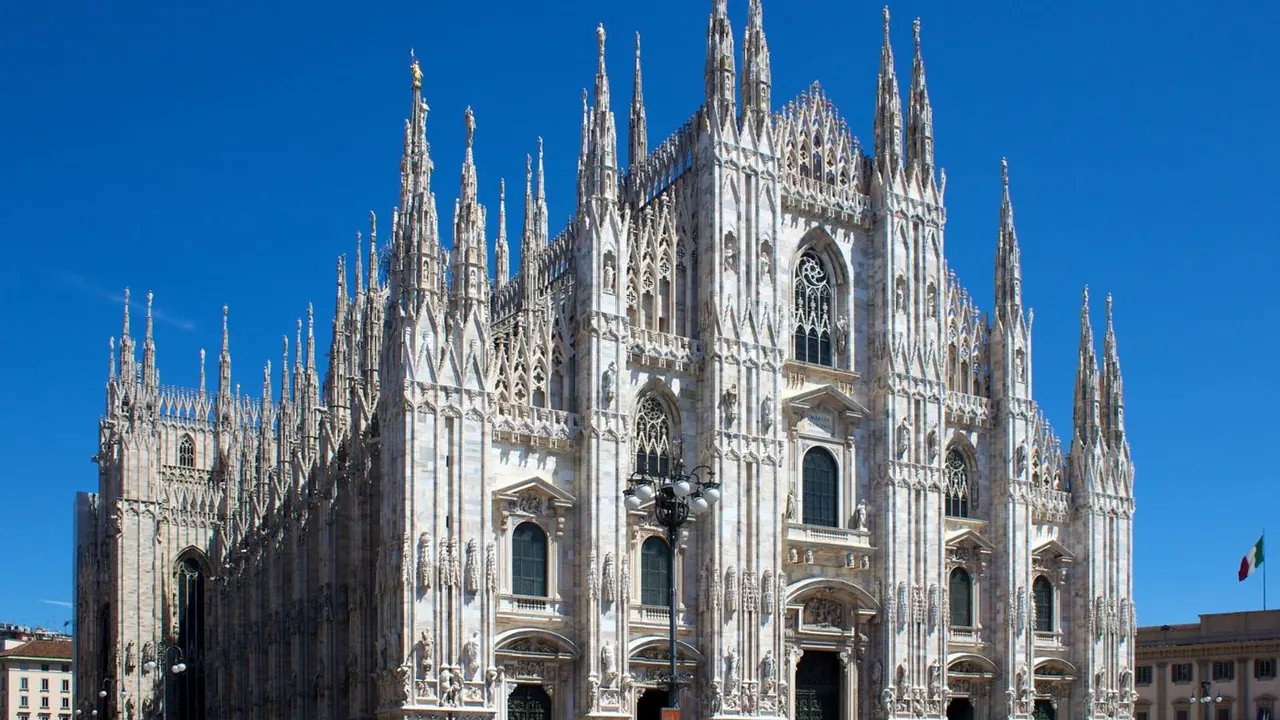
Photos: Genoa by Faber1893, CC BY-SA 4.0, cropped; Milan by Jiuguang Wang, CC BY-SA 3.0, cropped.
Genoa or Milan?
Our verdict in twelve categories, each scored against the same fixed benchmark cities, and the climate month by month, so you can choose for your trip.
Choose Genoa for
- beaches
- prices
- nature and the outdoors
Genoa suits the traveller who wants the sea in the same trip as the city. You can swim off the rocks at Boccadasse or Nervi, walk the Portofino cliff paths and eat focaccia in medieval lanes, all at prices that go easier on the wallet than Milan's. It rewards slow exploring and a liking for steep, shadowy, lived-in streets more than glamour.
Choose Milan for
- shopping
- live music and the arts
- nightlife
Milan is the better pick for anyone drawn by fashion, opera and polished evenings. The Quadrilatero, La Scala and the Navigli aperitivo strip have no real match in Genoa, and the city's fast rail links put Verona, Bergamo and the lakes within easy reach. Expect to pay more, and don't expect a beach.
Scoreboard
Twelve categories on one fixed scale from 0 to 100. The shaded stretch is the gap between the two.
Your match
Pick a travel style or drag the sliders, and both match scores follow your weighting.
Wins on beaches and prices with your weighting.
Wins on shopping and live music and the arts with your weighting.
What matters to you?
Category by category
What the scores mean for a trip.
Beaches & swimming
Genoa has the sea on its doorstep. You can swim from the pebble cove at Boccadasse, the rock-built bathing establishments along Corso Italia or the platforms below the Nervi promenade, and the Riviera towns east and west are easy afternoon trips by train. Expect pebbles and rented loungers rather than wide sand.
Milan is landlocked, so a swim there means the Idroscalo basin, a city pool or a train to Lake Como or Maggiore. The lakes are lovely, but the water stays a little cooler than the Ligurian sea, and swimming will be an occasional outing rather than a daily habit.
Food & drink
Milan has the edge in range. On top of its butter-rich risotto, ossobuco and cotoletta, it serves cooking from every region of Italy and has a serious fine-dining tier. The aperitivo hour in Brera, Isola and along the Navigli is a meal in itself.
Genoa is narrower but intensely local. This is the place for pesto at its source, pansoti in walnut sauce and farinata from old friggitorie in the caruggi, with Vermentino and harbour seafood alongside. Its street food beats anything Milan offers, but there is far less choice beyond Ligurian cooking.
Culture & sights
The two are level on heritage but very different to explore. Genoa gives you a whole medieval quarter of shaded lanes, with the Rolli palaces of Via Garibaldi above it and Staglieno's marble sculpture on the edge of town. It suits a visitor who likes to wander and find things.
Milan's treasures are fewer, but several are world-class: the Last Supper, the Duomo's rooftop among the spires, the Brera collection and Michelangelo's Rondanini Pietà. They sit in clusters within a largely modern city, and the Last Supper has to be booked well ahead.
Nightlife
Milan offers far more after dark. Bars spill onto the Navigli towpaths, Porta Venezia has the city's gay scene, and the clubs range from dressy Corso Como to warehouse nights on the outskirts. It is stylish rather than wild, and it quietens in August.
Genoa's evenings are smaller and more reserved: an aperitivo around Piazza delle Erbe, student bars near the university and summer beach clubs along the coast. Weeknights are quiet, so it is a place for a glass of wine in a medieval square rather than a long night out.
Nature & outdoors
Genoa puts walking country right on the edge of town. A funicular climbs to Righi and the ring of hilltop forts, the Portofino promontory has cliff paths down to San Fruttuoso, and boats leave the harbour to watch whales in the Pelagos Sanctuary. The Cinque Terre trails are a train ride away.
Milan's surroundings are flat and often hazy, so the outdoors starts with a journey. Once you reach Como, Maggiore or the Grigne ridges, though, the lake sailing, via ferrata and winter skiing in the Alpine valleys are things Genoa can't offer.
Day trips
Both are excellent bases, but Milan has the wider reach. High-speed trains put Verona, Turin and Bologna within about an hour or so, and Bergamo, Mantua, Cremona, the Borromean Islands and Lugano add variety in every direction.
Genoa's strength is one superb coastline. Portofino, Camogli, Sestri Levante and the Cinque Terre line the same railway, and Finale Ligure and Noli lie to the west. Milan itself makes a day trip from Genoa, while the Riviera is too far from Milan for a casual day by the sea.
Good for families
Genoa does better with children, mainly thanks to the Porto Antico. The aquarium, one of Europe's largest, sits beside the Galata museum's walk-through submarine and the biosphere, and the funiculars and swimming coves add to the fun. The steep, dark old-town lanes and endless stairs are hard work with a pushchair.
Milan is flatter and easier to get around with small children, and its science museum is a good wet-day standby. Beyond that, most of its sights appeal to adults, and the theme parks at Leolandia and Gardaland mean a trip out of the city.
Getting around
Milan is the easier city to get around. The centre is flat, the five metro lines and dense tram network cover almost everything, and the main stations connect directly to the lakes. The weak points are a hot metro in summer and the long transfer from Malpensa.
Genoa is a vertical city with a single short metro line. Its funiculars, rack railway and public lifts are part of the charm, but buses crawl through the narrow streets. The coastal railway does much of the useful work, reaching Nervi and the Riviera towns.
Shopping & style
This is Milan's strongest lead. The Quadrilatero della Moda holds the flagships of houses born in the city, La Rinascente and the Galleria add history, and design showrooms, Brera boutiques and the Navigli antique markets give depth well beyond luxury labels.
Genoa offers solid high-street shopping on Via XX Settembre, but its real appeal is in the caruggi: candied fruit, olive oil, silver filigree and coral from long-established shops. Come for edible souvenirs and crafts, not for fashion.
Affordability
Genoa is noticeably cheaper. Central hotels are more reasonable, focaccia and farinata cost very little, and trattoria lunches are fair. Costs climb in the Riviera resorts in summer and with paid loungers.
Milan is Italy's most expensive city. Hotel rates are high and spike further during trade fairs and fashion weeks. Lunchtime set menus, aperitivo snacks and a room near a metro stop outside the centre are the ways to keep a stay affordable.
Live music & performing arts
Milan has the stronger stage by a wide margin. La Scala alone draws opera lovers from around the world, and the Piccolo Teatro, the symphony orchestra at the Auditorium and big summer concerts at San Siro fill out a full calendar. Plan around a quieter summer season for opera.
Genoa's Teatro Carlo Felice runs a respectable season of opera, ballet and concerts. Paganini concerts and the city's singer-songwriter clubs give it local character, but it is a programme for an evening or two rather than a reason to travel.
Wellness & relaxation
Neither city is a place to unwind, though Milan has slightly more on offer. It has a thermal spa complex with outdoor pools in the city itself and the 1930s Bagni Misteriosi pools in summer, and the quiet lakeside villas are an hour away.
Genoa has no spa culture of its own, and the nearest thermal waters are at Acqui Terme, over an hour inland. What it has instead is Nervi's seafront promenade and villa gardens, and long, slow lunches in the Riviera villages.
When should you go?
Pick your month. The climate figures are measured averages, not a forecast.
Genoa in July
Milan in July
Daytime high, °C
Rainfall in the month, mm
Where the figures come from
Genoa has no rain gauge within 25 km of the centre, so its rainfall comes from a gridded climate dataset read at the city rather than from a gauge further away.
Genoa's sunshine is measured 80 km from the centre, at Capo Mele.
Milan's sunshine is measured 41 km from the centre, at Novara / Cameri.
Temperature and rainfall are climate normals, averaged over the years shown. Genoa: 1991-2020 normals, Genova / Sestri (6.7 km from centre). Milan: 1991-2020 (rainfall 1971-2000) normals, Milano / Linate (8 km from centre).
Genoa is the gentler of the two through most of the year. The sea warms enough for swimming from June, peaking at about 25°C in August, and July is almost dry and the sunniest month. Spring and early autumn are the best time to walk the hills and coast paths. Rain arrives in earnest from September, and October and November are the wettest months. Winters are mild for northern Italy, with days around 12°C and more sunshine than Milan gets.
Milan is hotter and stickier in July and August, which is uncomfortable for walking the streets and riding the metro, and it is wet in late spring as well as autumn, with November the wettest month. Winter is colder and greyer, with highs near 7°C and short, hazy days. Its best months for sightseeing are April, June and late September. The beach and swimming season belongs to Genoa.
Which traveller are you?
On a beach and sun trip, Genoa wins: the swimming platforms at Nervi are in town, and the Riviera coves of Camogli are a short train ride away. Milan has only the Idroscalo basin and city pools, with the lakes an hour off.
For a shopping trip, Milan is far ahead. Genoa is good for edible souvenirs and silver filigree, but Milan has the flagships of Via Montenapoleone, design showrooms and the vintage shops of Brera and Porta Ticinese, enough to build a trip around.
On a trip on a tight budget, Genoa makes the money go further. Farinata and focaccia make cheap meals, and central hotels cost less. In Milan, hotel rates and Brera restaurant bills add up fast, though aperitivo snacks and office set lunches help.
Before you go
| Measure | Genoa | Milan |
|---|---|---|
| Official language | Italian | Italian |
| Currency | Euro (EUR) | Euro (EUR) |
| Sockets | CFL230 V, 50 Hz | CFL230 V, 50 Hz |
| Driving side | Right | Right |
| Time zone | UTC+1, UTC+2 in summer | UTC+1, UTC+2 in summer |
| Emergency number | 112 | 112 |
| Elevation | 20 m | 138 m |
| Main airport | Genoa Cristoforo Colombo Airport (GOA)7 km from centre25 non-stop destinations | Milan Malpensa International Airport (MXP)40 km from centre208 non-stop destinations |
| Public holidays this year | 13 days | 13 days |
By the numbers
| Measure | Genoa | Milan |
|---|---|---|
| City population | 558,745 | 1,354,196 |
| People per km² | 2,325 | 7,453 |
| Museums within 10 km | 51 | 88 |
| UNESCO World Heritage sites within 50 km | 1 | 4 |
| Swim season, months above 21 °C | 4 months | - |
Where else could you go?
Every comparison below shares a destination with this one, so you can follow Genoa or Milan somewhere new.