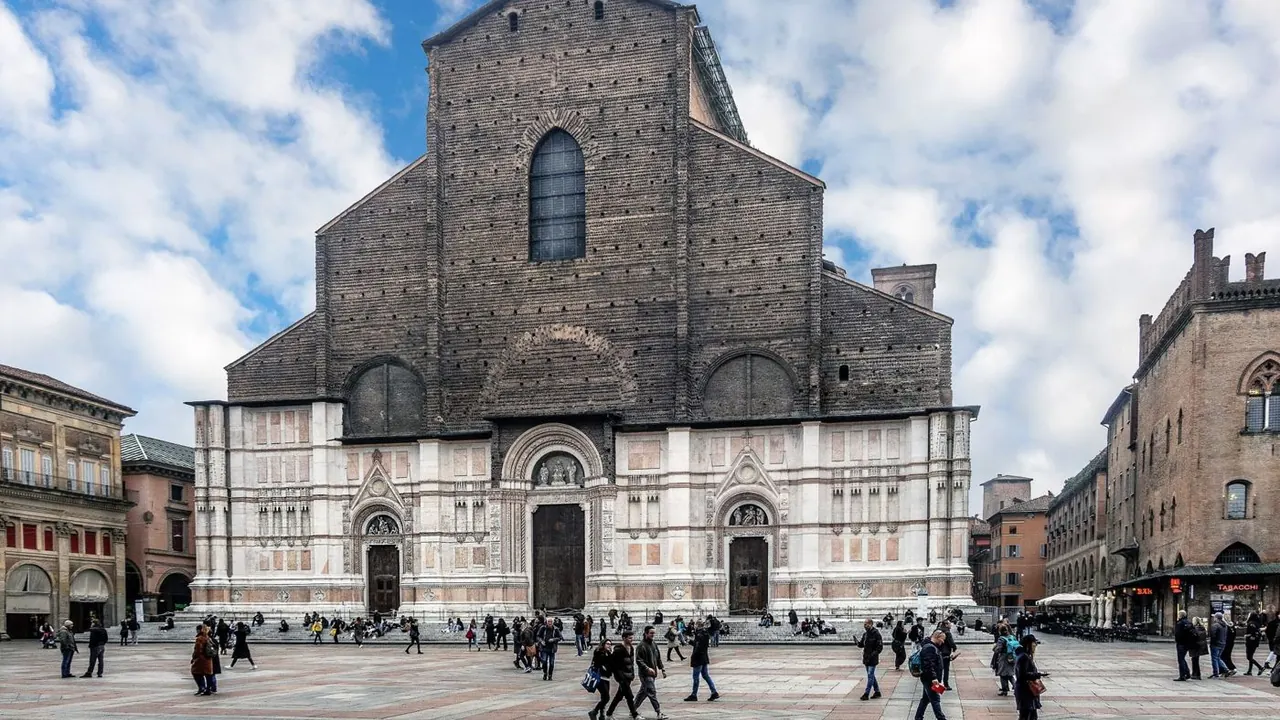
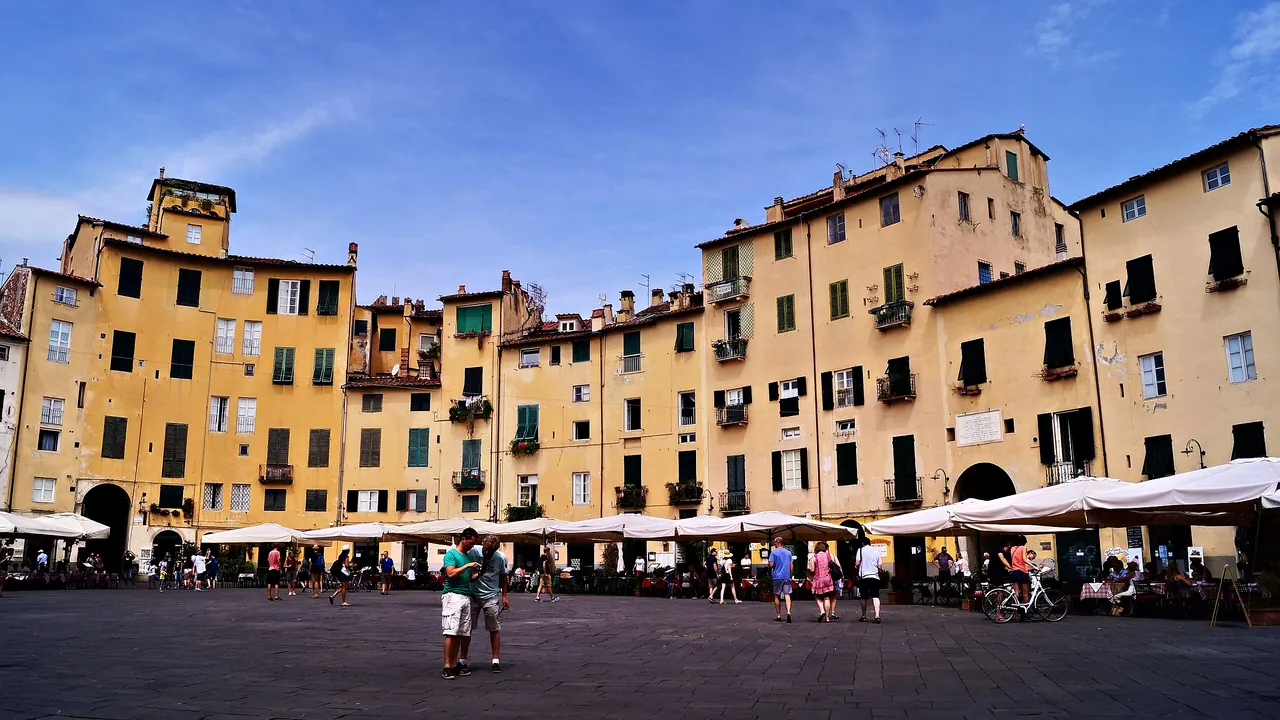
Photos: Bologna by Vanni Lazzari, CC BY-SA 4.0, cropped; Lucca by Stefano Sansavini, CC BY-SA 4.0, cropped.
Bologna or Lucca?
Our verdict in twelve categories, each scored against the same fixed benchmark cities, and the climate month by month, so you can choose for your trip.
Choose Bologna for
- nightlife
- food and drink
- shopping
Bologna is the better pick for travellers who plan their days around the table and want some life in the evenings. It has the richer kitchen, a student crowd that keeps Piazza Verdi and Via del Pratello busy late, and a larger medieval centre under its arcades. Its station also puts Florence, Ravenna and Venice within easy reach.
Choose Lucca for
- beaches
- nature and the outdoors
- wellness
If you want a gentler pace, you'll be happier in Lucca. Evenings inside its complete walls end early and quietly. The sandy Versilia beaches are close enough for an afternoon swim, and the Apuan Alps and the Garfagnana are more striking country than anything near Bologna. It suits couples and families who want art and old streets in the morning and the sea or the hills later in the day.
Scoreboard
Twelve categories on one fixed scale from 0 to 100. The shaded stretch is the gap between the two.
Your match
Pick a travel style or drag the sliders, and both match scores follow your weighting.
Wins on nightlife and food and drink with your weighting.
Wins on beaches and nature and the outdoors with your weighting.
What matters to you?
Category by category
What the scores mean for a trip.
Beaches & swimming
Neither city is on the sea, but Lucca is far better placed for it. Viareggio is about 25 minutes away by train, and from there wide sandy beaches run north to Forte dei Marmi. The free dunes and pine woods of the Lecciona suit anyone who dislikes rows of sunbeds.
From Bologna, Rimini on the Romagna Riviera is about an hour away. The shore there is a long, shallow strip of organised lidos, and the water is often greener. Both seas are about as warm in August, but from Lucca a swim takes an afternoon, while from Bologna it takes a whole day.
Food & drink
This is where Bologna is strongest. Tagliatelle al ragù, tortellini in brodo and lasagne verdi come from here. The delicatessens of the Quadrilatero and the Mercato delle Erbe make food shopping a sight in itself, and the producers of Parma and Modena are close by.
Lucca's cooking is plainer and more rustic: farro soup, tordelli, chestnut-flour dishes and slices of cecina, with a fine local olive oil. It is honest and fairly priced. Neither city offers much beyond its regional cooking, and Lucca's shorter list of dishes starts to repeat sooner.
Culture & sights
Bologna has more to see, and more of it on a grand scale. Its red-brick medieval centre is larger, threaded with close to 40km of UNESCO-listed porticoes, and it holds Piazza Maggiore with the unfinished San Petronio, the leaning Two Towers, the seven churches of Santo Stefano and the wooden anatomical theatre in the Archiginnasio. The Pinacoteca Nazionale adds a strong collection of Bolognese painting.
Lucca is smaller and more self-contained, a medieval grid held inside complete Renaissance walls. Its highlights are the carved Romanesque façades of San Michele and San Frediano, Ilaria del Carretto's tomb in the cathedral and the oval Piazza dell'Anfiteatro. Its museums are modest, and two unhurried days cover what Bologna needs two or three for.
Nightlife
Bologna is far livelier after dark. Its students fill Piazza Verdi and Via Petroni, the small taverns of Via del Pratello stay open late, and aperitivo around the Quadrilatero moves on to wine bars. In August, when the students leave, the nights go quiet.
In Lucca an evening means aperitivo, a long dinner and a walk on the walls, and the centre is calm by midnight. In summer, anyone who wants to dance has to drive or take a taxi to the Versilia beach clubs and come back late.
Nature & outdoors
Lucca has the more striking country around it. The tree-lined walls give an easy daily loop for walking or cycling. Within about an hour the Apuan Alps rise in sharp limestone and marble, and the Garfagnana woods and the reed beds of Massaciuccoli add variety.
Bologna's outdoors are gentler: the walk up to San Luca, the Colli Bolognesi and the gypsum caves of the Parco dei Gessi. The Via degli Dei crosses the Apennines to Florence over several days. North of the city the plain is flat farmland, better for cycling than for views.
Day trips
Both cities are excellent bases, and the difference is the direction they face. Bologna sits on northern Italy's main rail junction. Florence is barely half an hour away, Ferrara, Modena and Parma are short hops, Ravenna's mosaics are about an hour, and Venice, Verona and Padua are all in reach by train.
Lucca looks to Tuscany and the coast. Pisa is half an hour away and Florence a little over an hour, the villas at Marlia and Collodi are close, and Pietrasanta, Carrara and the Garfagnana villages lie to the north. Some of the countryside outings are much easier by car.
Good for families
Lucca is a little better with children. Riding a hired family quadricycle around the walls, the Pinocchio Park at Collodi and beaches under half an hour away fill the days easily. In autumn, Lucca Comics & Games delights older children and teenagers.
Bologna is flat, shaded and easy too, and climbing the Asinelli tower works for older children. For anything more, though, families rely on Mirabilandia or Rimini, both further away, and the city's summer heat is harder on small children.
Getting around
On foot there is little to choose between them. Both old centres are flat and largely closed to cars, and both stations sit at the edge of the old town, so a car only gets in the way in either.
Bologna is the bigger of the two, and its porticoes keep you out of the sun and rain. There is no metro, but buses cover the city and run up into the hills. Lucca is smaller still, and the bike is the natural way to get around, with rental shops near every gate. Its villas and hill villages are far easier to reach by car than by the sparse buses.
Shopping & style
Bologna has more to offer, though most of it is food: mortadella, aged Parmigiano and fresh tortellini from the Quadrilatero. Via dell'Indipendenza has the high-street chains, and there is a small luxury cluster around Via Farini and the Galleria Cavour.
Lucca's shopping is concentrated on Via Fillungo, with its old Liberty-style shopfronts, and on lanes selling olive oil and buccellato. Its main draw is the monthly antiques market around the cathedral, one of the oldest in Italy, but there is no luxury depth.
Affordability
The two cost much the same, and in both the expense is rooms rather than meals. Bologna's trattorias and food-laden aperitivo are good value and most sights are free, but trade fairs can make rooms scarce and costly. Lucca has few hotels inside its walls, so in summer and during festivals staying just outside them often works out better.
Live music & performing arts
Bologna has the broader scene. The Teatro Comunale stages opera, ballet and symphonic concerts, small jazz clubs play most nights, and students keep indie and rock gigs going. In summer there are outdoor concerts and films in Piazza Maggiore.
Lucca's music is built around Puccini: recitals of his arias in a central church most of the year, the Teatro del Giglio, and open-air opera by the lake at Torre del Lago in summer. The July Summer Festival brings big outdoor concerts, but beyond these the scene is small.
Wellness & relaxation
Lucca is the easier place to slow down. The quiet, traffic-free streets and an evening walk on the walls set a calm pace. Montecatini's grand old spas, the cave pools at Monsummano and the steam grottoes of Bagni di Lucca give a choice of spa days.
Bologna is relaxed for a city, but the university quarter is noisy and summers are heavy. Castel San Pietro Terme and Porretta Terme bring thermal water within reach, good for a calm half day rather than a reason to come.
When should you go?
Pick your month. The climate figures are measured averages, not a forecast.
Bologna in July
Lucca in July
Daytime high, °C
Rainfall in the month, mm
Where the figures come from
Bologna has no rain gauge within 25 km of the centre, so its rainfall comes from a gridded climate dataset read at the city rather than from a gauge further away.
Bologna's sunshine is measured 82 km from the centre, at Cervia.
Temperature and rainfall are climate normals, averaged over the years shown. Bologna: 1991-2020, 14 years observed normals, Bologna / Borgo Panigale (5.5 km from centre). Lucca: 1991-2020 normals, Pisa / S. Giusto (21.4 km from centre).
Spring and early autumn are the best times for walking in both cities, but Bologna's climate swings harder. In July and August highs reach 32°C, and the heat is humid even under the porticoes. Winters are cold and grey, around 7°C in January. Late April to early June and September are the best windows, before October and November bring more rain.
Lucca is milder in winter and a little less fierce in summer. The sea off the Versilia coast is warm enough for swimming from June to September and reaches 25°C in August. Lucca's weak season is autumn: October and November are much wetter than in Bologna, at around 130mm a month. For Lucca, late spring and early September are safer than late autumn.
Which traveller are you?
On a beach and sun trip, Lucca is the clear choice. Viareggio and the long sandy Versilia beaches are under half an hour away by train, so a swim fits after a morning in town. From Bologna, Rimini's lidos take up a whole day.
For a food and nightlife trip, Bologna wins easily. Hand-rolled tortellini, ragù and mortadella in old osterie set the standard for Italian cooking. The student quarter and Via del Pratello keep going long after Lucca's centre has fallen quiet.
On an outdoors trip, Lucca has the better landscape. The marble peaks of the Apuan Alps, the chestnut woods of the Garfagnana and the birdlife of Lake Massaciuccoli are all close. Bologna offers gentler hill walks and the long Via degli Dei.
Before you go
| Measure | Bologna | Lucca |
|---|---|---|
| Official language | Italian | Italian |
| Currency | Euro (EUR) | Euro (EUR) |
| Sockets | CFL230 V, 50 Hz | CFL230 V, 50 Hz |
| Driving side | Right | Right |
| Time zone | UTC+1, UTC+2 in summer | UTC+1, UTC+2 in summer |
| Emergency number | 112 | 112 |
| Elevation | 54 m | 19 m |
| Main airport | Bologna Guglielmo Marconi Airport (BLQ)6 km from centre98 non-stop destinations | Pisa International Airport (PSA)21 km from centre82 non-stop destinations |
| Public holidays this year | 13 days | 13 days |
By the numbers
| Measure | Bologna | Lucca |
|---|---|---|
| City population | 387,971 | 88,798 |
| People per km² | 2,754 | 478 |
| Museums within 10 km | 68 | 20 |
| UNESCO World Heritage sites within 50 km | 3 | 4 |
| Swim season, months above 21 °C | - | 4 months |
Where else could you go?
Every comparison below shares a destination with this one, so you can follow Bologna or Lucca somewhere new.