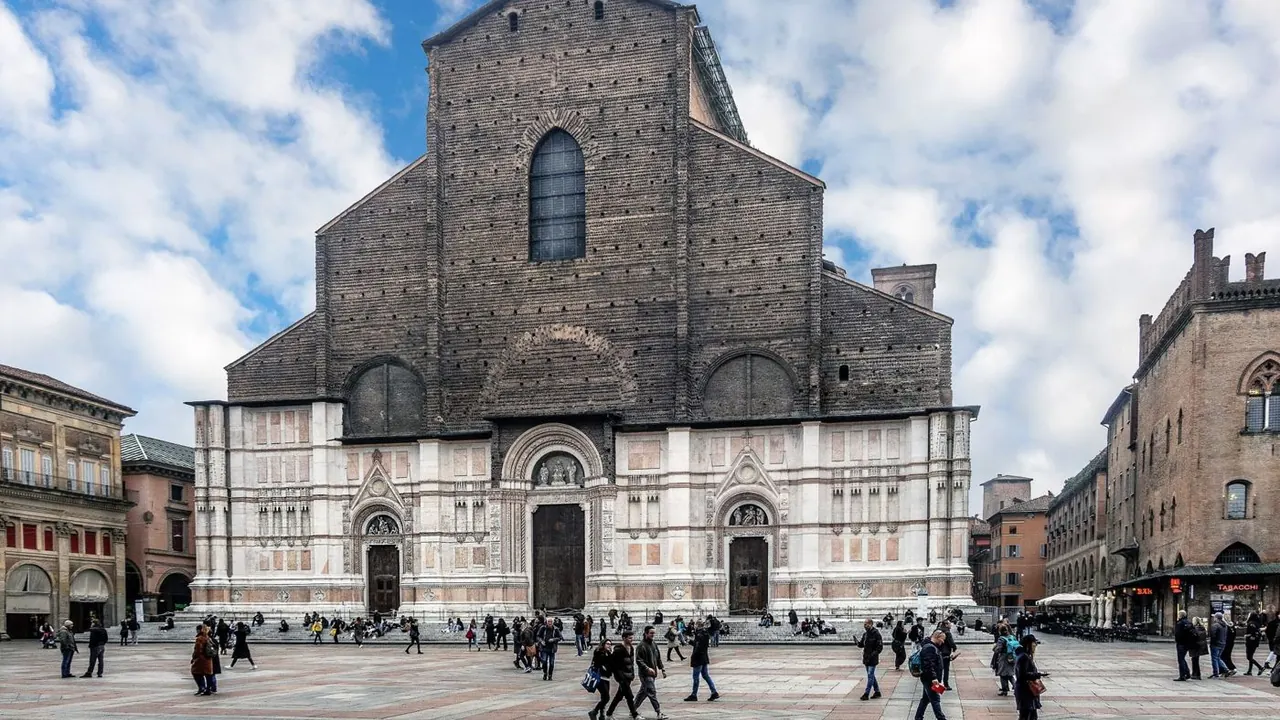
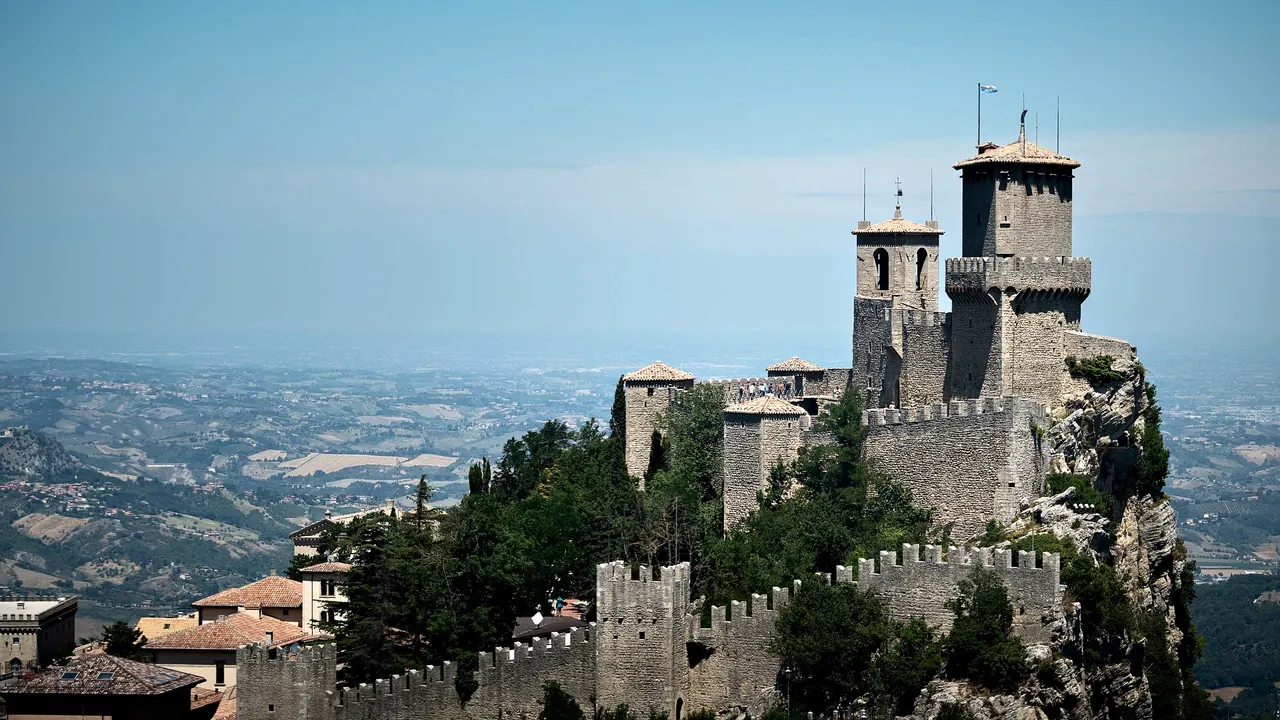
Photos: Bologna by Vanni Lazzari, CC BY-SA 4.0, cropped; San Marino by Tibor Szabo, Pexels License.
Bologna or San Marino?
Our verdict in twelve categories, each scored against the same fixed benchmark cities, and the climate month by month, so you can choose for your trip.
Choose Bologna for
- nightlife
- live music and the arts
- food and drink
Bologna is the choice for travellers who want a real city with depth: a large medieval centre under its porticoes, some of Italy's best cooking, student bars that keep going late and an opera house with a full season. It also works as a base. The station at the edge of the old town puts Florence, Ravenna, Modena and even Venice within a day by train, so a week can pass without hiring a car.
Choose San Marino for
- beaches
- prices
San Marino suits a shorter, quieter stop, or a driving trip through the hills. Its towers on the cliff edge and its long history as a republic are worth a morning, and the summit is calm once the coaches leave. The Riviera beaches are just below, and San Leo, Urbino and Gradara are all close by. Take a car, and pair the mountain with the sea and the Montefeltro rather than expecting the town itself to fill several days.
Scoreboard
Twelve categories on one fixed scale from 0 to 100. The shaded stretch is the gap between the two.
Your match
Pick a travel style or drag the sliders, and both match scores follow your weighting.
Wins on nightlife and live music and the arts with your weighting.
Wins on beaches and prices with your weighting.
What matters to you?
Category by category
What the scores mean for a trip.
Beaches & swimming
Neither is a beach destination, but San Marino is clearly closer to the sea. You can see the Adriatic from its walls, and the sand at Rimini and Riccione is about half an hour's drive down the mountain, which makes an afternoon swim easy.
From Bologna the same coast is an hour by train, so the beach takes a whole day. Either way it is the same organised Romagna shore of rented umbrellas and shallow water.
Food & drink
Food is where the two differ most, and Bologna is far ahead. It is one of the places Italy's richest cooking comes from, so a trip can be planned around meals: ragù and hand-rolled pasta in family trattorias and old osterie with paper tablecloths, food stalls in the Mercato delle Erbe, and Lambrusco or Pignoletto from the nearby hills. The producers of Parma and Modena are also within an hour. Its only weakness is range, because nearly everything is Emilian, and the cooking is heavy in summer.
San Marino has some good dishes, such as piadina, passatelli in broth and strozzapreti, but it cannot match Bologna for depth or care. Many terraces on the summit rely on day visitors and the view, so a good meal usually means going down to Borgo Maggiore or across the border into Romagna. The food there is pleasant and honest but not a reason to come, whereas in Bologna eating is often the reason for the trip.
Culture & sights
In both places the town itself is the main sight, but they differ in scale. Bologna's red-brick centre runs for kilometres of UNESCO-listed porticoes, from San Petronio and the Two Towers to the seven churches of Santo Stefano, and it has the Archiginnasio's anatomical theatre and a serious gallery of Bolognese painting. It takes several days to see well.
San Marino offers drama instead of breadth: three towers on a limestone crest, a cliff path between Guaita and Cesta, and the Palazzo Pubblico of a very old republic. It is striking, but a morning covers most of it.
Nightlife
Bologna's students give it a proper night out. There are crowds outside the bars around Piazza Verdi, taverns along Via del Pratello open late, and aperitivo turns into wine bars around Via San Vitale. Only August, when the university empties, goes quiet.
San Marino has dinner and a glass of wine on a terrace with the coast lit up below, and little more. For anything later you drive down to the Riviera clubs at Rimini and Riccione.
Nature & outdoors
Bologna has more to offer outdoors. You can walk straight from the city into the Colli Bolognesi or up to San Luca, explore the gypsum caves of the Parco dei Gessi, or set off from Piazza Maggiore on the Via degli Dei to Florence. The Apennines at Corno alle Scale add higher hiking and some winter skiing.
San Marino's Monte Titano is lower and smaller, but its cliffs and views to the sea make even a short walk feel dramatic. The Marecchia valley beyond is good for a quiet drive or bike ride rather than serious trekking.
Day trips
Both make good bases, but Bologna is in another class because of the railway. Florence is about half an hour away by fast train, Ferrara, Modena, Parma and Ravenna are short regional rides, and Venice, Verona and Padua are all within a day without a car.
San Marino's nearby sights are more rural and just as appealing: the fortress of San Leo, Renaissance Urbino, the castle at Gradara and the hill towns of Verucchio and Santarcangelo. Most of them, though, really need a car.
Good for families
These two are about even for children, in different ways. Bologna is flat and largely free of cars, with shade under the porticoes and the Asinelli tower to climb, but its summer heat is hard on small children. San Marino has battlements, cliff edges and a cable car ride, though its steep steps are tough with a pushchair.
San Marino is closer to the coast's attractions, with Fiabilandia, Italia in Miniatura and the Riccione waterparks a short drive below. From Bologna the big family day out is usually Mirabilandia near Ravenna.
Getting around
Bologna is much easier to get around. Its centre is small, flat and walkable under cover, and the main station at the edge of the old town connects you with the whole of northern Italy. Buses cover the rest, even without a metro.
San Marino's core is also walkable, but nearly every street climbs, and the cable car to Borgo Maggiore helps only so much. The bus to and from Rimini is the only regular link, so beyond the summit you need a car.
Shopping & style
In Bologna most people shop for food: aged Parmigiano, fresh tortellini and balsamic from the Quadrilatero. It also has a compact luxury quarter around Via Farini and the Galleria Cavour, the Montagnola market and bookshops in the university quarter.
San Marino's shops lean on its lower taxes, with perfume, watches and spirits, plus crossbow souvenirs and the stamps and coins that collectors look for. Apart from a large outlet centre in the valley, there is little depth.
Affordability
Overall the two cost much the same, but the money goes in different places. In Bologna eating out is the bargain and most sights are free, while rooms in the old town are expensive and very hard to find during the big trade fairs.
In San Marino hotels are moderate outside August, but you pay extra for anything on the summit with a view. Lower taxes make fuel and spirits cheaper than across the border.
Live music & performing arts
Bologna has a real musical life. The historic Teatro Comunale stages opera, ballet and symphony concerts, jazz plays most nights in basement clubs, and in summer there are concerts and film screenings in Piazza Maggiore.
San Marino has a small theatre, occasional concerts and its summer Medieval Days festival, with costumed musicians, crossbow contests and flag-throwers. For a concert season or an opera, its own visitors head to Bologna.
Wellness & relaxation
Neither has its own bathing tradition, but Bologna has thermal water within easy reach. Castel San Pietro Terme is about twenty minutes away and Porretta Terme an hour south by train, and a long lunch under the porticoes is a pleasure in itself.
San Marino has only a few hotel spas. What it offers is evening quiet: walks along the walls above the plain once the daytime crowds have gone, which is calmer than Bologna's noisy university quarter.
When should you go?
Pick your month. The climate figures are measured averages, not a forecast.
Bologna in July
San Marino in July
Daytime high, °C
Rainfall in the month, mm
Where the figures come from
Bologna has no rain gauge within 25 km of the centre, so its rainfall comes from a gridded climate dataset read at the city rather than from a gauge further away.
Bologna's sunshine is measured 82 km from the centre, at Cervia.
San Marino's temperatures are measured 52 km from the centre, at Frontone.
San Marino has no rain gauge within 25 km of the centre, so its rainfall comes from a gridded climate dataset read at the city rather than from a gauge further away.
Temperature and rainfall are climate normals, averaged over the years shown. Bologna: 1991-2020, 14 years observed normals, Bologna / Borgo Panigale (5.5 km from centre). San Marino: 1991-2020 normals, Frontone (51.5 km from centre).
Both are at their best in late spring and in September, when the streets are pleasant to walk and the hills are green. In July and August Bologna, down on the plain, gets heavy, with highs around 32°C and long, sunny days that make midday sightseeing hard work. San Marino on its ridge stays a couple of degrees cooler through the summer. The Adriatic below it reaches about 26°C in August, so July to early September is the time for days on the beach.
Rain builds from September in both places and peaks in November. San Marino is the wetter of the two, with about 105mm against Bologna's 95mm. Winters are cold and grey in both, with highs only around 7°C in January, which suits Bologna's arcaded streets and indoor museums better than an exposed mountaintop.
Which traveller are you?
On a food and nightlife trip, Bologna wins easily. You get ragù, tortellini and the delicatessens of the Quadrilatero, then aperitivo, then the student streets around Piazza Verdi and Via del Pratello. San Marino has honest regional cooking but goes silent after dark.
For a culture and arts trip, choose Bologna. Its brick centre, the Archiginnasio and the Pinacoteca fill two or three days, and the Teatro Comunale and the jazz clubs fill the evenings. San Marino's towers and Palazzo Pubblico are memorable but take only half a day.
On a beach and sun trip, San Marino is the better pick. The sands of Rimini and Riccione are about half an hour below the walls, and the mountain is a little cooler to sleep on. From Bologna the same coast is a full day out by train.
Before you go
| Measure | Bologna | San Marino |
|---|---|---|
| Official language | Italian | Italian |
| Currency | Euro (EUR) | Euro (EUR) |
| Sockets | CFL230 V, 50 Hz | CFL230 V, 50 Hz |
| Driving side | Right | Right |
| Time zone | UTC+1, UTC+2 in summer | UTC+1, UTC+2 in summer |
| Emergency number | 112 | 112 |
| Elevation | 54 m | 675 m |
| Main airport | Bologna Guglielmo Marconi Airport (BLQ)6 km from centre98 non-stop destinations | Bologna Guglielmo Marconi Airport (BLQ)114 km from centre98 non-stop destinations |
| Public holidays this year | 13 days | 18 days |
By the numbers
| Measure | Bologna | San Marino |
|---|---|---|
| City population | 387,971 | 4,040 |
| People per km² | 2,754 | 569 |
| Museums within 10 km | 68 | 19 |
| UNESCO World Heritage sites within 50 km | 3 | 2 |
| Swim season, months above 21 °C | - | 4 months |
Where else could you go?
Every comparison below shares a destination with this one, so you can follow Bologna or San Marino somewhere new.
- Florencevs Bologna
- Assisivs San Marino
- Luccavs Bologna
- Florencevs San Marino
- Veronavs Bologna
- Paduavs Bologna