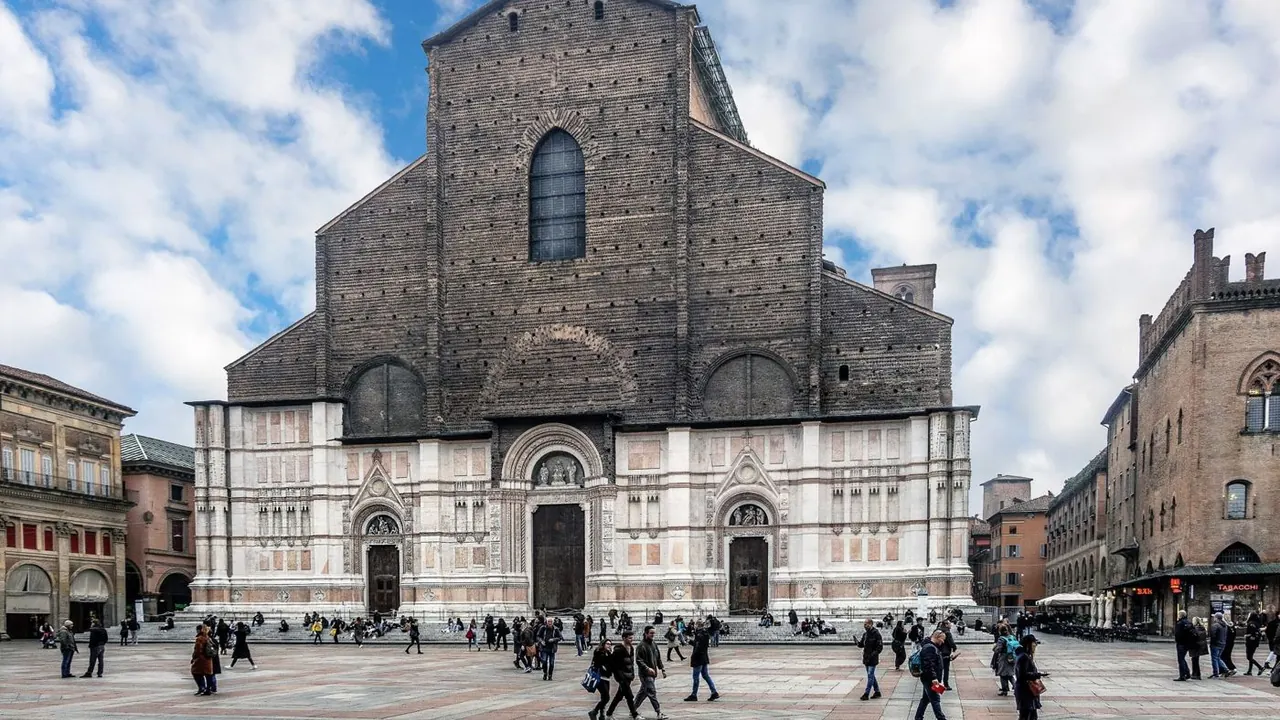
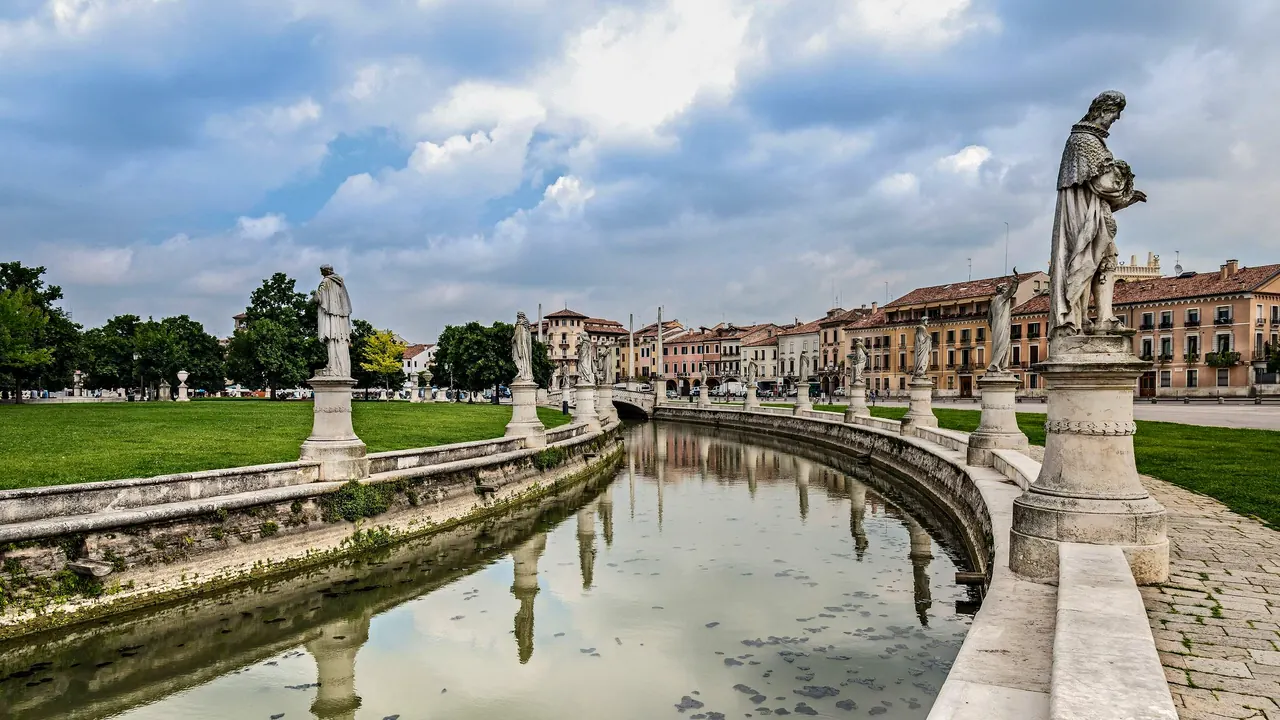
Photos: Bologna by Vanni Lazzari, CC BY-SA 4.0, cropped; Padua by Didier Descouens, CC BY-SA 4.0, cropped.
Bologna or Padua?
Our verdict in twelve categories, each scored against the same fixed benchmark cities, and the climate month by month, so you can choose for your trip.
Choose Bologna for
- live music and the arts
- food and drink
- nightlife
Bologna suits travellers who plan the day around lunch and the evening around a glass of Lambrusco. Its Emilian cooking is the stronger draw of the two, the student quarter keeps the bars full late into the night, and the opera house and jazz cellars give you more to do once you have eaten. Families and anyone who likes shopping for food also get a little more from it.
Choose Padua for
- wellness
- prices
- nature and the outdoors
Padua is the calmer and slightly cheaper base, and its real advantage is the hot springs. Abano and Montegrotto are a short ride from the centre, so a morning in front of Giotto's frescoes can end in a thermal pool. With Venice under half an hour away by train, it is the better choice for a restful stay with plenty of sightseeing close at hand.
Scoreboard
Twelve categories on one fixed scale from 0 to 100. The shaded stretch is the gap between the two.
Your match
Pick a travel style or drag the sliders, and both match scores follow your weighting.
Wins on live music and the arts and food and drink with your weighting.
Wins on wellness and prices with your weighting.
What matters to you?
Category by category
What the scores mean for a trip.
Beaches & swimming
Neither city is a beach destination, and from both you are about an hour from the same shallow, warm Adriatic lined with rented umbrellas. From Bologna, the train runs straight to the long lido strip of Rimini and the Romagna Riviera. From Padua, you go to Sottomarina or to the Lido of Venice by train and boat, and the Lido can easily be combined with a day in Venice.
Food & drink
Bologna is the stronger food city, and plenty of visitors come for the cooking alone. Tagliatelle al ragù, tortellini in brodo and mortadella were born here, the lanes of the Quadrilatero are lined with delicatessens, and the towns that make Parmigiano, Parma ham and aged balsamic vinegar are all less than an hour away.
Padua eats well in a plainer Venetian style: bigoli with duck sauce, baccalà and risotto with spring peas, with the ingredients sold every morning in Piazza delle Erbe and Piazza della Frutta. The early-evening spritz, drunk standing in the squares with small bites, is as much a part of eating here as anything on the plate. Neither city offers much beyond its own regional cooking.
Culture & sights
The two are evenly matched, but they reward different kinds of sightseeing. In Bologna the main sight is the city itself: miles of brick porticoes, the Two Towers, San Petronio and the seven churches of Santo Stefano. It takes two or three days of walking to see properly.
Padua's sights are fewer but more concentrated, with Giotto's Scrovegni Chapel among the great works of European painting, the UNESCO-listed fresco cycles and Donatello's bronzes at Saint Anthony. You need to book the timed chapel visit in advance. Both have old university anatomical theatres, but only Padua has the historic botanical garden.
Nightlife
Bologna offers the longer and livelier night out. Its large student population fills Piazza Verdi and Via Petroni, Via del Pratello's taverns stay open late, and the evening moves from aperitivo to wine bars with little effort.
In Padua the evening is mostly the early spritz hour, when crowds stand in Piazza delle Erbe and Piazza dei Signori, followed by a few pubs around the old ghetto. Both cities send clubbers to the outskirts and both go quiet in high summer, but Padua winds down sooner.
Nature & outdoors
Hills against plain is the real difference here, though neither has much of an advantage over the other. Bologna's green Apennine foothills start where the city ends: you can walk from the centre up to San Luca, explore the gypsum caves of the Gessi park, or set off from Piazza Maggiore on the Via degli Dei to Florence. Further south, Corno alle Scale has summer hiking and modest skiing.
Padua is surrounded by flat farmland, so you have to travel a little to get outdoors. The volcanic Euganean Hills, about 15km away, have vineyards, chestnut woods and quiet roads for cyclists. Closer in, the Brenta towpaths make easy, level rides, the lagoon is good for birdwatching, and for proper mountain walking you can drive to the pre-Alps.
Day trips
Both are outstanding bases with fast rail links, and the real difference is which way they point. Bologna looks south and along the Via Emilia, with Florence barely half an hour away and Ravenna's mosaics, Ferrara, Modena and Parma all close by.
Padua looks towards the Veneto, with Venice under half an hour away, Vicenza's Palladian buildings in a quarter of an hour, and Verona and Treviso easily reached, as well as the Brenta villas. The two cities are about an hour apart by train, so either one can cover the other's region on a single long day.
Good for families
Neither city is built around children, but Bologna gives them a little more. Climbing the Asinelli tower and walking the long arcade up to San Luca feel like small adventures, the porticoes keep everyone in the shade, and Mirabilandia and the Rimini beaches are an easy addition.
Padua is safe and largely pedestrianised. Children can run around the huge oval of Prato della Valle, and older ones may enjoy the botanical glasshouses, but most of the sights are frescoes, so families usually head out to Gardaland and the shores of Lake Garda.
Getting around
The two are equally easy. Each has a small, flat, arcaded centre that is best explored on foot, and a main-line station that does most of the work. The difference is small: Padua has a tram running from the station to the centre and Prato della Valle, while Bologna relies on buses, though its station is right at the edge of the old town and its long porticoes shelter almost every street.
Shopping & style
Bologna offers more to buy. Its Quadrilatero delicatessens are the best place in either city for edible souvenirs, Via Farini and the Galleria Cavour gather the luxury fashion houses, and there are flea and antiques markets at the Montagnola and in Piazza Santo Stefano.
Padua's shopping is quieter: Italian shoe and fashion shops along the arcades, bookshops for the university, the market squares for cheese and Euganean wine, and an antiques fair in Prato della Valle once a month. Anyone serious about fashion goes on to Venice or Milan.
Affordability
Padua is a little easier on the budget, mainly because its hotels are fairly priced for a region where Venice is expensive. That is why many visitors sleep there and spend their days elsewhere by train.
Bologna makes up for some of this at the table and at the sights: its trattoria meals and aperitivo with food included are good value, and most of its churches are free, while the Scrovegni Chapel charges an entry fee. Rooms in Bologna's old town cost more, though, and in both cities prices rise when the big trade fairs are on.
Live music & performing arts
Bologna is the better place for an evening of music. The Teatro Comunale is a historic opera house with a full season, the city has UNESCO's City of Music title, and small jazz cellars and student indie venues have something on most nights.
Padua has a smaller programme: some opera and drama at Teatro Verdi, and chamber concerts in the frescoed Sala dei Giganti and the Basilica of Saint Anthony. For major opera, visitors from Padua travel to the Fenice in Venice or to the summer Arena in Verona.
Wellness & relaxation
This is Padua's clearest advantage. Abano and Montegrotto Terme, about 12km away, are among Europe's largest thermal resorts, with spring water as hot as 87°C, mud treatments dating back to Roman times and spa hotels that take day visitors, so you can fit in a soak between sights.
Bologna has no real spa culture. Its options are hotel spas, the spring-fed pools at Castel San Pietro and the old Apennine spa town of Porretta, which are fine for a half day but no reason to choose it.
When should you go?
Pick your month. The climate figures are measured averages, not a forecast.
Bologna in July
Padua in July
Daytime high, °C
Rainfall in the month, mm
Where the figures come from
Bologna has no rain gauge within 25 km of the centre, so its rainfall comes from a gridded climate dataset read at the city rather than from a gauge further away.
Bologna's sunshine is measured 82 km from the centre, at Cervia.
Padua's temperatures are measured 35 km from the centre, at Treviso / Istrana.
Padua has no rain gauge within 25 km of the centre, so its rainfall comes from a gridded climate dataset read at the city rather than from a gauge further away.
Padua's sunshine is measured 36 km from the centre, at Treviso / S. Angelo.
Temperature and rainfall are climate normals, averaged over the years shown. Bologna: 1991-2020, 14 years observed normals, Bologna / Borgo Panigale (5.5 km from centre). Padua: 1991-2020 normals, Treviso / Istrana (35.4 km from centre).
The two cities share the same inland climate, and spring and autumn are the best seasons in both. May and late September are warm enough to sit outside in the evening without the heavy summer heat. July and August are hard work for long walks, with Bologna slightly hotter at about 32°C and very sunny, while Padua is a degree cooler but noticeably wetter, with around 78mm in August against Bologna's 47mm. For a beach day from Padua, the Adriatic is warmest at about 26°C in August and is pleasant from late June to September.
Autumn turns wet in both cities, and November is the rainiest month at around 95mm. Winters are cold and grey in both, with highs in single figures. Padua gets a little more winter sunshine, but fog often settles over its plain.
Which traveller are you?
On a food and nightlife trip, Bologna is the clear choice. You get hand-rolled tortellini and ragù in old osterie, deli counters in the Quadrilatero, and then the student bars of Piazza Verdi and Via del Pratello, which are still busy long after Padua's squares have emptied.
For a relaxing and wellness trip, Padua wins easily. Abano and Montegrotto Terme, two of Europe's largest thermal towns, are about 12km away with day access to hot mineral pools and mud treatments. The city itself moves at a gentle provincial pace.
On a family trip with children, Bologna has a slight edge. Shaded porticoes, a climb up the Asinelli tower and the arcaded walk to San Luca give children small adventures in town, and Mirabilandia and the Rimini beaches are within easy reach.
Before you go
| Measure | Bologna | Padua |
|---|---|---|
| Official language | Italian | Italian |
| Currency | Euro (EUR) | Euro (EUR) |
| Sockets | CFL230 V, 50 Hz | CFL230 V, 50 Hz |
| Driving side | Right | Right |
| Time zone | UTC+1, UTC+2 in summer | UTC+1, UTC+2 in summer |
| Emergency number | 112 | 112 |
| Elevation | 54 m | 12 m |
| Main airport | Bologna Guglielmo Marconi Airport (BLQ)6 km from centre98 non-stop destinations | Venice Marco Polo Airport (VCE)39 km from centre103 non-stop destinations |
| Public holidays this year | 13 days | 13 days |
By the numbers
| Measure | Bologna | Padua |
|---|---|---|
| City population | 387,971 | 206,496 |
| People per km² | 2,754 | 2,220 |
| Museums within 10 km | 68 | 29 |
| UNESCO World Heritage sites within 50 km | 3 | 5 |
| Swim season, months above 21 °C | - | 4 months |
Where else could you go?
Every comparison below shares a destination with this one, so you can follow Bologna or Padua somewhere new.