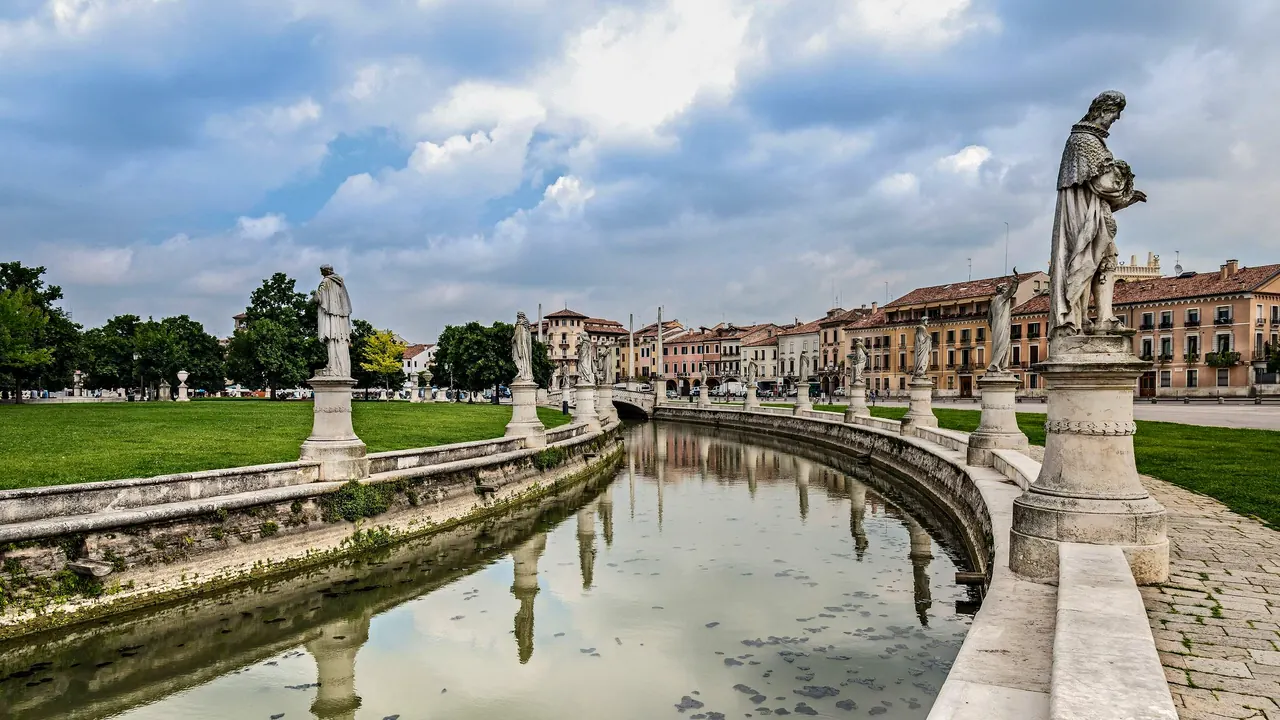
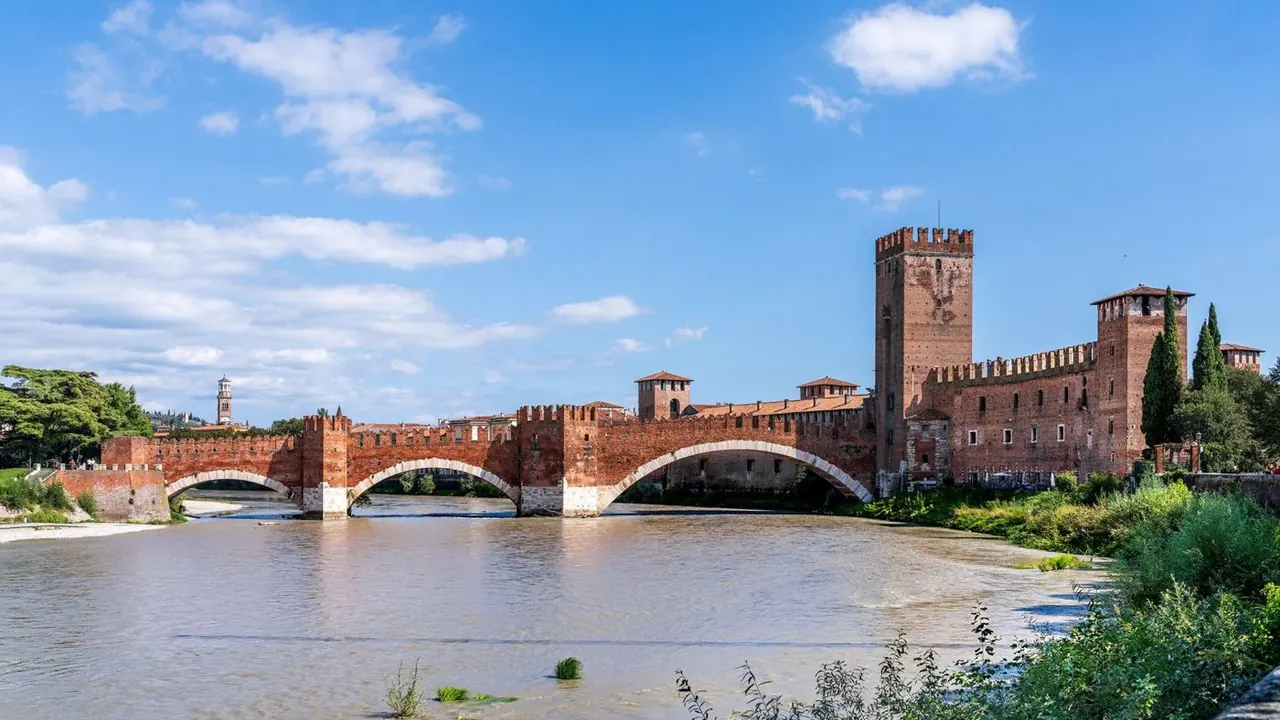
Photos: Padua by Didier Descouens, CC BY-SA 4.0, cropped; Verona by NorbertNagel, CC BY-SA 4.0, cropped.
Padua or Verona?
Our verdict in twelve categories, each scored against the same fixed benchmark cities, and the climate month by month, so you can choose for your trip.
Choose Padua for
- wellness
- nightlife
- getting around
Padua suits travellers who want a well-connected, reasonably priced base for the Veneto. Giotto's frescoes are a short walk from the station, Venice is close enough to visit on several days, and the thermal pools of Abano are a bus ride away for a soak after sightseeing. It is a good fit if you like doing everything on foot or by train and spending evenings over a spritz among students in the old squares.
Choose Verona for
- live music and the arts
- families
- beaches
Choose Verona for a summer trip built around opera in the Roman Arena, swimming in Lake Garda and the Valpolicella wine hills. It is also the better choice with children, since Gardaland and a safari zoo are close by, and for walkers who want Monte Baldo and the Lessinia within reach. Expect to pay more for a room inside the river loop.
Scoreboard
Twelve categories on one fixed scale from 0 to 100. The shaded stretch is the gap between the two.
Your match
Pick a travel style or drag the sliders, and both match scores follow your weighting.
Wins on wellness and nightlife with your weighting.
Wins on live music and the arts and families with your weighting.
What matters to you?
Category by category
What the scores mean for a trip.
Beaches & swimming
Neither city has a coast, but Verona's swimming is closer and more attractive. Lake Garda's southern shore is about half an hour away, with grassy lidos, small pebble coves and Sirmione's limestone shelves running into clear, calm water. From Padua the nearest swimming is the Adriatic at Sottomarina or the Lido of Venice, about an hour away, on long, flat beaches lined with umbrellas that suit paddling toddlers more than anyone looking for scenery.
Food & drink
The two cities share a kitchen, with bigoli in duck or sardine sauce on menus in both, but each has its own centre of gravity. Padua's lies in its twin morning markets beneath the Palazzo della Ragione, the standing spritz in the squares and the grand old Caffè Pedrocchi, with sweet Fior d'Arancio from the Euganean Hills to finish.
Verona's strength is its wine. Amarone, Valpolicella and Soave are made within a short drive and turn up in the risotto as well as the glass. Its osterie serve bollito with peppery pearà and horse stewed in red wine, although the cooking around the Arena is best avoided.
Culture & sights
Both are first-rate, but in different ways. Padua's riches are mostly indoors and painted: Giotto's Scrovegni Chapel with its timed visits, the UNESCO-listed group of fourteenth-century fresco cycles, the pilgrim Basilica of Saint Anthony with Donatello's bronzes, and scientific landmarks such as the anatomical theatre of the Bo and the 1545 botanical garden.
In Verona the city itself is the exhibit. Roman, medieval and Renaissance layers sit inside the loop of the Adige, from the Arena and the hillside Roman theatre to the Scaliger tombs, Romanesque San Zeno and Scarpa's Castelvecchio museum. Both cities can be covered in a few unhurried days.
Nightlife
Padua has a little more going on after dark, thanks to its large university. During term, students pack Piazza delle Erbe and Piazza dei Signori over spritz until late, even on weekday nights, and small bars fill the old ghetto, although the city empties in high summer.
Verona's evenings thin out earlier. Veronetta's younger wine bars are the exception, and so are summer nights, when the opera crowd leaving the Arena near midnight briefly fills the centre again. In both cities clubs are few and sit on the outskirts.
Nature & outdoors
Verona sits where the plain meets the Alpine foothills, and that shows. The Valpolicella vineyards are just north of town, the Lessinia plateau has gorges and beech woods for hiking, and Monte Baldo above Lake Garda offers ridge walks, paragliding and, further north, reliable wind for sailing.
Padua is flat, so its outdoors starts at the Euganean Hills, volcanic cones about 15km away with trails, chestnut woods and quiet roads for cyclists. It also has level towpaths along the Brenta and lagoon birdwatching, but real mountain walking is about an hour and a half's drive away.
Day trips
Both are outstanding bases and are under an hour apart by train, so the difference is which way each one faces. From Padua, Venice is under half an hour away, close enough to visit again and again, and Bologna, Ferrara, the Brenta villas and the walled towns around the Euganean Hills are all easy.
Verona looks west and north instead, with Sirmione and the Garda harbours, Gonzaga Mantua, Milan and the Valpolicella and Soave cellars on hand. Venice takes more than an hour from Verona.
Good for families
Verona is much the easier choice with children. Gardaland, the safari section at Parco Natura Viva and the water parks along Garda's southern shore are all about half an hour away, and the Arena and Roman theatre bring history to life for young visitors.
Padua is flat, safe and welcoming, and Prato della Valle and the botanical glasshouses fill an afternoon. Beyond that, its frescoes and churches are aimed at adults, and Gardaland is well over an hour away.
Getting around
Both centres are flat, compact and largely free of traffic, but Padua is a little easier. A tram runs from the station through the centre to Prato della Valle, the arcades give shelter from rain and sun, and the city's rail junction makes car-free day trips in every direction simple.
Verona has no tram, its station is about twenty minutes' walk from Piazza Bra, and the Valpolicella villages and the Lessinia are much easier to reach with a car.
Shopping & style
Verona has the slight edge, mainly thanks to Via Mazzini, a marble-paved street of Italian fashion labels between Piazza Bra and Piazza delle Erbe, with jewellers and boutiques on the side streets. It is also the place to buy Amarone, Garda olive oil and pandoro.
Padua's shopping is more everyday: arcaded fashion and shoe shops, university bookshops, delicatessens under the Palazzo della Ragione and a large monthly antiques market in Prato della Valle. In both cities, serious fashion shoppers head to Milan or Venice.
Affordability
Padua is the cheaper place to stay, and that is why so many visitors sleep there and spend their days in Venice or Verona. Its hotels are moderately priced, and standing aperitivi and market food cost little.
Verona's eating is fair, especially in Veronetta, but rooms inside the historic centre are expensive for a provincial city and become scarce on summer opera nights. Staying near the station or across the river softens the bill.
Live music & performing arts
Verona is well ahead, mainly because of the summer opera in the Roman Arena. On most evenings from June to early September, grand productions of Verdi and Puccini play to thousands of people seated on the stone tiers. The Roman theatre adds Shakespeare, dance and jazz outdoors, and the Teatro Filarmonico carries on through the cooler months.
Padua's programme is smaller but genuine, with prose theatre at the Teatro Verdi and chamber concerts in the frescoed Sala dei Giganti and the Basilica of Saint Anthony. For grand opera, people in Padua travel to the Arena or to the Fenice in Venice.
Wellness & relaxation
Padua has the stronger hand. Abano and Montegrotto, about 12km away, form one of Europe's largest thermal districts, with very hot mineral water, mud treatments used since Roman times and dozens of spa pools open to day visitors.
Verona's springs are fewer and further out: Sirmione's lakeside thermal centre, the spring-fed thermal park near Lazise and the old springs at Caldiero. Within town, both cities rely on the same slow rhythm of long lunches and quiet gardens.
When should you go?
Pick your month. The climate figures are measured averages, not a forecast.
Padua in July
Verona in July
Daytime high, °C
Rainfall in the month, mm
Where the figures come from
Padua's temperatures are measured 35 km from the centre, at Treviso / Istrana.
Padua has no rain gauge within 25 km of the centre, so its rainfall comes from a gridded climate dataset read at the city rather than from a gauge further away.
Padua's sunshine is measured 36 km from the centre, at Treviso / S. Angelo.
Temperature and rainfall are climate normals, averaged over the years shown. Padua: 1991-2020 normals, Treviso / Istrana (35.4 km from centre). Verona: 1991-2020 normals, Verona / Villafranca (11.6 km from centre).
Padua and Verona have almost the same climate. May and September are the most comfortable months for walking the streets, warm without the weight of midsummer. July and August reach about 31°C in Padua and barely less in Verona, hot and humid enough to push sightseeing into the mornings and evenings. Winters are cold and often grey in both cities, with daytime highs of 10°C or less from December to February.
The differences come in rain and water. Padua's wettest months are in late autumn, peaking at around 97mm in November, while Verona is drier from January to March and wettest in September. For swimming, the Adriatic within reach of Padua is warm from June to September and touches 26°C in August. Verona gets slightly more sunshine through spring and summer, which suits long evenings out of doors.
Which traveller are you?
On a tight budget, Padua stretches the money further. Keep the room cheap and spend the savings on train tickets, using the station as a hub for Vicenza, Verona and Bologna, and shop the morning markets for picnic lunches. In Verona, beds eat into the budget.
For a relaxing and wellness trip, Padua is the better pick. Stay in a spa hotel below the Euganean Hills, spend the days in thermal water and mud treatments, and go into town only for a fresco and a long lunch. Verona has less to offer here.
On a family trip with children, Verona makes the days easier. From Padua, every outing for the children means a long transfer. From Verona, a morning at a theme park or by the lake still leaves time for a nap, and a hire car covers the rest.
Before you go
| Measure | Padua | Verona |
|---|---|---|
| Official language | Italian | Italian |
| Currency | Euro (EUR) | Euro (EUR) |
| Sockets | CFL230 V, 50 Hz | CFL230 V, 50 Hz |
| Driving side | Right | Right |
| Time zone | UTC+1, UTC+2 in summer | UTC+1, UTC+2 in summer |
| Emergency number | 112 | 112 |
| Elevation | 12 m | 59 m |
| Main airport | Venice Marco Polo Airport (VCE)39 km from centre103 non-stop destinations | Verona Villafranca Valerio Catullo Airport (VRN)10 km from centre96 non-stop destinations |
| Public holidays this year | 13 days | 13 days |
By the numbers
| Measure | Padua | Verona |
|---|---|---|
| City population | 206,496 | 255,588 |
| People per km² | 2,220 | 1,285 |
| Museums within 10 km | 29 | 18 |
| UNESCO World Heritage sites within 50 km | 5 | 5 |
| Swim season, months above 21 °C | 4 months | - |
Where else could you go?
Every comparison below shares a destination with this one, so you can follow Padua or Verona somewhere new.
- Venicevs Padua
- Venicevs Verona
- Bergamovs Verona
- Bolognavs Verona
- Bolognavs Padua
- Cortina d'Ampezzovs Padua