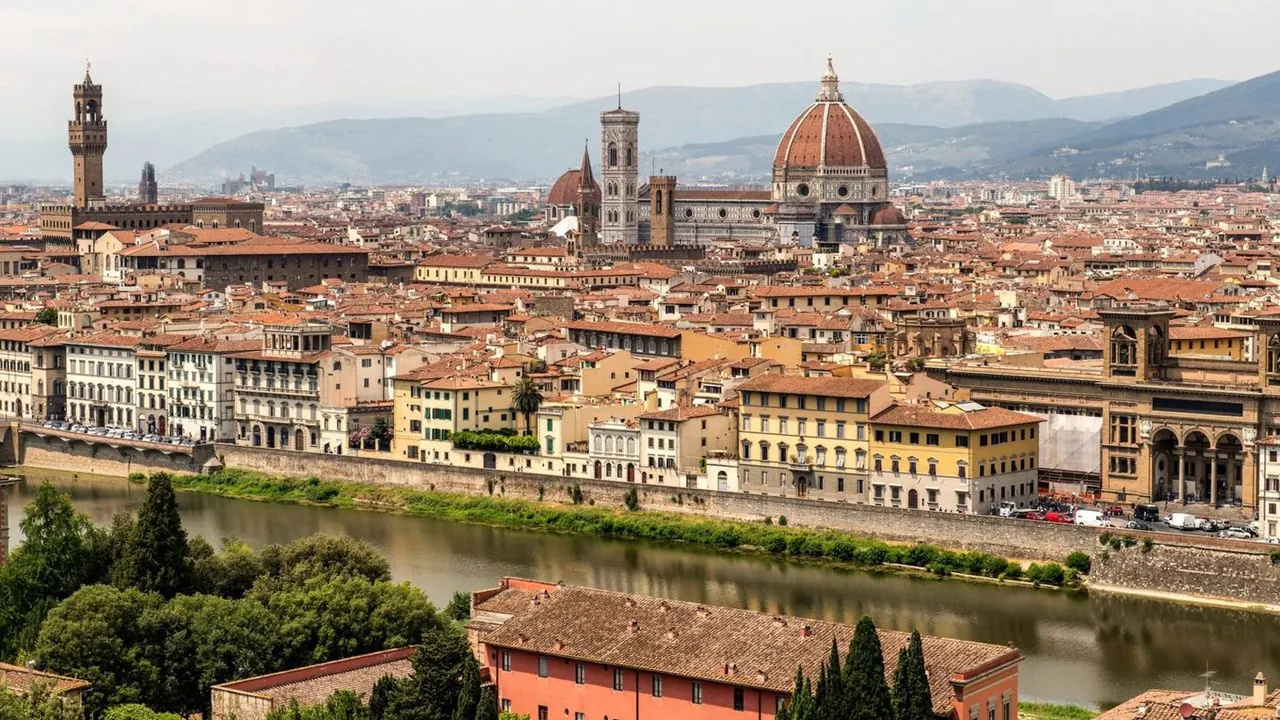
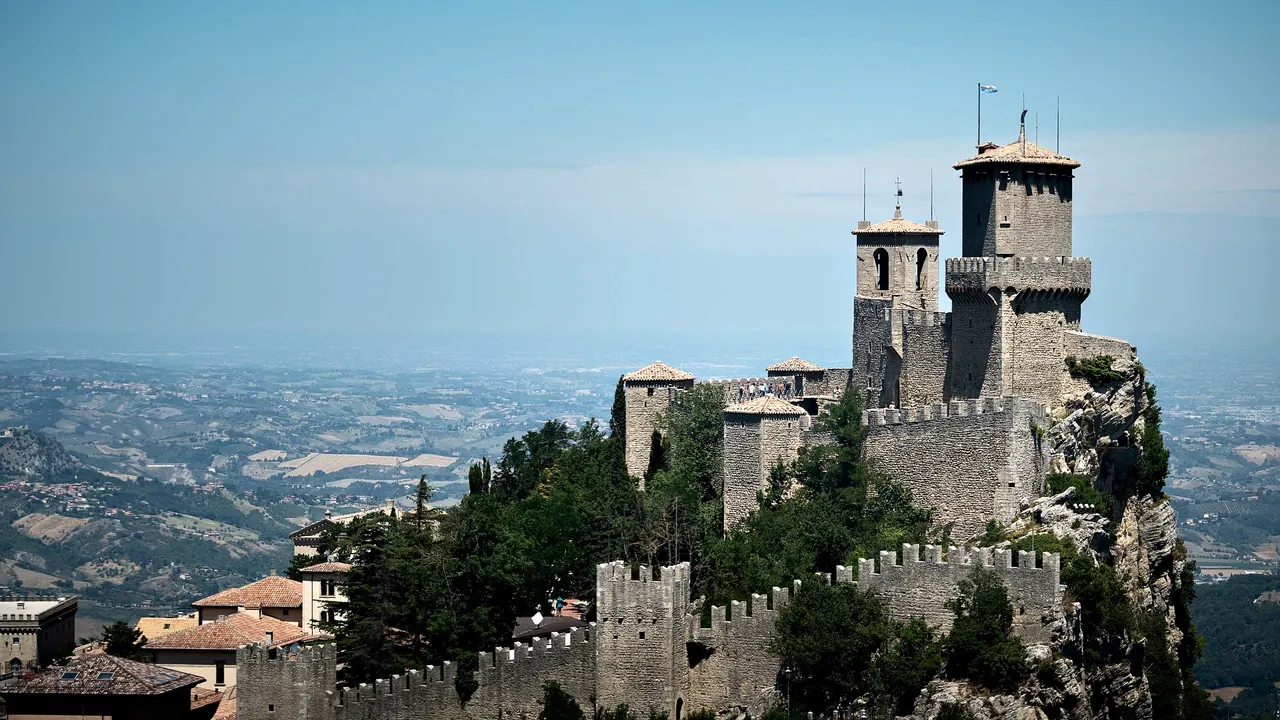
Photos: Florence by Wolfgang Weiser, Pexels License; San Marino by Tibor Szabo, Pexels License.
Florence or San Marino?
Our verdict in twelve categories, each scored against the same fixed benchmark cities, and the climate month by month, so you can choose for your trip.
Choose Florence for
- culture and sights
- live music and the arts
- shopping
Florence is the trip for anyone who travels for art, food and history in depth. The Uffizi, the Accademia and the Bargello, a trattoria table in the Oltrarno and a train to Siena or Lucca can easily fill a week. It also suits travellers without a car, since the centre is walkable and the rail station sits right in the middle. You will pay more for the room, and the Tuscan sea is a long day out.
Choose San Marino for
- beaches
- prices
- families
San Marino is better as a short, quiet stop than as the centre of a whole trip. Its walled ridge-top town and three towers take half a day, and it works best paired with the Adriatic beaches half an hour below and a hire car for San Leo and Urbino. Hotels cost less than in Florence, evenings on the walls are calm, and there is very little else to do after dark.
Scoreboard
Twelve categories on one fixed scale from 0 to 100. The shaded stretch is the gap between the two.
Your match
Pick a travel style or drag the sliders, and both match scores follow your weighting.
Wins on culture and sights and live music and the arts with your weighting.
Wins on beaches and prices with your weighting.
What matters to you?
Category by category
What the scores mean for a trip.
Beaches & swimming
Neither city has a beach of its own, but San Marino is much closer to one. The Rimini and Riccione sands are about half an hour away by car, so a morning on the towers and an afternoon in the shallow Adriatic fits into one day.
From Florence, the Versilia coast around Viareggio is roughly an hour and a half by train. That makes the sea a full day out rather than an afternoon swim, and on hot days most visitors make do with a pool. Both coasts are the same kind of beach, with rows of rented umbrellas and loungers.
Food & drink
Florence is a city you come to for the food. You eat bistecca alla fiorentina and bread soups like ribollita, lampredotto from street carts, and you shop the Mercato Centrale and Sant'Ambrogio markets, with Chianti vineyards just south of town. The tourist menus near the Duomo are easy to sidestep in the Oltrarno.
San Marino's cooking is honest Romagna fare, with piadina, passatelli in broth and the Tre Monti wafer cake. The summit terraces sell the view more than the meal, though, so the better eating is down in Borgo Maggiore or across the border.
Culture & sights
Florence holds one of the world's great concentrations of art: Brunelleschi's dome, Botticelli at the Uffizi, Michelangelo's David and room after room of the Pitti Palace. You can spend a week there and still leave things unseen.
In San Marino the sight is the setting itself, a medieval town strung along a cliff edge, with towers you can link on foot. Its real interest is political rather than artistic: the Palazzo Pubblico and the ceremony of the Captains Regent belong to one of the oldest surviving republics. Half a day covers it well.
Nightlife
Florence's evenings are modest for a city of its fame, but they are a real night out. Aperitivo leads to wine bars, drinkers spill across Piazza Santo Spirito, and in summer bars open along the Arno, even if the clubs are few.
San Marino's summit goes quiet once the coaches leave, leaving dinner and a glass of wine above the lights of the coast. If you want to go out late, you have to drive down to the Riviera clubs at Rimini and Riccione.
Nature & outdoors
Both offer gentle, lived-in landscape rather than wilderness, but Florence has more of it within reach. A bus takes you up to Fiesole's olive terraces, the Chianti lanes are made for cycling, and the beech and fir forests of the Casentino lie further out.
San Marino's appeal is the limestone ridge of Monte Titano itself. Cliff paths run between the towers, woods drop to Borgo Maggiore, and views stretch to the Adriatic. Add some quiet Montefeltro roads and you have good scenery for a morning, not for days on the trail.
Day trips
Florence is one of the best bases in Italy for day trips. Siena, Pisa and Lucca are easy by train or bus, Bologna is under forty minutes by fast train, and San Gimignano and the Val d'Orcia towns lie further out.
San Marino has a strong list of its own: the rock fortress of San Leo, ducal Urbino, Ravenna's mosaics and the castle at Gradara. The difference is access. Apart from the bus to Rimini, almost everything needs a car, while from Florence much of it is a train ride from the central station.
Good for families
The two are much alike for families, but they work in different ways. Florence gives children things to do inside the adult sights: climbing the dome, secret passages in the Palazzo Vecchio, the globes at the Museo Galileo and space to run in the Boboli Gardens, with the Pinocchio park at Collodi as an outing. Summer heat and crowds are the drawback.
San Marino's battlements, cliff edges and cable car are an adventure in themselves. The real family attractions, though, are on the coast below, with Italia in Miniatura, Fiabilandia, waterparks and shallow beaches. A car makes it easy to mix mountain mornings with afternoons by the sea.
Getting around
Florence is easy to get around. The major sights are within about twenty minutes' walk of each other on level ground, and trams and small buses fill the gaps. Santa Maria Novella station sits in the centre for rail day trips.
San Marino's old town is small but steep and full of steps, which wears on legs and pushchairs. The cable car to Borgo Maggiore helps, but the bus from Rimini is the only real link without a car. Buses between the villages are infrequent.
Shopping & style
Florence offers shopping with real craft behind it. There are leather workshops and the San Lorenzo stalls, marbled paper, goldsmiths on the Ponte Vecchio, gilders and restorers in the Oltrarno, and the fashion houses along Via de' Tornabuoni.
San Marino sells mostly souvenirs and duty-advantaged goods. Ceramics and decorative crossbows sit alongside perfume, watches and spirits that are cheaper than in Italy, plus an outlet centre in the valley. Stamp and coin collectors find something special here, but few others will shop seriously.
Affordability
San Marino is the gentler place to spend money. Hotels are moderate outside August, trattorias in the lower villages are fairly priced, and the towers and museums cost little. Just avoid the premium for staying or dining right on the summit.
Florence charges for its fame. Central hotel rooms are expensive from spring to autumn, and the museum and dome tickets add up over a few days. Street-stall lampredotto, market lunches, cheap house wine and a city you can walk soften the bill.
Live music & performing arts
Florence, where opera took shape around 1600, still has a proper season. The Teatro del Maggio Musicale stages opera, concerts and ballet, its spring festival is among Europe's oldest, and the eighteenth-century Pergola puts on theatre, mostly in Italian.
San Marino has a small theatre and occasional local concerts. Its one memorable event is the summer Medieval Days festival, with costumed musicians, crossbow contests and flag-throwers. For a real concert, people head to Bologna or Pesaro.
Wellness & relaxation
Neither city has a bathing culture of its own, but Florence has better options close by. Montecatini Terme's grand thermal halls are under an hour by train, and the outdoor sulphur pools of Bagno Vignoni and Saturnia make a longer outing. The Boboli and Bardini gardens offer calm in the morning.
San Marino has only a few hotel spas, and its thermal options are separate trips to the coast or the Apennine valleys. What it offers instead is the evening hush on the walls after the day crowds leave.
When should you go?
Pick your month. The climate figures are measured averages, not a forecast.
Florence in July
San Marino in July
Daytime high, °C
Rainfall in the month, mm
Where the figures come from
Florence has no rain gauge within 25 km of the centre, so its rainfall comes from a gridded climate dataset read at the city rather than from a gauge further away.
Florence's sunshine is measured 71 km from the centre, at Pisa / S. Giusto.
San Marino's temperatures are measured 52 km from the centre, at Frontone.
San Marino has no rain gauge within 25 km of the centre, so its rainfall comes from a gridded climate dataset read at the city rather than from a gauge further away.
Temperature and rainfall are climate normals, averaged over the years shown. Florence: 1995-2020 (sunshine 1991-2020, rainfall 1991-2020) normals, Firenze / Peretola (5.6 km from centre). San Marino: 1991-2020 normals, Frontone (51.5 km from centre).
Florence is at its best in spring and early autumn, when days are warm enough for long walks and the sun is generous from May. July and August are hot, with highs around 33°C in the stone streets and more than 300 hours of sunshine, which makes afternoons hard going. The rain arrives in autumn, and November is the wettest month at about 124mm. Winters are mild but grey.
San Marino runs a few degrees cooler all year because it sits on its mountain, so summer on the summit is more comfortable for sightseeing than Florence, and winter is noticeably colder, with January highs around 7°C. The beach season on the coast below runs from July to early September, when the Adriatic warms to about 25°C. Like Florence, it gets its heaviest rain from September to November.
Which traveller are you?
On a culture and arts trip, Florence wins easily. The Renaissance collections, the frescoes at San Marco and the Brancacci Chapel, and an opera season at the Maggio Musicale give you days of depth, while San Marino's towers and Palazzo Pubblico take a single afternoon.
For a beach and sun trip, San Marino is the better base. The sandy Romagna shore at Rimini and Riccione is half an hour down the mountain, with warm, shallow water in high summer, whereas Florence's nearest beaches on the Versilia take a full day there and back.
On a trip with a tight budget, San Marino goes further. Its hotels are moderate outside August and its sights are inexpensive. Florence has cheap street food and costs almost nothing to get around, but central rooms and museum tickets soon add up.
Before you go
| Measure | Florence | San Marino |
|---|---|---|
| Official language | Italian | Italian |
| Currency | Euro (EUR) | Euro (EUR) |
| Sockets | CFL230 V, 50 Hz | CFL230 V, 50 Hz |
| Driving side | Right | Right |
| Time zone | UTC+1, UTC+2 in summer | UTC+1, UTC+2 in summer |
| Emergency number | 112 | 112 |
| Elevation | 50 m | 675 m |
| Main airport | Florence Airport, Peretola (FLR)6 km from centre46 non-stop destinations | Bologna Guglielmo Marconi Airport (BLQ)114 km from centre98 non-stop destinations |
| Public holidays this year | 13 days | 18 days |
By the numbers
| Measure | Florence | San Marino |
|---|---|---|
| City population | 360,930 | 4,040 |
| People per km² | 3,528 | 569 |
| Museums within 10 km | 141 | 19 |
| UNESCO World Heritage sites within 50 km | 6 | 2 |
| Swim season, months above 21 °C | - | 4 months |
Where else could you go?
Every comparison below shares a destination with this one, so you can follow Florence or San Marino somewhere new.
- Sienavs Florence
- Luccavs Florence
- Pisavs Florence
- Bolognavs Florence
- Assisivs San Marino
- Bolognavs San Marino