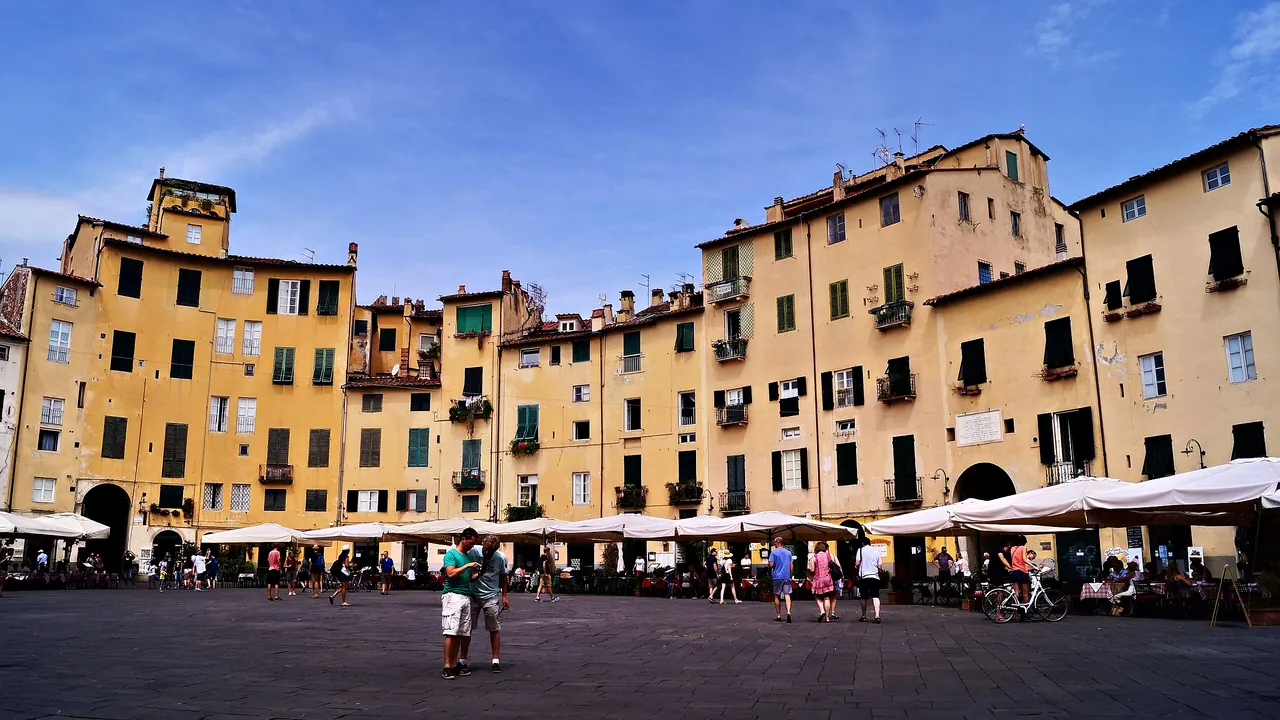
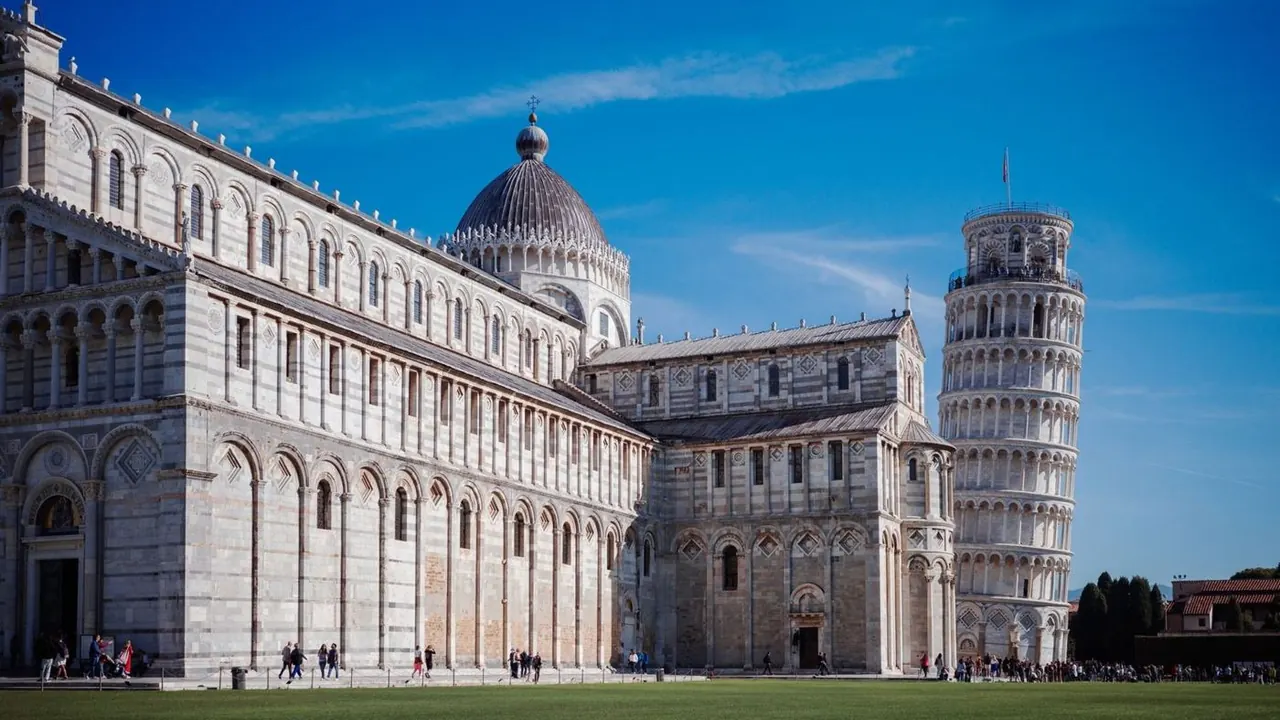
Photos: Lucca by Stefano Sansavini, CC BY-SA 4.0, cropped; Pisa by Bruno Kraler, Pexels License.
Lucca or Pisa?
Our verdict in twelve categories, each scored against the same fixed benchmark cities, and the climate month by month, so you can choose for your trip.
Choose Lucca for
- live music and the arts
- nature and the outdoors
- wellness
Lucca suits travellers who want to slow down. Inside its complete Renaissance walls the streets are almost free of cars, so days pass by bike and on foot between Romanesque churches, long lunches and an evening of Puccini. It is also the better base if you want to reach the Apuan Alps and the Garfagnana as well as the art towns.
Choose Pisa for
- nightlife
- prices
- beaches
Pick Pisa if you want a little more life after dinner and a lower bill. During term the students keep the old-market squares busy late into the evening, rooms and trattorias cost less, and the close airport and main rail junction make it the easier place to arrive at and travel out from. The Piazza dei Miracoli is the single grander sight, but Lucca gives you the more rounded old town.
Scoreboard
Twelve categories on one fixed scale from 0 to 100. The shaded stretch is the gap between the two.
Your match
Pick a travel style or drag the sliders, and both match scores follow your weighting.
Too close to call, level with your weighting
Wins on live music and the arts and nature and the outdoors with your weighting.
Wins on nightlife and prices with your weighting.
What matters to you?
Category by category
What the scores mean for a trip.
Beaches & swimming
Neither city is on the sea, and both treat the beach as a summer afternoon off. What differs is where you swim. From Lucca the train runs to Viareggio, where the Versilia coast offers long rows of beach-club umbrellas stretching towards Forte dei Marmi, plus wilder dunes at the Lecciona.
Pisa's own shore is closer, about 12km by bus. It ranges from the rocky breakwaters of Marina di Pisa to the wide, pine-backed sand at Tirrenia and Calambrone, though the water near the Arno mouth is rarely clear. The shallow sea at Tirrenia suits small paddlers well.
Food & drink
Both cities eat plainly and well, with no serious fine dining in either, but the flavours differ. Lucca cooks from its own hills and mountains: spelt soup with farro from the Garfagnana, meat-filled tordelli, chestnut flour in the cold months, buccellato, and its own olive oil and Montecarlo wines in the family osterie inside the walls.
Pisa cooks like a student town. Ribollita, game and salt cod come out of the trattorias around the morning market at Piazza delle Vettovaglie, and the seafood improves towards the coast. Steer clear of the menus by the tower.
Culture & sights
Pisa has the single greater sight. The cathedral, baptistery, Leaning Tower and Camposanto standing together on one lawn are among the great ensembles of Italy, and the Sinopie and San Matteo museums give them depth. The quiet Lungarni and Piazza dei Cavalieri reward anyone who walks on from there.
Lucca's appeal is spread more evenly. The intact walls, the carved arcades of San Michele, the mosaic of San Frediano and the oval Piazza dell'Anfiteatro make the whole town the attraction. Either city takes about two unhurried days.
Nightlife
Neither city is a reason to come for nights out, but Pisa clearly has more going on. Lucca is a town for dinner rather than drinks. The evening centres on a slow meal and a glass of Colline Lucchesi in one of the old piazzas, and after that there are only a few pubs and wine bars. In summer, anyone who wants to dance goes to the Versilia coast, which means a late drive or taxi back.
Pisa has a large university, so the old town has more bars, more young people out and a looser feel that lasts later into the night. It suits couples or friends who like an unplanned drink after dinner. Clubbers will be disappointed in both cities, and in Pisa the streets around the tower go quiet once the day-trippers leave.
Nature & outdoors
Lucca has the stronger outdoor options, mostly because of what lies to the north. The steep limestone and marble peaks of the Apuan Alps are within an hour, and the chestnut and beech woods of the Garfagnana and the Orecchiella park are good for quiet walks. In town, the 4km ring of the walls is a daily running and cycling track.
Pisa's best asset is right on its edge: the San Rossore park, with pine forest, wetland and wild dunes, where you can ride, cycle or spot fallow deer. The olive terraces of Monte Pisano add easy hill walks.
Day trips
Both are first-rate bases, and each is a classic day out from the other. The difference is in direction. Lucca leans north and inland, towards the villas of Marlia and Collodi, the old spa towns on the Florence line, and the mountain villages around Barga.
Pisa leans south and along the coast. It is closer to Livorno, Volterra and the Chianti road to Siena, and slightly quicker for the Cinque Terre and Portovenere. Florence is roughly an hour by train from either city.
Good for families
Both have flat, compact centres that are easy with a pushchair, and neither has much built for children. Lucca has a little more to fill the days: riding the walls on a family quadricycle, the trees on top of the Torre Guinigi, the Pinocchio Park at Collodi, and the costumes of Lucca Comics & Games in autumn.
Pisa's main draw is the tower photo on the lawn, though young children cannot climb it. Its family days are spent on the gentle sands of Tirrenia or riding in San Rossore.
Getting around
Both centres are flat and walkable, and the difference is in how you move and how far you can go. Lucca is a cycling town, mostly closed to traffic, with bike rental at every gate. Its villages and villas, though, really need a car.
Pisa is the better transport hub. The airport is linked to the main station by a shuttle train, and western Tuscany fans out by rail from there. City buses fill the gap to the tower and the beaches.
Shopping & style
Neither is a shopping destination, but Lucca's streets have more character. Via Fillungo keeps its jewellers behind Liberty-era shopfronts, the delis sell farro and local oil, and its monthly antiques market around the cathedral is one of the oldest in Italy.
Pisa's Corso Italia is mostly mid-range chains, with smarter shoe shops and pastry shops under the arcades of Borgo Stretto, and its own antiques market runs along the river.
Affordability
Pisa is the cheaper stay. Central rooms and those near the station are mid-range rather than premium, and the student trattorias keep meals fair. The extra costs are the tower climb and the cafés beside it.
Lucca is still cheaper than Florence, and its walls and churches are free, but beds are scarce inside the walls and fill up in summer and during festivals. Staying outside the gates usually saves money.
Live music & performing arts
Lucca is the place for music, because Puccini was born here. Short recitals of his arias run most evenings for much of the year, the Teatro del Giglio has a full opera season, and in July big outdoor concerts fill Piazza Napoleone. The lakeside Puccini Festival at Torre del Lago is close by.
In Pisa, the stage means the horseshoe-shaped Teatro Verdi, with opera, ballet and concerts from autumn to spring, plus university chamber music. Little happens outside that season.
Wellness & relaxation
Lucca is the more restful town. With almost no traffic inside the walls and a shaded promenade on top, the calm is part of daily life. It also offers a wider choice of spa days: the belle époque baths of Montecatini, the cave pools of Monsummano and the steam grottoes of Bagni di Lucca.
Pisa's calm begins once you leave the crowds at the cathedral square. Its strength is the 18th-century bath palace at San Giuliano Terme, on the city's doorstep, with the public thermal pool at Casciana Terme further out.
When should you go?
Pick your month. The climate figures are measured averages, not a forecast.
Lucca in July
Pisa in July
Daytime high, °C
Rainfall in the month, mm
Temperature and rainfall are climate normals, averaged over the years shown. Lucca: 1991-2020 normals, Pisa / S. Giusto (21.4 km from centre). Pisa: 1991-2020 normals, Pisa / S. Giusto (3.9 km from centre).
The two cities lie close together on the same plain and share one climate, so the choice between them makes no difference to the weather. Spring and early autumn are the best times for walking: May reaches about 23°C with long, bright days. July and August are hot at 30°C, with up to 320 hours of sunshine. That makes midday sightseeing hard work, though it is ideal for the coast.
The sea is pleasant for swimming from June to September and reaches 25°C in August. The dry spell ends in September, and October and November are the wettest months, with about 132mm of rain in November. Winter is mild but grey and damp, fine for museums and churches and not much else.
Which traveller are you?
On a food and nightlife trip, Pisa is the better pick. The student trattorias around Piazza delle Vettovaglie feed you well and cheaply, and the squares stay busy late during term. Lucca's evenings end with a quiet walk on the walls.
For a trip on a tight budget, Pisa again comes out ahead. Central rooms are easier to find at mid-range rates, the student kitchens keep meals honest, and you can walk everywhere. Lucca has fewer beds inside its walls, and they fill up in summer.
On an outdoors trip, choose Lucca. The steep marble peaks of the Apuan Alps and the chestnut woods of the Garfagnana are within an hour to the north, and the tree-lined ring of the walls makes a daily run or ride.
Before you go
| Measure | Lucca | Pisa |
|---|---|---|
| Official language | Italian | Italian |
| Currency | Euro (EUR) | Euro (EUR) |
| Sockets | CFL230 V, 50 Hz | CFL230 V, 50 Hz |
| Driving side | Right | Right |
| Time zone | UTC+1, UTC+2 in summer | UTC+1, UTC+2 in summer |
| Emergency number | 112 | 112 |
| Elevation | 19 m | 4 m |
| Main airport | Pisa International Airport (PSA)21 km from centre82 non-stop destinations | Pisa International Airport (PSA)4 km from centre82 non-stop destinations |
| Public holidays this year | 13 days | 13 days |
By the numbers
| Measure | Lucca | Pisa |
|---|---|---|
| City population | 88,798 | 88,737 |
| People per km² | 478 | 479 |
| Museums within 10 km | 20 | 27 |
| UNESCO World Heritage sites within 50 km | 4 | 4 |
| Swim season, months above 21 °C | 4 months | 4 months |
Where else could you go?
Every comparison below shares a destination with this one, so you can follow Lucca or Pisa somewhere new.