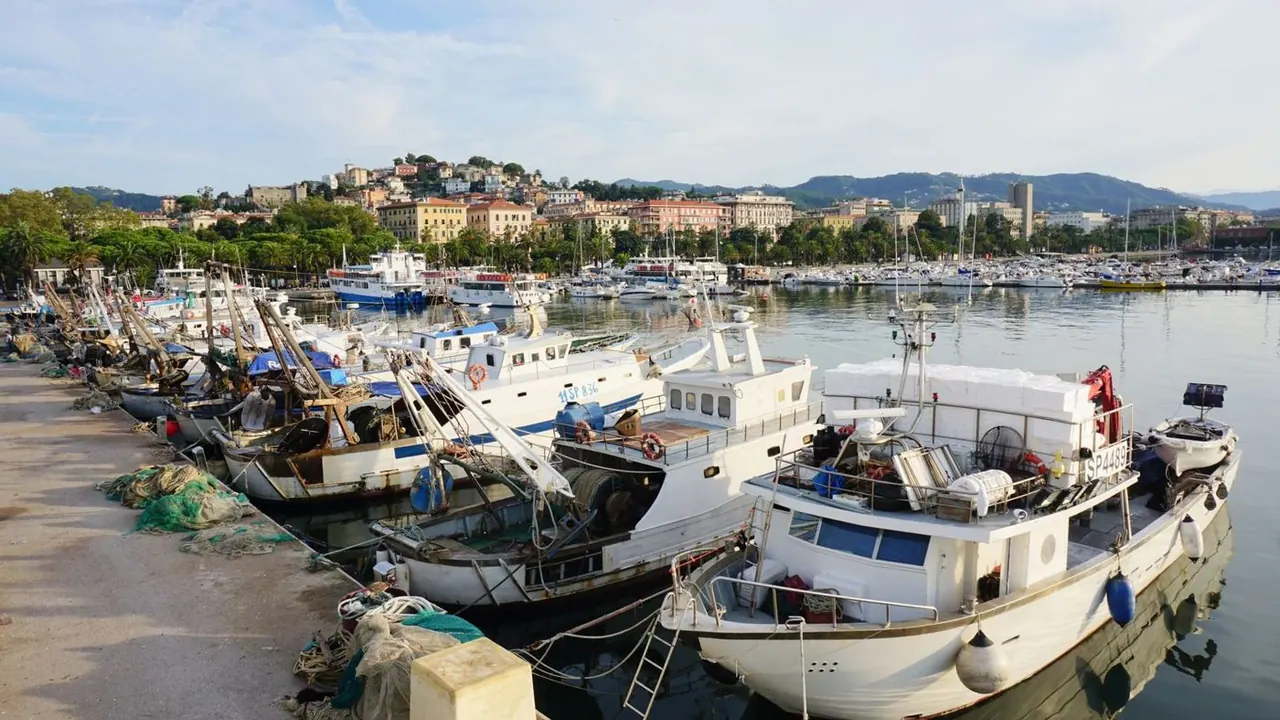
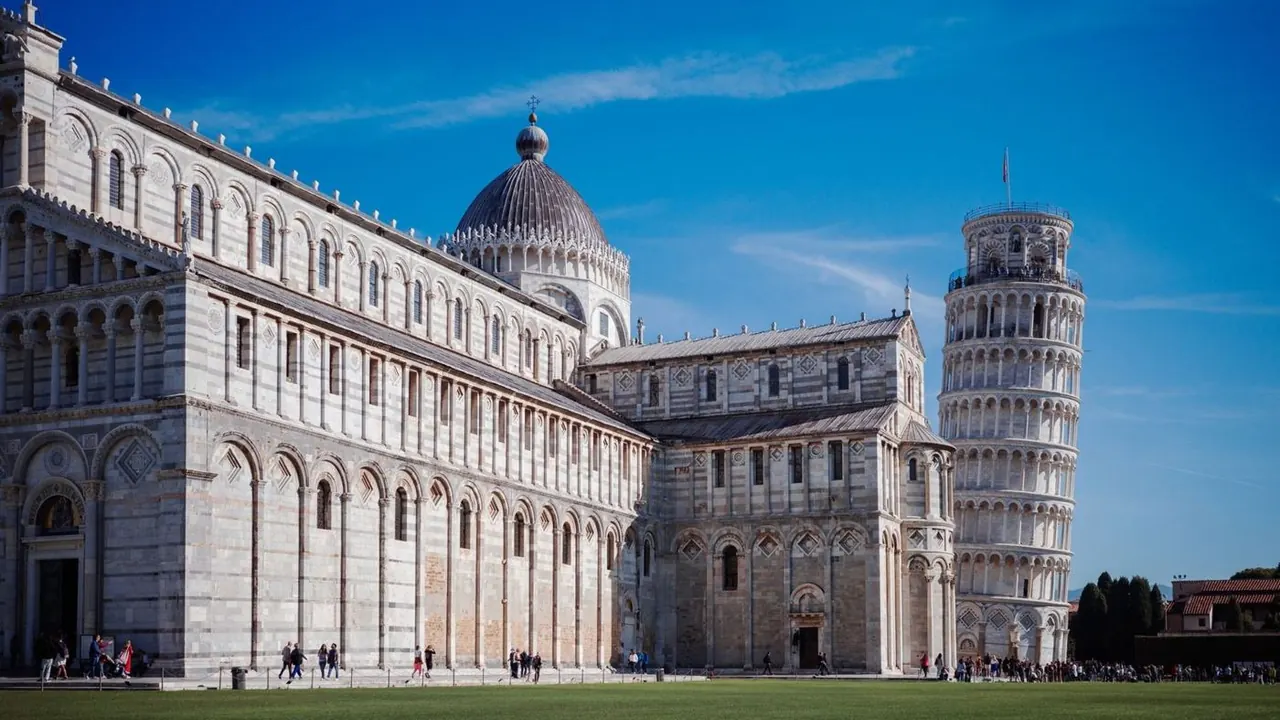
Photos: La Spezia by Irina Balashova, Pexels License; Pisa by Bruno Kraler, Pexels License.
La Spezia or Pisa?
Our verdict in twelve categories, each scored against the same fixed benchmark cities, and the climate month by month, so you can choose for your trip.
Choose La Spezia for
- nature and the outdoors
- food and drink
- beaches
La Spezia is the better choice for travellers who come for the coast itself. The Cinque Terre villages are minutes away by train, with the trails, the terraced cliffs, Palmaria and the clear water of Portovenere close behind. That suits walkers, swimmers and anyone happy to spend the day outdoors and turn in early. The town is a practical, unshowy base rather than a sight in its own right.
Choose Pisa for
- culture and sights
- wellness
- nightlife
Pisa rewards people who want a city to explore as well as a base. It has the Piazza dei Miracoli, quieter churches and museums beyond it, an opera house and student squares, so there is more to do after dark and on a wet day. Its rail hub and nearby airport make Florence, Lucca and the hill towns easy to reach. Pick it for a culture-led trip with a few beach afternoons on the side.
Scoreboard
Twelve categories on one fixed scale from 0 to 100. The shaded stretch is the gap between the two.
Your match
Pick a travel style or drag the sliders, and both match scores follow your weighting.
Wins on nature and the outdoors and food and drink with your weighting.
Wins on culture and sights and wellness with your weighting.
What matters to you?
Category by category
What the scores mean for a trip.
Beaches & swimming
Neither city has a beach in town, and both coasts are largely given over to paid bathing establishments, but the swimming is quite different. From La Spezia you reach small, often pebbly beaches at Lerici and San Terenzo, coves under olive terraces at Tellaro, and very clear rocky water at Portovenere and Palmaria, with Monterosso's sand further up the line.
Pisa's coast, about 12km away, has long, wide sandy beaches at Tirrenia and Calambrone, backed by pine woods and shallow enough for easy paddling, though the water near the Arno mouth is rarely very clear. Choose La Spezia for clear water and rocks, Pisa for room to spread out on the sand.
Food & drink
Both cities eat simply and well, and both bake a thin chickpea flatbread in wood ovens: farinata in La Spezia, cecina in Pisa. Beyond that, La Spezia cooks from the sea and Pisa from the land. La Spezia's food is Ligurian, with pesto on trofie and testaroli, mussels farmed off Portovenere, Monterosso anchovies and crisp Cinque Terre whites.
Pisa cooks Tuscan, with ribollita, wild boar and salt cod, and its best eating is in the trattorias around the Piazza delle Vettovaglie market, where students keep prices honest. Neither has much fine dining. In Pisa, skip the menus around the tower. In La Spezia, prices and quality in town are steadier than in the Cinque Terre villages.
Culture & sights
Pisa has far more to see. The Piazza dei Miracoli alone, with its cathedral, baptistery, Leaning Tower and Camposanto, outweighs anything in La Spezia. Beyond it are Vasari's palace on Piazza dei Cavalieri, Santa Maria della Spina on the river, the medieval art of the San Matteo museum and the old palazzi along the Lungarni.
La Spezia is a nineteenth-century naval town of arcaded streets and Liberty-style facades, with no medieval core. The early Italian paintings of the Museo Amedeo Lia, the naval museum and the prehistoric stele statues in Castello San Giorgio make a rewarding day, but most of the region's history lies out along the coast.
Nightlife
Neither is a place to come for going out, but Pisa has more of an evening. During term, students fill the small squares around the old market past midnight, and Borgo Stretto and the riverbanks draw the aperitivo crowd. In La Spezia the evening is a spritz on Via del Prione, around Piazza Verdi or, in summer, on the Lerici waterfront, and then it ends early, with most visitors resting for the next morning's walk.
Nature & outdoors
La Spezia sits right by the landscape most visitors come to this coast for. The terraced cliffs and footpaths of the Cinque Terre national park, from the Sentiero Azzurro to the quieter ridge path, begin minutes away. Palmaria's forts and sea caves, the Montemarcello promontory, and kayaking and diving in the gulf are closer still.
Pisa's outdoors is gentler. San Rossore park has pine forest, wetland and dunes for cycling, riding and spotting fallow deer, Lake Massaciuccoli is good for birdwatching, and Monte Pisano has paths through olive terraces. Both cities reach the Apuan Alps for serious hiking.
Day trips
Both make outstanding bases, and the difference is mainly in which way you travel. From La Spezia, the Cinque Terre is minutes away by coastal train, Portovenere is a short boat ride, Lerici, Sarzana and Luni are around the gulf, and the Riviera as far as Portofino and Genoa makes an easy day.
Pisa looks inland as well as along the coast. Lucca is under half an hour away, Florence about an hour, Volterra and San Gimignano are reachable by car, and Siena and Chianti are within two hours. The Cinque Terre is still a little over an hour away. Pick La Spezia for the Ligurian coast, Pisa for Tuscany.
Good for families
Both are easy places to bring children, and neither has much built for them, so the difference is in how a family spends its days. From La Spezia the best days are on the water: a boat round Portovenere and Palmaria, then the shallow, sheltered beaches at San Terenzo and Lerici. The catch is that the area's big draw, the cliff villages and their trails, means stairs, crowded carriages and long walks that small legs struggle with.
Pisa keeps its one great sight a short, level walk away, with a lawn beside the tower where children can let off steam. The other days go to the long, shallow sand at Tirrenia and Calambrone or to bikes and horses in San Rossore park. The tower climb is only for older children, and the cathedral square is hot and crowded in midsummer. With toddlers, Pisa is the simpler base. With older children who can manage the coast paths, La Spezia gives you more to do.
Getting around
Both have flat centres you can walk, but Pisa is simpler to arrive in and to leave for day trips. The airport is unusually close and an automatic shuttle train links it to the station, which is one of the main rail hubs of western Tuscany. Bikes suit the level streets.
La Spezia works well as a hub too, with coastal trains through the Cinque Terre, buses to Portovenere and Lerici, and ferries round the gulf from spring to autumn. Its weak point is summer, when those trains and the village platforms are packed. In neither city is a car much help for the main sights.
Shopping & style
Neither city is a shopping destination, and both offer everyday Italian high streets. Pisa adds the smarter shops and old pastry shops under the arcades of Borgo Stretto and a monthly antiques market by the river, and Florence and Lucca are close for anything more serious. La Spezia's Via del Prione is mostly chains and shoe shops, so its best buys are edible: pesto, olive oil, Sciacchetrà and anchovies.
Affordability
Both are mid-priced. In Pisa the costs that stand out are the tower climb and the cafés next to the monuments, while the student trattorias and the walkable centre keep daily spending low. In La Spezia, rooms cost noticeably less than in the Cinque Terre villages, but trail passes, boat trips and bathing establishments add up. In both, spring and autumn are easier on the budget than high summer.
Live music & performing arts
Pisa has more on stage thanks to the Teatro Verdi, a horseshoe-shaped nineteenth-century opera house with opera, concerts and ballet from autumn to spring, plus university chamber music. La Spezia's Teatro Civico hosts drama and touring shows, and the area comes alive in summer with a long-established jazz festival and open-air concerts in piazzas and castle courtyards. For opera, people in La Spezia go to Pisa or Genoa.
Wellness & relaxation
Pisa has the edge here because of its thermal springs. San Giuliano Terme, just outside the city, has a spa in an 18th-century bath palace on waters used since Roman times, and Casciana Terme has a larger public thermal pool. La Spezia's nearest thermal baths are the small ones at Equi Terme, an hour inland, so relaxing there means a long lunch in Tellaro or the quiet of Palmaria outside the summer season.
When should you go?
Pick your month. The climate figures are measured averages, not a forecast.
La Spezia in July
Pisa in July
Daytime high, °C
Rainfall in the month, mm
Where the figures come from
La Spezia's temperatures are measured 65 km from the centre, at Pisa / S. Giusto.
La Spezia has no rain gauge within 25 km of the centre, so its rainfall comes from a gridded climate dataset read at the city rather than from a gauge further away.
Temperature and rainfall are climate normals, averaged over the years shown. La Spezia: 1991-2020 normals, Pisa / S. Giusto (64.8 km from centre). Pisa: 1991-2020 normals, Pisa / S. Giusto (3.9 km from centre).
The two cities share the same weather, so the season matters more than the choice between them. Late April to June is the best stretch for both. It is warm enough for the Cinque Terre paths around La Spezia and for long days on foot in Pisa, and the autumn rain is still months away. The sea is warm enough to swim from June, at about 22°C, and is warmest in August at around 25°C, with July the sunniest month. July and August reach about 30°C, too hot for climbing terraced paths at midday or standing on Pisa's cathedral square.
September still has a warm sea, but it is also the start of the wetter season, with about 102mm of rain. The wettest months follow, peaking in November at about 132mm. Rain hurts La Spezia more, because its draws are coastal paths and boat trips, while Pisa's museums and churches still work on a wet day. Winters are mild in both but short on sun.
Which traveller are you?
On an outdoors trip, La Spezia is the stronger base. The Cinque Terre footpaths, the Palmaria loop walk, the Montemarcello promontory and kayaking along the gulf all start close by. Pisa offers gentler walking and cycling in San Rossore park and on Monte Pisano.
For a culture and arts trip, Pisa is the clear choice. The cathedral square, the San Matteo museum, Santa Maria della Spina and a night of opera at the Teatro Verdi fill two days, and Florence is an hour away. La Spezia's museums fill one good day.
For a short city break, Pisa is easier. A shuttle train links the airport to the station, you can cross the flat centre on foot in half an hour, and the student squares give the evenings some life. La Spezia suits a longer stay on the coast better.
Before you go
| Measure | La Spezia | Pisa |
|---|---|---|
| Official language | Italian | Italian |
| Currency | Euro (EUR) | Euro (EUR) |
| Sockets | CFL230 V, 50 Hz | CFL230 V, 50 Hz |
| Driving side | Right | Right |
| Time zone | UTC+1, UTC+2 in summer | UTC+1, UTC+2 in summer |
| Emergency number | 112 | 112 |
| Elevation | 3 m | 4 m |
| Main airport | Pisa International Airport (PSA)65 km from centre82 non-stop destinations | Pisa International Airport (PSA)4 km from centre82 non-stop destinations |
| Public holidays this year | 13 days | 13 days |
By the numbers
| Measure | La Spezia | Pisa |
|---|---|---|
| City population | 92,119 | 88,737 |
| People per km² | 1,792 | 479 |
| Museums within 10 km | 12 | 27 |
| UNESCO World Heritage sites within 50 km | 2 | 3 |
| Swim season, months above 21 °C | 4 months | 4 months |
Where else could you go?
Every comparison below shares a destination with this one, so you can follow La Spezia or Pisa somewhere new.