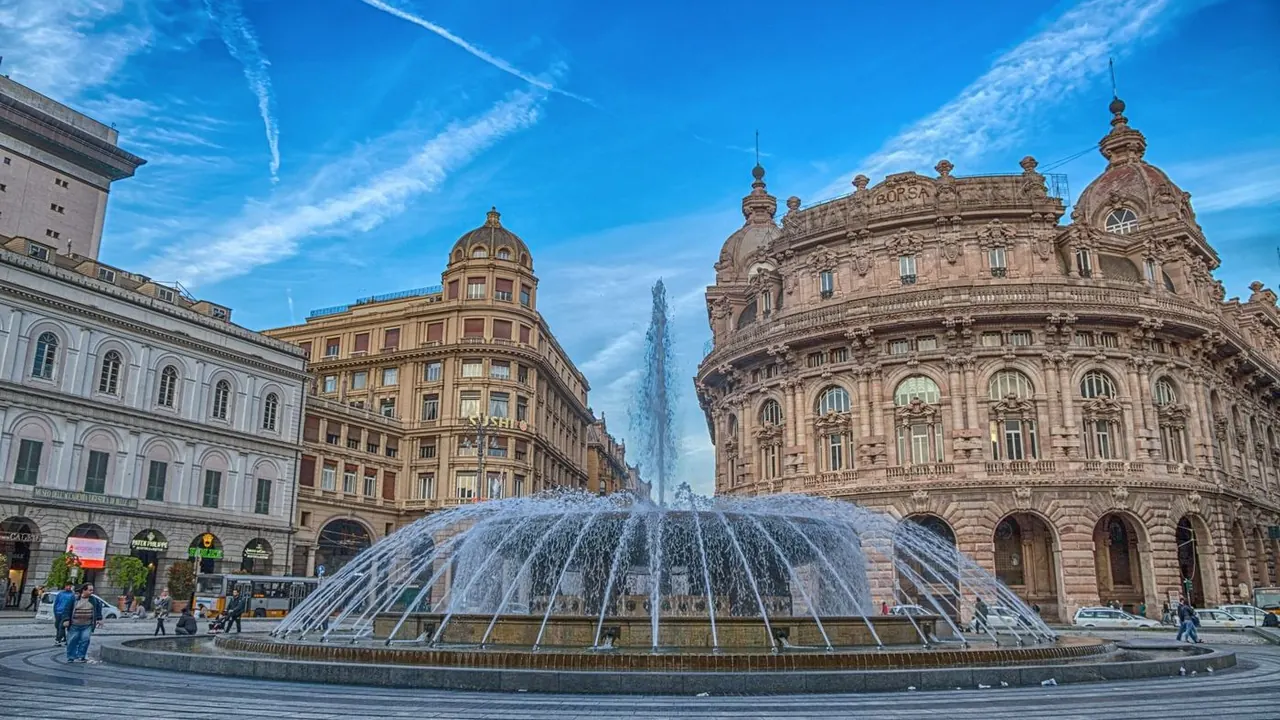
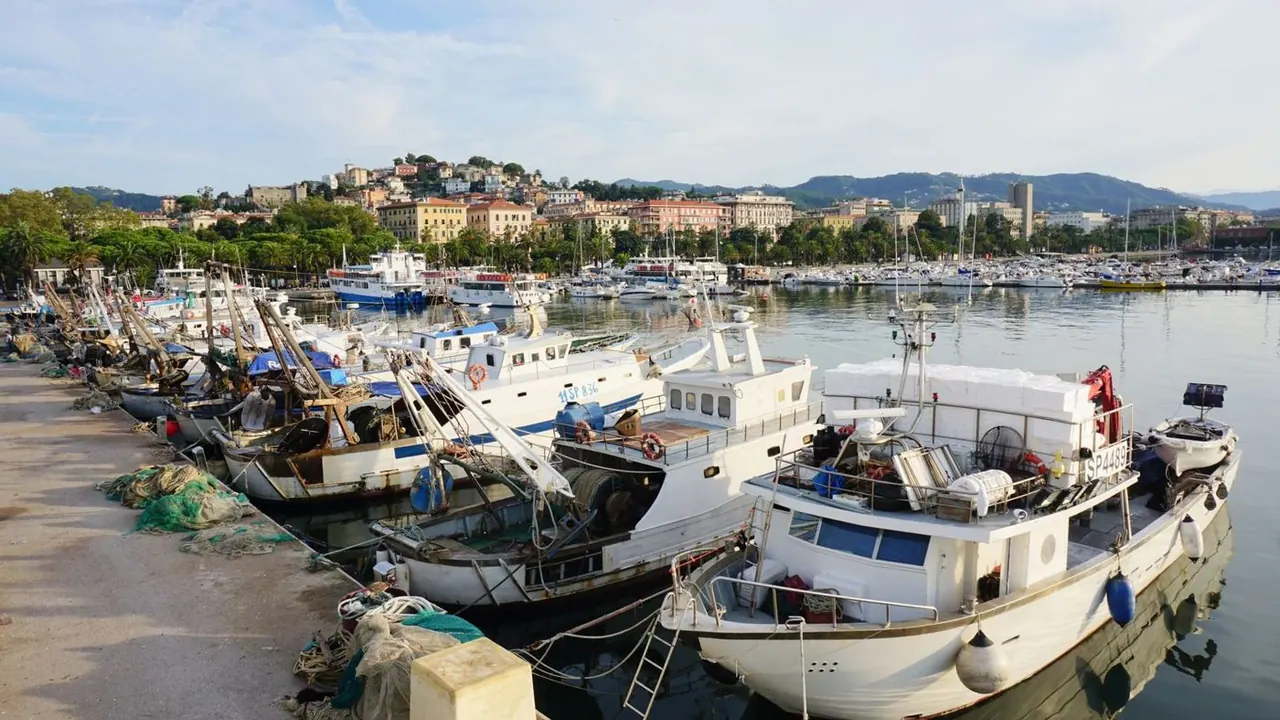
Photos: Genoa by Faber1893, CC BY-SA 4.0, cropped; La Spezia by Irina Balashova, Pexels License.
Genoa or La Spezia?
Our verdict in twelve categories, each scored against the same fixed benchmark cities, and the climate month by month, so you can choose for your trip.
Choose Genoa for
- culture and sights
- live music and the arts
- families
Genoa suits travellers who want a real city with the coast attached. You get the shaded caruggi and the painted Rolli palaces, an opera house, a deeper food culture built on pesto, focaccia and chickpea street snacks, and evenings in the old town squares that run late at weekends. With children it has the aquarium and the harbour museums, and Nervi and Boccadasse let you fit a swim into an afternoon of sightseeing.
Choose La Spezia for
- day trips
- getting around
- nature and the outdoors
If the trip is really about the Cinque Terre and the Gulf of Poets, La Spezia is the more practical base. Its flat, compact centre sits minutes by train from Riomaggiore and Manarola, with Portovenere, Palmaria and Lerici a short bus or boat ride away. The town itself has less to see and goes quiet early, which matters little when every morning starts on a cliff path or a ferry.
Scoreboard
Twelve categories on one fixed scale from 0 to 100. The shaded stretch is the gap between the two.
Your match
Pick a travel style or drag the sliders, and both match scores follow your weighting.
Wins on culture and sights and live music and the arts with your weighting.
Wins on day trips and getting around with your weighting.
What matters to you?
Category by category
What the scores mean for a trip.
Beaches & swimming
The swimming is about as good from either city, but you reach it differently. In Genoa you can swim without leaving town, at the pebble cove of Boccadasse, from the bathing establishments along Corso Italia or off the platforms below Nervi's promenade, with Camogli and Sestri Levante a short train ride further on.
La Spezia's own waterfront is a port, so every swim is an outing: to the sheltered sand at San Terenzo and Lerici, the clear rocky water around Palmaria, or Monterosso's long beach up the line. Both coasts are mostly pebble and lined with paid loungers.
Food & drink
Genoa is the stronger place to eat. As the home of pesto, it offers a wider spread of dishes, such as pansoti in walnut sauce and cold stuffed cima, and its old-town friggitorie selling fried fish, panissa and farinata give it a genuine street-food culture. The Mercato Orientale shows off the whole region's produce.
La Spezia's table is narrower but has its own character: mesciua soup, testaroli from the Lunigiana, and the rope-grown mussels of Portovenere, with Sciacchetrà to finish. Neither city has much fine dining, but Genoa offers far more variety over a week.
Culture & sights
This is where the two differ most. Genoa's caruggi make up one of Europe's largest medieval quarters, and above them the Rolli palaces on Via Garibaldi and Via Balbi hold Old Masters in painted halls. Add San Lorenzo cathedral, the Palazzo Ducale, the Lanterna and the marble sculpture of Staglieno cemetery, and there is several days' sightseeing.
La Spezia is a nineteenth-century naval town of straight arcaded avenues with no old core. The Museo Amedeo Lia and the prehistoric stele statues in Castello San Giorgio are worthwhile, but they fill a day or two at most.
Nightlife
Neither is a party city, but Genoa has more going on after dinner. Student bars around Piazza delle Erbe and the university lanes stay busy late at weekends, and the Porto Antico and Foce seafront add waterfront drinking.
La Spezia's evening is an aperitivo along Via del Prione or the promenade, with a summer move to Lerici's waterfront, and the town is quiet soon after. Most visitors here want an early night before a day on the trails.
Nature & outdoors
Both are superb for the outdoors. Genoa's strengths are walks straight from the city, up the Righi funicular to the ring of hilltop forts, plus the Portofino promontory paths to San Fruttuoso and boat trips to see whales and dolphins in the Pelagos Sanctuary.
La Spezia sits right beside the Cinque Terre national park, with its terraced cliffs, the Sentiero Azzurro and quieter ridge trails. Palmaria's loop walk and the pine woods of Montemarcello are close by, and the marble peaks of the Apuan Alps offer harder hiking inland.
Day trips
Both are excellent bases on the same coastal railway, and what differs is the direction. From Genoa, Camogli, Santa Margherita and Portofino are under an hour away, the walled Finale Ligure Borgo lies to the west, and Milan or Turin is close enough for a day of big-city museums.
La Spezia has the Cinque Terre minutes away rather than an hour and a half. Portovenere, Sarzana and the Roman ruins of Luni are close, and Pisa, Lucca and the Carrara quarries take you into Tuscany instead.
Good for families
Genoa is the easier sell with children because of the Porto Antico. One of Europe's largest aquariums sits beside a science centre, the biosphere and the submarine at the Galata museum, and the old public lifts are a ride in themselves. The steep, dark lanes and endless stairs are hard work with a pushchair.
La Spezia is the opposite: flat, calm and easy to push a buggy around, with shallow water at San Terenzo and boat trips round the islands. It lacks a single big attraction, and crowded trains and long cliff walks suit older children more than toddlers.
Getting around
Getting around is similarly easy, but in different ways. Genoa climbs steeply from the harbour, so funiculars, a rack railway and public lifts do much of the work, alongside a single metro line and slow buses in narrow streets.
La Spezia's centre is flat and compact, with the station, market and seafront all a short walk apart. The town works as a hub for coastal trains, gulf buses and seasonal ferries, though those trains are packed in summer.
Shopping & style
Genoa gives a shopper more to do. The arcades of Via XX Settembre and the Galleria Mazzini cover the familiar Italian labels, and the old town's long-established shops sell candied fruit and silver filigree as well as coral and ceramics made in small workshops.
La Spezia's Via del Prione is mostly chains and shoe shops, so the best buys are edible: Cinque Terre wine, Sciacchetrà, pesto and anchovies. Neither city has much luxury depth.
Affordability
Day-to-day costs are much the same, since both are mid-priced and focaccia and farinata are cheap meals in either. Genoa's central hotels compare well with Italy's better-known cities, and the extra costs come in the smart Riviera resorts and lounger hire.
La Spezia is the cheaper alternative to sleeping in the Cinque Terre villages, but summer rooms still cost the usual Western European rates. National park trail passes and boat trips add up quickly, so spring and autumn are noticeably cheaper.
Live music & performing arts
Genoa has a real season. The Teatro Carlo Felice on Piazza De Ferrari stages opera, ballet and symphony concerts, the Teatro Nazionale is a respected drama company, and Paganini concerts and small singer-songwriter clubs reflect the city's musical past.
La Spezia's Teatro Civico offers touring plays and concerts, and things only liven up in summer with the jazz festival and open-air concerts in castle courtyards. For opera, people from La Spezia travel to Genoa.
Wellness & relaxation
Neither city is a spa destination, and in both the thermal waters are about an hour away: Acqui Terme in the Piedmont hills for Genoa, the small baths at Equi Terme in the Lunigiana for La Spezia. Rest comes from places rather than treatments. Genoa has the villa gardens and promenade of Nervi as an escape from its noisy port, while La Spezia offers Palmaria, long lunches in Tellaro and quiet seafront evenings once the summer crowds have left.
When should you go?
Pick your month. The climate figures are measured averages, not a forecast.
Genoa in July
La Spezia in July
Daytime high, °C
Rainfall in the month, mm
Where the figures come from
Genoa has no rain gauge within 25 km of the centre, so its rainfall comes from a gridded climate dataset read at the city rather than from a gauge further away.
Genoa's sunshine is measured 80 km from the centre, at Capo Mele.
La Spezia's temperatures are measured 65 km from the centre, at Pisa / S. Giusto.
La Spezia has no rain gauge within 25 km of the centre, so its rainfall comes from a gridded climate dataset read at the city rather than from a gauge further away.
Temperature and rainfall are climate normals, averaged over the years shown. Genoa: 1991-2020 normals, Genova / Sestri (6.7 km from centre). La Spezia: 1991-2020 normals, Pisa / S. Giusto (64.8 km from centre).
Both cities share the same sea, warm enough for comfortable swimming from June to September and at about 25°C in August, and both have a dry, sunny summer followed by a wet autumn. The difference is in the heat. In July and August the daytime air in La Spezia's sheltered gulf reaches about 30°C, a couple of degrees warmer than breezier Genoa, which makes the exposed Cinque Terre paths hard going at midday. La Spezia's summer is also the drier of the two, with only 20mm of rain in July.
For walking, late April to early June is the best time in both places: warm but not draining, fairly dry and with long sunny days. Autumn is less reliable. The rain arrives in September, heavily in Genoa, and October and November are the wettest months in both cities, with 151mm in La Spezia in November. Early September in Genoa is still a fair second choice for walking, but autumn on the trails above La Spezia is a gamble. Winters are mild and grey in both. That suits Genoa's palaces and museums well enough, but leaves La Spezia with little to do.
Which traveller are you?
For a culture and arts trip, Genoa is the clear choice. Its medieval old town and the UNESCO-listed palaces of the Strade Nuove hold Van Dyck and Rubens, and the Carlo Felice stages opera. La Spezia offers a good private museum and not much more.
On a family trip with children, Genoa also wins. The aquarium, the walk-through submarine at the Galata museum and the funiculars fill several days. La Spezia is flat and easy with a pushchair, but it has no big attraction and its walks suit older children.
For an outdoors trip built around coastal hiking, La Spezia is the better base. The Cinque Terre trailheads are minutes away by train, Palmaria and Montemarcello sit across the gulf, and the Apuan Alps are within an hour, so you lose less of each day travelling.
Before you go
| Measure | Genoa | La Spezia |
|---|---|---|
| Official language | Italian | Italian |
| Currency | Euro (EUR) | Euro (EUR) |
| Sockets | CFL230 V, 50 Hz | CFL230 V, 50 Hz |
| Driving side | Right | Right |
| Time zone | UTC+1, UTC+2 in summer | UTC+1, UTC+2 in summer |
| Emergency number | 112 | 112 |
| Elevation | 20 m | 3 m |
| Main airport | Genoa Cristoforo Colombo Airport (GOA)7 km from centre25 non-stop destinations | Pisa International Airport (PSA)65 km from centre82 non-stop destinations |
| Public holidays this year | 13 days | 13 days |
By the numbers
| Measure | Genoa | La Spezia |
|---|---|---|
| City population | 558,745 | 92,119 |
| People per km² | 2,325 | 1,792 |
| Museums within 10 km | 51 | 12 |
| UNESCO World Heritage sites within 50 km | 1 | 2 |
| Swim season, months above 21 °C | 4 months | 4 months |
Where else could you go?
Every comparison below shares a destination with this one, so you can follow Genoa or La Spezia somewhere new.