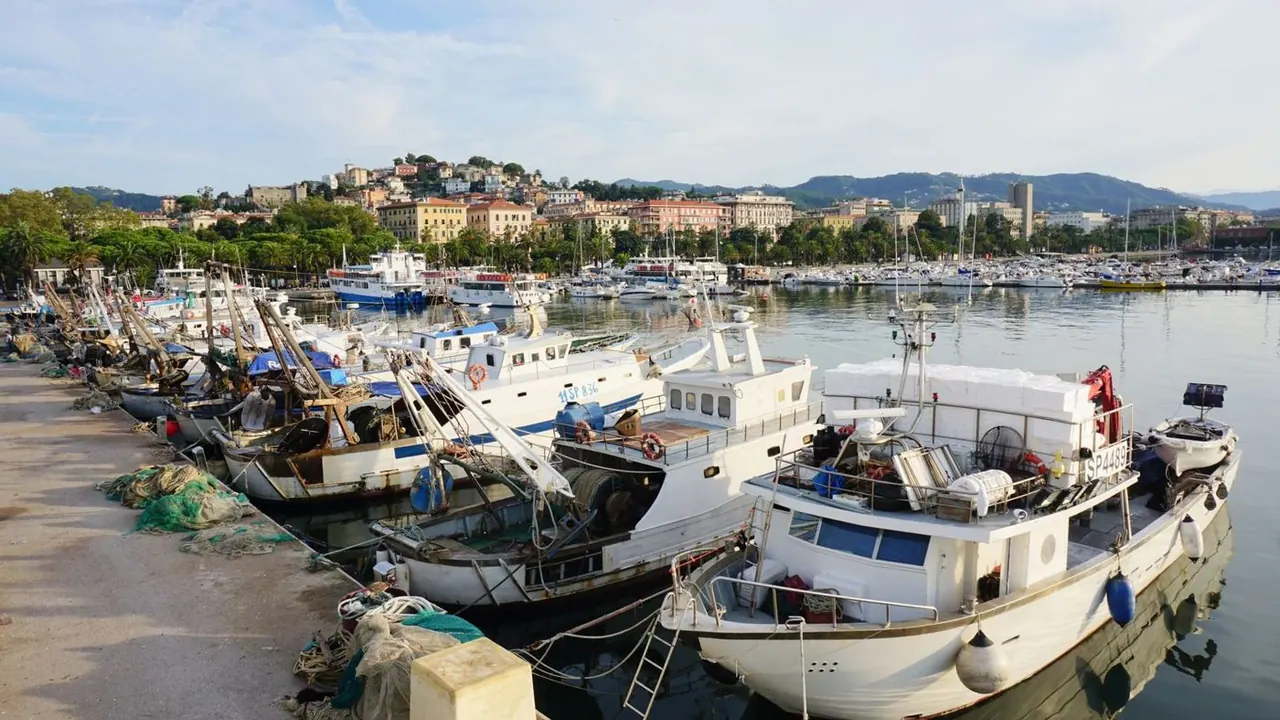
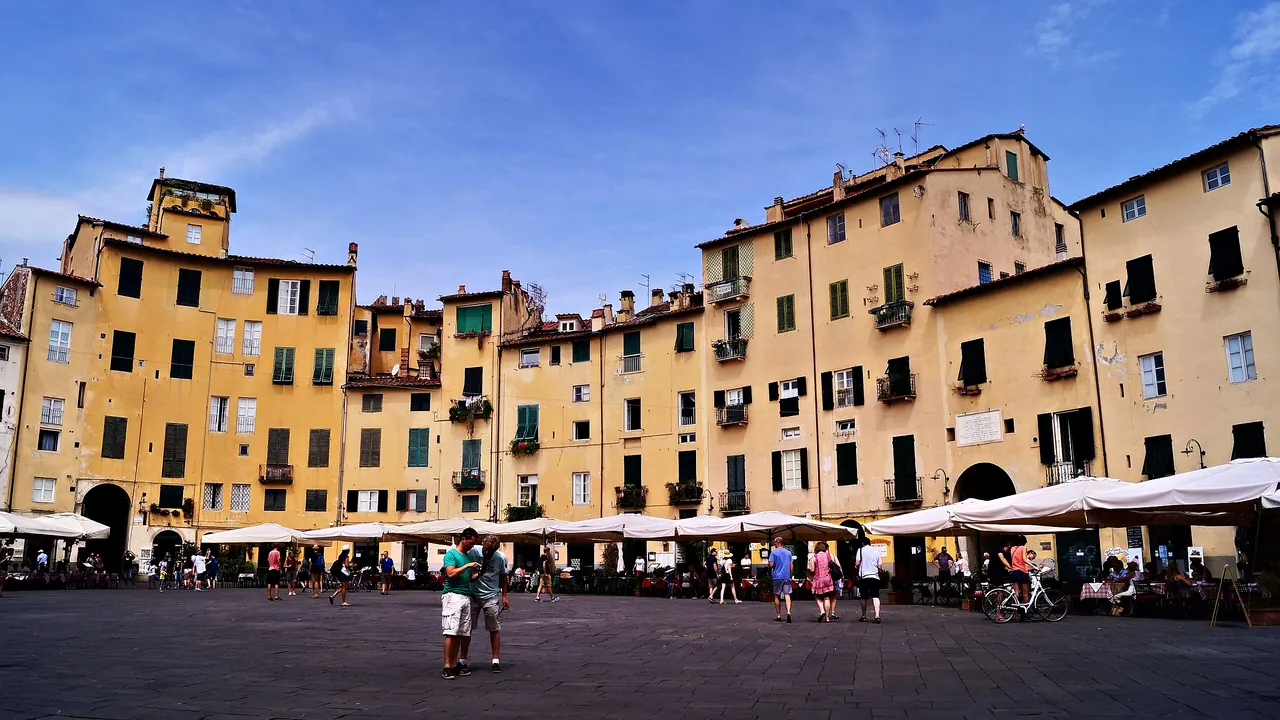
Photos: La Spezia by Irina Balashova, Pexels License; Lucca by Stefano Sansavini, CC BY-SA 4.0, cropped.
La Spezia or Lucca?
Our verdict in twelve categories, each scored against the same fixed benchmark cities, and the climate month by month, so you can choose for your trip.
Choose La Spezia for
- nature and the outdoors
- nightlife
- beaches
La Spezia is the better pick for walkers and sea lovers who want the Cinque Terre on the doorstep. The villages are minutes away by train, Portovenere and Palmaria are a short boat ride off, and the cliff paths, coves and kayaking waters of the gulf fill the days. You trade a handsome old town for an easy, practical base that costs less to stay in than the villages themselves.
Choose Lucca for
- live music and the arts
- culture and sights
- wellness
Choose Lucca if the place you sleep in matters as much as where you go from it. Inside its complete walls are Romanesque churches, quiet traffic-free lanes and an evening of Puccini almost any night of the year. It is also kinder to families and to anyone after a slow pace, with spa towns, Pisa and Florence all close by train.
Scoreboard
Twelve categories on one fixed scale from 0 to 100. The shaded stretch is the gap between the two.
Your match
Pick a travel style or drag the sliders, and both match scores follow your weighting.
Wins on nature and the outdoors and nightlife with your weighting.
Wins on live music and the arts and culture and sights with your weighting.
What matters to you?
Category by category
What the scores mean for a trip.
Beaches & swimming
Neither city has a beach in town, and both treat swimming as an outing, but the coast you reach is very different. From La Spezia you get the small coves of the gulf: sheltered pebble and sand at San Terenzo and Lerici, tiny inlets under olive terraces at Fiascherino and Tellaro, and rocky, very clear water off Portovenere and Palmaria. Monterosso's sandy strip is a short train ride up the coast.
Lucca's train runs to Viareggio in about 25 minutes, and from there the Versilia shore is long, wide and sandy, shelving gently and mostly set out with beach club umbrellas. The pine-backed dunes of the Lecciona give it a wilder free stretch. Pick La Spezia for snorkelling and coves, Lucca for a classic day on the sand.
Food & drink
The two eat equally well, and they even share a snack: La Spezia's farinata and Lucca's cecina are the same thin chickpea pancake under different names. The difference is sea against hills. La Spezia cooks with the gulf, with rope-grown mussels from Portovenere, Monterosso anchovies, pesto on trofie and testaroli, and crisp Cinque Terre whites or sweet Sciacchetrà to drink.
Lucca looks inland, to Garfagnana spelt soup, meat-filled tordelli, chestnut flour in the colder months and buccellato from the bakeries, with its own olive oil and Montecarlo wines. In both places the cooking is honest and the choice narrow, with little fine dining or food from abroad.
Culture & sights
Lucca is far richer here, because its whole centre is the attraction. The Renaissance walls survive intact around a medieval grid of towers and churches, and San Michele's tiered façade, San Frediano's mosaic, the cathedral's tomb of Ilaria del Carretto and the oval Piazza dell'Anfiteatro reward slow wandering.
La Spezia grew as a nineteenth-century naval base, so its streets are arcaded and straight rather than ancient. It has a few worthwhile collections, notably the early Italian paintings of the Museo Amedeo Lia and the prehistoric stele statues in the Castello San Giorgio, but the region's history lies out on the coast rather than in the city.
Nightlife
Both are early-to-bed places, but La Spezia keeps going a little longer. Its aperitivo crowd fills Via del Prione, Piazza Verdi and the promenade, a few bars stay open late, and in summer the waterfront at Lerici and San Terenzo adds some evening life.
Lucca's evenings are a drink in Piazza San Michele, dinner and a walk on the walls, with student pubs as the only late option. Anyone who wants to dance has to go to the Versilia discos and find a way back late at night.
Nature & outdoors
La Spezia has the stronger landscape right on its doorstep. The terraced cliffs of the Cinque Terre national park begin a few minutes away, with the Sentiero Azzurro and the quieter ridge and sanctuary paths. Palmaria's walk past forts and sea caves, the pine woods of Montemarcello, and kayaking and diving in the gulf add a lot to do by the sea.
Lucca's own outdoors is gentler: the 4km tree-lined ring of the walls, cycle paths along the Serchio and olive-covered hills. Its wilder country, the Garfagnana chestnut woods, the Orecchiella park and the reed beds of Lake Massaciuccoli, needs a day out. The Apuan Alps are about an hour from either city.
Day trips
Both are first-rate bases, but they point in different directions. La Spezia is built for the Ligurian coast: the Cinque Terre villages by train in minutes, Portovenere by boat, Lerici and Tellaro across the gulf, and Sarzana and Roman Luni inland. Pisa and Lucca are about an hour away, while Florence makes a long day.
Lucca faces Tuscany. Pisa is half an hour away, Florence little more than an hour, and Pistoia, the Marlia and Torrigiani villas and Collodi are all close. Pietrasanta and Viareggio cover the coast, and the Cinque Terre is a long day of about two hours each way.
Good for families
Lucca is the easier choice with children. Its flat, mostly car-free centre is safe to roam, hiring a family quadricycle to ride the walls is a guaranteed hit, the Torre Guinigi has trees on top, and the Pinocchio Park at Collodi and the sandy Versilia beaches are both close. Lucca Comics & Games turns the city into a costume party in autumn.
La Spezia is relaxed and pushchair-friendly along the seafront, and boat trips round Portovenere and the shallow water at San Terenzo work well. But its big draws, steep villages, crowded summer trains and long cliff walks, suit older children rather than toddlers.
Getting around
Both have compact, flat centres that are easy on foot, and in both a car is a nuisance in town. In La Spezia the strength is the network beyond it: coastal trains through the Cinque Terre, buses to Portovenere and Lerici, and seasonal ferries across the gulf, though summer trains get packed.
Lucca is easier inside the walls, where most traffic is barred and everyone cycles, and its station has direct lines to Pisa, Viareggio and Florence. Its weak spot is the countryside, where sparse buses make a car the simpler way to reach the villas and hill villages.
Shopping & style
Lucca has the more enjoyable shopping, though neither is a fashion destination. Via Fillungo winds past jewellers and fashion shops behind old Liberty shopfronts, side lanes hold delicatessens, paper shops and artisan workshops, and the monthly antiques market around the cathedral is one of Italy's oldest.
La Spezia's Via del Prione and Corso Cavour offer chains and everyday shops. Its best buys are edible: pesto, olive oil, Sciacchetrà and anchovies, with fish and produce at the Piazza Cavour market.
Affordability
Costs are much the same in both, and in each case the saving comes from staying beside a pricier neighbour. La Spezia's rooms undercut the Cinque Terre villages, but trail passes, boat trips and paid bathing establishments add up over a stay.
Lucca is cheaper than Florence, and its walls and many churches cost nothing to visit. The catch is accommodation: there are few hotels inside the walls, and they fill in summer and at festival time, so staying just outside often pays.
Live music & performing arts
Lucca is much the better stage, thanks to Puccini. Recitals of his arias run through most of the year, the nineteenth-century Teatro del Giglio has a season of opera, concerts and theatre, and summer brings big concerts to Piazza Napoleone and lakeside opera at Torre del Lago.
La Spezia's Teatro Civico offers prose theatre and touring productions, and its summer jazz festival and open-air concerts in castle courtyards around the gulf are pleasant. For most of the year there is little else, and opera means travelling elsewhere.
Wellness & relaxation
Lucca suits a restful stay better. The quiet, traffic-free lanes and an evening walk on the shaded walls set the pace, and real spas are easy to reach: the belle époque baths of Montecatini half an hour away by train, the cave pools of Monsummano and the steam grottoes of Bagni di Lucca.
La Spezia offers hotel spas and the small baths at Equi Terme, an hour inland. Its calm comes from long lunches in Tellaro or the quiet of Palmaria, and it is best outside summer, when the Cinque Terre crowds arrive.
When should you go?
Pick your month. The climate figures are measured averages, not a forecast.
La Spezia in July
Lucca in July
Daytime high, °C
Rainfall in the month, mm
Where the figures come from
La Spezia's temperatures are measured 65 km from the centre, at Pisa / S. Giusto.
La Spezia has no rain gauge within 25 km of the centre, so its rainfall comes from a gridded climate dataset read at the city rather than from a gauge further away.
Temperature and rainfall are climate normals, averaged over the years shown. La Spezia: 1991-2020 normals, Pisa / S. Giusto (64.8 km from centre). Lucca: 1991-2020 normals, Pisa / S. Giusto (21.4 km from centre).
Both cities follow the same temperature curve, with highs around 30°C in July and August. That is fine for the beach and hard work on La Spezia's exposed coastal paths or in Lucca's sheltered plain. May, June and late September are the sweet spot for walking and sightseeing in either. The sea is warm enough to swim from June to September and peaks around 25°C in August, whether you are in the gulf or on the Versilia sand. Winter highs drop to about 11°C, which suits a quiet city stroll but not a beach.
Rain is where the two part ways. Both get their wettest weather in October and November, but La Spezia gets more of it, around 151mm in November, and stays wetter through the winter, while Lucca's January and February are noticeably drier. Sunshine is the same in both, long and steady from May to August and short in the darker months.
Which traveller are you?
On a culture and arts trip, Lucca is the clear choice. The walled centre is the sight in itself, with San Michele, San Frediano and the cathedral close together, and Puccini recitals and the Teatro del Giglio fill the evenings, which La Spezia's naval-era grid cannot match.
For an outdoors trip, La Spezia wins. The Cinque Terre national park starts a few minutes up the line, with the Sentiero Azzurro and quieter ridge paths, and Palmaria's loop walk and kayaking in the gulf are close by. Lucca's best hiking needs a drive north.
On a relaxing and wellness trip, Lucca suits better. Its car-free streets and shaded walls set an unhurried rhythm, and Montecatini, Monsummano's cave pools and Bagni di Lucca are easy spa days. La Spezia's nearest baths are an hour inland, and its summer trails are crowded.
Before you go
| Measure | La Spezia | Lucca |
|---|---|---|
| Official language | Italian | Italian |
| Currency | Euro (EUR) | Euro (EUR) |
| Sockets | CFL230 V, 50 Hz | CFL230 V, 50 Hz |
| Driving side | Right | Right |
| Time zone | UTC+1, UTC+2 in summer | UTC+1, UTC+2 in summer |
| Emergency number | 112 | 112 |
| Elevation | 3 m | 19 m |
| Main airport | Pisa International Airport (PSA)65 km from centre82 non-stop destinations | Pisa International Airport (PSA)21 km from centre82 non-stop destinations |
| Public holidays this year | 13 days | 13 days |
By the numbers
| Measure | La Spezia | Lucca |
|---|---|---|
| City population | 92,119 | 88,798 |
| People per km² | 1,792 | 478 |
| Museums within 10 km | 12 | 20 |
| UNESCO World Heritage sites within 50 km | 2 | 4 |
| Swim season, months above 21 °C | 4 months | 4 months |
Where else could you go?
Every comparison below shares a destination with this one, so you can follow La Spezia or Lucca somewhere new.