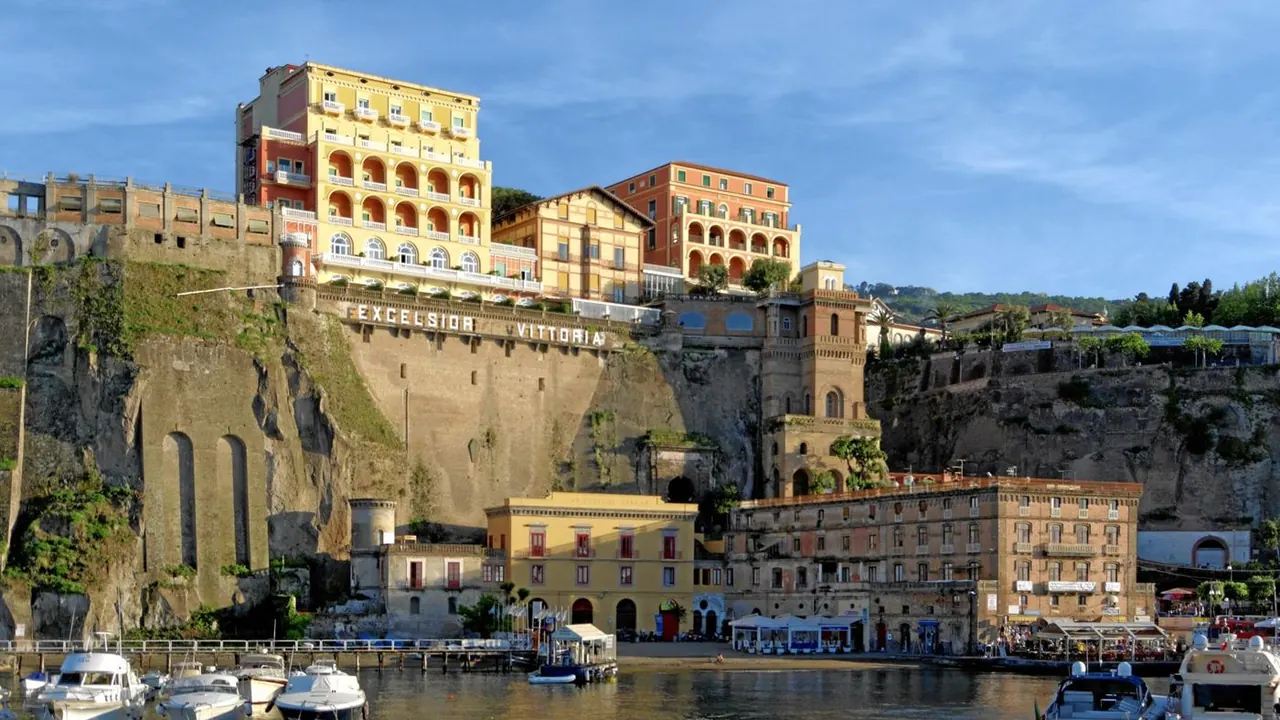
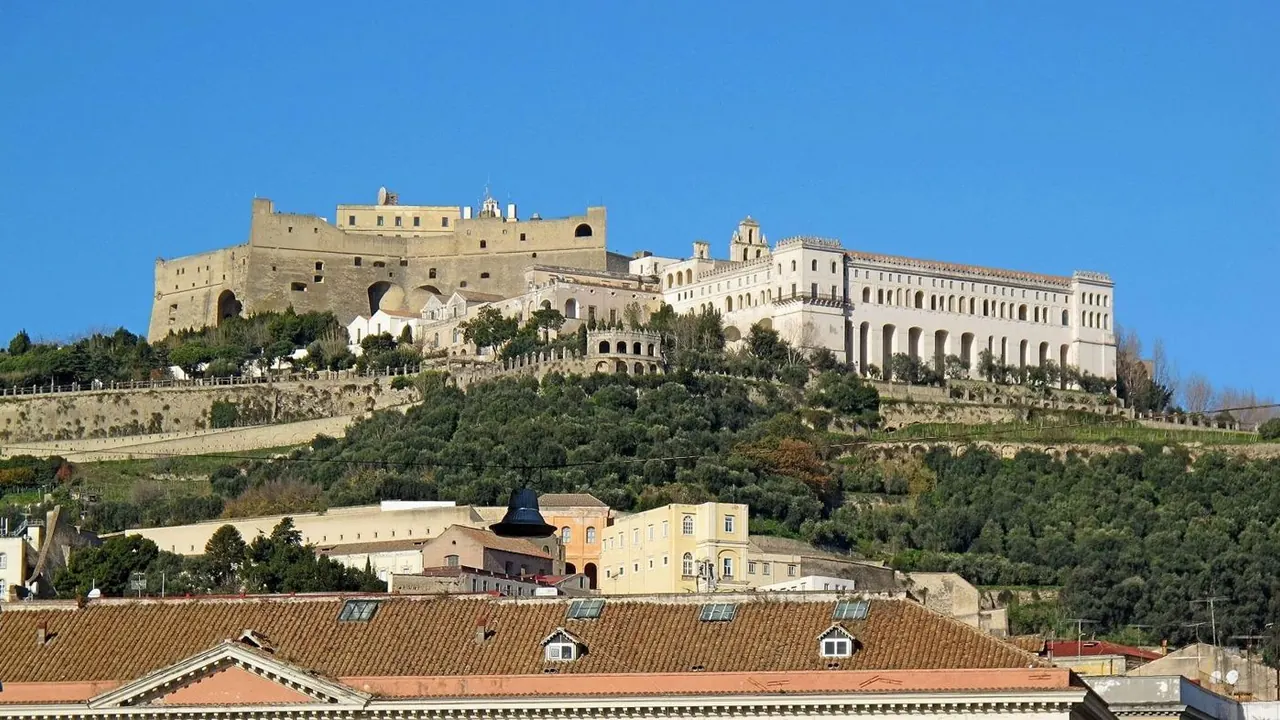
Photos: Sorrento by Berthold Werner, CC BY-SA 3.0, cropped; Naples by pietro scerrato, CC BY 3.0, cropped.
Sorrento or Naples?
Our verdict in twelve categories, each scored against the same fixed benchmark cities, and the climate month by month, so you can choose for your trip.
Choose Sorrento for
- beaches
- getting around
- wellness
Sorrento suits a slower trip by the sea. You swim off wooden piers into clear water, walk the lemon terraces of the peninsula and take the ferry to Capri, and you go back to quiet lanes at night. It costs more and has little culture or nightlife of its own, but Pompeii, the Amalfi Coast and Naples itself are all easy day trips.
Choose Naples for
- culture and sights
- live music and the arts
- nightlife
Naples is for travellers who want a real city to get stuck into. Its Greek street plan, churches, underground tunnels and the archaeological museum can fill a week. You also get the original pizza, the opera at San Carlo and evenings out in the piazzas, all at prices well below the resort coast. In return you put up with noise, scooters and a waterfront where the swimming is mediocre.
Scoreboard
Twelve categories on one fixed scale from 0 to 100. The shaded stretch is the gap between the two.
Your match
Pick a travel style or drag the sliders, and both match scores follow your weighting.
Wins on beaches and getting around with your weighting.
Wins on culture and sights and live music and the arts with your weighting.
What matters to you?
Category by category
What the scores mean for a trip.
Beaches & swimming
Sorrento comes out ahead because the swimming starts in town. A lift takes you down to the marinas, where lidos on wooden piers have ladders into clear, deep water, and the rocky inlet of the Bagni della Regina Giovanna is a short walk away. There is little sand, and in high summer much of the shore belongs to paid lidos.
In Naples the swimming is from the rocks below the Lungomare or at small lidos in Posillipo, and the water near the port is not always clean. For both places, the better coves are a boat ride away on Capri and the other islands.
Food & drink
Naples is the stronger place to eat. It is the home of pizza, and its street food runs from fried pizza to cones of seafood and sfogliatelle, with the Pignasecca and Porta Nolana markets showing what the kitchens cook with.
Sorrento cooks the same Campanian food with its own dishes, such as gnocchi alla sorrentina, fish all'acqua pazza and plenty of lemon. The centre is full of menus for tour groups, so the good meals are at Marina Grande, in the back lanes and up in the hill villages, where the peninsula's finest restaurants are. Neither place offers much beyond Italian food.
Culture & sights
There is no real contest here. Naples has one of Europe's largest historic centres, packed with churches along Spaccanapoli. It also has the archaeological museum holding the treasures of Pompeii, the Veiled Christ in the Cappella Sansevero, a city of tunnels and catacombs underground, and the Capodimonte gallery and Royal Palace above.
Sorrento's own sights take a day or two: the cathedral, the cloister of San Francesco, the Museo Correale and the overgrown ravine of the Vallone dei Mulini. Most of its cultural visits mean leaving town.
Nightlife
Naples is far livelier after dark. Crowds drink on the steps of Piazza Bellini and fill the bar alleys of Chiaia until well past midnight, though the nights are about the street rather than clubs.
Sorrento's evening is a passeggiata on Corso Italia, a drink on a terrace over the bay, and perhaps a piano bar. Outside summer it goes quiet early. The last trains and ferries leave in the evening, so a big night in Naples means staying over there.
Nature & outdoors
Both have fine landscapes on the doorstep, but the kind differs. Around Naples the landscape is volcanic. You can climb Vesuvius, walk the crater woods of Astroni and the rim of Monte Nuovo, and snorkel at the Gaiola underwater park below Posillipo. Inside the city, though, there is little green space.
Sorrento puts you on a limestone ridge of olive and lemon terraces, with footpaths leading straight out of town to Punta Campanella and the protected bay of Ieranto. Monte Faito and the Path of the Gods are also nearer, and boat trips to the grottoes of Capri are easy to arrange.
Day trips
Both are superb bases, and what differs is which way the trips point. From Naples, ferries leave Molo Beverello for Capri, Ischia and Procida. The Bourbon palace at Caserta and the Roman sites of Pozzuoli and Cuma are close by, and Pompeii and Herculaneum are under an hour on the train.
Sorrento sits nearer the south. Pompeii is about half an hour away, Capri is a short crossing, and in summer boats run to Positano and Amalfi. Ischia, Procida and Caserta are further from here, and Naples itself is an easy day out.
Good for families
In Naples the hard part is the streets. Scooters weave through the lanes, pavements are broken or missing, and steps and cobbles defeat a pushchair. Still, the city has a few things built for children, the Edenlandia amusement park, the zoo and the science museum, and older children love the tunnels underground and the funiculars.
Sorrento's flat, largely pedestrian centre is far kinder to a pushchair, but there is almost nothing in town made for children. Swimming means deep water off piers and rocks, and many hotels sit on steep lanes without pavements, so families often pick a hotel with a pool.
Getting around
Both are fine without a car, and both rely on the same old, crowded Circumvesuviana line. Naples has more transport but more chaos. Metro Line 1 and four funiculars connect the centre with Vomero and Posillipo, but buses crawl in traffic and crossing the road takes nerve.
Sorrento's centre is small and flat, with a lift down to the marinas. Leaving it means summer buses crawling around the hairpins of the Amalfi road, or ferries, and hotels in the hills depend on shuttles or taxis.
Shopping & style
Naples offers far more to shop for. It has generations of tailoring in the workshops of Chiaia, the high street of Via Toledo, the glass-roofed Galleria Umberto I, and nativity figures made all year on Via San Gregorio Armeno.
Sorrento's lanes are mostly lemon souvenirs, from limoncello to soaps and ceramics. Its two real crafts are wood inlay and leather sandals made to measure while you wait, and anyone after fashion goes to Naples or Capri.
Affordability
Naples is clearly the cheaper base. Eating as Neapolitans do costs well below northern Italian levels, and the metro and funiculars cost little. The bills that add up are the entry fees at the big archaeological sites and the ferries out to the islands.
In Sorrento you pay for the view. A room facing the bay, dinner on a terrace, a sunbed on a pier lido or a private boat all cost far more than their equivalents in Naples, especially in summer. It is still easier on the wallet than staying on Capri or the Amalfi side: local trains and buses are cheap, family trattorias off the main squares are fairly priced, and hotels ask a good deal less in spring and late autumn.
Live music & performing arts
Naples has the Teatro di San Carlo, the oldest opera house in Europe still in use, with a full season of opera, ballet and concerts. There are also concerts at the San Pietro a Majella conservatory and chamber music in the churches. Neapolitan song is still a living tradition in small theatres and trattorias.
Sorrento offers evening shows of song and tarantella staged for visitors, summer concerts in the cloister of San Francesco and singers in hotel bars. For anything bigger, you take the train to Naples.
Wellness & relaxation
Naples is no place to slow down, yet its volcanic ground gives it something Sorrento lacks: real thermal water, at the Agnano springs on the city's edge, used since Roman times. Otherwise, rest in Naples means a long lunch, an evening walk on the Lungomare or the quiet cloisters of Santa Chiara.
Sorrento's calm is gentler and comes from its setting: clifftop hotel spas, pools above the bay and the gardens of old villas. It is most restful in spring and autumn, since July and August crowd the centre. For a proper soak, the terraced thermal gardens of Ischia are about an hour by boat from either place.
When should you go?
Pick your month. The climate figures are measured averages, not a forecast.
Sorrento in July
Naples in July
Daytime high, °C
Rainfall in the month, mm
Where the figures come from
Sorrento has no rain gauge within 25 km of the centre, so its rainfall comes from a gridded climate dataset read at the city rather than from a gauge further away.
Sorrento's sunshine is measured 54 km from the centre, at Grazzanise.
Naples's sunshine is measured 28 km from the centre, at Grazzanise.
Temperature and rainfall are climate normals, averaged over the years shown. Sorrento: 2005-2025 (sunshine 1991-2020, rainfall 1991-2020) normals, Capri (17 km from centre). Naples: 2005-2020 (sunshine 1991-2020, rainfall 1971-2000) normals, Napoli / Capodichino (4.6 km from centre).
The two places share one climate, so the choice of month is the same for both. The sea is warm enough for proper swimming from June to September, reaching about 26°C in August, and it stays pleasant through October. July and August are hot, with highs around 30°C, long sunny days and almost no rain. That heat makes midday hard work in the crowded lanes of Naples and on the exposed trails above Sorrento.
The best walking weather, in the streets or on the cliff paths, comes in April and May and again from late September into October, when daytime highs sit between about 18°C and 22°C. June is already warm enough to slow you down by midday. Rain comes back in September and builds through the autumn. November is the wettest month at about 151mm, and winter is mild but grey and damp, which suits the museums of Naples better than the terraces of Sorrento.
Which traveller are you?
On a beach and sun trip, choose Sorrento. The lidos on piers at Marina Piccola and Marina Grande let you swim straight into clean, deep water. In Naples you sunbathe on rocks near a busy waterfront, and the clearer water means a boat ride.
For a culture and arts trip, Naples is the clear choice. It has the archaeological museum, the Veiled Christ, the catacombs, Capodimonte and an evening at San Carlo. Sorrento's cathedral and cloister take a day, and its own performances are mostly folk shows for visitors.
On a tight budget, base yourself in Naples. Pizza, street food, coffee at the bar and simple guesthouses in the historic centre all cost little. Sorrento charges resort rates for rooms and meals in summer, although its trains and buses are cheap.
Before you go
| Measure | Sorrento | Naples |
|---|---|---|
| Official language | Italian | Italian |
| Currency | Euro (EUR) | Euro (EUR) |
| Sockets | CFL230 V, 50 Hz | CFL230 V, 50 Hz |
| Driving side | Right | Right |
| Time zone | UTC+1, UTC+2 in summer | UTC+1, UTC+2 in summer |
| Emergency number | 112 | 112 |
| Elevation | 50 m | 17 m |
| Main airport | Naples International Airport (NAP)30 km from centre131 non-stop destinations | Naples International Airport (NAP)7 km from centre131 non-stop destinations |
| Public holidays this year | 13 days | 13 days |
By the numbers
| Measure | Sorrento | Naples |
|---|---|---|
| City population | 15,407 | 913,462 |
| People per km² | 1,541 | 7,676 |
| Museums within 10 km | 6 | 65 |
| UNESCO World Heritage sites within 50 km | 5 | 5 |
| Swim season, months above 21 °C | 5 months | 5 months |
Where else could you go?
Every comparison below shares a destination with this one, so you can follow Sorrento or Naples somewhere new.
- Positanovs Sorrento
- Amalfivs Sorrento
- Positanovs Naples
- Salernovs Sorrento
- Amalfivs Naples
- Salernovs Naples