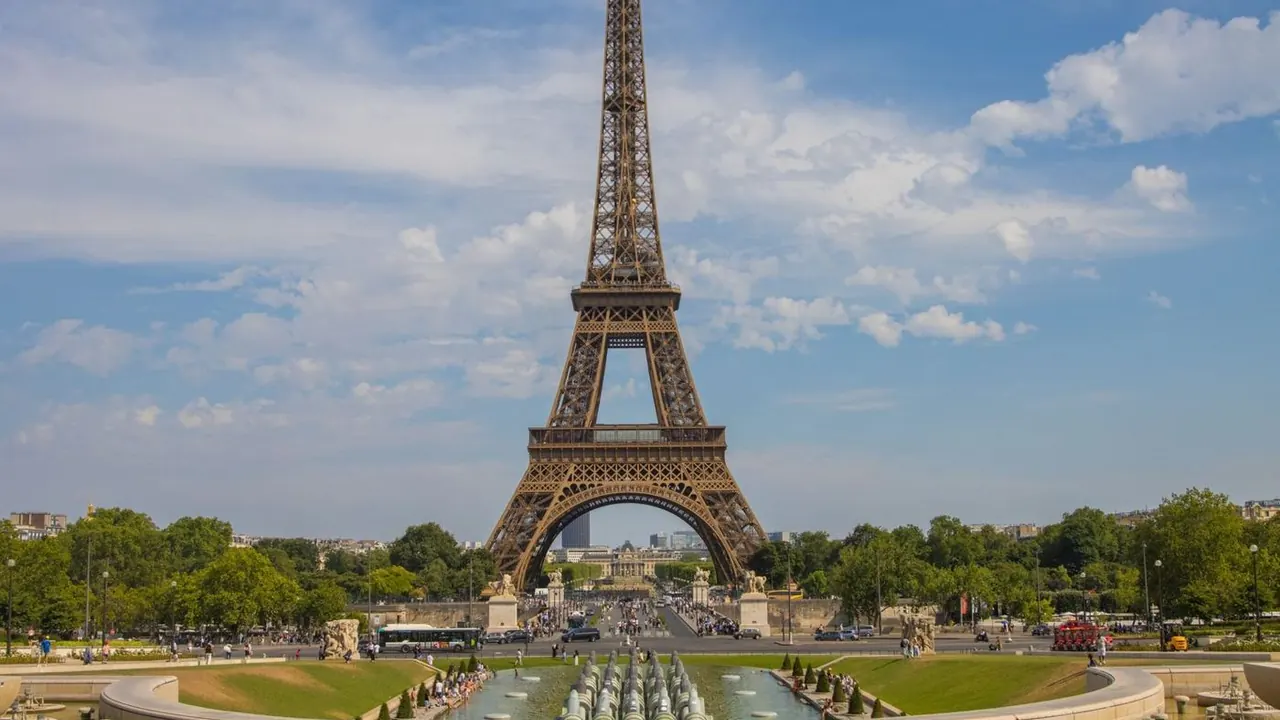
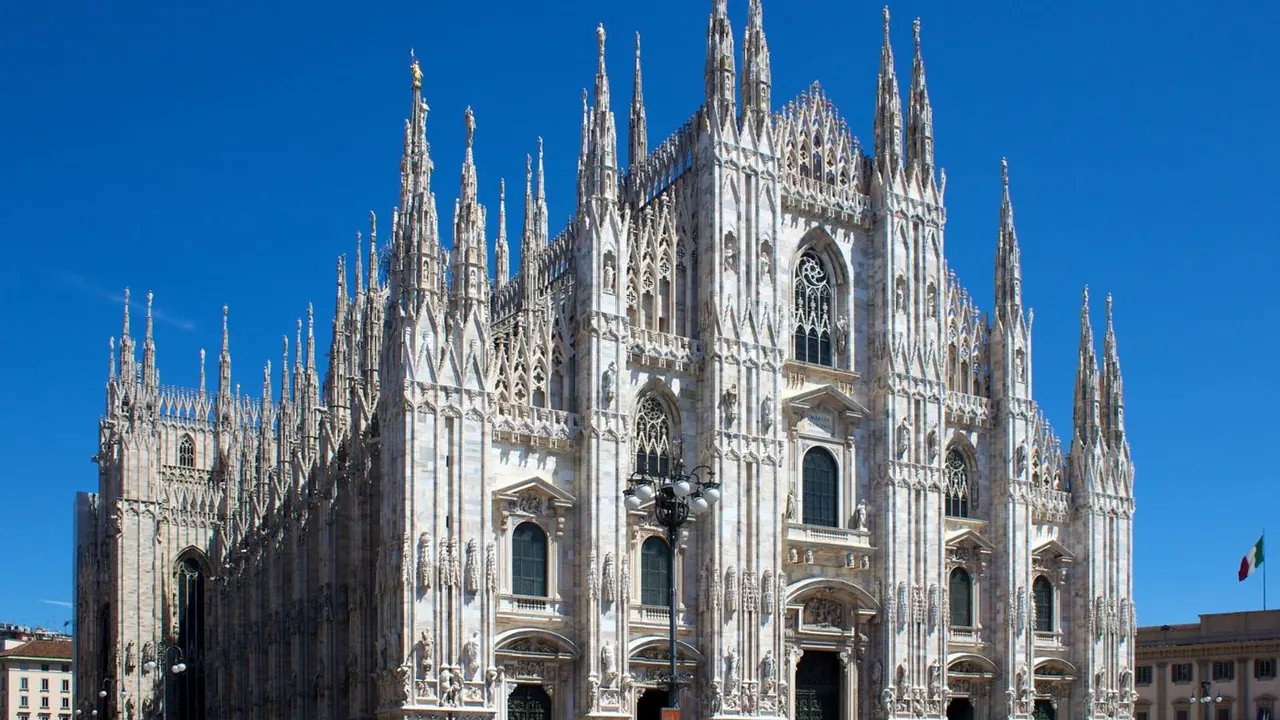
Photos: Paris by Efrem Efre, Pexels License; Milan by Jiuguang Wang, CC BY-SA 3.0, cropped.
Paris or Milan?
Our verdict in twelve categories, each scored against the same fixed benchmark cities, and the climate month by month, so you can choose for your trip.
Choose Paris for
- families
- culture and sights
- food and drink
Paris is the better choice when the city itself is the whole trip. Its museums and monuments go far deeper, and food is part of every street, from market mornings to wine bars and immigrant kitchens in the east. The nightlife lasts longer, and families have far more to do. Day trips are just as rich, but you go for châteaux and cathedrals rather than lakes and mountains.
Choose Milan for
- nature and the outdoors
- beaches
- prices
Milan suits the traveller who wants a smaller, sharper city with an exit route. A few first-rank sights, the Last Supper, the Duomo roofs and the Brera gallery, fit into a couple of days. After that the trip turns to La Scala, fashion and design shopping, and fast trains to Lake Como, Bergamo, Verona and the Prealps. It is also a little gentler on the budget, though neither city is cheap.
Scoreboard
Twelve categories on one fixed scale from 0 to 100. The shaded stretch is the gap between the two.
Your match
Pick a travel style or drag the sliders, and both match scores follow your weighting.
Wins on families and culture and sights with your weighting.
Wins on nature and the outdoors and beaches with your weighting.
What matters to you?
Category by category
What the scores mean for a trip.
Beaches & swimming
Neither city has a coast, but Milan makes summer swimming easier. Lake Como and Lake Maggiore are about an hour by train, with pebbly lidos and swimming platforms in warm water in August. Closer in, there are the Idroscalo basin and the city's open-air pools.
Paris has to make do with sand-covered riverbanks, swimming spots on the Bassin de la Villette and in the Seine, and some fine Art Deco pools. The nearest real sea is the cool Channel at Deauville, two hours away, so a beach day there takes more effort than a lake day from Milan.
Food & drink
Milan is the place for northern Italian cooking at its richest: butter, saffron and slow-braised veal rather than the olive oil of the south. Italians from every region live here, so you can also eat your way round the whole country in one city, from Neapolitan pizza to Sicilian sweets, as well as at a serious tier of fine dining. The best of it comes at set moments, a pastry and a stand-up espresso in the morning or a booked dinner in the evening.
Ordinary eating is patchier, with fewer markets and little street food.\n\nParis goes further, because good food is spread through the whole city instead of kept for particular addresses. Most streets have a bakery and a cheese shop, and most neighbourhoods have a market morning, so a picnic or a quick lunch can match a booked dinner. The choice is also wider. Haute cuisine and natural wine bars sit at one end, and the North African, Vietnamese and West African cooking of the east and the 13th sits at the other. Milan's food is mostly Italian, so it has nothing on that scale.
Culture & sights
Milan has a handful of great sights: the Duomo and its rooftop spires, Leonardo's Last Supper, the Brera paintings and Michelangelo's Rondanini Pietà at the Castello. These sit in clusters inside a largely modern business city, so a focused couple of days covers the essentials.
Paris works on another scale. The Louvre, Orsay, the Pompidou, the Orangerie and Cluny would each anchor a trip on their own, and the Sainte-Chapelle and Notre-Dame add Gothic masterpieces. The setting matters too: Haussmann's boulevards, the Marais townhouses and the UNESCO-listed Seine embankments make the walks between museums part of the visit.
Nightlife
A Milan evening is built around aperitivo. It moves from the Navigli towpaths to calmer Brera or relaxed Isola and Porta Venezia, with dressy clubs around Corso Como where looks count at the door. The city is well dressed rather than wild, and it goes quiet in August.
Paris offers more and stays out later. The crowded, unpretentious bars of Oberkampf, the Canal Saint-Martin and Belleville carry on into house and techno clubs and summer barges that run until dawn. Both scenes can be choosy at the door, but in Paris the night out is longer and covers more neighbourhoods.
Nature & outdoors
Milan itself is flat and often hazy, but it has the better outdoors within reach. Steep wooded slopes rise around Lake Como and Lake Maggiore, and there is windsurfing on the water, hiking and via ferrata on the Grigne, and ski resorts in the Valtellina for a long winter day.
Paris has the finer city parks, from the Buttes-Chaumont cliffs to the woods of Boulogne and Vincennes. Fontainebleau's sandstone boulders are a real draw for climbers. Beyond that, the Île-de-France offers gentle forest walks and cycling, with no mountains or water on Milan's scale.
Day trips
Both are first-class bases, and the difference is what you travel to see. From Milan, fast trains reach whole other cities: Verona's arena, Turin's palaces, Bologna, Bergamo's upper town and Lugano across the Swiss border. The lakes and the Borromean Islands add scenery that Paris has no equivalent for.
From Paris, the trips are mostly about palaces, cathedrals and landscapes made famous by painters: Versailles, Chantilly, Chartres, Monet's Giverny and Van Gogh's Auvers. Champagne at Reims and the Loire châteaux beyond Tours are a fast train away.
Good for families
Paris is much better for children. Disneyland and Parc Astérix are within easy reach, and the Cité des Sciences, the Jardin d'Acclimatation, the natural history galleries and the Vincennes zoo can fill a week. The Luxembourg gardens add carousels, puppet shows and toy boats. The costs are metro stairs, cramped hotel rooms and long queues.
Milan's flat centre and simple transport make it less tiring day to day, but there is less to do. Its science museum with the submarine is a good morning out, and the big theme parks, Leolandia and Gardaland, are a trip out of the city. Most of the famous sights are aimed at adults.
Getting around
Paris is the better city on foot. Walks along the river from the Louvre to the Eiffel Tower or from the Marais to Saint-Germain are often the best part of the day, and the metro is so dense that a station is always close. Its drawbacks are long corridors, stairs without lifts and crowded lines with pickpockets.
Milan's flat centre is also easy to walk, but it is smaller, and the city beyond it is less rewarding on foot. Its five metro lines are simpler to follow, and the old orange trams are a pleasure to ride. The weak points are the hot stations in summer and the long trip in from Malpensa.
Shopping & style
Both are world fashion capitals, and the difference is in kind. Milan is the more focused: the Quadrilatero around Via Montenapoleone holds houses founded in the city, and furniture and lighting showrooms make design a second reason to come.
Paris has a slightly broader range. Beyond Avenue Montaigne and the domed Galeries Lafayette there are the nineteenth-century covered passages, the huge Saint-Ouen flea market, the bouquinistes along the Seine, and chocolate, cheese and mustard from old specialist shops.
Affordability
Both are expensive, and Milan is the slightly cheaper of the two. Its hotels are dear and get much worse during trade fairs and fashion weeks, but aperitivo snacks can replace a light supper and the office-worker lunch menus are good value.
Paris rooms cost more and tend to be small, and the major museums charge full admission. You can save by walking, using the free permanent collections in the city's own museums, eating from bakeries and markets, and picnicking by the Seine.
Live music & performing arts
In Milan, it all comes back to La Scala, one of the world's great opera houses. Gallery seats put it within reach, and the Piccolo Teatro, the Auditorium orchestra and big summer concerts at San Siro fill out the calendar.
Paris spreads its offer wider. Ballet at the Palais Garnier, opera at the Bastille and concerts at the Philharmonie are joined by candlelit chamber music in the Sainte-Chapelle, jazz cellars around rue des Lombards and cabaret in Pigalle. Much of its theatre is in French, though.
Wellness & relaxation
Neither is a place to slow right down, but the ways to rest differ. Milan has a thermal spa complex with outdoor pools and the 1930s Bagni Misteriosi in summer. Its real advantage is that the quiet villas and lakeside walks of Como and Maggiore are an hour away.
Paris has no thermal tradition. What it offers is the tiled steam rooms and mint tea of the Grande Mosquée hammam, hotel spas, and the simple pleasure of a chair in the Luxembourg gardens.
When should you go?
Pick your month. The climate figures are measured averages, not a forecast.
Paris in July
Milan in July
Daytime high, °C
Rainfall in the month, mm
Where the figures come from
Milan's sunshine is measured 41 km from the centre, at Novara / Cameri.
Temperature and rainfall are climate normals, averaged over the years shown. Paris: 1991-2020 (sunshine 1961-1990) normals, Paris-Montsouris (4.6 km from centre). Milan: 1991-2020 (rainfall 1971-2000) normals, Milano / Linate (8 km from centre).
The two cities have similar winters, cold and grey with highs around 7 to 7°C, so December to February is for museums, opera and shops rather than long walks. The real difference is summer. Milan gets hotter and stickier, reaching 29°C in July, which is good for a swim in the lakes in July and August but heavy going in the streets and on the metro. Paris peaks at a milder 26°C, and summer days stay comfortable for walking.
Rain falls differently too. Paris spreads its rain fairly evenly through the year, and even its wettest month, May, gets only about 75mm. Milan is drier in winter but very wet from September to November, with around 75mm in November, and its sunshine falls away quickly after September. For Milan, May, June and early September are the best balance. Paris is easy from May to September, and pleasant in spring and early autumn as well.
Which traveller are you?
On a family trip with children, choose Paris. There is enough to fill a week without repeating a day. Plan one big outing each morning, keep afternoons for the parks and pick a hotel near a step-free station. Milan suits a shorter stop.
For an outdoors trip, Milan is the better base. Stay near Centrale or Garibaldi, take early trains north and treat the city as a place to eat and sleep between lake and mountain days. Around Paris the walking is gentle and flat.
On a food and nightlife trip, Paris goes further. Eat lunch at a market or bistro, start the evening on a terrace or the canal banks, and save late nights for the east of the city. Milan's evenings are smarter and end sooner.
Before you go
| Measure | Paris | Milan |
|---|---|---|
| Official language | French | Italian |
| Currency | Euro (EUR) | Euro (EUR) |
| Sockets | CE230 V, 50 Hz | CFL230 V, 50 Hz |
| Driving side | Right | Right |
| Time zone | UTC+1, UTC+2 in summer | UTC+1, UTC+2 in summer |
| Emergency number | 112 | 112 |
| Elevation | 27 m | 138 m |
| Main airport | Charles de Gaulle International Airport (CDG)22 km from centre277 non-stop destinations | Milan Malpensa International Airport (MXP)40 km from centre208 non-stop destinations |
| Public holidays this year | 11 days | 13 days |
By the numbers
| Measure | Paris | Milan |
|---|---|---|
| City population | 2,103,778 | 1,354,196 |
| People per km² | 19,960 | 7,453 |
| Museums within 10 km | 251 | 88 |
| UNESCO World Heritage sites within 50 km | 5 | 4 |
Where else could you go?
Every comparison below shares a destination with this one, so you can follow Paris or Milan somewhere new.