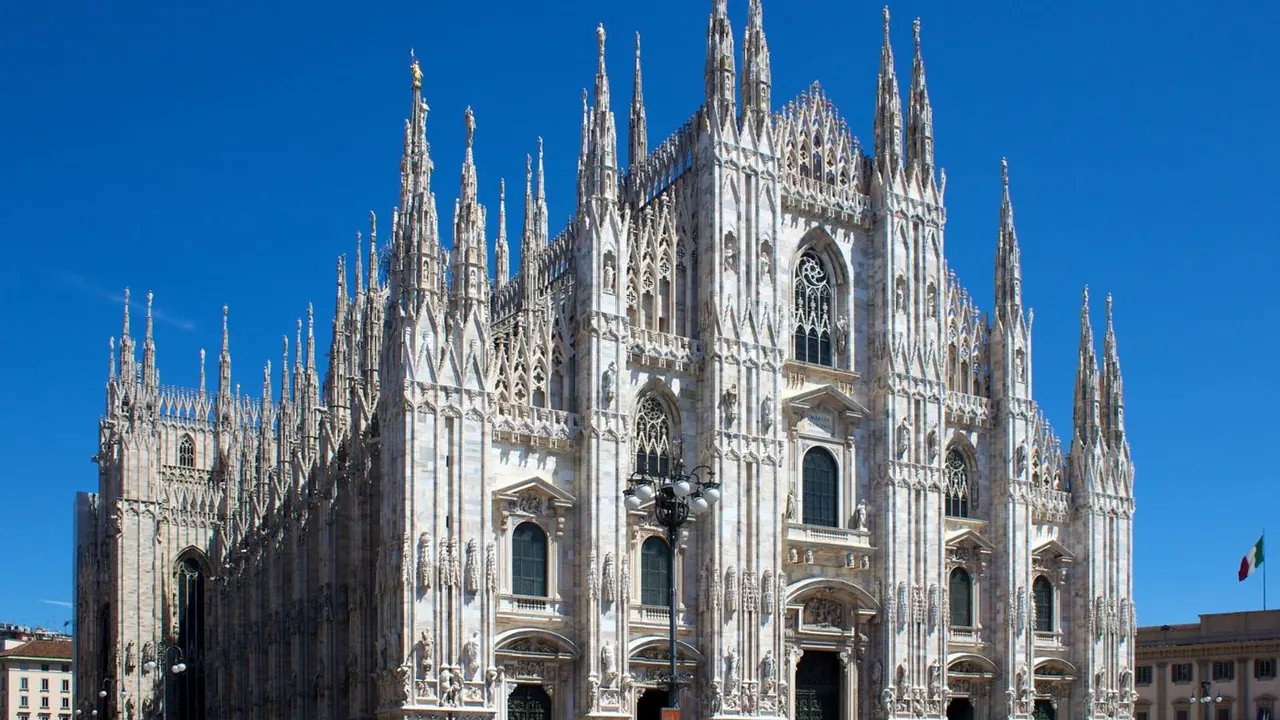
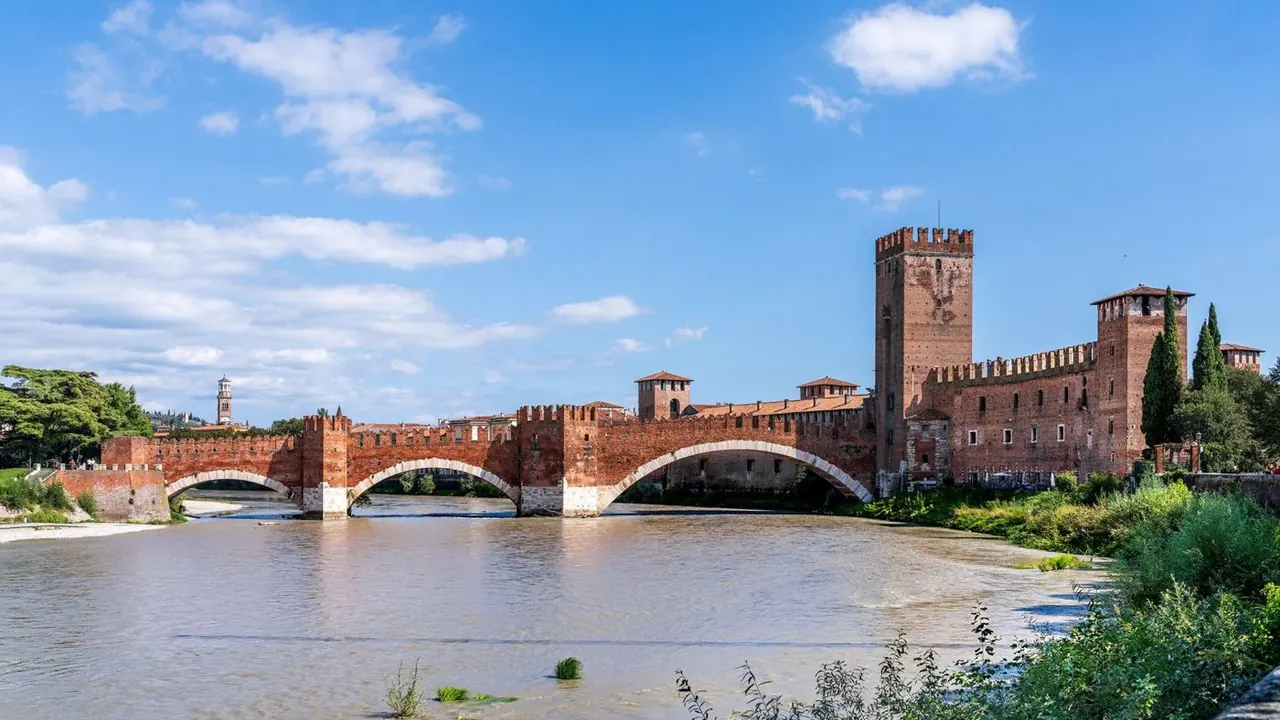
Photos: Milan by Jiuguang Wang, CC BY-SA 3.0, cropped; Verona by NorbertNagel, CC BY-SA 4.0, cropped.
Milan or Verona?
Our verdict in twelve categories, each scored against the same fixed benchmark cities, and the climate month by month, so you can choose for your trip.
Choose Milan for
- shopping
- nightlife
- live music and the arts
Milan suits the traveller who wants a big city. That means fashion flagships in the Quadrilatero, a night at La Scala, aperitivo that turns into a late evening along the Navigli, and a wider choice of food than anywhere else in northern Italy. It costs more, and its heritage comes in clusters inside a modern business city. But the metro and trams make it easy to cover, and Lake Como is an hour away.
Choose Verona for
- beaches
- prices
- families
Pick Verona for a slower, more compact trip where the old city is the whole point. The Roman Arena, Piazza delle Erbe and San Zeno all lie within a short walk inside the loop of the Adige. Summer opera on the stone tiers, Lake Garda half an hour away and Valpolicella cellars on the doorstep make it the better choice for couples, wine lovers and families with Gardaland in mind. It is also somewhat easier on the budget, though evenings end early.
Scoreboard
Twelve categories on one fixed scale from 0 to 100. The shaded stretch is the gap between the two.
Your match
Pick a travel style or drag the sliders, and both match scores follow your weighting.
Wins on shopping and nightlife with your weighting.
Wins on beaches and prices with your weighting.
What matters to you?
Category by category
What the scores mean for a trip.
Beaches & swimming
Swimming in Milan itself means the Idroscalo, a large artificial basin near Linate airport with grassy banks, or one of the city's open-air pools. For proper lake water you take a train of about an hour to the pebbly lidos of Como and Maggiore, so a swim stays an occasional summer outing.
Verona has lake swimming much closer. Lake Garda's southern shore is about half an hour away, with lawns and lidos at Lazise and Bardolino and Sirmione's flat limestone shelves, and by July the water is around 24°C. It is still a day out rather than part of the stay, though. The narrow beaches fill up on summer weekends, and visitors who want the lake every day stay on Garda itself.
Food & drink
Milan has the broader table. It has its own butter-rich classics such as saffron risotto, ossobuco and cotoletta, some of the best cooking from other Italian regions you will find away from home, and a real tier of fine dining. Aperitivo in the Navigli, Brera and Isola can be a meal in itself.
Verona is narrower but deeply local. Plain osterie around Piazza delle Erbe and in Veronetta serve Amarone risotto, bigoli with duck and bollito with pearà. Its strength is wine, with Valpolicella, Amarone and Soave made a short drive away, though the choice thins out beyond Veneto cooking and the menus around the Arena are weak.
Culture & sights
Both reward a curious visitor, but in different ways. Milan has a handful of works of the first rank, spread across a largely modern city: Leonardo's Last Supper, the Duomo's rooftop among the spires, the Brera paintings and Michelangelo's Rondanini Pietà.
In Verona the townscape itself is the sight. Its UNESCO-listed centre inside the Adige loop puts the Roman Arena, the hillside Roman theatre, the Scaliger tombs and San Zeno within an easy walk of each other. Milan is about great collections and Verona about walking through layers of history, and two or three days cover it.
Nightlife
Milan is the place to stay out late. Aperitivo on the Navigli towpaths runs on into the bars of Isola and Porta Venezia, which is also the city's gay quarter. The clubs range from dressy venues on Corso Como to warehouse nights on the edges, though August goes quiet.
An evening in Verona is a spritz or a glass of Valpolicella in Piazza delle Erbe, and Veronetta's student bars stay busy a little later. There is no dance scene in the centre, and outside the summer opera nights the streets empty well before the small hours.
Nature & outdoors
Both cities sit on the edge of the Po plain with the Alps rising to the north, and both reward walkers and cyclists who are willing to travel a little. Milan's green space in town is Parco Sempione and the canal towpaths. Como, Maggiore and the via ferrata of the Grigne ridges are an hour away, and ski resorts are within reach for a long winter day.
Verona has more on its doorstep: vineyard walks in Valpolicella, the climb to Castel San Pietro and the Adige cycle route north. On Lake Garda, Monte Baldo offers ridge walks and paragliding, the north end of the lake has reliable wind for sailing, and the Lessinia plateau adds gorges and beech woods.
Day trips
Both are among the best bases in northern Italy, and both sit on the fast rail lines, so the difference lies in what is in range. Milan reaches west and north: Lake Como's villages, Bergamo's upper town, Turin's royal palaces, the Certosa di Pavia and even Lugano across the Swiss border.
Verona looks east and to the lake. Venice is close enough for a full day, Vicenza's Palladio and Padua's Scrovegni Chapel are even quicker, and Sirmione, Soave and the Valpolicella cellars make easy half days. Mantua and Bologna are within reach from either city.
Good for families
Verona is the easier choice with children. Gardaland is about half an hour away and the drive-through safari at Parco Natura Viva is at a similar distance. Garda's calm, shallow water suits small swimmers, and the Arena tends to catch a child's imagination, though most of the attractions outside town need a car or a transfer.
Milan's best offer is the Science and Technology museum with its submarine, plus the aquarium and playgrounds of Parco Sempione. Gardaland is about an hour and a half away, and most of the city's highlights are aimed at adults.
Getting around
Milan has the stronger network. Its five metro lines are simple to follow and take contactless cards at the gates, a dense tram web includes the old orange cars, and direct trains to the lakes leave from three stations. The drawbacks are long transfers from Malpensa and hot platforms in summer.
Verona needs less, because its traffic-free centre is small enough to cross on foot. There is no metro or tram, though, and Porta Nuova station is about twenty minutes' walk from Piazza Bra. Buses to the Valpolicella and the Lessinia are thin, so a car helps beyond the rail line.
Shopping & style
This is where Milan leads most clearly. The Quadrilatero della Moda holds the flagships of the great Italian houses, and the Galleria and La Rinascente are institutions in their own right. Brera, Porta Ticinese, Corso Buenos Aires and the design showrooms cover everything else.
Verona's Via Mazzini is a pleasant, smart high street, but its range is provincial. It does better with food and drink to take home: Amarone, Garda olive oil and pandoro make souvenirs worth packing.
Affordability
In Milan the hotels set the price of the trip. It is Italy's most expensive city, rooms are dear by Southern European standards, and they become scarce during fashion weeks and trade fairs. Restaurants in the centre and Brera cost about as much. You can cut costs by making aperitivo your supper, eating the set lunches aimed at office workers and sleeping near a metro stop outside the centre.
Verona costs less day to day, though it is not as cheap as its size suggests. Rooms inside the river loop are dear for a provincial city, especially on summer opera nights. Away from the hotels it is easier: Veronetta's student osterie, wine counters that serve a snack with each glass and a centre you can cross on foot keep the rest modest, and the local wines are good value.
Live music & performing arts
Milan has the deeper calendar for most of the year. La Scala's season opens each December, and around it are the Piccolo Teatro, a fine symphony orchestra at the Auditorium, musicals at the Arcimboldi and small jazz rooms. Summer is the quiet time.
Verona is the reverse. Its great asset is summer opera in the Roman Arena, grand Verdi and Puccini under the stars, along with Shakespeare and jazz in the Roman theatre. The cooler months bring only a modest season at the Teatro Filarmonico, so go to Milan for opera in winter and to Verona in summer.
Wellness & relaxation
Milan's chances to unwind are mostly inside the city. It has a well-known thermal spa complex in the south of the centre with outdoor pools and saunas, a few good hotel spas and, in summer, the restored 1930s Bagni Misteriosi pools. For real rest, people take the train to the lakes.
Verona has a slight edge, thanks to the warm springs around it and a slower pace in town. Sirmione's thermal centre has pools facing Lake Garda, a spring-fed thermal lake lies in an old villa garden near Lazise, and the springs at Caldiero, east of town, go back to Roman times. In the city itself, rest means long lunches, a passeggiata by the river and the terraces of the Giardino Giusti.
When should you go?
Pick your month. The climate figures are measured averages, not a forecast.
Milan in July
Verona in July
Daytime high, °C
Rainfall in the month, mm
Where the figures come from
Milan has no rain gauge within 25 km of the centre, so its rainfall comes from a gridded climate dataset read at the city rather than from a gauge further away.
Milan's sunshine is measured 41 km from the centre, at Novara / Cameri.
Temperature and rainfall are climate normals, averaged over the years shown. Milan: 1991-2020 normals, Milano / Linate (8 km from centre). Verona: 1991-2020 normals, Verona / Villafranca (11.6 km from centre).
Both cities share the climate of the Po plain: cold, grey winters with highs around 7°C and hot, humid summers. Spring and early autumn are the times for walking the streets. May and June are pleasant in both. July and August bring heat that makes midday sightseeing hard work, and both cities run near 30°C, but Verona has noticeably more sunshine through the summer. For lake swimming, the window is June to September from either city.
The bigger difference is rain. Milan turns wet from September to November, peaking around 128mm in November, while Verona's autumn is drier and brighter, which makes September and October a better bet there. In winter both are chilly and short of sun, and Milan is the greyer of the two.
Which traveller are you?
For a shopping trip, Milan is the clear choice. The Quadrilatero della Moda, the Galleria, La Rinascente and the design showrooms make shopping a reason to travel. Verona's Via Mazzini is smart but provincial, and best for wine and pandoro.
On a food and nightlife trip, Milan offers more: regional cooking from all over Italy, serious fine dining, and aperitivo along the Navigli that carries on into bars and clubs. Verona's wine is superb, but its nights end early.
On a beach and sun trip, Verona wins. Lake Garda's lidos and Sirmione's limestone shelves are half an hour away, and its summers are sunnier. From Milan the lakes mean an hour on the train, so swimming stays an occasional outing.
Before you go
| Measure | Milan | Verona |
|---|---|---|
| Official language | Italian | Italian |
| Currency | Euro (EUR) | Euro (EUR) |
| Sockets | CFL230 V, 50 Hz | CFL230 V, 50 Hz |
| Driving side | Right | Right |
| Time zone | UTC+1, UTC+2 in summer | UTC+1, UTC+2 in summer |
| Emergency number | 112 | 112 |
| Elevation | 138 m | 59 m |
| Main airport | Milan Malpensa International Airport (MXP)40 km from centre208 non-stop destinations | Verona Villafranca Valerio Catullo Airport (VRN)10 km from centre96 non-stop destinations |
| Public holidays this year | 13 days | 13 days |
By the numbers
| Measure | Milan | Verona |
|---|---|---|
| City population | 1,354,196 | 255,588 |
| People per km² | 7,453 | 1,285 |
| Museums within 10 km | 88 | 18 |
| UNESCO World Heritage sites within 50 km | 4 | 5 |
Where else could you go?
Every comparison below shares a destination with this one, so you can follow Milan or Verona somewhere new.