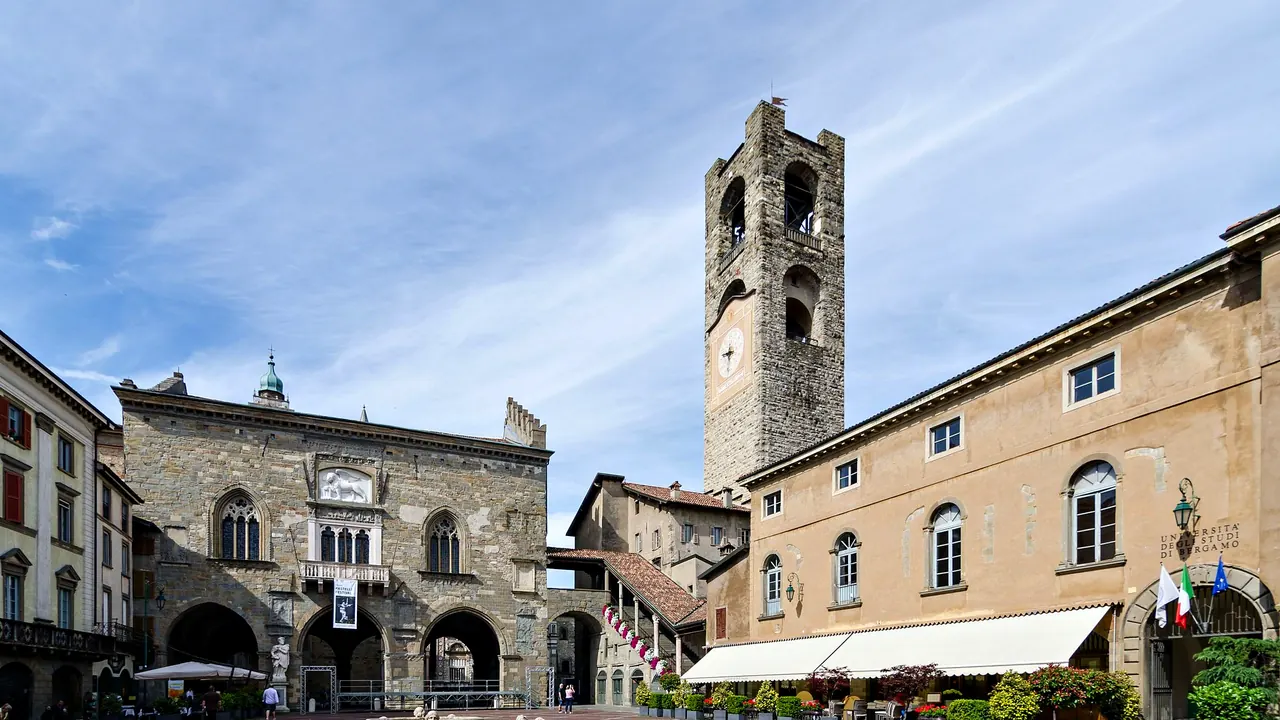
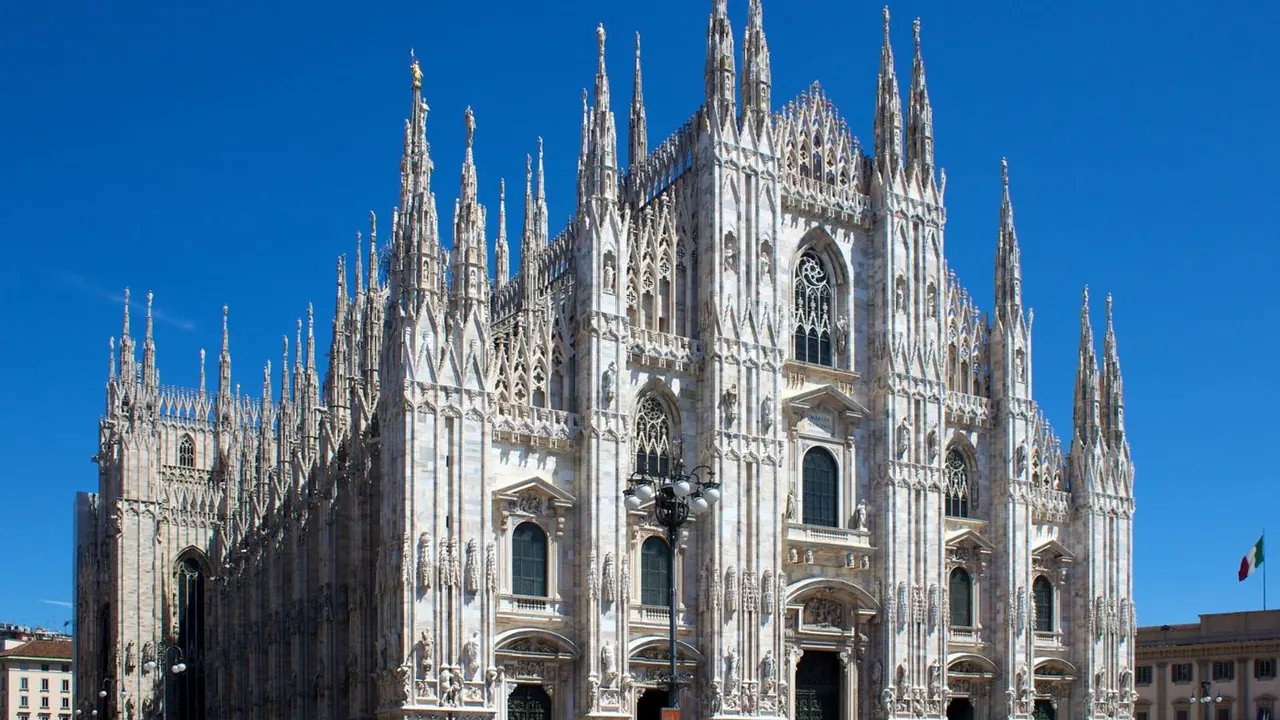
Photos: Bergamo by Steffen Schmitz, CC BY-SA 4.0, cropped; Milan by Jiuguang Wang, CC BY-SA 3.0, cropped.
Bergamo or Milan?
Our verdict in twelve categories, each scored against the same fixed benchmark cities, and the climate month by month, so you can choose for your trip.
Choose Bergamo for
- prices
- beaches
- wellness
Bergamo suits a slower, more affordable trip built around one superb walled hilltop town, Lombard mountain cooking and the valleys and lakes on its doorstep. It is quiet after midnight, easier on the wallet, and works well as a base from which Milan becomes the day out rather than the other way round.
Choose Milan for
- shopping
- live music and the arts
- nightlife
Milan is the stronger choice for travellers who want a big city at full stretch: La Scala and the Piccolo Teatro, the Last Supper and the Brera, fashion streets of world rank and evenings that run on along the Navigli long after Bergamo has gone to bed. The price is higher hotel bills and a modern, businesslike city, with its heritage gathered in clusters rather than in one old town.
Scoreboard
Twelve categories on one fixed scale from 0 to 100. The shaded stretch is the gap between the two.
Your match
Pick a travel style or drag the sliders, and both match scores follow your weighting.
Wins on prices and beaches with your weighting.
Wins on shopping and live music and the arts with your weighting.
What matters to you?
Category by category
What the scores mean for a trip.
Beaches & swimming
Neither city has a coast, and swimming means lakes in both, with pebble, grass or concrete platforms and water around 23°C at the height of summer. Bergamo has the edge because Lake Iseo is close, with lidos at Sarnico and Lovere, and the Lecco arm of Lake Como is easy to reach too.
From Milan the lakes are about an hour by train, so a swim takes most of a day. Inside the city, the Idroscalo basin near Linate and the open-air pools are what locals use.
Food & drink
Milan eats better and more widely. Beyond saffron risotto, ossobuco and cotoletta, it draws cooks from all over Italy, so Neapolitan pizza, Sicilian pastry and serious fine dining sit side by side, and aperitivo in the Navigli, Brera and Isola is a meal in its own right.
Bergamo's table is narrower but more rooted: casoncelli with butter and sage, polenta with game and mushrooms, and valley cheeses such as Taleggio, Branzi and Strachitunt. Its cheese counters in the Città Alta beat anything you will casually find in Milan, but look elsewhere for variety beyond Italian food.
Culture & sights
Milan carries more weight in individual masterpieces: the Duomo with its rooftop among the spires, Leonardo's Last Supper, the Brera's paintings and Michelangelo's Rondanini Pietà in the Castello Sforzesco. Its heritage is scattered in pockets through a largely modern city, and the big sights need booking and time.
Bergamo offers something Milan lacks, an almost complete walled town on a hill, ringed by UNESCO-listed Venetian fortifications, with Piazza Vecchia, Santa Maria Maggiore and the Cappella Colleoni close together. The Accademia Carrara adds Raphael and Bellini below the hill, and the whole lot fits comfortably into a day or two.
Nightlife
Milan is the place for a real night out. The Navigli canals fill with drinkers on summer evenings, Porta Venezia anchors the gay scene, and clubs range from the dressy Corso Como venues, where appearance counts at the door, to warehouse nights on the edges. It quietens in August, when much of the city leaves.
Bergamo keeps things modest: a long aperitivo, wine bars around Via XX Settembre and Borgo Santa Caterina, and summer drinks on the walls of the Città Alta. Clubs are few and far out, and Bergamo's own night owls take the train to Milan.
Nature & outdoors
Bergamo is closer to the outdoors. Paths climb from the upper town through the Colli di Bergamo to San Vigilio, and Val Brembana and Val Seriana lead into the Orobie Alps, with rifugi, high lakes and serious summer hiking, though a car helps for the upper valleys.
Milan sits on the flat, hazy Po plain, with Parco Sempione and the canal towpaths as its green space. Its strength is the train to Lake Como, Lake Maggiore and the Grigne ridges near Lecco, which suits walkers happy to travel to the trailhead.
Day trips
Both make excellent bases, and each is a classic day trip from the other. Milan's position on the high-speed lines gives it the wider reach, with Turin, Verona and Bologna in around an hour, plus the Certosa di Pavia, Vigevano and the Borromean Islands on Lake Maggiore.
Bergamo's strength is what lies close: Lake Iseo and car-free Monte Isola, the factory village of Crespi d'Adda, the Franciacorta wine country and Brescia, with Milan's own sights under an hour away.
Good for families
The two are equally manageable with children, in different ways. Bergamo is calm and small, with funicular rides, gelato on the walls and Leolandia about twenty minutes by car, though the steep cobbles are hard with a buggy.
Milan has the better rainy-day option in the science and technology museum with its submarine, a flat centre for pushchairs and trams that children enjoy, but summer humidity is heavy and most of its famous sights appeal to adults.
Getting around
Milan is easier to move around without thinking. A flat, compact centre, five simple metro lines and a dense tram network mean no car is ever needed, though the long transfer from Malpensa is a drawback.
Bergamo is walkable on each of its two levels, with funiculars linking the lower town, the Città Alta and San Vigilio, and its airport is only a short bus ride from the centre. Beyond the city, the valleys and lake shores are much easier by car.
Shopping & style
Milan is one of the world's fashion capitals and shopping can be the whole point of a visit. The Quadrilatero around Via Montenapoleone, the Galleria Vittorio Emanuele II and La Rinascente beside the Duomo handle the top end, Corso Buenos Aires the everyday, and design showrooms and Navigli antique markets add more.
Bergamo offers mid-range chains under the Sentierone arcades and, in the upper town, delicatessens and cheese shops that make for the best edible souvenirs. For anything stylish, Bergamo's shoppers go to Milan.
Affordability
Bergamo is clearly the cheaper stay. Lower-town hotels and trattorias are fairly priced, which is why many travellers sleep there and visit Milan by train, though rooms inside the Città Alta cost more.
Milan is Italy's most expensive city, and trade fairs and fashion weeks push hotel rates higher still. Aperitivo snacks, office-worker lunch menus and a room near an outer metro stop soften the bill.
Live music & performing arts
Milan is in a different league here. La Scala's season of opera, ballet and concerts is the draw, backed by the Piccolo Teatro, a symphony orchestra at the Auditorium, musicals at the Arcimboldi and big summer concerts at San Siro.
Bergamo, Donizetti's birthplace, has a respectable opera life of its own at the Teatro Donizetti, with an autumn festival devoted to the composer and Bergamo Jazz in spring. Between those, its programme is provincial, and La Scala is an easy evening trip away.
Wellness & relaxation
Bergamo is the more restful of the two. San Pellegrino Terme, a Belle Époque spa town, is about forty minutes up Val Brembana, Trescore Balneario has sulphur springs used since Roman times, and the Città Alta is quiet in the early morning and evening.
Milan is a work-driven city, though its thermal spa complex south of the centre and the 1930s Bagni Misteriosi pools in summer give an afternoon's respite. For real rest, Milanese head to the lakes.
When should you go?
Pick your month. The climate figures are measured averages, not a forecast.
Bergamo in July
Milan in July
Daytime high, °C
Rainfall in the month, mm
Where the figures come from
Bergamo has no rain gauge within 25 km of the centre, so its rainfall comes from a gridded climate dataset read at the city rather than from a gauge further away.
Bergamo's sunshine is measured 64 km from the centre, at Lugano.
Milan's sunshine is measured 41 km from the centre, at Novara / Cameri.
Temperature and rainfall are climate normals, averaged over the years shown. Bergamo: 1991-2020 normals, Bergamo / Orio Al Serio (3.9 km from centre). Milan: 1991-2020 (rainfall 1971-2000) normals, Milano / Linate (8 km from centre).
Bergamo is warm enough for walking the upper town and the valleys from May, but late spring is showery, with May and June each bringing over 100mm of rain. Midsummer is a little drier. July and August reach about 29°C, good for a swim at Lake Iseo but tiring on the climb to the Città Alta. Autumn is the wettest stretch, from September to November, so September is still pleasantly warm but you will need an umbrella. Winters are cold, with January highs around 7°C, though Bergamo gets clearly more winter sun than Milan.
Milan's temperatures follow almost the same pattern, a degree or so warmer in summer. Its rain comes in two bursts, in May and October, each close to 120mm. June and September fall between them and are its best months, warm and comfortable for walking between the sights. July and August are hot and humid on the flat streets, and winter on the plain is grey, with only about 66 hours of sunshine in December.
Which traveller are you?
On a shopping trip, Milan wins outright. The Quadrilatero della Moda holds the flagships of houses founded in the city, and design showrooms, Brera boutiques and Navigli antique markets add depth. Bergamo offers chain stores and good cheese, not much more.
For a food and nightlife trip, Milan has more of both. Its kitchens cover Italy's regional cuisines as well as risotto and cotoletta, and evenings move from aperitivo to canal-side bars and dressy clubs. Bergamo's nights are pleasant but usually end around midnight.
On a trip on a tight budget, Bergamo is the sensible choice. Lower-town hotels and trattorias cost noticeably less than Milan's, the funicular and buses are cheap, and Milan itself is under an hour away by train for a day of sights.
Before you go
| Measure | Bergamo | Milan |
|---|---|---|
| Official language | Italian | Italian |
| Currency | Euro (EUR) | Euro (EUR) |
| Sockets | CFL230 V, 50 Hz | CFL230 V, 50 Hz |
| Driving side | Right | Right |
| Time zone | UTC+1, UTC+2 in summer | UTC+1, UTC+2 in summer |
| Emergency number | 112 | 112 |
| Elevation | 249 m | 138 m |
| Main airport | Il Caravaggio International Airport (BGY)4 km from centre146 non-stop destinations | Milan Malpensa International Airport (MXP)40 km from centre208 non-stop destinations |
| Public holidays this year | 13 days | 13 days |
By the numbers
| Measure | Bergamo | Milan |
|---|---|---|
| City population | 119,534 | 1,354,196 |
| People per km² | 2,973 | 7,453 |
| Museums within 10 km | 21 | 88 |
| UNESCO World Heritage sites within 50 km | 6 | 4 |
Where else could you go?
Every comparison below shares a destination with this one, so you can follow Bergamo or Milan somewhere new.