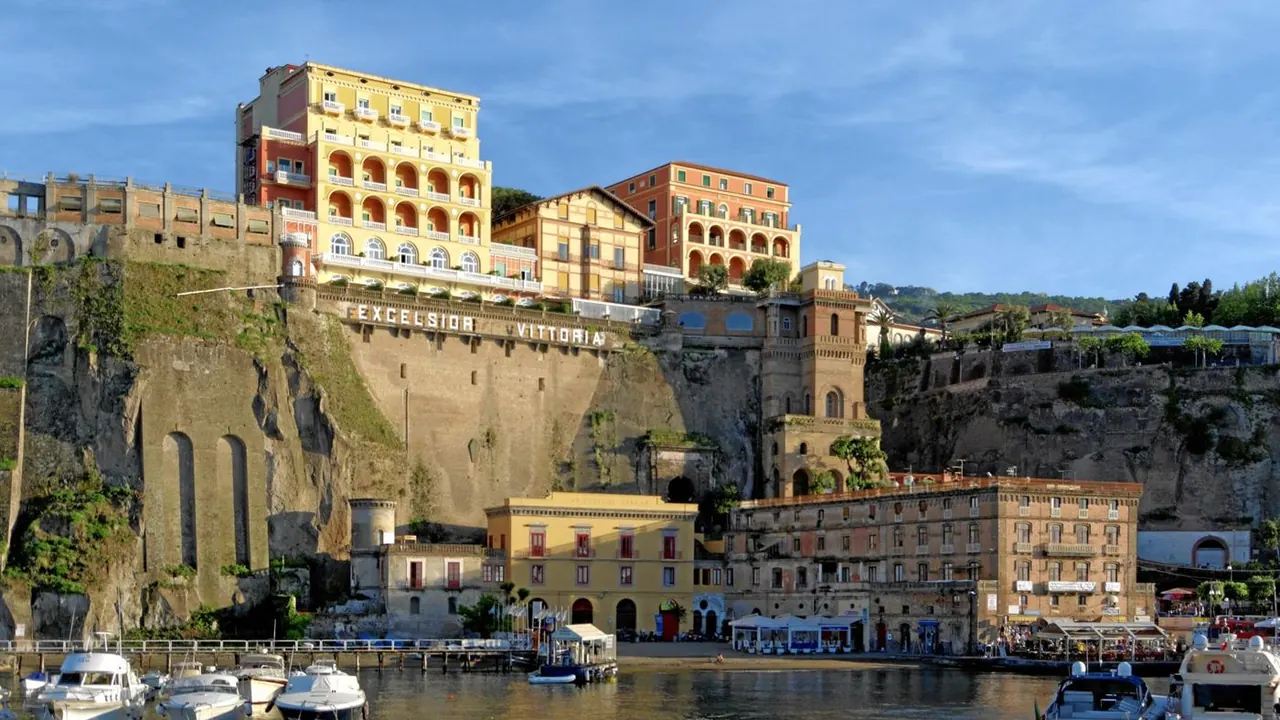
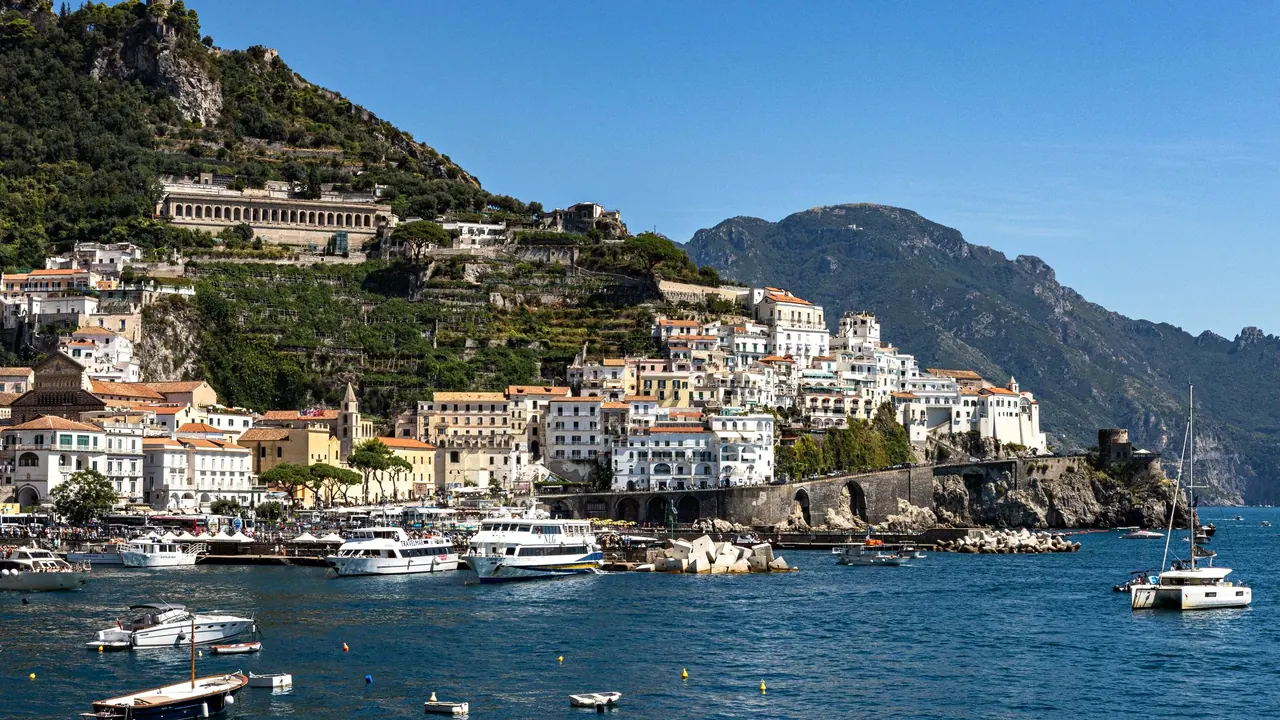
Photos: Sorrento by Berthold Werner, CC BY-SA 3.0, cropped; Amalfi by Oleksandra Zelena, Pexels License.
Sorrento or Amalfi?
Our verdict in twelve categories, each scored against the same fixed benchmark cities, and the climate month by month, so you can choose for your trip.
Choose Sorrento for
- nightlife
- wellness
- families
Sorrento is the more practical base and the better all-rounder. Its centre is flat, the train runs straight to Pompeii, Herculaneum and Naples, and ferries reach Capri quickly. It also has more to eat, a little more going on after dinner, better hotel spas and lower prices. Families, first-time visitors who want to see the whole region and anyone watching their budget will find it the easier choice. The cost is that the shore is mostly piers and rocks, and the most dramatic cliff scenery lies across the peninsula.
Choose Amalfi for
- beaches
- culture and sights
- nature and the outdoors
Choose Amalfi if the coast itself is the point of the trip. The town sits in the middle of the cliffs, with a real pebble beach below the cathedral steps, the Valle delle Ferriere starting behind the houses and Ravello's gardens just up the hill. It suits couples and walkers who can manage stairs, want to spend the day on boats and paths, and are happy to pay a lot to wake up there. Evenings are quiet and the town is not easy with small children.
Scoreboard
Twelve categories on one fixed scale from 0 to 100. The shaded stretch is the gap between the two.
Your match
Pick a travel style or drag the sliders, and both match scores follow your weighting.
Wins on nightlife and wellness with your weighting.
Wins on beaches and culture and sights with your weighting.
What matters to you?
Category by category
What the scores mean for a trip.
Beaches & swimming
Both towns swim in the same clear sea, but the way you get into it differs. Amalfi has an actual beach, Marina Grande, a strip of pebbles right below the Duomo steps. Atrani's small beach is a ten-minute walk away, and boats run out to coves such as Santa Croce and Duoglio. In summer, though, the beach clubs' loungers cover almost all of it.
Sorrento sits on a cliff, so most swimming is from the lidos' wooden piers at Marina Piccola and Marina Grande. You climb down ladders into deep water, or lie on the rocks at the Bagni della Regina Giovanna. For a beach to lie on, you take a bus or boat out of town.
Food & drink
Sorrento eats better. It has the dairy hills behind it, which supply mozzarella and provolone del Monaco, plus gnocchi alla sorrentina, the Neapolitan pizza tradition and fish restaurants down at Marina Grande. The villages on the peninsula above add some of the most celebrated tables in southern Italy.
Amalfi has its own good coastal cooking, such as scialatielli with clams, anchovies with colatura from Cetara, and lemon in everything. The town is small, though. The piazza cafés serve passing crowds, and the good trattorias are few and spread out.
Culture & sights
Neither town takes long to see, but their sights are different in kind. Amalfi's are grouped around one strong story, the medieval maritime republic. You have the striped Duomo with bronze doors cast in Constantinople, the white arches of the Chiostro del Paradiso, the old Arsenale and the paper mill museum, and you can see them all in a morning.
Sorrento spreads its sights more thinly along a Roman street grid. They include the Sedile Dominova loggia, the cloister of San Francesco, the paintings and porcelain of the Museo Correale and a museum of wood inlay. They are less striking than Amalfi's cathedral, but you can easily spend a day or two on them.
Nightlife
Neither is a party town, but Sorrento at least has an evening scene. People stroll along Corso Italia, then move on to cocktail terraces over the bay, pubs, piano bars playing Neapolitan songs and, in summer, a club or two. Amalfi empties once the last buses and ferries leave. Dinner and a gelato on Piazza Duomo is about as late as it gets.
Nature & outdoors
Both towns are superb bases for walking and time on the water. In Amalfi the scenery starts at your door. The Valle delle Ferriere gorge begins behind the town, old mule stairways climb to Pontone and Ravello, and the Path of the Gods is a short bus ride up to Agerola.
Sorrento's walks run the other way, out to Punta Campanella facing Capri and down to the protected bay of Ieranto. It also adds two things Amalfi lacks nearby: the beech woods of Monte Faito and the crater rim of Vesuvius.
Day trips
From Amalfi, the best day trips are along the coast itself. Ravello is a short bus ride up the hill, Positano is half an hour away by ferry, and Atrani, Cetara and the ceramics town of Vietri lie along the road east. Pompeii and Herculaneum are possible, but they make a long day, and most boats sail only from spring to autumn.
Sorrento puts more of the famous names within easy reach. The Circumvesuviana train gets to Pompeii in about half an hour, Herculaneum is a little further along the line, and you can add a climb up Vesuvius to the same day out. Naples and its archaeological museum are about an hour away, the Capri ferry takes under an hour, and in summer boats also run along the Amalfi Coast.
Good for families
Sorrento is the gentler choice with children. Its flat centre suits pushchairs, and the train ride to Pompeii's ruins and the boat to Capri make memorable outings. Its swimming is still from piers into deep water, though, so families with small children often pick a hotel with a pool.
Amalfi is much harder going. Steep stairways replace pavements, the beach is a crowded strip of pebbles and the winding cliff buses can make children carsick. Older children who swim well will still love the sea caves and the walks up the valley.
Getting around
Sorrento is easier to move around. Its centre is flat, lifts run down to the marinas, and a railway connects it to Pompeii and Naples. The train is old and crowded, but it avoids the road altogether. Hotels in the hills above town rely on shuttles or taxis.
Amalfi is tiny and walkable, but almost every route involves steps. Everything beyond the town depends on full buses on the single cliff road or on ferries that mostly sail from spring to autumn. In both towns a car is more trouble than it is worth.
Shopping & style
Both towns sell much the same limoncello, lemon soaps and painted ceramics. Both also have workshops that make sandals to measure, and neither has fashion worth the trip. The difference is the local craft. In Amalfi it is the handmade cotton paper from the mills in the valley, sold as notebooks and stationery, along with majolica tiles and tableware.
Sorrento's craft is intarsia, wood inlaid into boxes, trays and furniture, and the lanes around Via San Cesareo also sell coral and cameo jewellery. Anyone who wants more than souvenirs can reach the boutiques of Naples or Capri easily from Sorrento.
Affordability
Sorrento is pricey in summer, but it is the noticeably cheaper base. Trains and buses cost little, and pizza and the family trattorias away from Piazza Tasso are fairly priced. Hotel rates also fall a lot in spring and late autumn.
Amalfi ranks among the most expensive stays in Italy. There is little room to build, so rooms are scarce, and many of them are at the luxury end. Beach loungers and boat hire add up quickly. Only the local buses are truly cheap.
Live music & performing arts
Neither town has a theatre, so live performance is mostly seasonal in both. Amalfi has the more memorable evening within reach: the Ravello Festival's orchestral and chamber concerts on the terrace of Villa Rufolo, high above the sea. Sorrento has its own Neapolitan song and tarantella shows, chamber concerts in the San Francesco cloister and singers in the hotel bars. Naples' Teatro di San Carlo is about an hour away for opera.
Wellness & relaxation
Sorrento is better for a restful stay. Its larger cliff-top hotels have spas, pools and terraces over the bay, and the old villa gardens set an unhurried pace. The thermal gardens of Ischia are a ferry ride away.
Amalfi's spas belong to luxury hotels and are mostly kept for their own guests. Rest there means slow lunches, swims from the rocks and escaping to the hill hamlets when summer crowds fill the centre.
When should you go?
Pick your month. The climate figures are measured averages, not a forecast.
Sorrento in July
Amalfi in July
Daytime high, °C
Rainfall in the month, mm
Where the figures come from
Sorrento has no rain gauge within 25 km of the centre, so its rainfall comes from a gridded climate dataset read at the city rather than from a gauge further away.
Sorrento's sunshine is measured 54 km from the centre, at Grazzanise.
Amalfi's temperatures are measured 65 km from the centre, at Grazzanise.
Amalfi has no rain gauge within 25 km of the centre, so its rainfall comes from a gridded climate dataset read at the city rather than from a gauge further away.
Temperature and rainfall are climate normals, averaged over the years shown. Sorrento: 2005-2025 (sunshine 1991-2020, rainfall 1991-2020) normals, Capri (17 km from centre). Amalfi: 1991-2020 normals, Grazzanise (64.7 km from centre).
The two towns share almost the same weather, so one calendar works for both. The sea is warm enough for proper swimming from June to September and reaches about 26°C in August. It stays pleasant into October for anyone willing to swim between showers. June to August is almost dry and very sunny. Amalfi gets a little hotter at the height of summer, around 31°C, and in both towns the lanes and exposed trails are tiring in the midday heat.
April and May are the best months for walking, with mild days, plenty of sun and fairly little rain. September is still warm, but the rain comes back during the month, and October is properly wet, with about 114mm in Amalfi and 118mm in Sorrento. November is wetter still. Winters are cool and damp rather than cold, which is fine for a quiet stay but not for the beach.
Which traveller are you?
On a family trip with young children, Sorrento is clearly easier. Its flat, largely pedestrian centre works with a pushchair and the train to Pompeii makes an easy outing. Amalfi's stairways, cramped beach and winding bus rides make for hard going with toddlers.
For a trip on a tight budget, Sorrento is the more realistic base. Both towns are expensive in summer, but Sorrento has fairly priced pizza, back-lane trattorias and cheap trains. Amalfi is among the dearest places to stay in Italy, and its short supply of rooms keeps prices high.
On a food and nightlife trip, Sorrento gives you more for your evenings. There is gnocchi alla sorrentina, fish at Marina Grande and fine dining in the hill villages, then a passeggiata, piano bars and the odd summer club. In Amalfi, a long dinner and a drink on the piazza is usually the whole night.
Before you go
| Measure | Sorrento | Amalfi |
|---|---|---|
| Official language | Italian | Italian |
| Currency | Euro (EUR) | Euro (EUR) |
| Sockets | CFL230 V, 50 Hz | CFL230 V, 50 Hz |
| Driving side | Right | Right |
| Time zone | UTC+1, UTC+2 in summer | UTC+1, UTC+2 in summer |
| Emergency number | 112 | 112 |
| Elevation | 50 m | 6 m |
| Main airport | Naples International Airport (NAP)30 km from centre131 non-stop destinations | Naples International Airport (NAP)38 km from centre131 non-stop destinations |
| Public holidays this year | 13 days | 13 days |
By the numbers
| Measure | Sorrento | Amalfi |
|---|---|---|
| City population | 15,407 | 4,729 |
| People per km² | 1,541 | 830 |
| Museums within 10 km | 6 | 8 |
| UNESCO World Heritage sites within 50 km | 5 | 5 |
| Swim season, months above 21 °C | 5 months | 5 months |
Where else could you go?
Every comparison below shares a destination with this one, so you can follow Sorrento or Amalfi somewhere new.
- Positanovs Sorrento
- Positanovs Amalfi
- Salernovs Amalfi
- Naplesvs Sorrento
- Salernovs Sorrento
- Naplesvs Amalfi