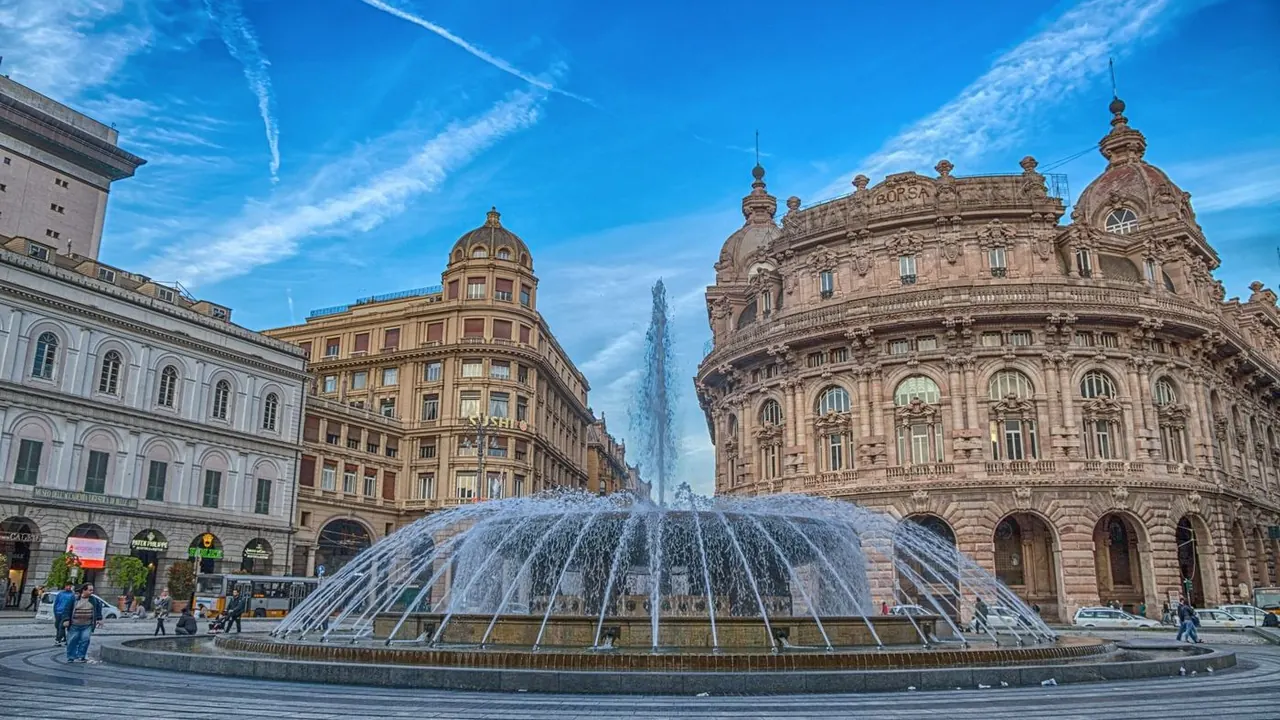
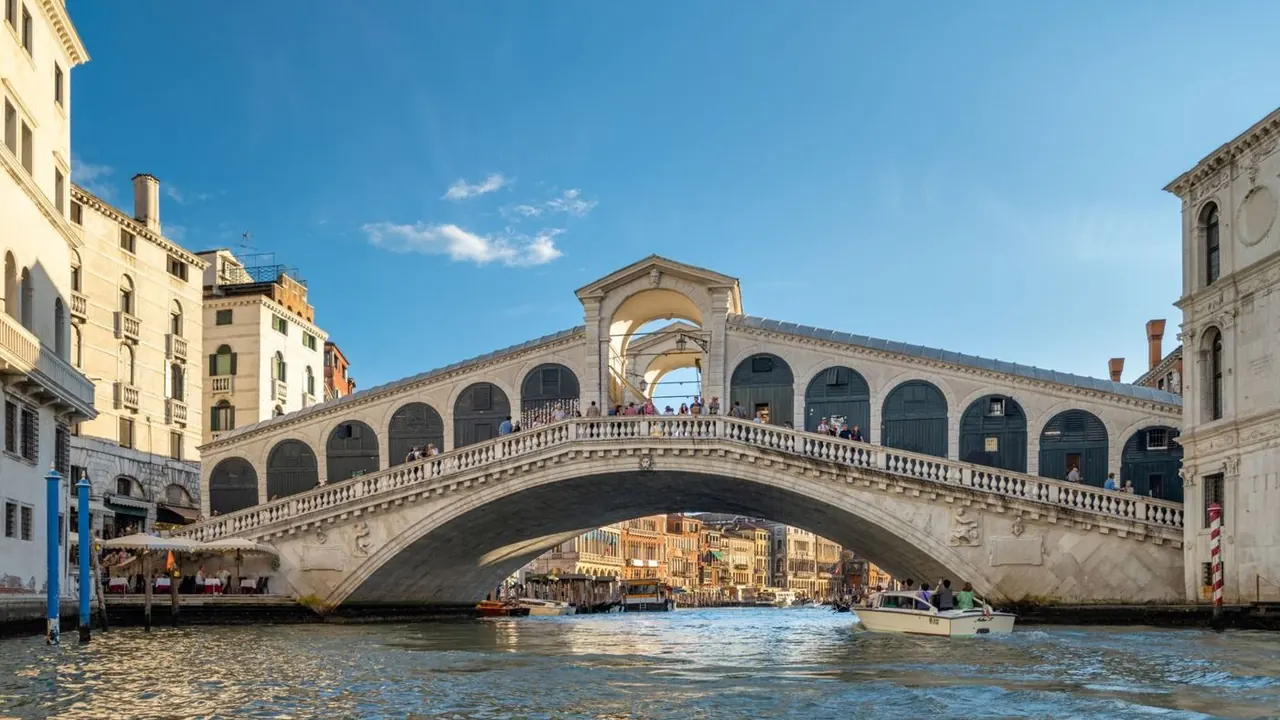
Photos: Genoa by Faber1893, CC BY-SA 4.0, cropped; Venice by David Vives, Pexels License.
Genoa or Venice?
Our verdict in twelve categories, each scored against the same fixed benchmark cities, and the climate month by month, so you can choose for your trip.
Choose Genoa for
- prices
- nature and the outdoors
- families
Genoa is for the traveller who wants a working Italian port with the Riviera on its doorstep. Hill trails and fortresses start from the city, the coast villages are a short train ride away and there is swimming most afternoons. Pesto and focaccia are eaten where they were born. It costs far less than Venice and is easier with children, but its palaces and museums, fine as they are, are not on Venice's level.
Choose Venice for
- culture and sights
- live music and the arts
- shopping
Choose Venice when the sights are the reason for going. Nowhere else in Italy puts this much art and architecture in one walkable, car-free place, from San Marco and the Grand Canal to Titian, Tintoretto and the Biennale, and La Fenice gives you an opera night to match. In return you pay high prices, eat carefully to avoid the tourist menus, find little nightlife and have only the lagoon for nature.
Scoreboard
Twelve categories on one fixed scale from 0 to 100. The shaded stretch is the gap between the two.
Your match
Pick a travel style or drag the sliders, and both match scores follow your weighting.
Wins on prices and nature and the outdoors with your weighting.
Wins on culture and sights and live music and the arts with your weighting.
What matters to you?
Category by category
What the scores mean for a trip.
Beaches & swimming
Genoa makes swimming easier to fit into a city trip. Boccadasse, Corso Italia's bathing platforms and the rocks below Nervi are all in town, the water is clear, and Camogli, Sestri Levante and Varazze are short train rides away. Most of the shore is pebble or coarse sand, though.
Venice has the softer beach. The Lido's long stretch of fine sand and shallow, gentle water suits small children who like to wade, but the sea is greenish rather than clear. Most visitors go there for one hot afternoon, not every day.
Food & drink
Genoa eats better and more simply. Pesto with trofie, pansoti in walnut sauce and focaccia dipped in cappuccino are the daily food, and the old-town friggitorie and the Mercato Orientale make good local eating easy to find without much searching.
Venice has one great habit, cicchetti and a spritz at the bacari around the Rialto, and the lagoon gives it black cuttlefish risotto and soft-shell crab. Around San Marco, though, too many restaurants rely on picture menus, so a good sit-down meal takes more effort to find than in Genoa.
Culture & sights
Genoa surprises people who arrive knowing little about it. Its historic centre is one of the largest medieval quarters in Europe, a maze of tall, shaded caruggi, and above it the painted Rolli palaces on Via Garibaldi hold Van Dyck and Rubens. San Lorenzo, the old harbour's Lanterna and the marble sculpture of Staglieno fill two or three rewarding days.
Venice is still the bigger draw, because the whole city is the monument. The Basilica of San Marco, the Doge's Palace and the Gothic palazzi along the Grand Canal come before you even reach the galleries, and small parish churches all over town hold masterpieces of their own. A week is not enough to see it all.
Nightlife
Neither city is made for a big night out, but Genoa stays up later. Students fill the bars around Piazza delle Erbe at weekends, and in summer the evening moves to waterfront bars and beach clubs along Corso Italia.
In Venice the best of the evening is the aperitivo on the Fondamenta della Misericordia, followed by a few late bars in Campo Santa Margherita. The canals go quiet around midnight, which makes for a fine late walk but not much else.
Nature & outdoors
Genoa sits between steep hills and the sea, so you can walk from the centre into real hiking. A funicular climbs to the fortress trails above the port, and the cliff path to San Fruttuoso on the Portofino promontory and the Cinque Terre terraces are close by. There are also whale and dolphin trips into the Pelagos Sanctuary.
Venice's outdoors is the lagoon: herons and flamingos around Torcello, kayaking and rowing standing up in the Venetian style. The ground is flat everywhere, and the nearest real mountains are the Dolomites, more than two hours away.
Day trips
Both are excellent bases, but the trips are different in kind. From Genoa, the coastal railway runs to Portofino, Camogli and the Cinque Terre, so the days out are about the sea, cliff villages and swimming, with Milan and Turin as inland options.
From Venice the trips are about art and history in other towns: Giotto in Padua, Verona's arena, Palladio in Vicenza and on the Brenta. Murano, Burano and Torcello make an easy day on the lagoon without boarding a train.
Good for families
Genoa is easier with children, largely because of the Porto Antico. The aquarium, one of Europe's largest, sits beside the science centre, the biosphere and the Galata museum's walk-through submarine, and the funiculars are an outing in themselves. The steep old-town lanes are hard going with a pushchair.
Venice thrills children with its boats and car-free alleys, and the Lido's shallow sand is ideal for small ones. Day to day, though, hundreds of stepped bridges, summer crowds and few parks or playgrounds wear families down, so it suits older children on a short stay.
Getting around
Both centres are best on foot, but the effort is different. Genoa climbs, so funiculars, a rack railway and public lifts take the strain, and the coastal train is the best link to Nervi and the Riviera. Buses are slow in its narrow streets.
Venice is flat but crossed by bridges with steps, so wheeled luggage is hard work, and vaporetti take the place of buses. Everything in the centre is within walking distance, though the twisting alleys will get you lost.
Shopping & style
Venice offers more to buy. Murano glass, Burano lace, papier-mâché masks, marbled paper and furlane slippers are made in workshops in Dorsoduro and Castello, and the big fashion labels line Calle Larga XXII Marzo. Watch for cheap imported copies on the main routes.
Genoa's best buys are for eating: candied fruit, olive oil and pesto from old shops in the caruggi, and produce from the Mercato Orientale. There is silver filigree and coral too, but fashion along Via XX Settembre is mainstream.
Affordability
This is where the two differ most. Genoa is fair-priced for northern Italy, with very cheap street food, moderate central hotels and cheap funiculars. Costs rise only in the smart Riviera resorts and on lounger-filled beach days.
Venice is among the dearest stays in the country. Hotel rooms, vaporetti and church entry fees all cost visitor prices. Staying in Mestre, eating at the bar counter and coming in late autumn or winter help, but it remains much the costlier trip.
Live music & performing arts
Venice has the stronger evening programme. La Fenice, where Verdi and Rossini had premieres, is one of Italy's great opera houses, the Biennale adds contemporary music and dance, and Vivaldi concerts in churches run on most nights, of mixed quality.
Genoa's Carlo Felice gives a solid opera and concert season, and the city honours Paganini with concerts. The small clubs keep the singer-songwriter tradition going, enough for an evening or two.
Wellness & relaxation
Neither city has a bathing culture of its own, and in both the spas are in hotels. The thermal waters are out of town: Acqui Terme in the Piedmont hills for Genoa, and Abano and Montegrotto near Padua for Venice.
The calm takes different forms. In Genoa it means escaping to Nervi's gardens and seafront promenade, away from the noise of the port. Venice has no traffic, so you can find quiet within the city itself, on early-morning walks through Castello, Cannaregio or Giudecca.
When should you go?
Pick your month. The climate figures are measured averages, not a forecast.
Genoa in July
Venice in July
Daytime high, °C
Rainfall in the month, mm
Where the figures come from
Genoa has no rain gauge within 25 km of the centre, so its rainfall comes from a gridded climate dataset read at the city rather than from a gauge further away.
Genoa's sunshine is measured 80 km from the centre, at Capo Mele.
Temperature and rainfall are climate normals, averaged over the years shown. Genoa: 1991-2020 normals, Genova / Sestri (6.7 km from centre). Venice: 1991-2020 (sunshine 1971-2000, rainfall 1981-2010) normals, Venezia / Tessera (6.7 km from centre).
Genoa has the gentler climate. Its winters are mild enough for walking the caruggi in any month, and its summers are dry and very sunny, with only about 27mm of rain in July. The sea warms to swimming temperature from June to September. Rain arrives in earnest in autumn and peaks in November. May and June, and again September before the downpours, are the best months for coastal walking.
Venice swings harder through the year. Winters are cold and damp, around 7°C, and summers reach 29°C with a muggy heat that makes the crowded centre tiring. Rain is spread through the year rather than saved for one season. The Lido's water is warm in July and August. Late spring and early autumn are the most comfortable months for days of walking between churches and galleries.
Which traveller are you?
On a culture and arts trip, Venice is the clear choice. The Accademia, the Frari, San Rocco's Tintorettos, the Guggenheim and the Biennale fill a week, and an evening at La Fenice adds to it. Genoa's Rolli palaces are rewarding but smaller in scope.
For a trip on a tight budget, Genoa goes much further. Focaccia and farinata make cheap meals, central hotels cost less and the funiculars are cheap. In Venice the rooms, water transport and church entry fees soon add up, even if you eat cicchetti standing at the bar.
For an outdoors trip, Genoa wins easily. Trails start from Righi along the fortress ridge, the Portofino park and the Cinque Terre are a train ride away, and boats go out whale-watching. Venice offers lagoon kayaking and flat cycling on the Lido, and little more.
Before you go
| Measure | Genoa | Venice |
|---|---|---|
| Official language | Italian | Italian |
| Currency | Euro (EUR) | Euro (EUR) |
| Sockets | CFL230 V, 50 Hz | CFL230 V, 50 Hz |
| Driving side | Right | Right |
| Time zone | UTC+1, UTC+2 in summer | UTC+1, UTC+2 in summer |
| Emergency number | 112 | 112 |
| Elevation | 20 m | 2 m |
| Main airport | Genoa Cristoforo Colombo Airport (GOA)7 km from centre25 non-stop destinations | Venice Marco Polo Airport (VCE)7 km from centre103 non-stop destinations |
| Public holidays this year | 13 days | 13 days |
By the numbers
| Measure | Genoa | Venice |
|---|---|---|
| City population | 558,745 | 250,369 |
| People per km² | 2,325 | 602 |
| Museums within 10 km | 51 | 52 |
| UNESCO World Heritage sites within 50 km | 1 | 5 |
| Swim season, months above 21 °C | 4 months | 4 months |
Where else could you go?
Every comparison below shares a destination with this one, so you can follow Genoa or Venice somewhere new.