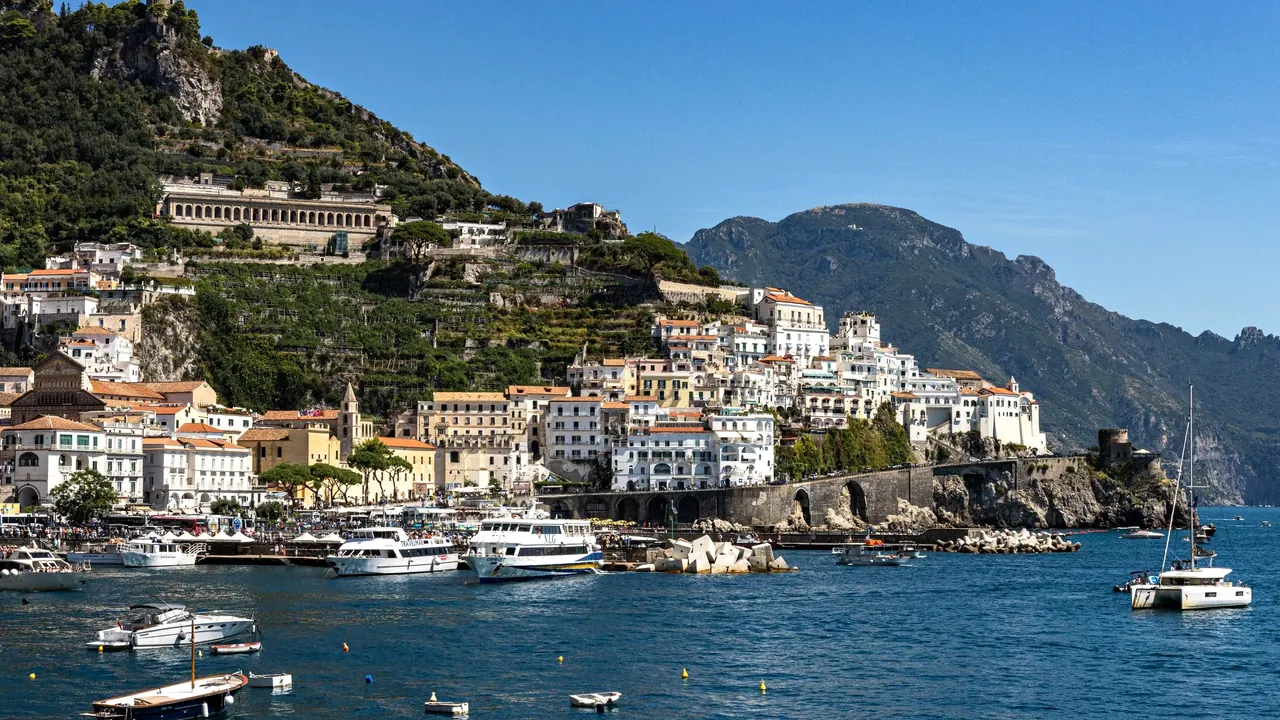
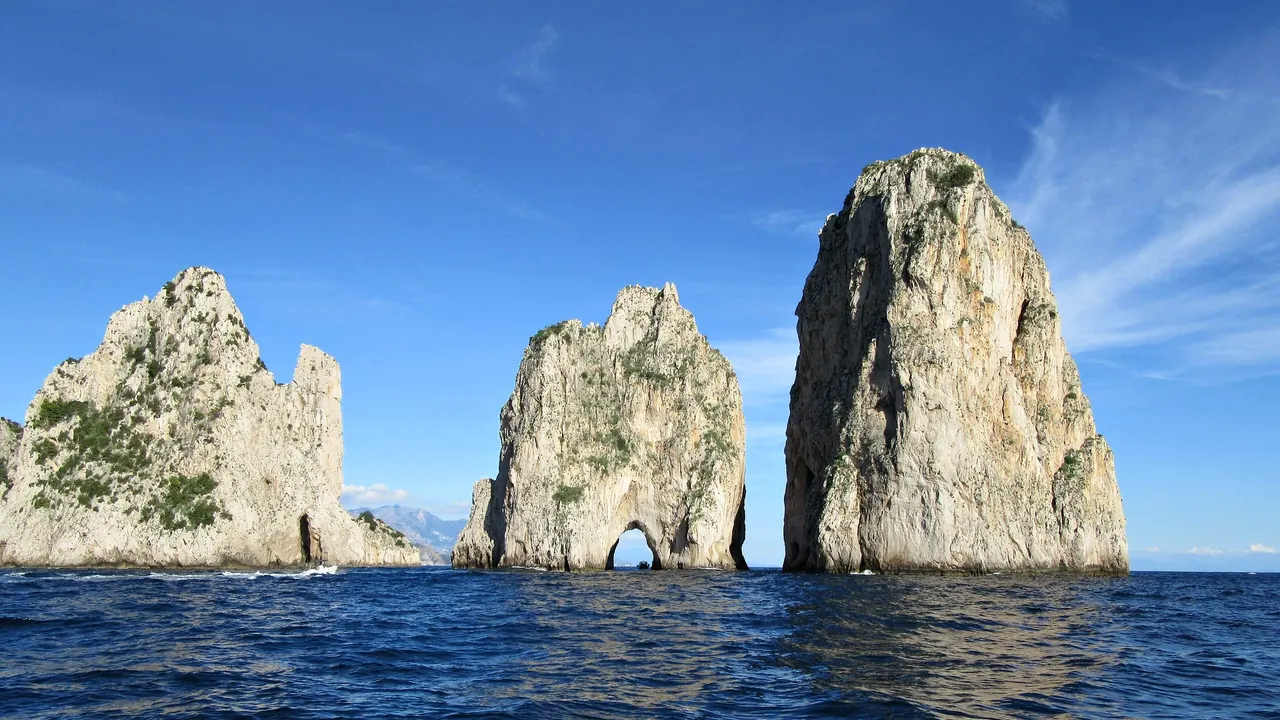
Photos: Amalfi by Oleksandra Zelena, Pexels License; Capri by Sheeba Samuel, CC BY-SA 4.0, cropped.
Amalfi or Capri?
Our verdict in twelve categories, each scored against the same fixed benchmark cities, and the climate month by month, so you can choose for your trip.
Choose Amalfi for
- nature and the outdoors
- day trips
- live music and the arts
Amalfi suits travellers who want to be out on foot and on the move. The mountains rise straight behind the town, the Path of the Gods and the old mule stairways are close by, and Ravello, Positano and the rest of the coast are a bus or ferry ride away. It works best as a base for a week of walking and exploring, and it is a little less punishing on the wallet, though evenings end early.
Choose Capri for
- nightlife
- shopping
- getting around
Capri is the better pick for a polished, self-contained island stay. You get luxury boutiques and dressed-up evenings on the Piazzetta, swimming off the rocks in deep blue water, and a few good Roman and monastic sites. The landscape is spectacular but compact, so a few nights covers it. Stay overnight, because the calm mornings and evenings are when it is at its best.
Scoreboard
Twelve categories on one fixed scale from 0 to 100. The shaded stretch is the gap between the two.
Your match
Pick a travel style or drag the sliders, and both match scores follow your weighting.
Too close to call, 1 point apart
Wins on nature and the outdoors and day trips with your weighting.
Wins on nightlife and shopping with your weighting.
What matters to you?
Category by category
What the scores mean for a trip.
Beaches & swimming
Neither has a sandy shore, and the swimming is about as good in both. The difference is in how you get into the water. In Amalfi you wade in from pebbles, at Marina Grande under the Duomo steps, in Atrani next door, or in coves like Santa Croce reached by stairs or shuttle boat.
On Capri you more often climb down a ladder from a rock or concrete platform into deep, very clear water, with Punta Carena on the Anacapri side the pick for afternoon sun. That suits confident swimmers more than paddlers.
Food & drink
The food is much the same standard in both, and both lean on lemons and seafood. What differs is the local speciality. Amalfi has the coast's sfusato lemons, scialatielli with clams, colatura from Cetara and wines from Furore and Tramonti.
Capri brings its own short list: insalata caprese, ravioli capresi with marjoram and torta caprese. In both, the better meals are away from the main square, in Amalfi's back alleys and up its valley, and in Capri's case in the family trattorias of Anacapri.
Culture & sights
Capri has a bit more to see, spread over several sites: Tiberius's Villa Jovis on its headland, Villa San Michele in Anacapri and the Certosa di San Giacomo. It is enough for two days.
Amalfi's heritage is concentrated in one place, the Duomo di Sant'Andrea with its bronze doors and crypt, the Chiostro del Paradiso, the Arsenale and the paper museum. Most people see it all in half a day.
Nightlife
Capri has a real, if limited, evening scene. Once the ferries leave, the Piazzetta fills for a dressed-up aperitivo, and the piano bars and taverns keep Neapolitan songs going into the early hours from May to September. It is glamorous rather than wild, and there are no clubs.
Amalfi's evenings stop at dinner, a gelato on Piazza Duomo and perhaps a late glass in summer. For anything more you would have to go to Salerno or Naples.
Nature & outdoors
Amalfi has the greater landscape. The Lattari mountains fall into the sea behind it, the shaded gorge of the Valle delle Ferriere starts at the edge of town, and the Path of the Gods, one of Europe's great coastal walks, is a short bus ride up at Agerola.
Capri's scenery is world-famous but on a smaller scale. You can see the Faraglioni, the Arco Naturale, the Sentiero dei Fortini and the chairlift up Monte Solaro in a few days, while Amalfi's hillsides keep a walker busy for a week.
Day trips
Amalfi is the better base for exploring. Ravello is a short bus ride uphill, Positano is half an hour by ferry, and the villages to the east lead on to Vietri and Salerno, with trains from there to Paestum. Capri and Pompeii are both within reach too.
From Capri almost every outing starts with a boat, to Sorrento, Naples, Ischia or the Amalfi Coast. That opens up the whole bay, but rough seas can cancel sailings, and the coastal routes thin out outside the season.
Good for families
Both are hard work with small children: steps everywhere, no attractions made for them and packed summer buses. The difference is in the water. Amalfi's pebble beaches at least let children wade in from the shore, while Capri's rock platforms and ladders into deep water suit only strong swimmers. Capri does offer older children the chairlift up Monte Solaro and calmer bases in Anacapri.
Getting around
Capri is the easier of the two to get around. The funicular lifts you from Marina Grande to the town in minutes, small buses and open-topped taxis cover the short distances, and much of the town is pedestrian.
Amalfi itself is tiny and you can walk it, but trips beyond it depend on a single cliff road. In summer that means full buses passing queues, slow traffic and almost nowhere to park. In both places the steps are the real obstacle for anyone with limited mobility.
Shopping & style
Capri is a genuine shopping destination for its size. Via Camerelle and Via Vittorio Emanuele hold a run of luxury labels and resort fashion, alongside sandals made while you wait and perfumes made on the island.
Amalfi has nothing at the fashion end. Its one main street sells lemon products and majolica, and the find worth taking home is the handmade cotton paper from the valley.
Affordability
Neither is cheap, but Amalfi is the slightly gentler of the two. Staying in a hill village, eating in a back-street trattoria and coming in spring or autumn all bring the cost down noticeably, and the local buses are a bargain.
On Capri, rooms are scarce and summer rates are among the highest in the Mediterranean. The cheaper option of sleeping in Sorrento or Naples means missing the island's best hours.
Live music & performing arts
Amalfi has the better access to live music. In summer the Ravello Festival, a short ride uphill, holds orchestral and chamber concerts on the Villa Rufolo terrace above the sea, which is worth planning an evening around.
Capri offers only occasional summer concerts at the Certosa or Villa San Michele, plus the Neapolitan songs in its late taverns. For serious music it is the boat to Naples.
Wellness & relaxation
Capri is the slightly better place to unwind, provided you stay several nights. After the day-trippers leave, its lanes go quiet and smell of lemon and jasmine, Anacapri is calm, and Ischia's thermal baths are across the bay.
Amalfi's rest comes from long shaded lunches and quiet early swims, but its small centre gets noisy in July and August. Neither has a bathing tradition of its own, and in both the spas belong to the hotels.
When should you go?
Pick your month. The climate figures are measured averages, not a forecast.
Amalfi in July
Capri in July
Daytime high, °C
Rainfall in the month, mm
Where the figures come from
Amalfi's temperatures are measured 65 km from the centre, at Grazzanise.
Amalfi has no rain gauge within 25 km of the centre, so its rainfall comes from a gridded climate dataset read at the destination rather than from a gauge further away.
Capri has no rain gauge within 25 km of the centre, so its rainfall comes from a gridded climate dataset read at the destination rather than from a gauge further away.
Capri's sunshine is measured 58 km from the centre, at Grazzanise.
Temperature and rainfall are climate normals, averaged over the years shown. Amalfi: 1991-2020 normals, Grazzanise (64.7 km from centre). Capri: 2005-2025 (sunshine 1991-2020, rainfall 1991-2020) normals, Capri (3.6 km from centre).
The two share almost the same year. The sea is warm enough for a proper swim from June to early October, and it reaches about 26°C in August. July and August are dry and very sunny. Amalfi's streets and stairways feel a touch hotter, reaching about 31°C, which makes the exposed coastal trails hard work at midday. Capri's figures, taken on the island itself, run a degree or two cooler in high summer.
For walking, April, May and late September into October are the best months in both places, warm without the heat. Rain arrives with the autumn, and November is the wettest month at about 145mm. From November to March both are cool and damp, at about 13°C in January, with fewer boats running. That is a time for quiet walks, not the sea.
Which traveller are you?
On an outdoors trip, Amalfi is the stronger choice. The Valle delle Ferriere starts at the back of town, the Sentiero degli Dei is a short bus ride away, and stairways climb to Pontone and Ravello. Capri's paths are lovely but are walked in a few days.
For a shopping trip, Capri wins clearly. The lanes off the Piazzetta pack in Italian and international luxury labels alongside made-to-measure sandals and island perfumes. Amalfi's single main street mostly repeats limoncello, ceramics and its handmade paper.
On a food and nightlife trip, Capri gives you more to do after dinner. The menus on the two are about as good as each other, but Capri's Piazzetta aperitivo and late piano taverns make an evening of it. Amalfi falls quiet once the day visitors leave.
Before you go
| Measure | Amalfi | Capri |
|---|---|---|
| Official language | Italian | Italian |
| Currency | Euro (EUR) | Euro (EUR) |
| Sockets | CFL230 V, 50 Hz | CFL230 V, 50 Hz |
| Driving side | Right | Right |
| Time zone | UTC+1, UTC+2 in summer | UTC+1, UTC+2 in summer |
| Emergency number | 112 | 112 |
| Elevation | 6 m | - |
| Main airport | Naples International Airport (NAP)38 km from centre131 non-stop destinations | Naples International Airport (NAP)131 non-stop destinations |
| Public holidays this year | 13 days | 13 days |
By the numbers
| Measure | Amalfi | Capri |
|---|---|---|
| Population | 4,729 | 12,903 |
| People per km² | 830 | 1,241 |
| Museums within 10 km | 8 | - |
| UNESCO World Heritage sites within 50 km | 5 | - |
| Swim season, months above 21 °C | 5 months | 5 months |
Where else could you go?
Every comparison below shares a destination with this one, so you can follow Amalfi or Capri somewhere new.